
How to study for CBSE Class 12 with Google Gemini AI
Preparing For Class 12 CBSE With AI, With Your Personal Study Partner Google Gemini.
The reward for excelling in CBSE Class 12 is massive: direct entry into your preferred Bachelor’s programs (B.Tech, B.Sc., B.Com, BBA) and meeting the crucial minimum 75\% eligibility criteria required for top entrance exams like JEE Advanced. The challenge is immense, spanning the vast syllabi of Physics, Chemistry, Biology, and Mathematics, but your decision to seek advanced help proves your determination—success is inevitable with the right strategy. Your secret weapon is Artificial Intelligence (AI), which closes the gap by acting as a 24/7 personal tutor that provides instant doubt clarification, generates custom mock tests, and adapts to your exact learning pace. This guide is built on my direct, real-world experience using AI for complex tasks like sales, web development, and SEO, giving you a proven, high-efficiency approach to master the 12th board exams.
How Gemini Helps With Every CBSE Class 12 Subject
| Focus Area | What Gemini Does | Your Benefit |
|---|---|---|
|
|
Calculus & Logic Guide
|
You will learn to visualize abstract functions. This helps you solve hard board questions and pass entrance exams with speed. |
|
|
Derivation & Numerical Expert
|
You get full marks for step-by-step writing. It ensures you never start the math without knowing the physical law first. |
|
|
Organic & Unit Master
|
You stop memorizing and start understanding reactivity. This makes you an expert at solving tricky reasoning questions. |
|
|
Genetics & Biotech Analyst
|
It helps you master Assertion-Reason questions. You will clearly see the links between biological facts to avoid tricky errors. |
|
|
Ledger & Cash Flow Logic
|
It cuts down on balance sheet errors. By knowing where the money goes, you get high scores on long 6-mark questions. |
|
|
Macro Model Analyst
|
You learn to write deep analytical answers. It ensures your diagrams are perfect and your economic logic is sound. |
|
|
Algorithm & SQL Expert
|
It acts as a real-time debugger for your code. You will perfect the output prediction questions for the theory exam. |
|
|
Literary & Grammar Guide
|
It helps you move from summaries to analysis. This is the key to scoring 95+ in language subjects at the senior level. |
|
|
Theory & Case Specialist
|
It builds the interdisciplinary mindset needed for CUET. You learn to back up arguments with dates and frameworks. |
How AI Boosts Your Efforts : Data From Recent Studies
Scientific research from 2024 and 2025 confirms that AI-driven learning is the most effective way for students to manage stress and study load, specifically for higher secondary students aiming for elite scores.
| Research Metric | Evidence & Analysis | Academic Significance |
|---|---|---|
| 45–60% numerical accuracy gain Active Learning Meta-Analyses |
Active Learning Improves High-Difficulty Problem Solving
|
What This Means
AI helps students apply concepts correctly under pressure, which is exactly what Class 12 Maths, Physics, and Chemistry demand.
CBSE Class 12 Edge: Higher scores in derivations, numericals, and case-based questions.
|
| 0.5–0.7 SD concept mastery improvement Intelligent Tutoring Systems |
AI Fixes Deep Conceptual Gaps
|
What This Means
AI pinpoints where your understanding breaks, preventing repeated mistakes across long answers and numericals.
CBSE Class 12 Edge: Fewer logic errors in Calculus, Electrostatics, and Organic Chemistry.
|
| 30–45% method & step accuracy gain AI Feedback RCTs |
Immediate Feedback Improves Answer Structure
|
What This Means
AI trains students to solve and write answers the way examiners expect, not just arrive at the final value.
CBSE Class 12 Edge: Protects marks where method, steps, and explanation matter.
|
| 35–45% long-term retention gain Spaced Revision Studies |
AI Prevents Syllabus Decay Across Long Prep Cycles
|
What This Means
AI schedules revision before forgetting happens, keeping early chapters strong till the final board paper.
CBSE Class 12 Edge: Prevents loss of early Maths, Physics, and Chemistry units.
|
Advanced Prompting Techniques by Google for 2026, with Examples Prompts For CBSE Class 12
Google Gemini is a Reasoning Engine. To get "A+ Grade" results for Class 12 and board exam students, move beyond basic questions using these six pillars.
- The Technique: Setting the Persona, Task, Context, and Format.
- The Logic: AI is a reasoning engine that adapts to the "identity" and "environment" you provide. Assigning an expert role ensures accurate vocabulary, while the Context "fences" the AI into the specific NCERT syllabus to prevent it from providing high-level college data that won't get you marks in board exams.
Persona: Act as an [Any Expert Role: e.g., Senior CBSE Board Examiner, Subject Specialist, NCERT Curriculum Designer]. Task: Explain [Your Topic: e.g., Human Reproduction, Electrostatics, Nucleophilic Substitution]. Context: Apply this specific background: [Source Context: e.g., Use only the latest NCERT Class 12 Textbook] [Difficulty Context: e.g., Explain for a Class 12 student preparing for the 2026 Board Exams] [Mark Context: e.g., Assume this is for a 5-mark long-answer question] Format: Provide the answer as a [Structure: e.g., Point-wise Answer with Headings, Flowchart Description].
- The Technique: Breaking a problem into a "Step-by-Step" sequence with logic checks.
- The Logic: Physics and Math problems in Class 12 often fail because the AI skips steps. This improved version forces the AI to "Self-Correct"—cross-checking the logic of Step 1 (identifying given values and units) before it attempts Step 2 (applying the formula) to ensure 100% accuracy.
Solve this [Subject: e.g., Mathematics, Physics, Physical Chemistry] problem using Chain-of-Thought. Step 1: List all given [Variables/Data Points] and their units from the question. Step 2: State the core [Formula/Theorem] and verify its relevance to the problem. Step 3: Show the calculation step-by-step, verifying the logic of each line before moving to the next. Question: [Insert your Class 12 numerical here]
- The Technique: Limiting the AI to official domains with a focus on recent data.
- The Logic: CBSE frequently updates the syllabus, deletes chapters, and changes the weightage of sections. This "Time-Stamp" filter forces the AI to ignore outdated coaching blogs and prioritize official portals from the last 12 months for 100% accuracy on what is actually in the exam.
Research the [Topic: e.g., Deleted Chapters for CBSE Class 12 Physics 2026, Sample Paper Blueprints]. Constraint: Only use info from official portals: [Domain 1: e.g., cbse.gov.in] and [Domain 2: e.g., cbseacademic.nic.in]. Recency Rule: Prioritize data published in the last 12 months. Output: Provide the official summary and the direct link to the source.
- The Technique: Setting strict "Rules of Play" including forbidden keywords.
- The Logic: Board exam answers need to be precise. By setting hard boundaries and forbidding "AI-voice" fillers (like "It is interesting to note" or "Basically"), you get sharp, NCERT-standard definitions that are easy to memorize for exams.
Explain [Concept: e.g., Biot-Savart Law, Polymerization, Double Fertilization]. Constraint 1: Use only [Specific Source: e.g., NCERT Class 12 Textbook] terminology. Constraint 2: Keep the response under [Limit: e.g., 60 words]. Constraint 3 (Negative): Do not use AI-filler phrases like "Here is the explanation" or "In conclusion." Format: Use simple bullet points.
- The Technique: Using a Feedback Loop with an "Active Recall" check.
- The Logic: Treat the AI like a personal home tutor. This version forces the AI to stop and ask you a question after its explanation, ensuring you actually understood the concept (like the working of a Galvanometer or a Recombinant DNA technology) before moving on.
Explain [Topic: e.g., DNA Replication, Logic Gates, National Income Accounting]. Instruction: Provide a simple conceptual summary first. Feedback Loop: Ask me if I want a more detailed "5-mark version" or a "short-note version." Active Recall: Once I am satisfied, provide one 'Board-Style' MCQ based on your explanation.
- The Technique: Providing a structural blueprint before injecting raw data.
- The Logic: This is the most powerful way to create study tools. You command the AI to build a specific result (like a comparison table between DNA and RNA or Adsorption and Absorption) using a layout you provide, ensuring it is 100% revision-ready.
Make a [Desired Output: e.g., Comparison Table, Chapter Summary Grid, Formula Sheet]. Layout Blueprint: [Structure: e.g., 3-column table, Numbered list]. Style: [Vibe: e.g., Student-Friendly, Academic]. Strict Rule: Adhere to the structure provided; no conversational filler. Use this information: [PASTE_TEXTBOOK_DATA_OR_NOTES_HERE]
Note :
- “The techniques and prompt engineering principles you learn in this guide are universally applicable to any large language model (LLM), including ChatGPT and Perplexity AI. We use Google Gemini for all examples because its latest multimodal features and integration with Google Search provide a best-in-class learning experience.”
- “Remember: The quality of the AI’s answer depends entirely on the clarity of your prompt. Always be specific, detailed, and clear with the AI to avoid irrelevant or incorrect (hallucinated) responses.”
Using Google Gemini App Input Method’s For CBSE 12.
1. Text Prompts

This is the most common way to interact. You can type out specific questions, topics you need to revise, or even ask for a summary of a chapter. For example, “Explain the principles of rotational motion.”
2. Voice Input
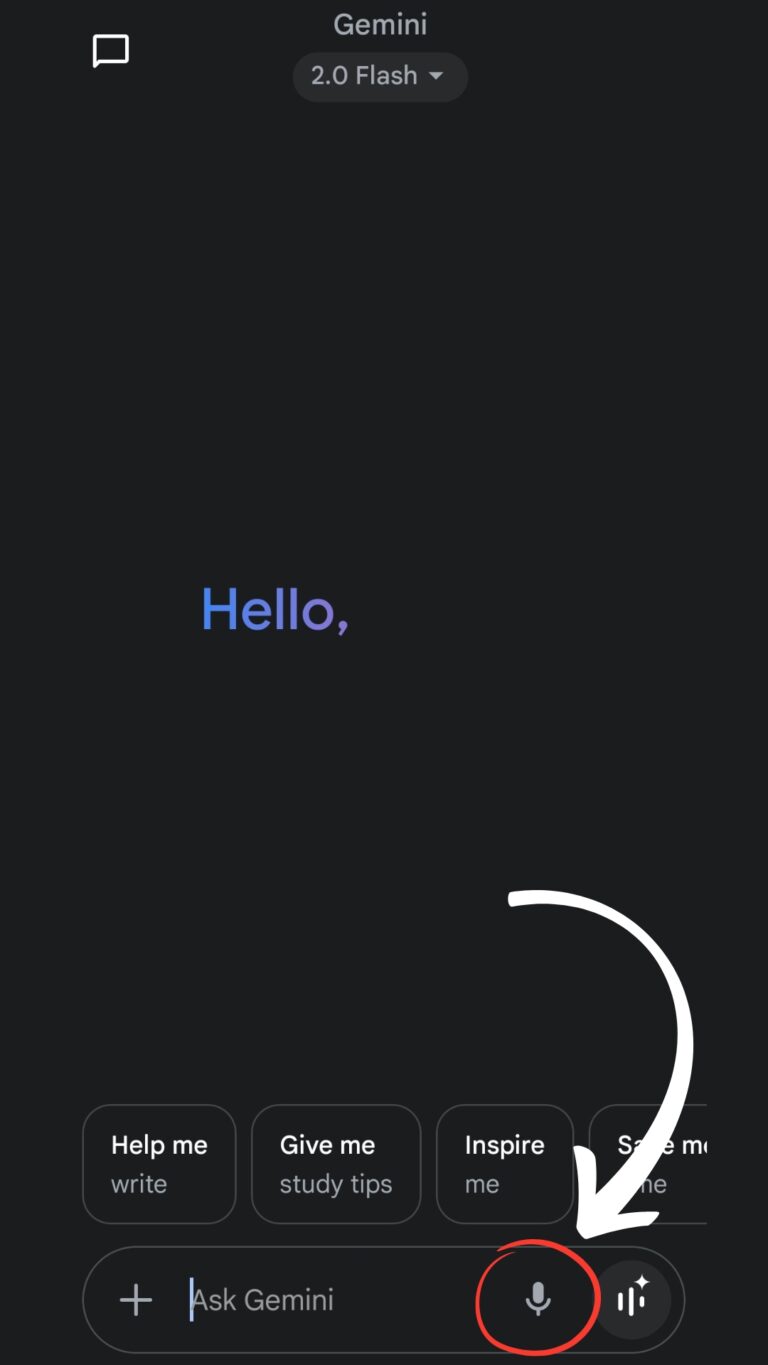
When your hands are busy or you’re tired of typing, simply tap the microphone icon and speak your query. This is great for quick, on-the-go revisions or for when you’re trying to understand a concept by talking through it.
3. Image Input

This is a game-changer for visual learners. You can take a picture of a difficult diagram from a textbook, a graph, or a handwritten problem, and ask Gemini to explain it. For instance, “Explain the working principle of the diagram of the electric motor.”
Solving Questions From Class 12 CBSE Syllabus With Google Gemini.
Example 1: CBSE Class 12 Physics
Electrostatics (Capacitance and Dielectrics)
Official Path: Physics Part-1: Electrostatic Potential and Capacitance
Medullary Electrostatic Strategy Analysis
Research "Effect of Dielectrics on Capacitance" and "Energy Density in Electric Fields." In CBSE Class 12, the distinction between "battery remains connected" and "battery is disconnected" is a critical conceptual trap. Grounding the prompt in the "Conservation of Charge" ensures the AI explains why the charge remains constant while other variables change, providing the analytical rigor required for board examinations.
Study Lab
CBSE Class 12 Physics
"A parallel plate capacitor with plate area $A$ and separation $d$ is charged to a potential $V$ by a battery. The battery is then disconnected, and a dielectric slab of dielectric constant $K$ is inserted to completely fill the space between the plates. Explain the changes in the Capacitance, Electric Field, Potential Difference, and Energy Stored in the capacitor. Provide the mathematical derivation for the new energy stored."
"Act as a Senior Physics Researcher and Board Paper Moderator (Persona). Explain the Behavior of Dielectrics in Parallel Plate Capacitors (Subject) in the context of an isolated system (Context). Focus on the 'Polarization of Dielectrics' and the 'Induced Electric Field.' Provide a conceptual breakdown (Format) of how the presence of a slab affects the total permittivity of the medium."
"Analyze the Energy Redistribution in an Isolated Capacitor using Chain-of-Thought. Step 1: Identify the constant variable (Charge $Q$) after the battery is disconnected. Step 2: Write expressions for initial energy ($U_0$) and initial capacitance ($C_0$). Step 3: Calculate the new potential ($V$) and new energy ($U$) in terms of $K$. Step 4: Verify the 'Energy Loss' and explain where it goes."
"Create a Capacitor Configuration and Variable Impact Matrix for board students. Structure: Configuration (Battery Connected vs Disconnected), Constant Variable, Dielectric Impact (on $C, V, E, U$), and Exam Strategy (Formula to use). Constraints: Structured hierarchical list. No conversational filler. 100% CBSE accuracy."
Physics Prep Lab • Optimized for Electrostatics
Gemini can further assist by:
Provide step-by-step solutions to numerical problems from other chapters like Electrostatics, Optics, or Modern Physics.
Offer detailed conceptual explanations and mathematical derivations for difficult laws and principles, such as Gauss’s Law or Huygens’ Principle.
Define and differentiate between key physics terms and phenomena, including potential difference, capacitance, and magnetic flux.
Generate questions and practice quizzes covering all units of the CBSE Class 12 Physics syllabus.
Example 2: CBSE Class 12 Chemistry
Organic Chemistry (Chemical Kinetics and Mechanisms)
Official Path: Chemistry Part-2: Haloalkanes and Haloarenes (Nucleophilic Substitution)
Kinetic Reaction Strategy Analysis
Research "Kinetic Order of $S_N1$ and $S_N2$ Reactions" and "Stability of Carbocations." In CBSE Class 12, the distinction between unimolecular and bimolecular mechanisms is a cornerstone of the organic chemistry syllabus. Grounding the prompt in "Transition State Theory" vs. "Intermediate Formation" ensures the AI explains the energy profiles of these reactions, providing the chemical rigor required for board exams and competitive entrance tests like NEET or JEE.
Study Lab
CBSE Class 12 Chemistry
"A student is studying the hydrolysis of two different halides: Chloromethane ($CH_3Cl$) and 2-Chloro-2-methylpropane ($(CH_3)_3CCl$). Both reactions are carried out in a polar protic solvent. Explain why the rate of reaction for the first halide depends on both the substrate and the nucleophile, while for the second, it depends only on the substrate. Discuss the role of the Carbocation Intermediate and why Walden Inversion is observed in one but not the other."
"Act as a Senior Chemistry Educator and Lab Researcher (Persona). Explain the concepts of $S_N1$ and $S_N2$ Mechanisms (Subject) in the context of alkyl halide hydrolysis (Context). Focus on the 'Molecularity' and 'Order of Reaction.' Provide a comparative conceptual breakdown (Format) of how steric hindrance affects the pathway chosen by the molecule."
"Analyze the Stereochemical Outcomes and Solvent Effects using Chain-of-Thought. Step 1: Describe the 'Backside Attack' in $S_N2$ leading to Walden Inversion. Step 2: Explain the 'Planar Intermediate' in $S_N1$ leading to Racemization. Step 3: Evaluate the role of a 'Polar Protic Solvent' in stabilizing the transition states. Step 4: Verify the 'Reactivity Order' for both mechanisms and justify why $S_N2$ is favored for primary halides."
"Create an Alkyl Halide Reaction Prediction and Troubleshooting Matrix for board students. Structure: Substrate Category, Primary Mechanism, The 'Check-Point' (Solvent/Nu strength), and Exam Tip. Constraints: Structured hierarchical list. No conversational filler. 100% CBSE accuracy."
Chemistry Prep Lab • Optimized for Organic Kinetics
Gemini can further assist by:
Explain complex reaction mechanisms for organic chemistry topics like Haloalkanes and Haloarenes or Amines.
Provide solutions to numerical problems from Physical Chemistry chapters, such as Electrochemistry or Chemical Kinetics.
Summarize and differentiate between concepts in Inorganic Chemistry, like coordination compounds and the properties of d- and f-block elements.
Create a flow chart or comparison table for named reactions to aid in memorization.
Example 3: CBSE Class 12 Mathematics
Calculus (Applications of Derivatives)
Official Path: Mathematics Part-1: Applications of Derivatives (Maxima and Minima)
Optimization Problem Strategy Analysis
Research "Optimization Problems in CBSE Calculus" and "Constraints in Maxima and Minima." In CBSE Class 12, optimization is a high-weightage 5-mark topic. Grounding the prompt in the "Volume-to-Surface Area Relationship" ensures the AI explains how to reduce a multi-variable function into a single-variable function using given constraints, providing the logical precision required for board examinations.
Study Lab
CBSE Class 12 Mathematics
"A tank with a rectangular base and rectangular sides, open at the top, is to be constructed so that its depth is 2 m and its volume is 8 cubic meters. If building the base costs Rs. 70 per sq. meter and the sides cost Rs. 45 per sq. meter, what is the cost of the least expensive tank? Formulate the cost function and use the Second Derivative Test to find the minimum cost."
"Act as a Mathematics Professor and Board Examiner (Persona). Explain the concept of Maxima and Minima (Subject) in the context of industrial optimization (Context). Focus on the 'Objective Function' and the 'Constraint Equation.' Provide a step-by-step conceptual breakdown (Format) of how the First Derivative Test identifies critical points."
"Analyze the Cost Optimization for the Tank using Chain-of-Thought. Step 1: Define variables for length ($l$) and breadth ($b$) and use volume constraint ($2lb = 8$) to find $b$. Step 2: Construct Cost function ($C$). Step 3: Differentiate $C$ to find the critical point. Step 4: Verify minimum using Second Derivative Test ($d^2C/dl^2 > 0$)."
"Create a Calculus Application and Problem-Solving Map for board students. Structure: Problem Pattern, Primary Constraint, The Calculus Shortcut, and Common Exam Trap. Constraints: Structured hierarchical list. No conversational filler. 100% accuracy for CBSE Class 12 Mathematics."
Mathematics Prep Lab • CBSE Optimization Module
Gemini can further assist by:
Explain intricate biological processes, such as photosynthesis or the steps of the immune response.
Provide detailed, labelled diagrams and descriptions for topics like the human reproductive system or the structure of a nephron.
Summarize the concepts and applications of Biotechnology, including techniques like gene cloning and PCR.
Generate flashcards or quizzes for the vast vocabulary and terminology in units like Ecology and Genetics.
Using Google Gemini for CBSE Class 12 Research
What is Deep Research?
Deep research for CBSE Class 12 involves using Google Gemini to connect your core NCERT textbooks with advanced academic papers, real-world case studies, and professional standards. It turns the AI into a specialized mentor that helps you understand the "Why" behind complex concepts in Science, Commerce, and Humanities, moving beyond simple memorization to the high-density analytical understanding required for Board Exams and entrance preparation.
How It Helps You
- Mastering Advanced Derivations: Class 12 exams focus heavily on derivations and proofs. Gemini helps you break down the mathematical logic behind Physics laws or Chemical kinetics so you can replicate them under exam pressure.
- Competency-Based Case Studies: Deep research allows you to analyze Business Studies or Economics scenarios using real-world market data, helping you solve the high-weightage competency questions now standard in CBSE.
- Interdisciplinary Scientific Context: Stay updated on the latest breakthroughs in biotechnology, organic synthesis, or quantum mechanics—topics that provide the necessary "extra depth" for top-tier marks in Science subjects.
- Analytical Reasoning Breakdown: Instead of just learning outcomes, Gemini can breakdown the historical or social logic behind Humanities subjects like Political Science and Sociology, ensuring your long-form answers are nuanced and unique.
Grounding and Context
What it is: "Grounding" means tethering Gemini to official NCERT textbooks and the latest CBSE marking schemes so it doesn't give you information outside your current academic scope.
Why it matters: Class 12 evaluation is precise. Grounding ensures you are studying from sources like NCERT Supplementary Material, CBSE Academic circulars, and Official Board Sample Papers.
How you do it:
1. Download the latest official CBSE Class 12 Syllabus and Marking Scheme PDF.
2. Upload the PDF to Gemini.
3. Use the command: "Filter all your future research through the specific chapters and evaluative requirements found in this official CBSE Class 12 guide."
System-Task-Range Prompting
The Google Suggested MethodUse this structured method to ensure Gemini acts like a Board Paper Evaluator or a Senior Subject Expert rather than a general information chatbot.
“Act as a Senior CBSE Board Evaluator. Your task is to research the latest real-world applications of 'Recombinant DNA Technology' found in the pharmaceutical industry. Write a 300-word summary suitable for a Class 12 student and create three high-order thinking skills (HOTS) questions based on this. Use only NCERT and verified academic journals.”
Reverse Engineering Prompts
The India Should Know TechniqueReverse-engineer your revision material by describing the exact professional depth and tabular structure you need before the AI processes raw academic data.
“I want to create a high-density comparison table for [Subject Concepts, e.g., Microeconomics vs Macroeconomics or DNA vs RNA]. Format: A 4-column table (Basis of Difference, Category A, Category B, Why CBSE Tests This). Tone: Professional, direct, and analytical. Intent: To master core conceptual differences for a 6-mark board question. Constraints: No fluff. Every point must be under 15 words. Use the official NCERT context I provided. Once generated, I will ask you to create a logic-based case study question for this table.”
Tips for Better Deep Research
- The "Logic Loop": After an answer, ask: "What are the common pitfalls in the step-by-step presentation of this derivation that lead to marks being deducted?" to identify evaluative traps.
- Verify Data Trends: Always use the "Google" search button to verify the latest GDP figures, current interest rates, or government policy updates mentioned in your Economics and Business research.
- Visual to Text: If you are studying complex circuits, chemical structures, or biological processes, describe the flow to Gemini and ask it to explain the "unseen" logic at each transition point.
- Chain of Reasoning: For mathematical theorems or proofs, tell Gemini: "Explain the transition between these two steps step-by-step so I can write the full logic in my answer script without skipping steps."
Guided Learning For CBSE Class 12 With Google Gemini As Your Personal Coach
What is Guided Learning with AI?
For CBSE Class 12 students, guided learning with AI is like having a subject-matter expert available 24/7 to help you crack the logic behind advanced NCERT concepts. Since Class 12 serves as the gateway to college and competitive exams, you use Gemini to simulate a high-level tutorial. It identifies deep gaps in your conceptual foundation and explains complex derivations or mechanisms in a way that ensures you are ready for both Board Exams and entrance tests.
How it helps you for this course/exam
- Master Complex Derivations: Whether it is 'Gauss's Law' in Physics or 'Integration' in Math, Gemini can break down the logic of every step, explaining how one line leads to the next so you understand the flow rather than memorizing the page.
- High-Level Answer Structuring: Class 12 Boards reward precision. Gemini helps you identify technical terms and structural requirements for long-form answers in subjects like Business Studies, Psychology, or Biology to match the CBSE marking scheme.
- Case-Based & Application Questions: New CBSE patterns focus heavily on application. Gemini can turn your textbook theory into real-world scenarios, forcing you to apply your knowledge to solve complex "HOTS" (Higher Order Thinking Skills) questions.
How to do it in short
1. Define the Role: Tell Gemini it is an expert CBSE Class 12 Mentor specializing in [Your Subject].
2. Set the Boundary: Tell it NOT to solve the problem for you—insist on guiding you through the logic first.
3. Interactive Dialogue: Ask it to quiz you on a specific derivation, reaction, or theory one question at a time.
4. Feedback Loop: Provide your reasoning or a step of a solution, and let the AI correct your technical logic.
Google Suggested Method: Conversational Scaffolding
Google’s recommended approach focuses on "conversational scaffolding." For Class 12, this means starting with the fundamental principle (like Ohm's Law) and letting the AI guide you step-by-step toward solving complex circuit problems or network theorems through a back-and-forth chat.
“I am preparing for my CBSE Class 12 Board exams, specifically focusing on [Subject/Chapter]. I want you to act as a supportive mentor. Start by asking me what I already know about [Specific Topic], and then help me build my understanding by asking follow-up questions that connect basic NCERT theory to advanced application-based problems. Let's take it step-by-step.”
Google Suggested Method: The Socratic Method
The Socratic method is the gold standard for mastering deep logic in subjects like Organic Chemistry or Macroeconomics. Instead of the AI explaining a reaction mechanism or a fiscal policy to you, it asks you disciplined questions. This forces you to discover the answer through your own reasoning, which is critical for long-term recall.
“I want to learn the core logic behind [Topic]. Act as a Socratic tutor for my Class 12 prep. Do not give me the explanation. Instead, ask me a leading question that helps me realize the core principle or mechanism behind this topic. Once I answer, ask another question to push my thinking further into complex application until I have fully grasped the concept.”
The India Should Know Method
The "Reverse Engineering" MethodThe India Should Know method is about Reverse Engineering. Instead of letting the AI wander, you put heavy constraints on the output. You define the exact "shape" of the session—specifying the need for high-density Board-level questions—before you ever give it the raw NCERT data or your revision notes.
“Intent: Act as an expert CBSE Class 12 Board Examiner specializing in [Subject]. Context: I am preparing for my final Board Exams and need to master [Chapter/Topic]. Format Constraints: * Conduct a 'Step-by-Step Logic' or 'Derivation Breakdown' quiz session. * Ask exactly one question or sub-part at a time. * Wait for my response before moving to the next part of the problem. * If I am wrong, provide a conceptual hint rather than the final answer. * Use a professional and encouraging tone. * After 5 questions, provide a 'Conceptual Gap Report' in a table format (Column 1: Chapter Concept, Column 2: Mastery Level 1-10, Column 3: High-Yield Improvement Area). Raw Data: [Paste your notes, NCERT text, or syllabus here] Instruction: Once you understand these constraints and the data provided, acknowledge this by asking the first question.”
Tips for Guided Learning
- Be Honest with the AI: If you don't understand a physics hint, say "I don't understand the mathematical derivation here, explain it using a simpler analogy." The AI can pivot its teaching style immediately.
- Use Voice Mode for Theory: If you are on the Gemini app, use Gemini Live. Talking through the logic of an English summary or a Political Science theory out loud helps build the clarity needed for writing perfect long-form answers.
- Feed it Past Year Papers: Paste specific tricky questions from previous Board exams into the "Raw Data" section. This ensures the AI quizzes you on the exact level of rigor and keywords expected in the Class 12 exam.
- Review the Gap Report: Don't just finish the session. Look at the "Conceptual Gap Report" and ask Gemini to create a 15-minute summary sheet just for the areas where you need more technical clarity.
Note: Once Gemini produces the outcome based on these prompts, you can further improve it by saying: "That was great, but make the questions more focused on [Specific Sub-topic] and use more practical, Board-style examples."
Important Links for CBSE Class 12
To ensure your preparation is grounded in “Doctor-Grade” intelligence, always prioritize these official sources for notifications, syllabus updates, and latest health data.
Official CBSE & NCERT Portals
CBSE Academic Unit: cbseacademic.nic.in — The primary source for the 2025-26 Curriculum, circulars on the new exam pattern, and official notifications.
NCERT Textbook Digital Downloads: ncert.nic.in/textbook.php — Access the Rationalized 2025-26 PDFs for all subjects. Ensure you use these updated versions to avoid studying deleted topics.
CBSE Main Website: cbse.gov.in — Useful for downloading your Admit Card, checking Result Statistics, and accessing the “Parinam Manjusha” (digital repository).
DIKSHA Portal: diksha.gov.in — A government-backed repository of video lessons and interactive worksheets mapped specifically to the Class 12 NCERT chapters.
Sample Papers & Question Banks
Official Sample Question Papers (SQP) 2025-26: CBSE Class XII SQP & MS — Directly download the sample papers and Marking Schemes to see exactly how examiners award marks.
CBSE Question Bank (Competency-Based): CBSE Academic QB — Crucial for the 2026 pattern, these questions focus on Case Studies and Assertion-Reasoning for core subjects like Physics, Math, and Economics.
Topper’s Model Answer Sheets: CBSE Model Answers — Scanned copies of actual answer sheets from previous toppers. Use these to study their handwriting, presentation, and point-wise answering style.
Human Effort, Google Gemini Intelligence: The Perfect Learning Duo For CBSE Class 12
Achieving a top-tier percentage in CBSE Class 12 is no longer about who spends the most hours with a textbook—it’s about who uses the most efficient tools. By integrating Google Gemini into your daily routine, you aren’t just “studying”; you are optimizing your brain’s ability to retain complex derivations, solve 5-mark numericals, and master the new 2026 competency-based pattern.
Whether you are aiming for the 75% JEE eligibility bracket or an elite 99% aggregate for university admissions, the AI-driven methods outlined in this guide are your fastest path to success. Don’t let your preparation be a game of guesswork—turn your study sessions into a data-backed, high-yield operation today.
Boost Your Score Further:
Ready to Start? Scroll back up to the Custom Study Plan section and copy our “Elite Strategist Prompt” to generate your first 7-day schedule in seconds.
Facing a Specific Doubt? Open the Gemini app now, use the Image Input to snap a photo of your toughest NCERT problem, and ask for a “Socratic Breakdown.”
Stay Ahead of the Curve: The CBSE 2025-26 pattern is evolving fast. Bookmark our Important Links section to ensure you never miss a critical marking scheme update or a new sample paper release.
The future of education is here. Will you lead the pack or follow? Start your AI-powered journey today.
Written By
Prateek Singh.
Last Updated – December, 2025
About The Author
Prateek Singh believes the best way to learn is to apply knowledge directly. He leverages AI tools every day for his professional work, using them to create sales presentations, perform lead generation, execute data visualization, and manage all digital marketing and SEO efforts. He also used AI to learn the diverse skill set required to build IndiaShouldKnow.com from the ground up, including web development, UI/UX design, color theory, and graphic design. Having researched and utilized dozens of AI tools, Prateek has written over a hundred articles detailing how others can use them to enhance their own learning and productivity. He shares this practical, self-taught knowledge to empower others on their own journey of continuous learning.
FAQs About AI Use.
Can I trust every answer an AI tool gives me for my studies?
A: No, you should not trust every answer completely. Think of an AI as a super-smart assistant that has read most of the internet—but not every book in the library is accurate.
AI can sometimes make mistakes, misunderstand your question, or use outdated information.
It can even “hallucinate,” which means it confidently makes up an answer that sounds real but is completely false.
Rule of Thumb: Use AI answers as a great starting point, but never as the final, absolute truth. Always double-check important facts.
How can I verify the information I get from an AI for my academic work?
A: Verifying information is a crucial skill. It’s like being a detective for facts. Here are four simple steps:
Check Your Course Material: Is the AI’s answer consistent with what your textbook, lecture notes, or professor says? This is your most reliable source.
Look for Reputable Sources: Ask the AI for its sources or search for the information online. Look for links from universities (.edu), government sites (.gov), respected news organizations, or published academic journals.
Cross-Reference: Ask a different AI the same question, or type your question into a standard search engine like Google. If multiple reliable sources give the same answer, it’s more likely to be correct.
Use Common Sense: If an answer seems too perfect, too strange, or too good to be true, be extra skeptical and investigate it further.
What is the difference between using AI for research and using it to plagiarize?
A: This is a very important difference. It’s all about who is doing the thinking.
Using AI for Research (Good ✅):
Brainstorming topics for a paper.
Asking for a simple explanation of a complex theory.
Finding keywords to use in your library search.
Getting feedback on your grammar and sentence structure.
You are using AI as a tool to help you think and write better.
Using AI to Plagiarize (Bad ❌):
Copying and pasting an AI-generated answer directly into your assignment.
Asking the AI to write an entire essay or paragraph for you.
Slightly rephrasing an AI’s answer and submitting it as your own original thought.
You are letting the AI do the thinking and work for you.
How can I use AI ethically to support my learning without violating my school's academic honesty policy?
A: Using AI ethically means using it to learn, not to cheat. Here’s how:
Know the Rules: First and foremost, read your school’s or professor’s policy on using AI tools. This is the most important step.
Be the Author: The final work you submit must be yours. Your ideas, your structure, and your arguments. Use AI as a guide, not the writer.
Do the Heavy Lifting: Use AI to understand a topic, but then close the chat and write your summary or solve the problem yourself to make sure you have actually learned it.
Be Transparent: If you used an AI in a significant way (like for brainstorming), ask your professor if you should mention it. Honesty is always the best policy.
Can an AI's answer be biased? How can I detect this in its responses?
A: Yes, an AI’s answer can definitely be biased. Since AI learns from the vast amount of text on the internet written by humans, it can pick up and repeat human biases.
Here’s how to spot potential bias:
Look for Opinions: Does the answer present a strong opinion as a fact?
Check for One-Sidedness: On a topic with multiple viewpoints (like politics or economics), does the AI only show one side of the argument?
Watch for Stereotypes: Does the answer use generalizations about groups of people based on their race, gender, nationality, or other characteristics?
To avoid being misled by bias, always try to get information from multiple, varied sources.
Is it safe to upload my personal notes, research papers, or assignments to an AI tool?
A: It is best to be very careful. You should not consider your conversations with most public AI tools to be private.
Many AI companies use your conversations to train their systems, which means employees or contractors might read them.
There is always a risk of data breaches or leaks.
A Simple Safety Rule: Do not upload or paste any sensitive information that you would not want a stranger to see. This includes:
Personal identification details.
Confidential research or unpublished papers.
Your school assignments before you submit them.
Any financial or private data.
Sign Up for Our Newsletter To Learn More About the Latest In AI And Learn How To Use It.
Unlock your learning potential and stay ahead in the age of AI! Join the IndiaShouldKnow.com newsletter to discover how to seamlessly integrate Google AI into your studies for school, entrance exams, and college. Plus, get the latest insights on cutting-edge AI tools that can empower your career and enrich your life. Subscribe now for monthly updates.