
How to Study for CDS Exam with Google Gemini AI
Ace the CDS Exam with Your AI-Powered Study Partner, Google Gemini
The Combined Defence Services (CDS) Exam is your guaranteed path to becoming a Commissioned Officer in the Indian Army, Navy, or Air Force. This prestigious goal demands excellence across the required written papers: English, General Knowledge, and Elementary Mathematics, plus holding a graduate degree. The vast syllabus and intense time pressure can feel overwhelming, but the mere fact you are actively searching for an advanced solution proves your officer-level dedication—and makes success inevitable. Your secret weapon is Google Gemini AI. It’s your dedicated, 24/7 study partner, ready to instantly demystify complex math, explain tough history, and analyze current global affairs right from your study material. Trust this guide because I’ve personally harnessed AI’s power to conquer real-world challenges in data analysis, marketing, and web content creation, using it even to build this entire platform for you.
How Gemini Helps With Every CDS Subject
| Focus Area | What Gemini Does | Your Benefit |
|---|---|---|
|
|
Grammar & Speed Coach
|
You stop guessing and start using real rules. This helps you score above 70 marks in the English paper easily. |
|
|
NCERT Concept Specialist
|
You cover all 25-30 science questions fast. This gives you a safe score buffer without extra research. |
|
|
Timeline & Logic Expert
|
You won't get confused by similar dates or laws. This helps you get full marks on statement-based questions. |
|
|
Visual & Policy Analyst
|
You become great at map-based and data questions. These are the high-scoring parts of the General Knowledge paper. |
|
|
Shortcut & Logic Master
|
You finish the math paper on time. This is the biggest challenge for IMA and AFA aspirants. |
|
|
Strategic News Curator
|
You gain the knowledge needed for the SSB interview. It makes you sound like a true officer in GTO rounds. |
How AI Boosts Your Efforts : Data From Recent Studies
| Research Metric | Evidence & Analysis | Academic Significance |
|---|---|---|
| 18–30% overall score increase Active Learning Meta-Analyses |
Active Learning Raises CDS Written Scores
|
What This Means
AI-driven active learning raises your baseline performance, so clearing CDS cutoffs doesn’t depend on one lucky paper.
CDS Edge: Balanced gains across Maths, English, and General Knowledge.
|
| 25–35% weak-area improvement Diagnostic Learning Research |
AI Fixes Sectional Weaknesses
|
What This Means
AI shows exactly which section is threatening your selection, allowing focused correction instead of blind revision.
CDS Edge: Prevents elimination due to one weak paper (Maths or English).
|
| 15–25% net score recovery Test-Behaviour Analytics |
Smarter Attempts, Fewer Penalties
|
What This Means
AI trains disciplined decision-making, which is critical in CDS where negative marking is unforgiving.
CDS Edge: Protects marks in Maths and GK where penalties hurt most.
|
| 30–40% consistency & retention gain Spaced Learning Studies |
AI Builds Long-Term Retention & Discipline
|
What This Means
AI prevents syllabus decay and burnout, keeping performance stable till exam day.
CDS Edge: Builds the discipline and mental endurance expected of officers.
|
Advanced Prompting Techniques by Google for 2026, with Examples Prompts For CDS Exam
Google Gemini is a Reasoning Engine. To get "A+ Grade" results for CDS and UPSC aspirants, move beyond basic questions using these six pillars.
- The Technique: Setting the Persona, Task, Context, and Format.
- The Logic: AI is a reasoning engine that adapts to the "identity" and "environment" you provide. Assigning an expert role ensures professional military and academic vocabulary, while the Context "fences" the AI into the specific CDS syllabus (UPSC standard) to prevent it from providing irrelevant or overly simplistic data.
Persona: Act as an [Any Expert Role: e.g., Defense Analyst, UPSC Faculty, Retired Army Officer]. Task: Explain [Your Topic: e.g., Cold Start Doctrine, Mountain Passes in India, Fundamental Rights]. Context: Apply this specific background: [Source Context: e.g., Use only the official UPSC CDS 2026 Syllabus and NCERT/Laxmikanth] [Difficulty Context: e.g., Explain for a CDS Aspirant preparing for the IMA/OTA] [Exam Context: e.g., Focus on 'Statement-based' UPSC pattern questions] Format: Provide the answer as a [Structure: e.g., Technical Briefing, 5-Point High-Yield List].
- The Technique: Breaking a problem into a "Step-by-Step" sequence with logic checks.
- The Logic: CDS Mathematics and Science questions often involve multi-step logic. This improved version forces the AI to "Self-Correct"—cross-checking the logic of Step 1 (identifying variables) before it attempts Step 2 (the calculation) to ensure accuracy and avoid negative marking.
Solve this [Subject: e.g., Elementary Mathematics, Physics Numerical] problem using Chain-of-Thought. Step 1: List all given [Variables/Data Points] and units from the question. Step 2: State the core [Formula/Theorem] and verify its relevance to the problem. Step 3: Show the calculation step-by-step, verifying the logic of each line before moving to the next. Question: [Insert your CDS math or science question here]
- The Technique: Limiting the AI to official domains with a focus on recent data.
- The Logic: Current affairs and defense updates (new weapon inductions, joint exercises) change every month. This "Time-Stamp" filter forces the AI to ignore third-party coaching blogs and prioritize official portals like PIB or the Ministry of Defence from the last 12 months.
Research the [Topic: e.g., Recent Indo-Pacific Naval Exercises, New Appointments in Integrated Defence Staff]. Constraint: Only use info from official portals: [Domain 1: e.g., pib.gov.in] and [Domain 2: e.g., upsc.gov.in]. Recency Rule: Prioritize data published in the last 12 months. Output: Provide the official summary and the direct link to the source.
- The Technique: Setting strict "Rules of Play" including forbidden keywords.
- The Logic: For CDS, you need high-density information for rapid revision. By setting hard boundaries and forbidding "AI-voice" fillers (like "Essentially" or "In conclusion"), you get sharp, exam-ready definitions and facts.
Explain [Concept: e.g., Ryotwari System, Coriolis Force, Money Bill]. Constraint 1: Use only [Specific Source: e.g., NCERT, Standard Reference Books] terminology. Constraint 2: Keep the response under [Limit: e.g., 60 words]. Constraint 3 (Negative): Do not use AI-filler phrases like "Here is the summary" or "I hope this helps." Format: Use simple bullet points.
- The Technique: Using a Feedback Loop with an "Active Recall" check.
- The Logic: Treat the AI like a UPSC mentor. This version forces the AI to stop and ask you a question after its explanation, ensuring you have actually mastered the logic (like the "Elimination Technique" for MCQ) before moving to the next topic.
Explain [Topic: e.g., Federal Structure of India, Plate Tectonics]. Instruction: Provide a high-level conceptual summary first. Feedback Loop: Ask me if I want a "Statement-based" UPSC practice set or a simpler explanation. Active Recall: Once I am satisfied, provide one 'CDS-standard' MCQ based on your explanation.
- The Technique: Providing a structural blueprint before injecting raw data.
- The Logic: This is the most powerful way to organize your study material. You command the AI to build a specific result (like a comparison table of Himalayan rivers) using a layout you provide, ensuring it is 100% ready for your revision folder.
Make a [Desired Output: e.g., Battle Timeline, River System Table, Revision Checklist]. Layout Blueprint: [Structure: e.g., 3-column table, Chronological list]. Style: [Vibe: e.g., Professional, Minimalist]. Strict Rule: Adhere to the structure provided; no conversational filler. Use this information: [PASTE_NOTES_OR_PYQ_DATA_HERE]
Note :
- “The techniques and prompt engineering principles you learn in this guide are universally applicable to any large language model (LLM), including ChatGPT and Perplexity AI. We use Google Gemini for all examples because its latest multimodal features and integration with Google Search provide a best-in-class learning experience.”
- “Remember: The quality of the AI’s answer depends entirely on the clarity of your prompt. Always be specific, detailed, and clear with the AI to avoid irrelevant or incorrect (hallucinated) responses.”
Using Google Gemini Input Method’s For CDS Exam.
1. Text Prompts

This will be your primary and most direct tool for posing specific questions across English, General Knowledge, and Elementary Mathematics. You can seek detailed explanations of historical events, request step-by-step solutions to mathematical problems, and even ask for summaries of important current affairs relevant to the CDS exam.
2. Voice Input
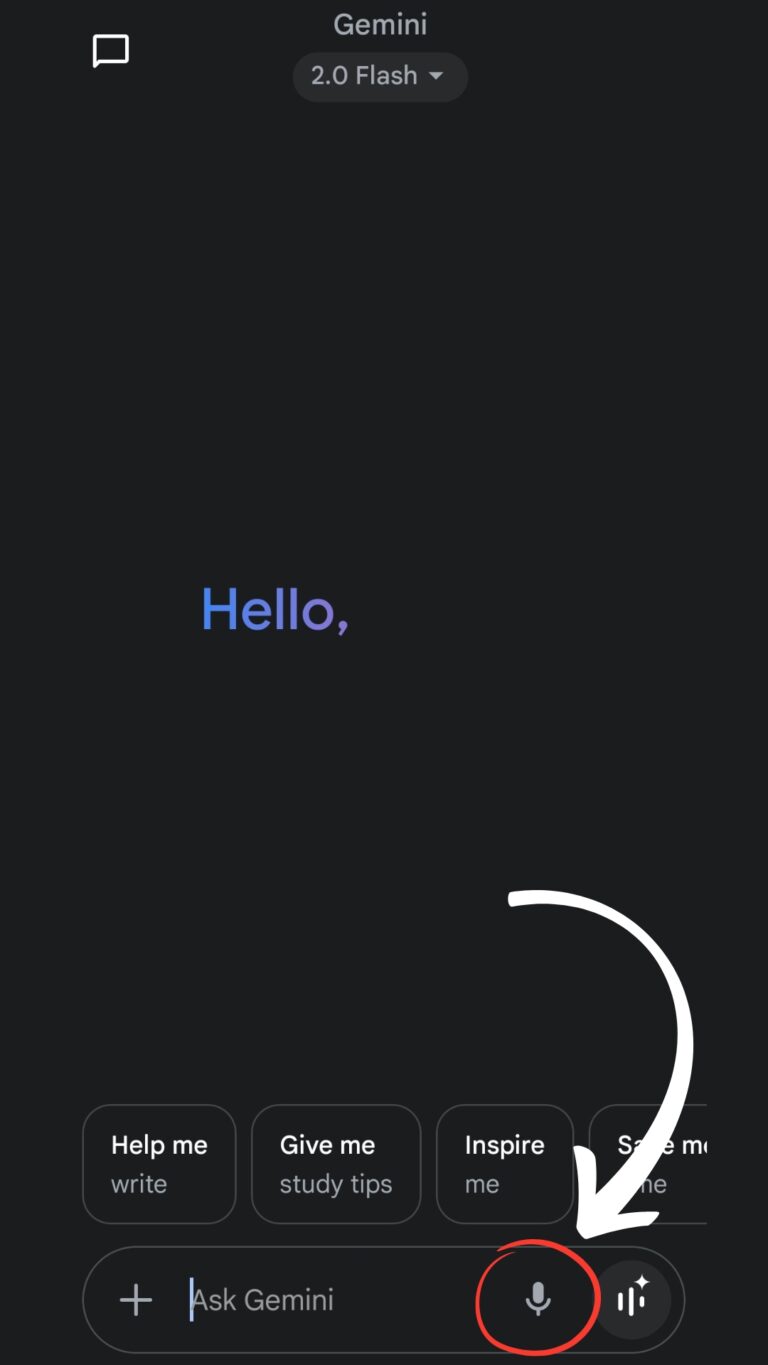
For quick conceptual clarifications during practice sessions, brainstorming key points for current affairs, or even rapidly reviewing mathematical formulas and vocabulary on the go, utilize voice commands to interact with Gemini. This offers an incredibly convenient avenue for instant academic assistance, crucial for maximizing your valuable study time for the CDS exam.
3. Image Input

When faced with a complex geographical map, a historical timeline, or a tricky geometry diagram from your CDS exam material, simply capture a clear image and upload it to Gemini. You can then ask targeted questions about geographical locations, historical sequences, or request explanations of geometric principles.
Solving Question From CDS Exam Syllabus With Google Gemini
Example 1: CDS Exam Elementary Mathematics
Number System (Divisibility and Remainders)
Official Path: Elementary Mathematics: Number System and Algebra
Optimization Problem Strategy Analysis
Research "Divisibility Rules for Composite Numbers" and "Successive Division Logic." In the CDS exam, speed is the deciding factor. Grounding the prompt in the "Factor Relationship" ensures the AI explains why you can ignore the original number and work only with the remainder, providing the competitive edge required for the 100-question Mathematics paper.
Study Lab
CBSE Class 12 Mathematics
"A number when divided by 221 leaves a remainder of 64. What will be the remainder when the same number is divided by 13? Additionally, explain the 'Remainder Theorem' logic behind this shortcut and determine the largest 4-digit number exactly divisible by 88."
"Act as a Defense Academy Instructor and Mathematics Expert (Persona). Explain the Concept of Divisibility and Remainders (Subject) in the context of competitive exams (Context). Focus on the relationship between divisors when one is a factor of another. Provide a logical summary (Format) of how the 'Euclidean Division Lemma' ($a = bq + r$) applies to remainder shortcuts."
"Analyze the Remainder and Divisibility Calculation using Chain-of-Thought. Step 1: Verify if 13 is a factor of 221. Step 2: Apply the remainder shortcut. Step 3: Find the largest 4-digit number divisible by 88 using LCM logic. Step 4: Verify the result using divisibility rules for 8 and 11."
"Create a Divisibility and Number Theory Shortcut Matrix for CDS aspirants. Structure: Divisor Type, The 'CDS Shortcut', The Logical 'Why', and Speed-Math Tip. Constraints: Structured hierarchical list. No conversational filler. 100% accuracy for CDS Mathematics standards."
Mathematics Prep Lab • Number System Module
Gemini can further assist by:
- Quickly recalling trigonometric identities and formulas.
- Suggesting alternative methods to solve trigonometric equations.
- Providing similar problems for practice relevant to the CDS exam.
Example 2: CDS Exam General Knowledge. Understanding History with Gemini
Indian Polity (Presidential Elections and Powers)
Official Path: General Knowledge: Indian Constitution and Polity
Constitutional Strategy Analysis
Research "Article 54 and 55 of Indian Constitution" and "Presidential Veto Types in India." In the CDS exam, the Union Executive is a high-yield topic. Grounding the prompt in the "Exclusion of Nominated Members" ensures the AI explains the federal character of the election, providing the factual precision required for the 120-question General Knowledge paper.
Study Lab
General Knowledge: Indian Constitution and Polity
"Explain the composition of the Electoral College for the election of the President of India as per Article 54. Discuss the difference between 'Nominated Members' and 'Elected Members' in this context. Additionally, clarify the Veto Powers of the President regarding Ordinary Bills vs. Money Bills and explain the concept of 'Pocket Veto'."
"Act as a Senior Defense Analyst and UPSC Polity Faculty (Persona). Explain the Election Process of the President of India (Subject) within the framework of Federalism (Context). Focus on the 'Value of Votes' for MLAs and MPs. Provide a constitutional summary (Format) of why the President is elected indirectly through Proportional Representation."
"Analyze the Presidential Veto Powers using Chain-of-Thought. Step 1: Distinguish between the treatment of Ordinary Bills and Money Bills under Article 111. Step 2: Explain the 'Suspensive Veto' and the limitation on its second use. Step 3: Detail the 'Pocket Veto' in the Indian context vs. the American context. Step 4: Verify the 'Absolute Veto' application in private member bills."
"Create a Presidential Powers and Constitutional Articles Matrix for CDS aspirants. Structure: Power Category, Key Article, The 'CDS Trap', and Revision Shortcut. Constraints: Structured hierarchical list. No conversational filler. 100% accuracy for CDS General Knowledge standards."
Polity Prep Lab • Union Executive Module
Gemini can further assist by:
- Providing timelines of important historical events.
- Explaining the roles of key figures in the Indian independence movement.
- Offering context and analysis of different periods in Indian history relevant to the CDS exam.
Example 3: CDS Exam English
Verbal Ability (Spotting Errors and Sentence Improvement)
Official Path: English: Grammar and Usage (Subject-Verb Agreement and Conditionals)
Grammatical Strategy Analysis
Research "Subject-Verb Agreement with Correlative Conjunctions" and "Hypothetical Conditionals (Second Conditional)." In the CDS exam, error spotting often revolves around subtle rules like the "Rule of Proximity" and the usage of "Were" in imaginary situations. Grounding the prompt in "Noun Number and Case" ensures the AI explains why collective or uncountable nouns take singular verbs, providing the linguistic precision required for the 120-question English paper.
Study Lab
English: Grammar and Usage
"Identify the error in the following sentences and provide the corrected versions: 1. 'Neither the captain nor the sailors was able to reach the shore.' 2. 'If I was the Prime Minister, I would eliminate poverty.' 3. 'The furniture in this room are very old and needs replacement.' Explain the grammatical rules regarding 'Proximity' and the 'Subjunctive Mood' used in these examples."
"Act as an English Language Expert and Defence Entrance Coach (Persona). Explain the concept of Subject-Verb Agreement (Subject) in complex sentences (Context). Focus on 'Neither-Nor' structures and 'Uncountable Nouns.' Provide a methodological summary (Format) of how the proximity of the subject affects the auxiliary verb."
"Analyze the Correction of Grammatical Errors using Chain-of-Thought. Step 1: Apply the Rule of Proximity to the 'Captain/Sailors' sentence. Step 2: Identify the 'Subjunctive Mood' in the hypothetical 'Prime Minister' sentence. Step 3: Correct the usage of the uncountable noun 'Furniture.' Step 4: Verify the corrections by explaining the 'IF' clause structure for imaginary scenarios."
"Create a CDS English Error-Spotting and Grammar Matrix for aspirants. Structure: Error Category, The 'CDS Trap', The Golden Rule, and Speed-check Tip. Constraints: Structured hierarchical list. No conversational filler. Ensure 100% accuracy for CDS English standards."
English Prep Lab • Grammar Mastery Module
Gemini can further assist by:
- Providing definitions, synonyms, and antonyms for a wide range of vocabulary.
- Explaining grammatical rules and identifying errors in sentences.
- Helping you understand different literary devices and their impact on meaning relevant to the CDS exam English section.
Using Google Gemini for CDS Exam Research
What is Deep Research?
Deep research for the CDS (Combined Defence Services) exam involves using Google Gemini to connect core UPSC General Knowledge with the latest defense strategic updates and military geography. It turns the AI into a tactical mentor that helps you understand the "Why" behind geopolitics and advanced science concepts, moving beyond rote learning to the analytical mindset required for the IMA, INA, AFA, and OTA entry.
How It Helps You
- Military Current Affairs Synthesis: CDS exams focus heavily on defense deals, joint exercises, and new inductions. Gemini helps you find the operational history and strategic significance of these updates.
- UPSC-Standard Science Analysis: Deep research allows you to break down NCERT science concepts into application-based questions, matching the "General Science" difficulty level of UPSC papers.
- History and Geography Context: Stay updated on current boundary issues, international relations, and significant historical anniversaries—topics that are critical for the General Knowledge paper.
- Grammar Logic Breakdown: Instead of memorizing rules, Gemini can research the context of difficult English sentence structures and idioms, ensuring you master the "Ordering of Sentences" and "Spotting Errors" sections.
Grounding and Context
What it is: "Grounding" means tethering Gemini to official UPSC notifications and PIB (Press Information Bureau) data so it doesn't give you unverified news or "hallucinated" military specs.
Why it matters: UPSC evaluation is fact-heavy. Grounding ensures you are studying from sources like UPSC Previous Papers, Ministry of Defence Reports, and NCERT Supplementary Material.
How you do it:
1. Download the latest official UPSC CDS notification or a compilation of the last 5 years' General Knowledge questions PDF.
2. Upload the PDF to Gemini.
3. Use the command: "Filter all your future research through the specific difficulty level and question patterns found in this official UPSC CDS guide."
System-Task-Range Prompting
The Google Suggested MethodUse this structured method to ensure Gemini acts like a retired Colonel or a UPSC Subject Expert rather than a general information chatbot.
“Act as a UPSC Exam Mentor specializing in Defence. Your task is to research the major joint military exercises involving India in the last 12 months. Write a 200-word summary of their strategic importance and create three multiple-choice questions based on this research. Use only official government and PIB sources.”
Reverse Engineering Prompts
The India Should Know TechniqueReverse-engineer your study notes by describing the exact tactical depth and tabular format you need before the AI processes raw defense and science data.
“I want to create a high-density comparison table for [Defence Technology, e.g., Ballistic vs Cruise Missiles]. Format: A 4-column table (Feature, Category A, Category B, Strategic Significance for India). Tone: Technical, direct, and professional. Intent: To master core differences for the General Knowledge section. Constraints: No fluff. Every point must be under 15 words. Use the official PIB context I provided. Once generated, I will ask you to create a logic-based reasoning question for this table.”
Tips for Better Deep Research
- The "Logic Loop": After an answer, ask: "What are the common factual traps UPSC sets in questions regarding this international treaty/boundary?" to identify negative marking traps.
- Verify Military Stats: Always use the "Google" search button to verify the latest induction dates of aircraft or the names of the current Chiefs of Staff mentioned in your research.
- Visual to Text: If you are studying complex geographical maps or military formations, describe the key points to Gemini and ask it to explain the "unseen" tactical advantages of that location.
- Chain of Reasoning: For mathematical shortcuts in the Elementary Mathematics paper, tell Gemini: "Explain the transition between these two steps step-by-step so I can mentally calculate this during the exam."
Guided Learning For The CDS Exam With Google Gemini As Your Personal Coach
What is Guided Learning with AI?
For CDS aspirants, guided learning with AI is like having a specialized defence instructor available 24/7 to help you crack the UPSC-standard logic behind English, General Knowledge, and Elementary Mathematics. Instead of just searching for answers, you use Gemini to simulate a coaching session. It identifies gaps in your knowledge and explains complex historical links or mathematical patterns in a way that helps you build the conceptual depth required to become a commissioned officer.
How it helps you for this course/exam
- Master General Knowledge: The CDS GK paper is vast. Gemini can help you connect historical events to current geopolitical situations, ensuring you understand the "Why" behind Geography and History rather than just memorizing dates.
- Improve Verbal Accuracy: English is a scoring subject in CDS. Gemini can help you identify subtle grammar patterns and improve your vocabulary, teaching you to spot errors in sentence construction faster during the exam.
- Mathematical Shortcuts: UPSC Mathematics requires both logic and speed. Gemini can act as a coach, providing shortcuts for Geometry, Trigonometry, and Arithmetic problems so you can solve them within the time limits.
How to do it in short
1. Define the Role: Tell Gemini it is an expert UPSC CDS Mentor specializing in English, GK, or Mathematics.
2. Set the Boundary: Tell it NOT to give you the answer immediately—ask it to lead you to the solution with conceptual hints.
3. Interactive Dialogue: Ask it to explain a historical event or a math formula one question at a time.
4. Feedback Loop: Provide your reasoning for a question, and let the AI correct your logic based on UPSC standards.
Google Suggested Method: Conversational Scaffolding
Google’s recommended approach focuses on "conversational scaffolding." For CDS, this means starting with the basic rules of a topic (like the basics of the Indian Constitution) and letting the AI guide you step-by-step toward solving complex UPSC-level application questions through a back-and-forth chat.
“I am studying for the CDS exam, specifically focusing on [Subject/Chapter]. I want you to act as a supportive instructor. Start by asking me what I already know about [Specific Topic], and then help me build my understanding by asking follow-up questions that connect basic rules to complex UPSC-level reasoning. Don't give me all the information at once; let's take it step-by-step.”
Google Suggested Method: The Socratic Method
The Socratic method is the best way to master logic in subjects like Science and History. Instead of the AI explaining a scientific law or a historical cause to you, it asks you small, leading questions. This forces you to think through the logic yourself, which is critical for the analytical questions found in the CDS GK paper.
“I want to learn the core logic behind [Topic]. Act as a Socratic tutor for my CDS prep. Do not give me the explanation. Instead, ask me a leading question that helps me realize the core principle or historical cause behind this. Once I answer, ask another question to push my thinking further until I have fully grasped the concept.”
The India Should Know Method
The "Reverse Engineering" MethodThe India Should Know method is about Reverse Engineering. Instead of letting the AI wander, you put heavy constraints on the session—specifying the need for high-density UPSC formats—before you ever give it the raw study material or mock test data. This ensures you only focus on what is high-yield for the exam.
“Intent: Act as an expert UPSC CDS Mentor specializing in [Subject]. Context: I am preparing for my final CDS entrance exam and need to master [Chapter/Topic]. Format Constraints: * Conduct a 'Step-by-Step Logic' or 'Historical Breakdown' quiz session. * Ask exactly one question at a time. * Wait for my response before moving to the next part of the logic. * If I am wrong, provide a conceptual hint rather than the final answer. * Use a professional and encouraging tone. * After 5 questions, provide a 'Conceptual Gap Report' in a table format (Column 1: Subject Concept, Column 2: Mastery Level 1-10, Column 3: High-Yield Improvement Area). Raw Data: [Paste your notes, mock test questions, or syllabus here] Instruction: Once you understand these constraints and the data provided, acknowledge this by asking the first question.”
Tips for Guided Learning
- Be Honest with the AI: If you don't understand a math hint, say "I don't understand the trigonometry logic here, explain it using a simpler analogy." The AI can pivot its teaching style immediately.
- Use Voice Mode for GK: If you are on the Gemini app, use Gemini Live. Talking through historical events or current affairs summaries out loud helps build the clarity needed for both the written exam and the SSB interview.
- Feed it Past Year Papers: Paste specific tricky questions from previous CDS papers into the "Raw Data" section. This ensures the AI quizzes you on the exact level of rigor and analytical depth expected by the UPSC.
- Review the Gap Report: Don't just finish the session. Look at the "Conceptual Gap Report" and ask Gemini to create a 10-minute focus summary sheet just for the areas where you scored low on conceptual clarity.
Note: Once Gemini produces the outcome based on these prompts, you can further improve it by saying: "That was great, but make the questions more focused on [Specific Sub-topic] and use more real-world, defence-style examples."
Important Links for CDS Aspirants
To keep your preparation grounded in reality, you need the right sources. Don’t rely on random blogs—use these official portals to track your application, download your admit card, and check your final results.
Official Portals (The Essentials)
UPSC Online Application (OTR) Portal: This is where you actually apply. You must complete your One-Time Registration (OTR) here before you can fill out the CDS 1 or CDS 2 forms.
Join Indian Army: Once you pass the written exam, this is where you’ll track your SSB Interview dates and download your call-up letter. (Note: Navy and Air Force have their own portals, but this is the primary one for Army entries).
Study & Research Resources
UPSC Previous Year Papers: The best way to practice. Download the original question papers for English, GK, and Math from the last 10 years directly from the UPSC archive.
Press Information Bureau (PIB) – Defence News: Use this to research real-time defense updates. It’s the most authentic source for the “Defence Current Affairs” section of your exam and SSB.
NCERT Digital Books: Since the CDS GK paper is heavily based on NCERT (Class 9–12), use this link to access free digital copies of History, Geography, and Science books.
Final Checklist
Before you close this article, make sure you have:
Registered on the OTR portal so you don’t scramble at the last minute.
Downloaded the 2025 Question Papers to see exactly what you’re up against.
Bookmarked the PIB Defence page for your daily 15-minute news check.
Your AI-Powered Strategy for CDS Success
Google Gemini, with its comprehensive ability to process information across text and images, coupled with its vast knowledge base, offers an invaluable advantage in your preparation for the CDS exam. By acting as an instant clarification tool, a quick problem-solving guide, and a versatile resource for enhancing your understanding across English, General Knowledge, and Elementary Mathematics, it empowers you to learn efficiently and effectively.
Integrating Gemini seamlessly with your CDS study material creates a dynamic and responsive learning environment, enabling you to maximize your study time, build a strong foundation across all subjects, and ultimately approach the CDS exam with enhanced confidence, superior analytical skills, and a well-rounded understanding of the required knowledge.
Embrace this powerful AI tool as your strategic ally, and unlock your full potential to achieve your defence aspirations. The future of efficient and targeted learning is here, empowering you to conquer the CDS exam.
Written By
Prateek Singh.
Last Updated – December, 2025
About The Author
Prateek Singh believes the best way to learn is to apply knowledge directly. He leverages AI tools every day for his professional work, using them to create sales presentations, perform lead generation, execute data visualization, and manage all digital marketing and SEO efforts. He also used AI to learn the diverse skill set required to build IndiaShouldKnow.com from the ground up, including web development, UI/UX design, color theory, and graphic design. Having researched and utilized dozens of AI tools, Prateek has written over a hundred articles detailing how others can use them to enhance their own learning and productivity. He shares this practical, self-taught knowledge to empower others on their own journey of continuous learning.
FAQs About AI Use.
Can I trust every answer an AI tool gives me for my studies?
A: No, you should not trust every answer completely. Think of an AI as a super-smart assistant that has read most of the internet—but not every book in the library is accurate.
AI can sometimes make mistakes, misunderstand your question, or use outdated information.
It can even “hallucinate,” which means it confidently makes up an answer that sounds real but is completely false.
Rule of Thumb: Use AI answers as a great starting point, but never as the final, absolute truth. Always double-check important facts.
How can I verify the information I get from an AI for my academic work?
A: Verifying information is a crucial skill. It’s like being a detective for facts. Here are four simple steps:
Check Your Course Material: Is the AI’s answer consistent with what your textbook, lecture notes, or professor says? This is your most reliable source.
Look for Reputable Sources: Ask the AI for its sources or search for the information online. Look for links from universities (.edu), government sites (.gov), respected news organizations, or published academic journals.
Cross-Reference: Ask a different AI the same question, or type your question into a standard search engine like Google. If multiple reliable sources give the same answer, it’s more likely to be correct.
Use Common Sense: If an answer seems too perfect, too strange, or too good to be true, be extra skeptical and investigate it further.
What is the difference between using AI for research and using it to plagiarize?
A: This is a very important difference. It’s all about who is doing the thinking.
Using AI for Research (Good ✅):
Brainstorming topics for a paper.
Asking for a simple explanation of a complex theory.
Finding keywords to use in your library search.
Getting feedback on your grammar and sentence structure.
You are using AI as a tool to help you think and write better.
Using AI to Plagiarize (Bad ❌):
Copying and pasting an AI-generated answer directly into your assignment.
Asking the AI to write an entire essay or paragraph for you.
Slightly rephrasing an AI’s answer and submitting it as your own original thought.
You are letting the AI do the thinking and work for you.
How can I use AI ethically to support my learning without violating my school's academic honesty policy?
A: Using AI ethically means using it to learn, not to cheat. Here’s how:
Know the Rules: First and foremost, read your school’s or professor’s policy on using AI tools. This is the most important step.
Be the Author: The final work you submit must be yours. Your ideas, your structure, and your arguments. Use AI as a guide, not the writer.
Do the Heavy Lifting: Use AI to understand a topic, but then close the chat and write your summary or solve the problem yourself to make sure you have actually learned it.
Be Transparent: If you used an AI in a significant way (like for brainstorming), ask your professor if you should mention it. Honesty is always the best policy.
Can an AI's answer be biased? How can I detect this in its responses?
A: Yes, an AI’s answer can definitely be biased. Since AI learns from the vast amount of text on the internet written by humans, it can pick up and repeat human biases.
Here’s how to spot potential bias:
Look for Opinions: Does the answer present a strong opinion as a fact?
Check for One-Sidedness: On a topic with multiple viewpoints (like politics or economics), does the AI only show one side of the argument?
Watch for Stereotypes: Does the answer use generalizations about groups of people based on their race, gender, nationality, or other characteristics?
To avoid being misled by bias, always try to get information from multiple, varied sources.
Is it safe to upload my personal notes, research papers, or assignments to an AI tool?
A: It is best to be very careful. You should not consider your conversations with most public AI tools to be private.
Many AI companies use your conversations to train their systems, which means employees or contractors might read them.
There is always a risk of data breaches or leaks.
A Simple Safety Rule: Do not upload or paste any sensitive information that you would not want a stranger to see. This includes:
Personal identification details.
Confidential research or unpublished papers.
Your school assignments before you submit them.
Any financial or private data.
Sign Up for Our Newsletter To Learn More About the Latest In AI And Learn How To Use It.
Unlock your learning potential and stay ahead in the age of AI! Join the IndiaShouldKnow.com newsletter to discover how to seamlessly integrate Google AI into your studies for school, entrance exams, and college. Plus, get the latest insights on cutting-edge AI tools that can empower your career and enrich your life. Subscribe now for monthly updates.