
How to Prepare VITEEE with Google Gemini AI

Ace Your VITEEE with Your AI-Powered Study Partner: Google Gemini
The VITEEE exam is your essential pass to a high-value Engineering Career from a top institution. To seize this prize, you must master the extensive syllabus in Physics, Chemistry, and Mathematics, demanding both foundational knowledge and lighting-fast problem-solving skills. The scale of this preparation can feel impossible, but the simple fact that you are proactively seeking advanced AI assistance proves your superior dedication—engineering success is absolutely inevitable with this level of commitment. Your secret weapon is Google Gemini AI. This advanced technology is the solution, ready to instantly clear up complex doubts, provide step-by-step solutions, and guide you through alternative problem-solving techniques, transforming your study into a focused, efficient mastery plan. Trust this guide because I’ve been relying on AI daily since 2022 to transform my own professional skills, from enhancing data analysis to building this entire website from start to finish—proving AI’s immense power to accelerate learning for real-world academic success.
How Gemini Helps With Every Subject For The VITEEE
| Focus Area | What Gemini Does | Your Benefit |
|---|---|---|
|
|
AI Tech Mentor
|
Math has the most questions. Gemini helps you switch to fast shortcuts so you can finish all 40 questions on time. |
|
|
Concept Doctor
|
Biology is about facts. Gemini turns long chapters into cheat sheets so you score 40 marks with zero calculation time. |
|
|
Logic Solver
|
Physics uses both theory and numbers. Gemini makes your basics solid so you don't get tricked by hard questions. |
|
|
Reaction Mapper
|
Chemistry is usually the fastest section. Gemini helps you memorize facts perfectly to save time for tougher parts. |
|
|
Logic Specialist
|
Most students ignore this part. Gemini turns these 10 questions into free marks with simple logical frameworks. |
|
|
Grammar Coach
|
These 5 marks can boost your rank. Gemini ensures your grammar is sharp so you get these points with 100% accuracy. |
How AI Boosts Your Efforts : Data From Recent Studies
| Research Metric | Evidence & Analysis | Academic Significance |
|---|---|---|
| 18–30% score improvement Active Learning Science |
AI Gains in Speed-Based STEM Exams
|
What This Means
AI raises your baseline score so every VITEEE attempt stays competitive, even under tight time pressure.
VITEEE Edge: +20–40 marks can trigger a massive rank jump.
|
| 25–35% numerical accuracy Educational Assessment Psychometrics |
AI-Based Numerical Pattern Training
|
What This Means
AI trains you to recognise VITEEE-style numericals instantly instead of deriving everything from scratch.
VITEEE Edge: Major gains in Mechanics, Calculus, and Algebra.
|
| 20–30% Chemistry scores Syllabus Coverage Optimization Research |
AI-Guided Chemistry Coverage Optimisation
|
What This Means
AI prevents Chemistry coverage gaps — a common reason students lose easy marks in VITEEE.
VITEEE Edge: Strong impact in Inorganic & NCERT-based questions.
|
| 30–40% error reduction Diagnostic Error Pattern Analysis |
AI-Based Mistake Pattern Correction
|
What This Means
AI stops you from losing rank to avoidable silly mistakes that compound across the paper.
VITEEE Edge: Protects 10–15 marks that decide branch allotment.
|
Advanced Prompting Techniques by Google for 2026, with Examples Prompts For VITEEE
Google Gemini is a Reasoning Engine. To get "A+ Grade" results for VITEEE (Engineering Entrance) and engineering career success, move beyond basic questions using these six pillars.
- The Technique: Setting the Persona, Task, Context, and Format.
- The Logic: VITEEE is known for being a high-speed exam with 125 questions and no negative marking. Assigning an "Exam Strategist" role ensures the AI prioritizes mental math and "Intelligent Guessing" techniques, while the Context "fences" it into VITEEE sections (including English and Aptitude).
Persona: Act as a [Any Expert Role: e.g., VITEEE Exam Strategist, Physics Faculty, Aptitude Trainer]. Task: Explain [Your Topic: e.g., Semiconductor Diodes, Electrostatics, Quantitative Aptitude - Profit & Loss]. Context: Apply this specific background: [Source Context: e.g., Use the latest VITEEE 2026 Information Brochure for syllabus] — (Focuses on the 125-question format). [Difficulty Context: e.g., Focus on 'Easy to Moderate' questions solvable in 40 seconds] — (Sets the speed-test pace). [Constraint Context: e.g., Assume No Negative Marking environment] — (Focuses on elimination techniques over deep derivations). Format: Provide the answer as a [Structure: e.g., High-Speed Formula Sheet, 5-Point Shortcut List].
- The Technique: Breaking a problem into a "Step-by-Step" sequence with logic checks.
- The Logic: Since VITEEE has a dedicated "Aptitude" section (10 questions), logic is as important as physics. This version forces the AI to "Self-Correct"—verifying Step 1 (identifying patterns/values) before moving to Step 2, ensuring you don't fall for "trap" options.
Solve this [Subject: e.g., Chemistry - Chemical Bonding, Aptitude - Number Series] problem using Chain-of-Thought. Step 1: List the [Initial Variables/Patterns] and identify the standard VITEEE shortcut applicable. Step 2: State the core [Formula/Logic Rule] and verify its applicability to the given data. Step 3: Show the step-by-step calculation, verifying the mathematical consistency of each move before concluding. Question: [Insert your VITEEE question here]
- The Technique: Limiting the AI to official domains with a focus on recent data.
- The Logic: VIT often changes its exam slots, weightage for the "English and Aptitude" section, and campus-wise counseling rules. This filter forces the AI to prioritize the official VIT admissions portal for 100% accurate info on Slot Booking and Rank-wise counseling.
Research the [Topic: e.g., VITEEE 2026 Slot Booking Process, English & Aptitude Syllabus, VIT Rank-wise Scholarship Rules]. Constraint: Only use info from official portals: [Domain 1: e.g., vit.ac.in]. Recency Rule: Prioritize data published in the last 12 months. Output: Provide the official summary and the direct link to the source.
- The Technique: Setting strict "Rules of Play" including forbidden keywords.
- The Logic: VITEEE Physics and Chemistry are often NCERT-based but require "Speed Memory." By setting hard boundaries and forbidding "AI-voice" fillers, you get sharp high-yield definitions and tables that focus on "Dimensions" and "Unit Conversions"—a favorite for VITEEE.
Explain [Concept: e.g., Dimensions of Universal Constants, Periodic Table Trends, English Preposition Rules]. Constraint 1: Use only [Specific Source: e.g., NCERT, VITEEE Previous Years Analysis] terminology. Constraint 2: Keep the response under [Limit: e.g., 80 words]. Constraint 3 (Negative): Do not use AI-filler phrases like "Basically" or "In conclusion." Format: Use simple bullet points with bolded units/values.
- The Technique: Using a Feedback Loop with an "Active Recall" check.
- The Logic: Treat the AI like a senior student who cleared VITEEE with a high rank. This version forces the AI to stop and ask you a question after its explanation, ensuring you have grasped the "Calculation Shortcut" (like L-Hospital rule) before moving forward.
Explain [Topic: e.g., Logic Gates, Limits and Continuity, Organic Chemistry Name Reactions]. Instruction: Provide a high-level conceptual summary and one VITEEE-specific shortcut first. Feedback Loop: Ask me if I want a "Physics/Chemistry Numerical" or an "English/Aptitude Practice" question. Active Recall: Once I am satisfied, provide one 'VITEEE-standard' MCQ based on your explanation.
- The Technique: Providing a structural blueprint before injecting raw data.
- The Logic: Use this to build your "VITEEE Quick-Revision Grid." You command the AI to build a specific result (like a comparison table of integration types or Modern Physics formulas) using a layout you provide, ensuring it is 100% revision-ready.
Make a [Desired Output: e.g., Physics Formula Grid, English Grammar Checklist, Chemistry Reaction Summary]. Layout Blueprint: [Structure: e.g., 3-column table, Numbered list, Flowchart description]. Style: [Vibe: e.g., Minimalist, Academic, Data-focused]. Strict Rule: Adhere to the structure provided; no conversational filler. Use this information: [PASTE_VITEEE_NOTES_OR_RAW_SYLLABUS_DATA_HERE]
Note :
- “The techniques and prompt engineering principles you learn in this guide are universally applicable to any large language model (LLM), including ChatGPT and Perplexity AI. We use Google Gemini for all examples because its latest multimodal features and integration with Google Search provide a best-in-class learning experience.”
- “Remember: The quality of the AI’s answer depends entirely on the clarity of your prompt. Always be specific, detailed, and clear with the AI to avoid irrelevant or incorrect (hallucinated) responses.”
Using Google Gemini Input Method’s For VITEEE Preparation.
1. Text Prompts

This will be your primary and most direct tool for posing specific questions, seeking clear explanations of fundamental concepts, requesting detailed solutions to practice problems aligned with the VITEEE syllabus, and even asking for comparisons of different problem-solving methods.
2. Voice Input
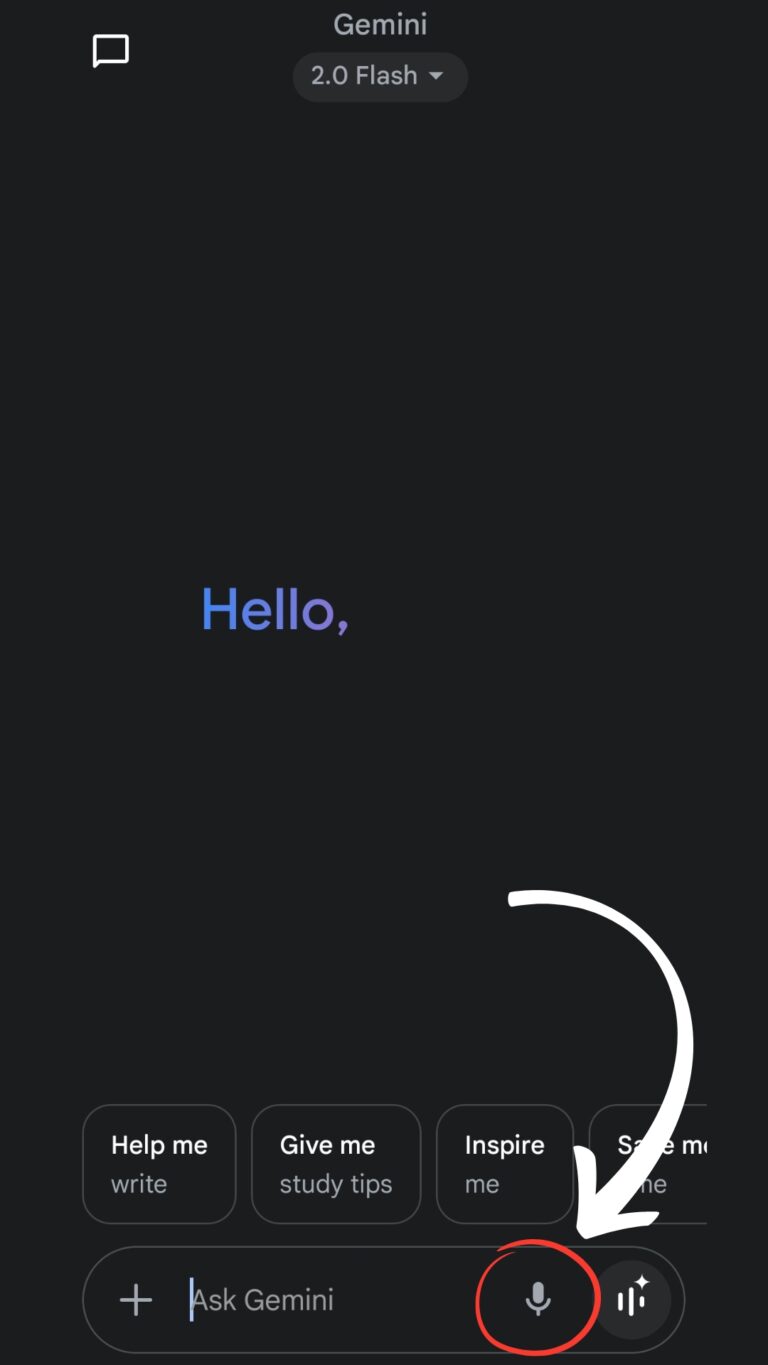
For quick conceptual clarifications during intense study sessions, brainstorming potential problem-solving pathways aloud when tackling particularly difficult questions, or even rapidly reviewing complex formulas and derivations on the go, utilize voice commands to interact with Gemini. This offers an incredibly convenient avenue for instant academic assistance, ensuring no crucial doubt remains unresolved
3. Image Input

When faced with a complex circuit diagram in physics, a chemical reaction mechanism in chemistry, or a challenging graphical representation in mathematics, simply capture a clear image and upload it to Gemini. You can then ask targeted questions about the visual information presented, receiving rapid and focused clarifications to maintain your learning momentum.
Questions From The VITEEE Syllabus Solved Using Google Gemini.
Example 1: VITEEE Mathematics. Conquering Calculus with Gemini
Question
Solving and Understanding a problem involving definite integrals, a key topic in the VITEEE Mathematics syllabus.
Your Study Material: A problem from your VITEEE Mathematics material: Evaluate \int_0^{\pi/4} \tan^3 x, dx

Your Google Gemini Image Input & Text Prompt:
Upload an image of the equation
Explain step-by-step how to evaluate the definite integral of tan cubed x from 0 to pi/4, following the integration techniques relevant to the VITEEE Mathematics syllabus. Show all the necessary steps and trigonometric identities used.
How Google Gemini Will Answer (Like a Personal Tutor):
Google Gemini currently supports 9 Indian languages: Hindi, Bengali, Gujarati, Kannada, Malayalam, Marathi, Tamil, Telugu, and Urdu.
“Alright, let’s evaluate the definite integral \int_0^{\pi/4} \tan^3 x, dx using techniques relevant to VITEEE.
Here’s a step-by-step solution:
1. Rewrite \tan^3 x:
\tan^3 x = \tan x \cdot \tan^2 x = \tan x (\sec^2 x – 1)
2. Substitute this into the integral:
\int_0^{\pi/4} \tan^3 x, dx = \int_0^{\pi/4} (\tan x \sec^2 x – \tan x), dx
3. Separate the integral:
= \int_0^{\pi/4} \tan x \sec^2 x, dx – \int_0^{\pi/4} \tan x, dx
4. Evaluate the first integral \left(\int_0^{\pi/4} \tan x \sec^2 x, dx\right):
Use the substitution u = \tan x, so du = \sec^2 x, dx. The limits change from x = 0 \implies u = \tan 0 = 0 to x = \pi/4 \implies u = \tan(\pi/4) = 1. \int_0^1 u, du = \left[\frac{u^2}{2}\right]_0^1 = \frac{1^2}{2} – \frac{0^2}{2} = \frac{1}{2}
5. Evaluate the second integral \left(\int_0^{\pi/4} \tan x, dx\right):
\int \tan x, dx = \int \frac{\sin x}{\cos x}, dx. Use the substitution v = \cos x, so dv = -\sin x, dx. The limits change from x = 0 \implies v = \cos 0 = 1 to x = \pi/4 \implies v = \cos(\pi/4) = \frac{1}{\sqrt{2}}. \int_1^{1/\sqrt{2}} -\frac{1}{v}, dv = \left[-\ln |v|\right]_1^{1/\sqrt{2}} = \left(-\ln \left(\frac{1}{\sqrt{2}}\right)\right) – (-\ln 1) = -\ln (2^{-1/2}) – 0 = – \left(-\frac{1}{2} \ln 2\right) = \frac{1}{2} \ln 2
6. Combine the results:
\int_0^{\pi/4} \tan^3 x, dx = \frac{1}{2} – \frac{1}{2} \ln 2 = \frac{1}{2}(1 – \ln 2)
Therefore, the value of the definite integral \int_0^{\pi/4} \tan^3 x, dx is \frac{1}{2}(1 – \ln 2).”
SAVE THESE NOTES! Full Gemini Answer for Quick Revision

Gemini can further help by:
- Quickly recalling integration formulas and trigonometric identities.
- Suggesting alternative methods of integration.
- Providing similar definite integral problems for practice.
Example 2: VITEEE Physics. Applying Concepts Efficiently with Gemini
Question
Quickly understanding of a circuit concept during a last-minute revision.
Your Study Material: A diagram illustrating a series LCR circuit connected to an AC source.
Your Google Gemini Image Input & Text Prompt:
[Upload the image of the series LCR circuit]
Explain the condition for resonance in a series LCR circuit connected to an AC source, as relevant for VITEEE Physics. Provide the formula for the resonant frequency and briefly explain its significance.
How Google Gemini Will Answer (Like a Personal Tutor):
Google Gemini currently supports 9 Indian languages: Hindi, Bengali, Gujarati, Kannada, Malayalam, Marathi, Tamil, Telugu, and Urdu.
“Resonance in a series LCR circuit occurs when the inductive reactance (X_L) becomes equal to the capacitive reactance (X_C). At this frequency, the impedance of the circuit is minimum, and the current in the circuit is maximum.
Formulas for Inductive and Capacitive Reactance:
Inductive Reactance (X_L): X_L = \omega L = 2\pi f L
Capacitive Reactance (X_C): X_C = \frac{1}{\omega C} = \frac{1}{2\pi f C}
Where:
\omega is the angular frequency.
f is the frequency of the AC source.
L is the inductance.
C is the capacitance.
Condition for Resonance:
For resonance, the reactances must be equal: X_L = X_C 2\pi f_r L = \frac{1}{2\pi f_r C}
Resonant Frequency (f_r):
Solving for the resonant frequency (f_r):
(2\pi f_r)^2 = 1/(LC)
f_r^2 = 1/(4\pi^2 LC)
f_r = 1/(2\pi\sqrt{LC})
Significance of Resonant Frequency:
At the resonant frequency:
The impedance of the circuit is purely resistive (Z = R).
The current in the circuit is maximum (I = V/R).
The phase difference between the voltage and current is zero.
The circuit efficiently transfers power from the AC source to the resistor.
SAVE THESE NOTES! Full Gemini Answer for Quick Revision


Gemini can further help by:
- Quickly recalling formulas related to AC circuits.
- Explaining the concepts of impedance and reactance.
- Helping with quick calculations involving resonant frequency.
Example 3: VITEEE Chemistry. Learning Reaction Mechanisms with Gemini
Question
Understanding and Remembering a named organic reaction during a chemistry review.
Your Study Material: A question asking about the product of a specific named reaction, like the Aldol condensation.
Your Google Gemini Image Input & Text Prompt:
Explain the Aldol condensation reaction between two molecules of acetaldehyde (CH3CHO), as relevant for VITEEE Chemistry (Organic Chemistry). Show the step-by-step mechanism and the final product formed.
How Google Gemini Will Answer (Like a Personal Tutor):
Google Gemini currently supports 9 Indian languages: Hindi, Bengali, Gujarati, Kannada, Malayalam, Marathi, Tamil, Telugu, and Urdu.
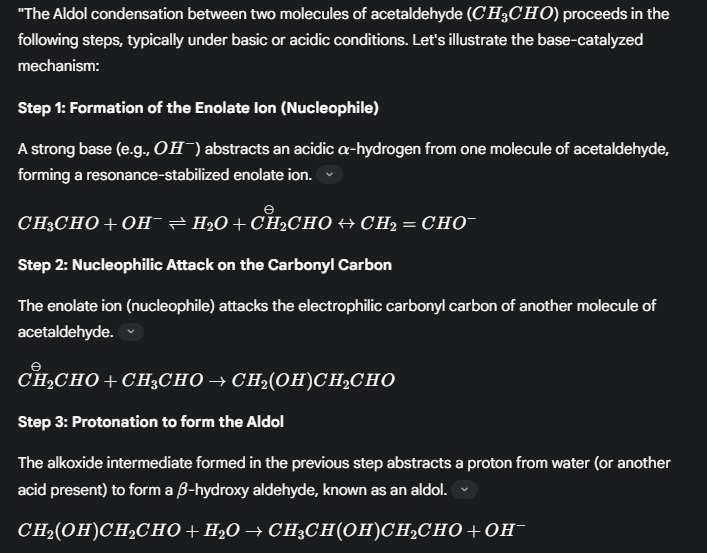
“The Aldol condensation between two molecules of acetaldehyde (CH_3CHO) proceeds in the following steps, typically under basic or acidic conditions. Let’s illustrate the base-catalyzed mechanism:
Step 1: Formation of the Enolate Ion (Nucleophile)
A strong base (e.g., OH^-) abstracts an acidic $\alpha$-hydrogen from one molecule of acetaldehyde, forming a resonance-stabilized enolate ion. CH_3CHO + OH^- \rightleftharpoons H_2O + \overset{\ominus}CH_2CHO \rightleftharpoons CH_2 = CHO^-
Step 2: Nucleophilic Attack on the Carbonyl Carbon
The enolate ion (nucleophile) attacks the electrophilic carbonyl carbon of another molecule of acetaldehyde. \overset{\ominus}CH_2CHO + CH_3CHO \to CH_2(OH)CH_2CHO
Step 3: Protonation to form the Aldol
The alkoxide intermediate formed in the previous step abstracts a proton from water (or another acid present) to form a
\alpha, \beta hydroxy aldehyde, known as an aldol. CH_2(OH)CH_2CHO + H_2O \to CH_3CH(OH)CH_2CHO + OH^-
Step 4 (Optional, with heat): Dehydration to form the unsaturated aldehyde
Under heating conditions or with a stronger base, the aldol can undergo dehydration (loss of water) to form an \alpha, \beta\text{-unsaturated aldehyde}. CH_3CH(OH)CH_2CHO \xrightarrow{-\text{H}_2\text{O}} CH_3CH = CHCHO
Final Product:
The initial product of the Aldol condensation of acetaldehyde is 3-hydroxybutanal (CH_3CH(OH)CH_2CHO). If heat or a stronger base is applied, the product is usually but-2-enal (CH_3CH = CHCHO). For VITEEE, understanding the initial aldol product is crucial.
SAVE THESE NOTES! Full Gemini Answer for Quick Revision

Gemini can further help by:
- Quickly recalling named organic reactions and their mechanisms.
- Explaining the role of catalysts and reaction conditions.
- Helping predict products of similar Aldol condensation reactions.
Your AI-Powered Strategy for VITEEE Success
Google Gemini, with its ability to process information rapidly and provide clear, step-by-step explanations, offers a significant advantage in your VITEEE preparation. By acting as an instant tutor for clarifying concepts, a quick problem-solving guide, and a valuable resource for recalling important reactions and formulas, it empowers you to learn efficiently and effectively.
Integrating Gemini seamlessly with your VITEEE study materials creates a dynamic and responsive learning environment, enabling you to maximize your study time, build a strong foundation across Physics, Chemistry, and Mathematics, and ultimately approach the VITEEE examination with enhanced speed, accuracy, and confidence.
Embrace this powerful AI tool as your strategic ally, and unlock your full potential to excel in the Vellore Institute of Technology Engineering Entrance Examination. The future of efficient and targeted learning is here, empowering you to crack VITEEE.
Written By
Prateek Singh.
Last Updated – November, 2025
About The Author
Prateek Singh believes the best way to learn is to apply knowledge directly. He leverages AI tools every day for his professional work, using them to create sales presentations, perform lead generation, execute data visualization, and manage all digital marketing and SEO efforts. He also used AI to learn the diverse skill set required to build IndiaShouldKnow.com from the ground up, including web development, UI/UX design, color theory, and graphic design. He shares this practical, self-taught knowledge to empower others on their own journey of continuous learning.
FAQs About AI Use.
Can I trust every answer an AI tool gives me for my studies?
A: No, you should not trust every answer completely. Think of an AI as a super-smart assistant that has read most of the internet—but not every book in the library is accurate.
AI can sometimes make mistakes, misunderstand your question, or use outdated information.
It can even “hallucinate,” which means it confidently makes up an answer that sounds real but is completely false.
Rule of Thumb: Use AI answers as a great starting point, but never as the final, absolute truth. Always double-check important facts.
How can I verify the information I get from an AI for my academic work?
A: Verifying information is a crucial skill. It’s like being a detective for facts. Here are four simple steps:
Check Your Course Material: Is the AI’s answer consistent with what your textbook, lecture notes, or professor says? This is your most reliable source.
Look for Reputable Sources: Ask the AI for its sources or search for the information online. Look for links from universities (.edu), government sites (.gov), respected news organizations, or published academic journals.
Cross-Reference: Ask a different AI the same question, or type your question into a standard search engine like Google. If multiple reliable sources give the same answer, it’s more likely to be correct.
Use Common Sense: If an answer seems too perfect, too strange, or too good to be true, be extra skeptical and investigate it further.
What is the difference between using AI for research and using it to plagiarize?
A: This is a very important difference. It’s all about who is doing the thinking.
Using AI for Research (Good ✅):
Brainstorming topics for a paper.
Asking for a simple explanation of a complex theory.
Finding keywords to use in your library search.
Getting feedback on your grammar and sentence structure.
You are using AI as a tool to help you think and write better.
Using AI to Plagiarize (Bad ❌):
Copying and pasting an AI-generated answer directly into your assignment.
Asking the AI to write an entire essay or paragraph for you.
Slightly rephrasing an AI’s answer and submitting it as your own original thought.
You are letting the AI do the thinking and work for you.
How can I use AI ethically to support my learning without violating my school's academic honesty policy?
A: Using AI ethically means using it to learn, not to cheat. Here’s how:
Know the Rules: First and foremost, read your school’s or professor’s policy on using AI tools. This is the most important step.
Be the Author: The final work you submit must be yours. Your ideas, your structure, and your arguments. Use AI as a guide, not the writer.
Do the Heavy Lifting: Use AI to understand a topic, but then close the chat and write your summary or solve the problem yourself to make sure you have actually learned it.
Be Transparent: If you used an AI in a significant way (like for brainstorming), ask your professor if you should mention it. Honesty is always the best policy.
Can an AI's answer be biased? How can I detect this in its responses?
A: Yes, an AI’s answer can definitely be biased. Since AI learns from the vast amount of text on the internet written by humans, it can pick up and repeat human biases.
Here’s how to spot potential bias:
Look for Opinions: Does the answer present a strong opinion as a fact?
Check for One-Sidedness: On a topic with multiple viewpoints (like politics or economics), does the AI only show one side of the argument?
Watch for Stereotypes: Does the answer use generalizations about groups of people based on their race, gender, nationality, or other characteristics?
To avoid being misled by bias, always try to get information from multiple, varied sources.
Is it safe to upload my personal notes, research papers, or assignments to an AI tool?
A: It is best to be very careful. You should not consider your conversations with most public AI tools to be private.
Many AI companies use your conversations to train their systems, which means employees or contractors might read them.
There is always a risk of data breaches or leaks.
A Simple Safety Rule: Do not upload or paste any sensitive information that you would not want a stranger to see. This includes:
Personal identification details.
Confidential research or unpublished papers.
Your school assignments before you submit them.
Any financial or private data.
Sign Up for Our Newsletter To Learn More About the Latest In AI And Learn How To Use It.
Unlock your learning potential and stay ahead in the age of AI! Join the IndiaShouldKnow.com newsletter to discover how to seamlessly integrate Google AI into your studies for school, entrance exams, and college. Plus, get the latest insights on cutting-edge AI tools that can empower your career and enrich your life. Subscribe now for monthly updates.