
How to Prepare for XAT with Google Gemini AI

Ace the XAT with Your AI-Powered Study Partner: Google Gemini
The XAT exam is your critical entry point to a high-value career in Top Management Programs and business leadership. To achieve this prize, you must master Math, Verbal & Logic, and Decision Making, requiring an intense balance of quantitative skill, tricky verbal arguments, and ethical precision. Facing this comprehensive challenge can feel daunting, but the simple fact that you are proactively seeking advanced AI assistance proves your dedication—securing your seat is absolutely inevitable with this level of focus. Your secret weapon is Google Gemini AI. This advanced technology is the solution, ready to instantly solve tough quant concepts, break down verbal nuances, and guide you through complex ethical decision-making, transforming your prep into an efficient path to XAT mastery. Trust this guide because I’ve been using AI daily since 2022 to transform my own professional skills, from enhancing data analysis to building this entire website from start to finish—proving AI’s immense power to accelerate learning for real-world academic success.
How Gemini Helps With Every Subject For The XAT
| Focus Area | What Gemini Does | Your Benefit |
|---|---|---|
|
|
Logic Coach
|
XAT reading is hard. Gemini helps you see deeper into the text so you understand exactly what the author wants to say. |
|
|
Strategy Guide
|
This is the most famous part of XAT. Gemini trains you to think like a boss who makes balanced and fair choices. |
|
|
Data Analyst
|
XAT math is about using logic, not just memory. Gemini helps you master the "why" so you can solve clever questions fast. |
|
|
News Digest
|
GK helps you get selected after the exam. Gemini finds the most important facts so you can learn them in 10 minutes a day. |
How AI Boosts Your Efforts : Data From Recent Studies
| Research Metric | Evidence & Analysis | Academic Significance |
|---|---|---|
| 18–30% score improvement Active Learning Science |
AI Performance Gains in Ambiguity-Heavy Exams
|
What This Means
AI improves how you evaluate options when answers are not black-and-white, which is exactly how XAT frames questions.
XAT Edge: +8–15 marks can push you past XLRI cutoffs.
|
| 25–35% DM accuracy Heuristic Reasoning Research |
AI-Based Decision Making Training
|
What This Means
AI trains you to think the way XAT examiners expect — not emotionally, not mechanically, but contextually.
XAT Edge: Massive gains in Decision Making, the most differentiating section.
|
| 20–30% RC accuracy Cognitive Processing Research |
AI-Guided Strategic Reading for Long RCs
|
What This Means
AI teaches you to read selectively and strategically, not line-by-line — crucial for XAT’s abstract RCs.
XAT Edge: Protects 4–8 marks in Verbal Ability.
|
| 25–35% late-paper accuracy Cognitive Endurance Studies |
AI-Supported Cognitive Endurance Training
|
What This Means
AI helps you stay mentally sharp for the entire XAT paper, not just the first hour.
XAT Edge: Critical for Quant + DM towards the end of the exam.
|
Advanced Prompting Techniques by Google for 2026, with Examples Prompts For XAT
Google Gemini is a Reasoning Engine. To get "A+ Grade" results for XAT (Xavier Aptitude Test) and business leadership career success, move beyond basic questions using these six pillars.
- The Technique: Setting the Persona, Task, Context, and Format.
- The Logic: XAT is the most "philosophical" and decision-heavy MBA exam. Assigning a role like "Ethics Professor" or "Business Lead" ensures the AI handles the unique Decision Making (DM) section with the required ethical and pragmatic balance, while the Context "fences" it into the 175-minute high-stamina format.
Persona: Act as a [Any Expert Role: e.g., XLRI Faculty, Business Ethics Consultant, Quant Specialist]. Task: Explain [Your Topic: e.g., Decision Making Frameworks, Probability, Critical Reasoning - Assumption]. Context: Apply this specific background: [Source Context: e.g., Use the latest XAT 2026 Exam Pattern] — (Focuses on the Decision Making, VALR, and QA-DI sections). [Difficulty Context: e.g., Focus on multi-layered logic and ethical dilemmas] — (Sets the high-level XAT standard). [Institutional Context: e.g., Prioritize long-term stakeholder value over short-term profit] — (Aligns with the 'XLRI way' of thinking). Format: Provide the answer as a [Structure: e.g., Ethical Matrix, 5-Step Logic Flow, Case Analysis].
- The Technique: Breaking a problem into a "Step-by-Step" sequence with logic checks.
- The Logic: XAT’s Decision Making section requires eliminating options that are either too harsh or too passive. This version forces the AI to "Self-Correct"—verifying Step 1 (identifying stakeholders) before evaluating options, ensuring the choice is the most "XAT-balanced" answer.
Solve this [Subject: e.g., Decision Making Caselet, Geometry Numerical] using Chain-of-Thought. Step 1: List all [Primary/Secondary Stakeholders] or variables involved in the scenario. Step 2: Analyze each option for [Ethical Consistency and Business Logic], identifying why options are "too extreme." Step 3: Show the solution step-by-step, verifying the logical consistency of each move before concluding. Question: [Insert your XAT caselet or problem here]
- The Technique: Limiting the AI to official domains with a focus on recent data.
- The Logic: XAT recently re-introduced the Essay Writing section and periodically updates the time limits. This filter forces the AI to prioritize the official XAT Online portal for 100% accurate info on the marking scheme (including the -0.10 penalty for unattempted questions).
Research the [Topic: e.g., XAT 2026 Marking Scheme for unattempted questions, Essay Writing evaluation criteria, Selection weightage for XLRI]. Constraint: Only use info from official portals: [Domain 1: e.g., xatonline.in]. Recency Rule: Prioritize data published in the last 12 months. Output: Provide the official summary and the direct link to the source.
- The Technique: Setting strict "Rules of Play" including forbidden keywords.
- The Logic: XAT Verbal (VALR) includes poem-based RC and complex vocabulary. By setting hard boundaries and forbidding "AI-voice" fillers, you get sharp technical notes that focus on "Figurative Meanings" and "Logical Fallacies," matching the high verbal rigor of the test.
Explain [Concept: e.g., Interpreting Metaphors in Poetry, Modifiers in Grammar, Bayesian Probability]. Constraint 1: Use only [Specific Source: e.g., Standard MBA Advanced Prep Manuals] terminology. Constraint 2: Keep the response under [Limit: e.g., 80 words]. Constraint 3 (Negative): Do not use AI-filler phrases like "Basically" or "In conclusion." Format: Use simple bullet points with bolded keywords.
- The Technique: Using a Feedback Loop with an "Active Recall" check.
- The Logic: Treat the AI like a mentor for the Interview and Essay round. This version forces the AI to stop and ask you an analytical question after its explanation, ensuring you have grasped the "Managerial Logic" before moving forward.
Explain [Topic: e.g., The Concept of 'Stakeholder Capitalism', How to solve Base Systems in Quant]. Instruction: Provide a high-level conceptual and ethical summary first. Feedback Loop: Ask me if I want a "Quantitative Drill" or a "Decision Making Case Study." Active Recall: Once I am satisfied, provide one 'XAT-standard' Decision Making question based on your explanation.
- The Technique: Providing a structural blueprint before injecting raw data.
- The Logic: Use this to build your "XAT Decision-Making Matrix" or "Quant Cheat Sheet." You command the AI to build a specific result using a layout you provide, ensuring the data is 100% revision-ready.
Make a [Desired Output: e.g., Decision Making Framework Table, Advanced Geometry Formula Grid, Essay Topic Checklist]. Layout Blueprint: [Structure: e.g., 3-column table, Hierarchical list, Comparison grid]. Style: [Vibe: e.g., Analytical, Academic, Professional]. Strict Rule: Adhere to the structure provided; no conversational filler. Use this information: [PASTE_XAT_PREVIOUS_YEAR_DILEMMA_OR_QUANT_NOTES_HERE]
Note :
- “The techniques and prompt engineering principles you learn in this guide are universally applicable to any large language model (LLM), including ChatGPT and Perplexity AI. We use Google Gemini for all examples because its latest multimodal features and integration with Google Search provide a best-in-class learning experience.”
- “Remember: The quality of the AI’s answer depends entirely on the clarity of your prompt. Always be specific, detailed, and clear with the AI to avoid irrelevant or incorrect (hallucinated) responses.”
Using Google Gemini Input Method’s For XAT Prep.
1. Text Prompts

This will be your primary and most direct tool for posing specific questions across Quantitative Ability, Verbal and Logical Ability, and Decision Making. You can seek detailed explanations of mathematical concepts, request analyses of arguments and reading comprehension passages, and even ask for ethical frameworks to approach DM scenarios.
2. Voice Input
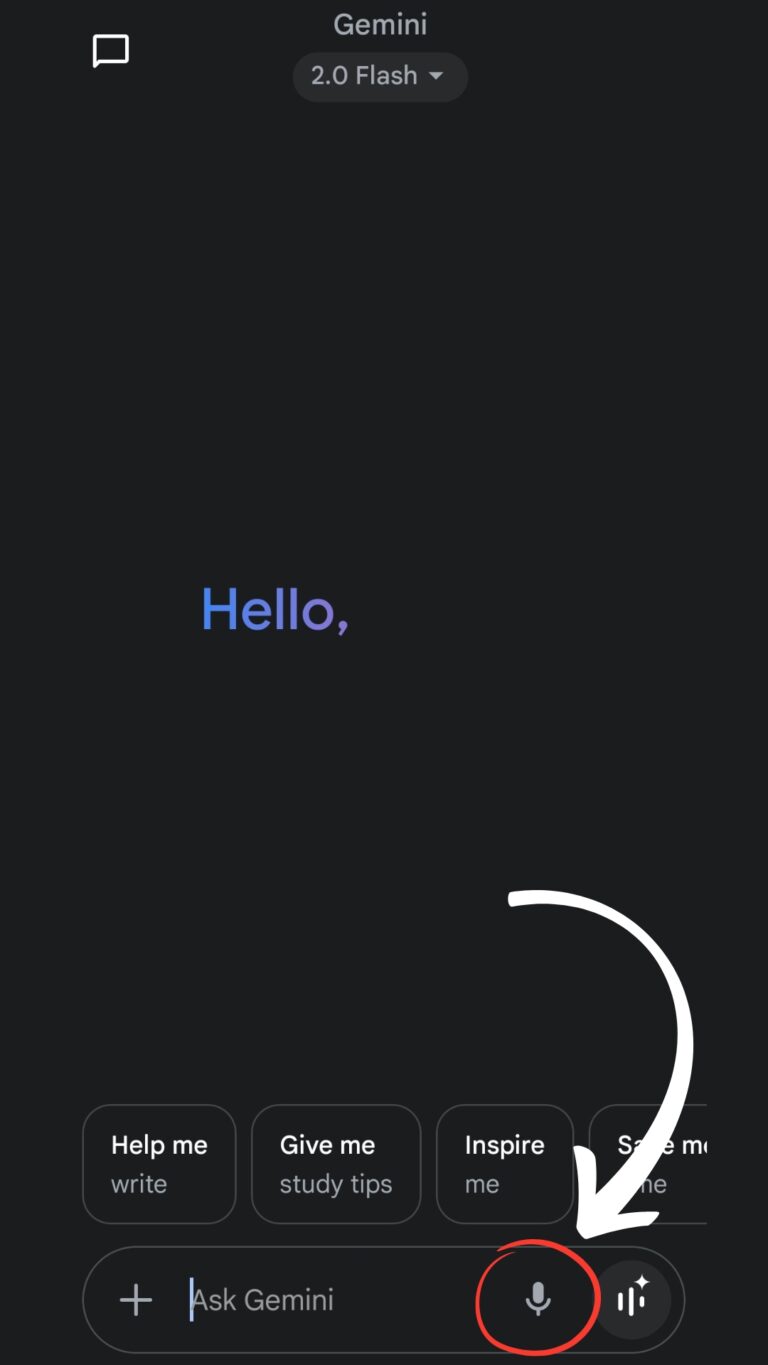
For quick conceptual clarifications during practice sessions, brainstorming approaches to a challenging Decision Making problem aloud, or even rapidly reviewing key formulas, vocabulary, and ethical principles on the go, utilize voice commands to interact with Gemini. This offers an incredibly convenient avenue for instant academic assistance, crucial for maximizing your valuable study time for the XAT exam.
3. Image Input

When faced with a complex geometry diagram, a tricky data interpretation chart, or a lengthy and dense reading comprehension passage, simply capture a clear image and upload it to Gemini. You can then ask targeted questions about the visual information presented in DI, request explanations of geometric principles, or even ask for summaries and identification of key arguments within a V&LA passage.
Questions From The XAT Syllabus Solved Using Google Gemini.
Example 1: XAT Geometry. Solving Diagrams with Gemini
Question
Solving a challenging geometry problem involving circles.
Your Study Material: A problem from your XAT exam QA material: Two circles with radii 5 cm and 3 cm touch each other externally. Find the length of the direct common tangent.
Your Google Gemini Image Input & Text Prompt:
Upload image of geometry problem.
Explain step-by-step how to evaluate the limit of the sum (1/(n+1) + 1/(n+2) + … + 1/(2n)) as n approaches infinity, using the concept of definite integrals as taught in the JEE Mathematics syllabus. Show the conversion of the sum to an integral and all the integration steps.
How Google Gemini Will Answer (Like a Personal Tutor):
Google Gemini currently supports 9 Indian languages: Hindi, Bengali, Gujarati, Kannada, Malayalam, Marathi, Tamil, Telugu, and Urdu.
Visualize the two circles: Imagine two circles externally touching each other.
Identify Key Parameters:
Radius of the larger circle: R = 5 \text{ cm}
Radius of the smaller circle: r = 3 \text{ cm}
Distance between the centers: d (since they touch externally, d = R + r = 5 + 3 = 8 \text{ cm})
Geometric principle: The line segment joining the centers (d) and the radii form a right-angled trapezoid (when considering the common tangent). The perpendicular distance between the centers (the height of the right-angled trapezoid, equal to R – r) is needed to find the length of the tangent. The radius of the larger circle is R = 5 \text{ cm}. The difference in radii is R – r = 5 – 3 = 2 \text{ cm}. The construction of the tangent forms a right-angled trapezoid.
Substitute Principle (Pythagorean Theorem): The length of the direct common tangent (L) is given by the formula, which is derived from the Pythagorean theorem on the trapezoid: L = \sqrt{d^2 – (R – r)^2}
Calculate the Length (L): Substitute the known values (d = 8 and R – r = 2) into the formula: L = \sqrt{8^2 – (2)^2} L = \sqrt{64 – 4} L = \sqrt{60} L = \sqrt{4 \times 15} L = 2\sqrt{15} \text{ cm}
Conclusion: The length of the direct common tangent is 2\sqrt{15} \text{ cm}.
SAVE THESE NOTES! Full Gemini Answer for Quick Revision


Gemini can further help by:
- Quickly recalling geometric formulas and theorems.
- Suggesting alternative approaches to solve geometry problems.
- Providing similar problems involving tangents and circles for XAT preparation.
Example 2: XAT Verbal and Logical Ability. Deciphering Critical Reasoning with Gemini
Question
Identifying the conclusion in a critical reasoning question.
Your Study Material: A short passage from your XAT exam V&LA material presenting an argument.
Your Google Gemini Image Text Prompt:
Analyze the following argument from a XAT Verbal and Logical Ability passage: “[Paste the argument here]”. Identify the main conclusion of the argument and explain the reasoning that leads to this conclusion, as expected for the XAT exam.
How Google Gemini Will Answer (Like a Personal Tutor):
Google Gemini currently supports 9 Indian languages: Hindi, Bengali, Gujarati, Kannada, Malayalam, Marathi, Tamil, Telugu, and Urdu.
“Let’s carefully examine the argument you’ve provided to pinpoint the main conclusion:
1. Read the Argument Carefully: Understand the different statements presented and how they relate to each other. Look for indicator words that often precede conclusions (e.g., therefore, thus, so, consequently) or premises (e.g., because, since, as, for).
2. Identify the Claim the Author is Trying to Establish: The main conclusion is the ultimate point the author is arguing for. It’s what they want you to believe or accept based on the other statements. In your provided argument, the main conclusion appears to be: [State the main conclusion in your own words. For example: The new government policy will likely lead to increased unemployment.]
3. Trace the Reasoning (Premises): The author provides certain reasons or evidence to support their conclusion. These are the premises. Let’s identify them:
[Quote a statement that acts as a premise. For example: The policy involves significant cuts to the manufacturing sector.]
[Quote another statement that acts as a premise. For example: Historically, such cuts have resulted in job losses.]
[Mention any other supporting facts or evidence provided.]
4. Understand the Connection: Analyze how the premises are intended to lead to the conclusion. What is the logical link the author is implying? In this case, the link is the historical precedent of job losses following manufacturing cuts.
5. Paraphrase the Argument: In your own words, explain the author’s reasoning: The author concludes that increased unemployment is likely because the new government policy involves cuts to manufacturing, and past instances of such cuts have led to job losses.
Understanding how to dissect an argument into its conclusion and supporting premises is a fundamental skill for tackling critical reasoning questions in the XAT exam. This involves careful reading, identifying the core claim, and understanding the logical flow of the author’s reasoning.
SAVE THESE NOTES! Full Gemini Answer for Quick Revision


Gemini can further help by:
- Explaining different types of logical arguments (deductive, inductive).
- Helping you identify assumptions and potential flaws in arguments.
- Providing practice questions for critical reasoning relevant to the XAT exam.
Example 3: XAT Decision Making. Navigating Ethical Dilemmas with Gemini
Question
Facing a complex ethical dilemma presented in a Decision Making scenario.
Your Study Material: A case study from your XAT exam DM material describing a business situation with ethical implications.
Your Google Gemini Image Input & Text Prompt:
Analyze the following Decision Making case study from the XAT exam: “[Paste the case study here]”. Identify the central ethical dilemma, the different courses of action available, and evaluate each course of action based on ethical principles and potential consequences. Explain your reasoning like a personal tutor guiding someone through a DM problem.
How Google Gemini Will Answer (Like a Personal Tutor):
Google Gemini currently supports 9 Indian languages: Hindi, Bengali, Gujarati, Kannada, Malayalam, Marathi, Tamil, Telugu, and Urdu.
1. Identify the Central Ethical Dilemma: Carefully read the case study to understand the core conflict or tension present. What fundamental values or principles are in conflict? In your provided case, the central ethical dilemma might be: [State the ethical dilemma in your own words. For example: Balancing profit maximization with environmental responsibility.]
2. Identify the Courses of Action: List all the possible actions that the protagonist or decision-maker in the case study can take. Be comprehensive and consider both obvious and less obvious options. For example, the courses of action might include:
[State Action 1. For example: Implementing the cheaper, less environmentally friendly production method.]
[State Action 2. For example: Investing in the more expensive, sustainable alternative.]
[State Action 3. For example: Seeking a compromise or exploring other options.]
[State Action 4. For example: Whistleblowing or raising the issue publicly.]
3. Evaluate Each Course of Action Based on Ethical Principles: Consider relevant ethical frameworks and principles to evaluate each option. Some principles to consider for the XAT exam often include:
Utilitarianism: Choosing the action that maximizes overall happiness or benefit for the greatest number of people.
Deontology: Following moral rules or duties, regardless of the consequences.
Justice: Ensuring fairness and impartiality in the distribution of benefits and burdens.
Rights-based ethics: Respecting the fundamental rights of all stakeholders.
Care ethics: Emphasizing relationships, empathy, and responsibility towards others.
For each course of action, ask:
What are the potential benefits and harms to all stakeholders involved (employees, customers, shareholders, the environment, the community)?
Does this action uphold relevant ethical duties or principles?
Is this action fair and just to all parties?
Does this action respect the rights of individuals and groups?
4. Analyze Potential Consequences: Consider the short-term and long-term consequences of each course of action, both ethical and practical (e.g., financial, reputational, legal).
5. Formulate a Justified Decision: Based on your ethical evaluation and analysis of consequences, choose the course of action that you believe is the most ethically sound and justifiable. Clearly explain your reasoning, highlighting the ethical principles that guided your decision and acknowledging any trade-offs involved. There isn’t always a single “right” answer in DM; the justification is key for the XAT exam.
By systematically analyzing the ethical dilemma, exploring different options, evaluating them through ethical lenses, and considering the potential consequences, you can develop a well-reasoned and defensible decision, a crucial skill for the Decision Making section of the XAT exam.
SAVE THESE NOTES! Full Gemini Answer for Quick Revision


Gemini can further help by:
- Providing definitions and explanations of various ethical principles.
- Helping you brainstorm potential consequences of different actions.
- Offering different perspectives on ethical dilemmas relevant to the XAT exam.
Your AI-Powered path to XAT Success
Google Gemini, with its multifaceted ability to process text and images, coupled with its vast knowledge base, offers an unprecedented opportunity to significantly enhance your preparation for the challenging XAT.
By acting as a personalized tutor across Quantitative Ability, Verbal and Logical Ability, and especially the nuanced Decision Making section, ready to clarify intricate concepts, dissect complex arguments, and guide you through ethically ambiguous scenarios on demand, it empowers you to become a more active, strategic, and effective learner.
Integrating Gemini seamlessly with your XAT study material creates a dynamic and supportive learning ecosystem, enabling you to address doubts instantly, achieve a deeper understanding of challenging topics, and ultimately approach the XAT with enhanced confidence, superior problem-solving skills, and a well-developed ethical compass.
Embrace this powerful AI tool to unlock your full academic potential throughout your XAT preparation journey. The power of personalized and insightful learning is now readily accessible, right at your fingertips, paving your way to those coveted XLRI calls and other top-tier B-schools.
Written By
Prateek Singh.
Last Updated – November, 2025
About The Author
Prateek Singh believes the best way to learn is to apply knowledge directly. He leverages AI tools every day for his professional work, using them to create sales presentations, perform lead generation, execute data visualization, and manage all digital marketing and SEO efforts. He also used AI to learn the diverse skill set required to build IndiaShouldKnow.com from the ground up, including web development, UI/UX design, color theory, and graphic design. He shares this practical, self-taught knowledge to empower others on their own journey of continuous learning.
FAQs About AI Use.
Can I trust every answer an AI tool gives me for my studies?
A: No, you should not trust every answer completely. Think of an AI as a super-smart assistant that has read most of the internet—but not every book in the library is accurate.
AI can sometimes make mistakes, misunderstand your question, or use outdated information.
It can even “hallucinate,” which means it confidently makes up an answer that sounds real but is completely false.
Rule of Thumb: Use AI answers as a great starting point, but never as the final, absolute truth. Always double-check important facts.
How can I verify the information I get from an AI for my academic work?
A: Verifying information is a crucial skill. It’s like being a detective for facts. Here are four simple steps:
Check Your Course Material: Is the AI’s answer consistent with what your textbook, lecture notes, or professor says? This is your most reliable source.
Look for Reputable Sources: Ask the AI for its sources or search for the information online. Look for links from universities (.edu), government sites (.gov), respected news organizations, or published academic journals.
Cross-Reference: Ask a different AI the same question, or type your question into a standard search engine like Google. If multiple reliable sources give the same answer, it’s more likely to be correct.
Use Common Sense: If an answer seems too perfect, too strange, or too good to be true, be extra skeptical and investigate it further.
What is the difference between using AI for research and using it to plagiarize?
A: This is a very important difference. It’s all about who is doing the thinking.
Using AI for Research (Good ✅):
Brainstorming topics for a paper.
Asking for a simple explanation of a complex theory.
Finding keywords to use in your library search.
Getting feedback on your grammar and sentence structure.
You are using AI as a tool to help you think and write better.
Using AI to Plagiarize (Bad ❌):
Copying and pasting an AI-generated answer directly into your assignment.
Asking the AI to write an entire essay or paragraph for you.
Slightly rephrasing an AI’s answer and submitting it as your own original thought.
You are letting the AI do the thinking and work for you.
How can I use AI ethically to support my learning without violating my school's academic honesty policy?
A: Using AI ethically means using it to learn, not to cheat. Here’s how:
Know the Rules: First and foremost, read your school’s or professor’s policy on using AI tools. This is the most important step.
Be the Author: The final work you submit must be yours. Your ideas, your structure, and your arguments. Use AI as a guide, not the writer.
Do the Heavy Lifting: Use AI to understand a topic, but then close the chat and write your summary or solve the problem yourself to make sure you have actually learned it.
Be Transparent: If you used an AI in a significant way (like for brainstorming), ask your professor if you should mention it. Honesty is always the best policy.
Can an AI's answer be biased? How can I detect this in its responses?
A: Yes, an AI’s answer can definitely be biased. Since AI learns from the vast amount of text on the internet written by humans, it can pick up and repeat human biases.
Here’s how to spot potential bias:
Look for Opinions: Does the answer present a strong opinion as a fact?
Check for One-Sidedness: On a topic with multiple viewpoints (like politics or economics), does the AI only show one side of the argument?
Watch for Stereotypes: Does the answer use generalizations about groups of people based on their race, gender, nationality, or other characteristics?
To avoid being misled by bias, always try to get information from multiple, varied sources.
Is it safe to upload my personal notes, research papers, or assignments to an AI tool?
A: It is best to be very careful. You should not consider your conversations with most public AI tools to be private.
Many AI companies use your conversations to train their systems, which means employees or contractors might read them.
There is always a risk of data breaches or leaks.
A Simple Safety Rule: Do not upload or paste any sensitive information that you would not want a stranger to see. This includes:
Personal identification details.
Confidential research or unpublished papers.
Your school assignments before you submit them.
Any financial or private data.
Sign Up for Our Newsletter To Learn More About the Latest In AI And Learn How To Use It.
Unlock your learning potential and stay ahead in the age of AI! Join the IndiaShouldKnow.com newsletter to discover how to seamlessly integrate Google AI into your studies for school, entrance exams, and college. Plus, get the latest insights on cutting-edge AI tools that can empower your career and enrich your life. Subscribe now for monthly updates.