
How To Study For AIIMS MBBS With Google Gemini AI
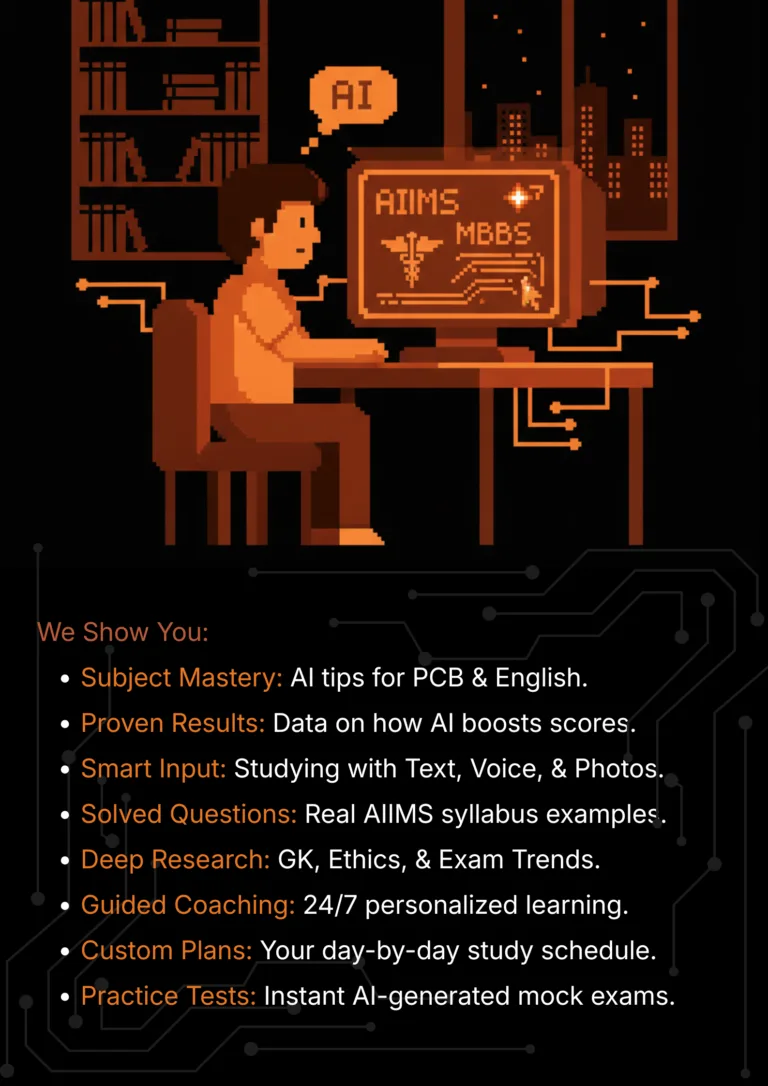
Stronger & Smarter Preparation for AIIMS MBBS With Your AI Study Partner.
Studying for AIIMS MBBS means fighting tough battles in Physics, Chemistry, and Biology. The prize is massive: a career as a top doctor, graduating from institutions like AIIMS Delhi and earning high salaries. To succeed, you must conquer the NEET-UG and meet the 60% PCB academic requirement. It’s easy to feel lost, but the fact that you are seeking advanced help proves your determination—success is inevitable with the right strategy. Your always-on tutor is Artificial Intelligence (AI), your secret weapon for cracking this exam. AI instantly solves complex doubts, generates personalized practice quizzes, and aids memorization for those impossible cut-offs. I know this power works because I use AI daily for complex professional tasks like sales work, web development, and digital marketing. This guide shows you exactly how to turn this high-efficiency approach into a personalized study tool. Get ready to stop studying harder and start studying smarter.
How Gemini Helps With Every Subject For AIIMS MBBS
| Focus Area | What Gemini Does | Your Benefit |
|---|---|---|
|
|
Active NCERT Interrogation
|
This helps you memorize every small detail perfectly. Since the biology exam asks many questions directly from the textbook lines, you will be able to answer them quickly and get a very high score. |
|
|
Conceptual Scaffolding
|
You will stop worrying about memorizing formulas and start understanding the science. This makes you much better at solving math-based physics problems with fewer mistakes. |
|
|
Mechanism Visualizer
|
By understanding the logic of how chemicals react, you won't be scared of new questions. You will be able to figure out answers for chemicals you have never even seen before. |
|
|
Critical Logic Refinement
|
This builds the special logic needed to avoid the biggest trap in the exam: picking "Both are true" when the second statement doesn't actually explain the first one. |
|
|
Medical Awareness Filter
|
This helps you develop the "Doctor Mindset." You will be ready for the personality questions and also grab easy marks in the General Knowledge section of the paper. |
|
|
Pattern Analysis Engine
|
This removes the guessing game. You will learn to solve logic puzzles with certainty, making sure you get those extra marks that separate the top students from everyone else. |
|
|
Contextual Proficiency Builder
|
You will stop guessing and start following clear language rules. This helps you finish the English section very fast so you have more time for hard physics and chemistry math. |
|
|
Precision Error Tracking
|
By turning every practice test into a lesson, you fix your specific weaknesses. This ensures you are perfectly ready and confident when the actual exam day arrives. |
How AI Boosts Your Efforts : Data From Recent Studies
Preparing for the AIIMS MBBS entrance isn’t just about hard work; it’s about aligning your brain with the same cutting-edge technology you will use as a doctor. Research from 2024 and 2025 confirms that AI is no longer just a “helper”—it is a fundamental shift in how medical mastery is achieved.
| Research Metric | Evidence & Analysis | Academic Significance |
|---|---|---|
| ~45% learning improvement Meta-analysis (68 studies) |
Consistent AI Learning Gains
|
What This Means
AI improves understanding across many independent studies. Benefits are strongest in complex medical subjects where memorisation alone fails.
AIIMS MBBS Edge: Faster mastery of Physiology, Biochemistry, and Pathology.
|
| ↑ Accuracy clinical & diagnostic tasks Medical Education Reviews |
Adaptive & Simulation-Based Learning
|
What This Means
AI adapts to your weak areas in real time and reinforces applied clinical reasoning, not just textbook recall.
AIIMS MBBS Edge: Stronger clinical reasoning before postings and vivas.
|
| 15–35% score improvement Systematic Review (21 studies) |
Higher Academic Performance & Retention
|
What This Means
Students using AI retain information better and perform more consistently across long, high-pressure exams.
AIIMS MBBS Edge: Fewer memory lapses during finals and internals.
|
| 80.7% AI awareness Indian Medical Student Survey |
Rapid Acceptance of AI in Medical Education
|
What This Means
Medical students are ready for AI — when used responsibly and with academic structure.
AIIMS MBBS Edge: Aligns your prep with modern medical learning trends.
|
By using AI now, you are practicing the future of medicine. In the medical field today, AI is already transforming both practical and educational landscapes
Advanced Prompting Techniques by Google for 2026, with Examples Prompts For MBBS
Google Gemini is a Reasoning Engine. To get "A+ Grade" results for AIIMS and NEET-UG, move beyond basic questions using these six pillars.
- The Technique: Setting the Persona, Task, Context, and Format.
- The Logic: AI is a reasoning engine that adapts to the "identity" and "environment" you provide. Assigning an expert role ensures professional medical vocabulary, while the Context "fences" the AI into a specific syllabus or source (like NCERT) to prevent it from giving irrelevant data.
Persona: Act as an [Any Expert Role: e.g., AIIMS Biology Professor, Senior Neurosurgeon]. Task: Explain [Your Topic: e.g., Cardiac Cycle, Action Potential, Krebs Cycle]. Context: Apply this specific background: [Source Context: e.g., Use only NCERT Class 12 Syllabus] [Difficulty Context: e.g., Explain for a 1st-year MBBS student] [Exam Context: e.g., Use the 2026 NEET-UG official notification] Format: Provide the answer as a [Structure: e.g., Technical Summary, 5-Point High-Yield List].
- The Technique: Breaking a problem into a "Step-by-Step" sequence with logic checks.
- The Logic: Physics and Chemistry problems in medical exams often fail because the AI jumps to conclusions. This version forces the AI to "Self-Correct"—cross-checking the logic of Step 1 before it even attempts Step 2.
Solve this [Subject: e.g., Physics, Physical Chemistry] problem using Chain-of-Thought. Step 1: List all given [Variables/Data Points] and units from the question. Step 2: State the core [Formula/Theory] and verify its relevance to the question. Step 3: Show the calculation step-by-step, verifying the logic of each line before moving to the next. Question: [Insert your numerical question here]
- The Technique: Limiting the AI to official domains with a focus on recent data.
- The Logic: Medical data and exam patterns change frequently. This "Time-Stamp" filter forces the AI to ignore third-party coaching blogs and prioritize official portals from the last 12 months for 100% accuracy.
Research the [Topic: e.g., 2026 NEET-UG Syllabus changes, AIIMS Admission Criteria]. Constraint: Only use info from official portals: [Domain 1: e.g., nta.ac.in] and [Domain 2: e.g., nmc.org.in]. Recency Rule: Prioritize data published in the last 12 months. Output: Provide the official summary and the direct link to the source.
- The Technique: Setting strict "Rules of Play" including forbidden keywords.
- The Logic: AI tends to be "chatty." By setting hard boundaries and forbidding "AI-voice" fillers (like "In conclusion"), you get professional, high-yield material ready for revision.
Explain [Concept: e.g., Double Fertilization, Krebs Cycle]. Constraint 1: Use only [Specific Source: e.g., NCERT, Guyton & Hall] terminology. Constraint 2: Keep the response under [Limit: e.g., 100 words]. Constraint 3 (Negative): Do not use AI-filler phrases like "Here is the answer" or "In conclusion." Format: Use simple bullet points.
- The Technique: Using a Feedback Loop with an "Active Recall" check.
- The Logic: Treat the AI like a tutor. This version forces the AI to stop and ask you a question after its explanation, ensuring you actually understood the concept.
Explain [Topic: e.g., Mechanism of Muscle Contraction, CRISPR Technology]. Instruction: Provide a technical summary first. Feedback Loop: Ask me if I want it simpler for basics or more technical for the exam. Active Recall: Once I am satisfied, provide one 'Check-for-Understanding' question based on your explanation.
- The Technique: Providing a structural blueprint before injecting raw data.
- The Logic: This is the most powerful way to stop AI from guessing. You command the AI to build a specific result using a layout you provide, ensuring it is 100% project-ready.
Make a [Desired Output: e.g., High-Yield Comparison Table, Revision Checklist]. Layout Blueprint: [Structure: e.g., 3-column table, Markdown list]. Style: [Vibe: e.g., Medical Minimalist, Academic]. Strict Rule: Adhere to the structure provided; no conversational filler. Use this information: [PASTE_DATA_OR_TEXT_HERE]
Note :
- “The techniques and prompt engineering principles you learn in this guide are universally applicable to any large language model (LLM), including ChatGPT and Perplexity AI. We use Google Gemini for all examples because its latest multimodal features and integration with Google Search provide a best-in-class learning experience.”
- “Remember: The quality of the AI’s answer depends entirely on the clarity of your prompt. Always be specific, detailed, and clear with the AI to avoid irrelevant or incorrect (hallucinated) responses.”
Using Google Gemini Input Method's For AIIMS MBBS.
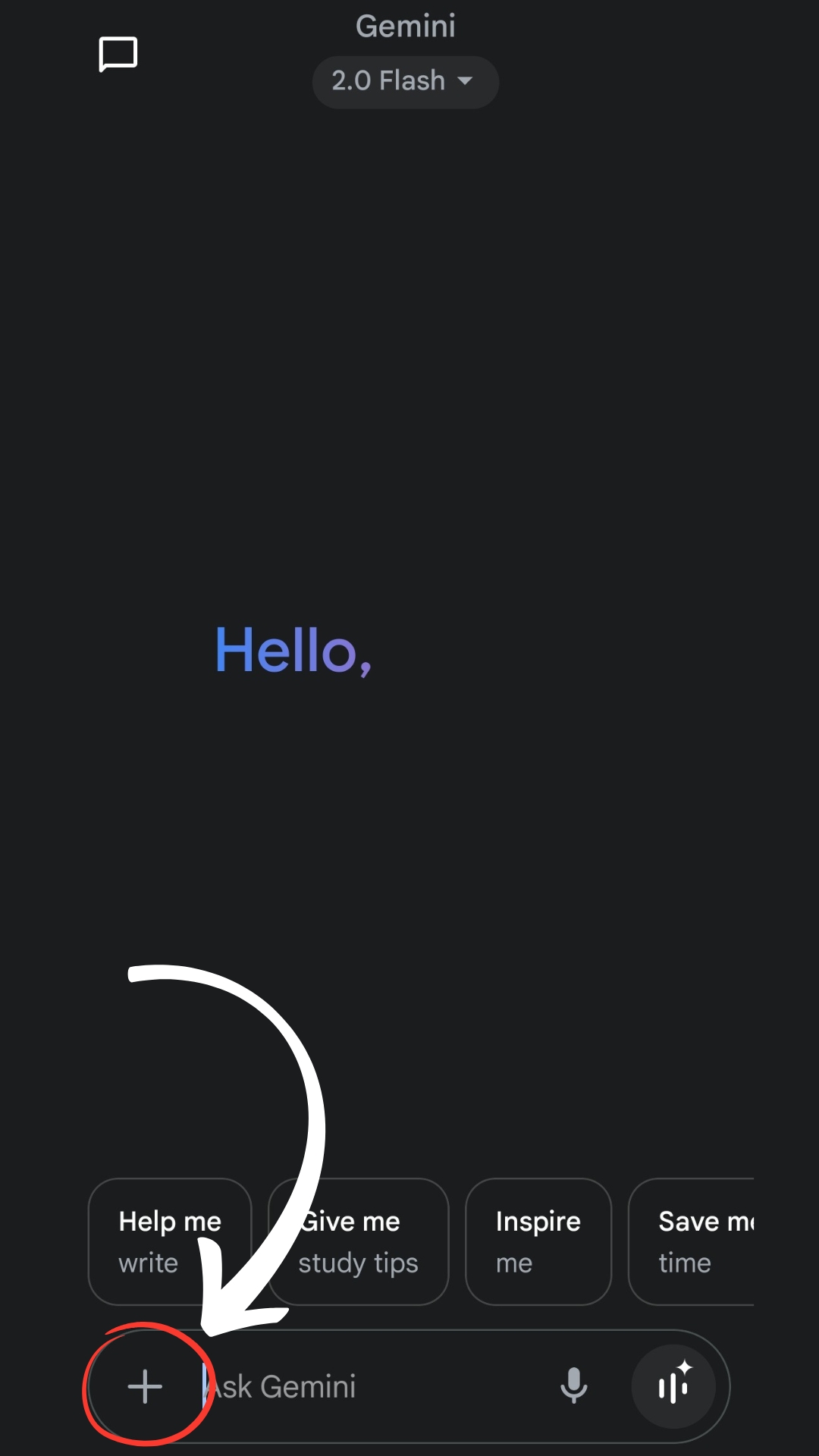
Stuck on a confusing diagram in your textbook?
Whether it’s a tough medical diagram, a physics schematic for a tool, or a complex chemistry reaction, just take a clear photo and upload it to Gemini. You can then ask specific questions about the picture and get clear, helpful explanations at the level you need for the AIIMS exam.
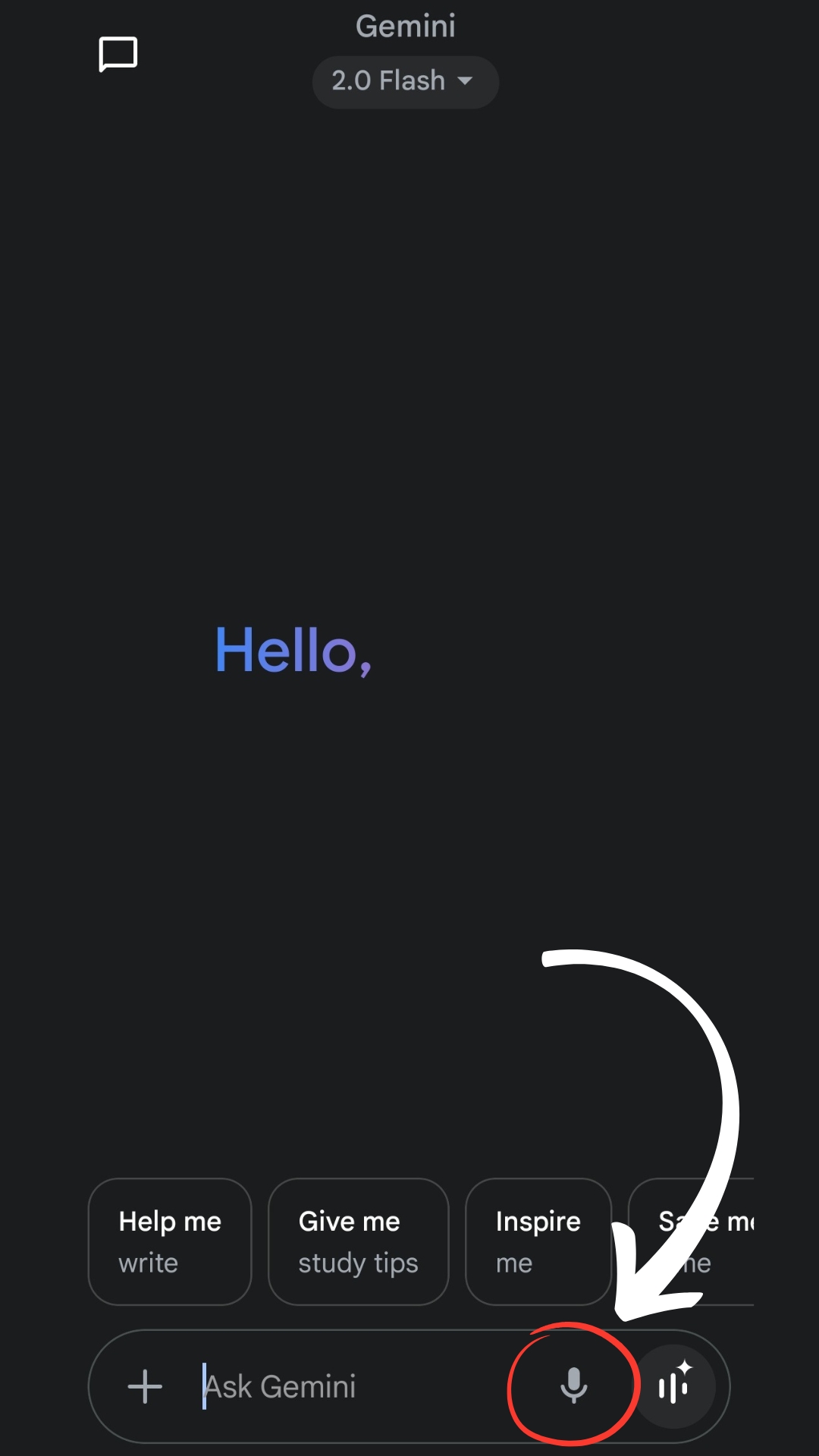
Conceptual Clarifications On-the-Go
For quick conceptual clarifications during intensive study sessions, brainstorming, or even rapidly reviewing complex topics and principles on the go, utilise voice commands to interact with Gemini. It’s very convenient.
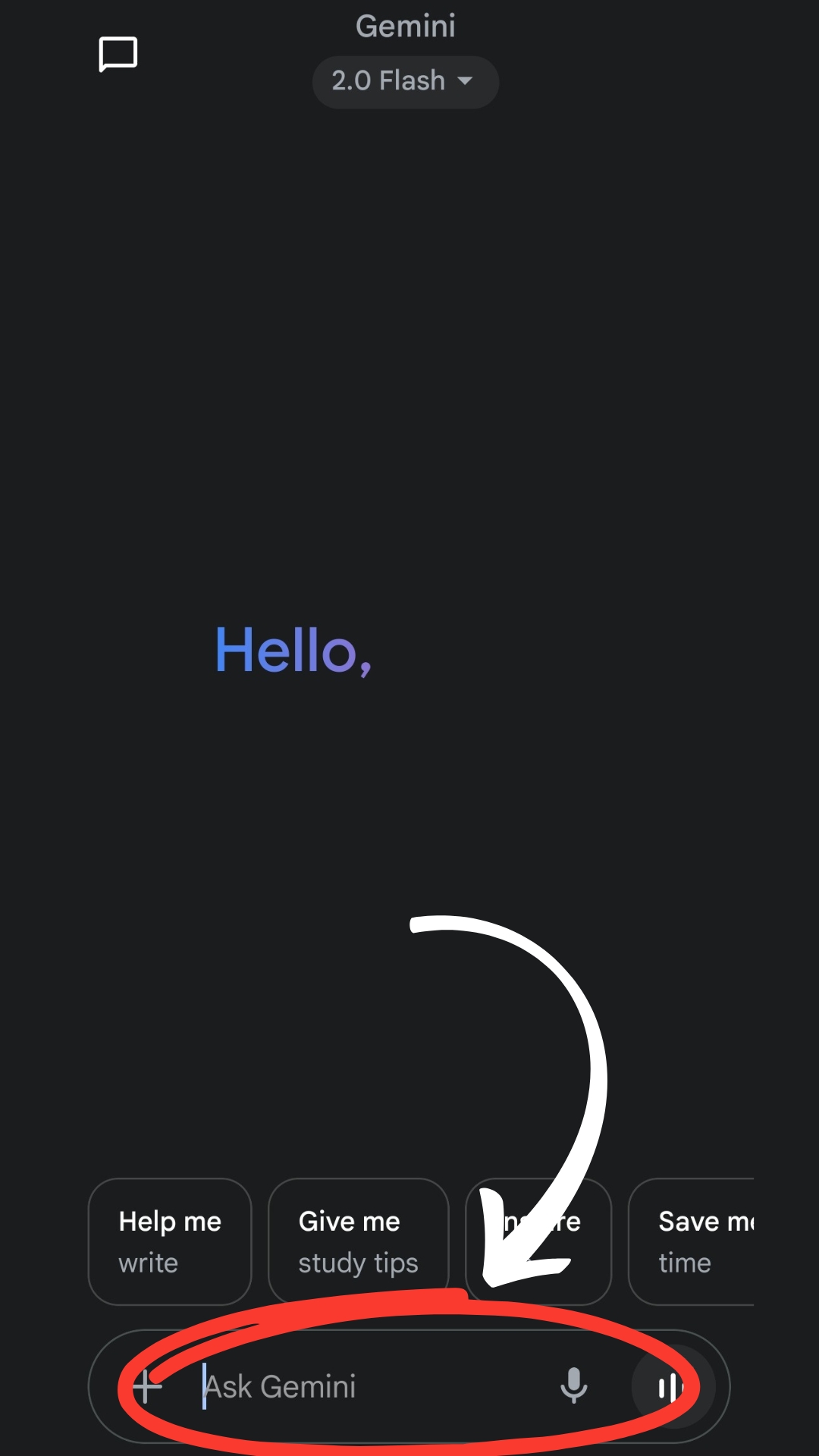
Main Tool for Detailed Questions
This will be your main and most effective tool for asking extremely detailed, difficult-to-understand questions in the fields of chemistry, biology, and physics. You can ask for detailed explanations about advanced mechanisms, request comparative analyses, and even explore the clinical relevance of fundamental scientific principles as emphasised in examinations of the AIIMS MBBS standard.
real syllabus questions solved with AI
Case Studies: Solving Questions From The AIIMS MBBS Syllabus Using Google Gemini
Example 1: AIIMS MBBS Biology
Counter-Current Mechanism in the Kidney
Official Path: Excretory Products and Their Elimination: Concentration of the Filtrate
Medullary Interstitial Gradient Analysis
Research the "Medullary Interstitial Gradient" and the "Single Effect in the Counter-Current Multiplier." In medical entrances like AIIMS, the focus is on the source of the gradient. Grounding the prompt in the "NKCC2 cotransporter" and the difference between the "Multiplier" (Henle's Loop) and the "Exchanger" (Vasa Recta) ensures the AI provides the physiological depth required for top-tier medical aptitude.
Study Lab
AIIMS MBBS Prep
"A patient presents with a mutation in the genes coding for the thick ascending limb's active transport proteins. Explain why this patient would be unable to produce concentrated urine even in the presence of high Antidiuretic Hormone (ADH) levels. Focus on the disruption of the Medullary Interstitial Gradient."
"Act as a Senior Nephrologist. Explain the Counter-Current Multiplier system using Guyton and Hall Physiology. Focus on how the osmolarity increases from 300 mOsmol/L to 1200 mOsmol/L. Provide the response as a Clinical Mechanism Summary."
"Analyze the Vasa Recta's role as a Counter-Current Exchanger using Chain-of-Thought. Step 1: Define the flow of blood. Step 2: Explain the exchange of NaCl and Water. Step 3: Deduce concentration changes. Step 4: Verify how this prevents 'washout'."
"Create a 3-column Physiological Comparison Table for the Kidney's Counter-Current components. Column 1: Segment. Column 2: Permeability. Column 3: Impact. Constraints: Markdown format, AIIMS accuracy."
AIIMS Prep Lab • Optimized for Learning
Google Gemini can further help by:
- Elaborating on the clinical significance of ECG findings and their impact on patient diagnostic pathways.
- Explaining the complex physiological regulation of heart rate and contractility through the autonomic nervous system.
- Discussing common cardiac pathologies and the underlying mechanisms of structural heart disease.
Example 2: AIIMS MBBS Physics
Medical Imaging and Particle Physics (X-Rays)
Official Path: Modern Physics: Dual Nature of Radiation and Matter (X-ray Production)
The Deep Search Strategy
Research "Moseley’s Law" and "Duane-Hunt Law." In AIIMS Physics, questions often bridge the gap between pure physics and clinical application. Grounding the prompt in the "Bremsstrahlung process" (braking radiation) and "K-shell transitions" ensures the AI provides the level of technical accuracy required for medical entrance toppers.
Study Lab
AIIMS MBBS Prep
"In a diagnostic X-ray tube used for medical imaging, the accelerating voltage is set to $V$. If the target material's atomic number is $Z$, explain the origin of the continuous and characteristic X-ray spectra. Specifically, calculate the cutoff wavelength ($\lambda_{min}$) and explain why changing the filament current affects intensity but not the minimum wavelength."
"Act as a Medical Physicist (Persona). Explain the production of X-rays in a Coolidge Tube (Subject) focusing on the energy conversion of electrons hitting a Tungsten target. Use the AIIMS/NEET High-Yield Physics standards (Context). Provide a detailed conceptual breakdown (Format) of Continuous vs. Characteristic X-rays."
"Analyze the mathematical constraints of X-ray production using Chain-of-Thought. Step 1: Apply the Principle of Conservation of Energy to find the maximum possible frequency ($\nu_{max}$) of an X-ray photon for an accelerating voltage $V$. Step 2: Derive the Duane-Hunt formula for cutoff wavelength ($\lambda_{min}$). Step 3: Explain the logical relationship between filament current, electron count, and X-ray intensity. Step 4: Verify why $\lambda_{min}$ is independent of the target material's atomic number ($Z$)."
"Create a 3-column Comparison Table for X-ray Spectrum Parameters. Column 1: Parameter Change (e.g., Increase Voltage). Column 2: Effect on Cutoff Wavelength ($\lambda_{min}$). Column 3: Effect on Characteristic Peaks and Intensity. Constraints: Markdown table format. No conversational filler. Ensure 100% accuracy for AIIMS-style Assertion-Reasoning prep."
AIIMS Prep Lab • Optimized for Learning
Google Gemini can further help by:
- Explaining the difference between color Doppler and power Doppler ultrasound.
- Calculating the signal-to-noise ratio in ultrasound imaging.
- Summarizing other medical imaging technologies like MRI and CT scans.
Example 3: AIIMS MBBS Chemistry
Chemical Kinetics and Collision Theory
Official Path: Physical Chemistry: Chemical Kinetics (Arrhenius Equation)
Maxwell-Boltzmann Distribution Analysis
Research the "Arrhenius Equation in logarithmic form" and the "Maxwell-Boltzmann Distribution Curve." In AIIMS Chemistry, questions frequently link mathematical kinetics to molecular energy distributions. Grounding the prompt in the "Effective Collision Frequency" and "Threshold Energy" ensures the AI provides the conceptual depth required for competitive medical entrances.
Study Lab
AIIMS MBBS Prep
"A specific biochemical reaction follows first-order kinetics. When the temperature is increased from $300\text{ K}$ to $310\text{ K}$, the rate constant triples. Calculate the activation energy ($E_a$) for this reaction. Explain how a catalyst would alter the fraction of effective collisions without changing the temperature."
"Act as a Physical Chemistry Professor (Persona). Explain the Temperature Dependence of Reaction Rates (Subject) using the Arrhenius Equation (Context). Focus on the relationship between kinetic energy and the energy barrier. Provide a step-by-step mathematical derivation (Format) for calculating activation energy from two different rate constants."
"Analyze the effect of a catalyst on reaction kinetics using Chain-of-Thought. Step 1: Define the activation energy barrier for a non-catalyzed reaction. Step 2: Explain how a catalyst provides an alternative pathway. Step 3: Use the Maxwell-Boltzmann Distribution to show the change in the number of molecules with energy greater than $E_a$. Step 4: Verify why a catalyst does not change the equilibrium constant ($K_{eq}$)."
"Create a 3-column Comparison Table for Kinetic Parameters. Column 1: Change in Condition (e.g., Increase Temp, Add Catalyst). Column 2: Effect on Activation Energy ($E_a$). Column 3: Effect on Rate Constant ($k$) and Collision Frequency. Constraints: Use Markdown table format. No conversational filler. Ensure 100% accuracy for AIIMS-style Assertion-Reasoning prep."
AIIMS Prep Lab • Optimized for Learning
Google Gemini can further help by:
- Creating a simplified diagram of the bicarbonate buffer system for visual learning.
- Explaining the Henderson-Hasselbalch equation and its use in clinical practice.
- Detailing the causes and clinical presentation of both respiratory and metabolic alkalosis.
AI for Deep Exam Research
Using Google Gemini for AIIMS MBBS Exam Research
What is Deep Research?
Deep research for AIIMS MBBS involves using Google Gemini to connect your core NCERT concepts with advanced medical GK and clinical breakthroughs. It turns the AI into a research partner that helps you understand the "Why" behind medical processes, moving beyond simple memorization to the high-level application required for India's most prestigious medical entrance exam.
How It Helps You
- Beyond NCERT Syllabus: AIIMS often asks questions that are slightly more advanced than standard textbooks. Gemini helps bridge the gap between school-level biology and professional medical knowledge.
- Assertion-Reason Mastery: Deep research allows you to analyze the logical connection between facts, which is critical for mastering the difficult Assertion-Reasoning questions unique to AIIMS.
- Real-World Medical GK: Stay updated on current health threats, WHO reports, and Nobel Prizes in Medicine—topics that are frequently tested as "high-yield" areas in AIIMS exams.
- Simplifying Complex Derivations: Whether it's Physics optics or Chemistry thermodynamics, Gemini can break down complex mathematical derivations step-by-step so you understand the logic.
Grounding and Context
What it is: "Grounding" means tethering Gemini to official medical sources so it doesn't give you incorrect or "hallucinated" info that could hurt your rank.
Why it matters: Medical facts can change. Grounding ensures you are studying from the National Medical Commission (NMC) and NTA guidelines rather than outdated blogs.
How you do it:
1. Download the latest official NTA Information Bulletin or NMC syllabus PDF.
2. Upload the PDF to Gemini.
3. Use the command: "Filter all your future research through the rules and syllabus found in this official AIIMS MBBS bulletin."
Google Suggested Prompt Method
The "System, Task, Range" MethodUse this structured method to ensure Gemini acts like a specialized medical tutor instead of a general search engine.
“Act as an AIIMS MBBS entrance tutor. Your task is to research the latest WHO health threats report for 2025 and find three concepts that relate to the 'Human Health and Disease' chapter. Write a 200-word summary and create three Assertion-Reasoning questions based on this research. Use only official government and verified medical sources.”
The India Should Know Technique
The "Reverse Engineering" MethodReverse-engineer your study materials by describing the exact clinical depth and format you need before the AI processes the raw medical data.
“I want to create a high-density comparison table for [Specific Medical Cycle, e.g., Krebs Cycle]. Format: A 4-column table (Step, Enzyme, High-Yield Fact, Why AIIMS Asks This). Tone: Professional, clinical, and precise. Intent: To master deep conceptual differences for MCQs. Constraints: No fluff. Every point must be under 15 words. Use the official NMC syllabus context I provided. Once generated, I will ask you to create a logic-based Assertion-Reason question for this table.”
Tips for Better Deep Research
- The "Logic Loop": After an answer, ask: "What is the most common reason a top-tier student gets a question wrong on this topic?" to identify tricky exam traps.
- Verify Clinical Data: Always use the "Google" search button to verify the latest names, dates, or clinical statistics mentioned in WHO or MOHFW reports.
- Visual to Text: If you are studying a complex diagram in NCERT, describe the labels to Gemini and ask it to explain the "unseen" chemical or physical mechanisms behind them.
- Chain of Reasoning: For complex biology cycles, tell Gemini: "Explain this thinking step-by-step so I can explain it to a clinical specialist." This builds long-term memory.
Guided learning with AI
Guided Learning For AIIMS MBBS With Google Gemini As Your Personal Coach
What is Guided Learning with AI?
For AIIMS MBBS aspirants, guided learning with AI is like having a clinical professor available 24/7 to help you understand the "Why" behind medical facts. Instead of just memorizing NCERT biology or physics formulas, you use Gemini to simulate a teaching environment. It mimics a medical classroom setting where the AI identifies gaps in your conceptual understanding and explains complex clinical logic in ways that match your learning style.
How it helps you for this course/exam
- Master Assertion-Reasoning: AIIMS is famous for difficult Assertion-Reasoning questions. Gemini can help you analyze the logical link between two facts to see if the "Reason" actually explains the "Assertion."
- Bridge NCERT to Medical GK: AIIMS often goes slightly beyond standard textbooks. Gemini helps you connect school-level concepts to real-world medical breakthroughs and clinical applications.
- High-Yield Quiz Simulation: It can act as a strict examiner, quizzing you on "Out of NCERT" topics that are frequent in AIIMS but rare in other entrance exams.
How to do it in short
1. Define the Role: Tell Gemini it is a PhD-level Medical Tutor for AIIMS MBBS Prep.
2. Set the Boundary: Tell it NOT to give you answers immediately—insist on conceptual hints first.
3. Interactive Dialogue: Ask it to explain a complex physiological mechanism or quiz you one question at a time.
4. Feedback Loop: Provide your reasoning, and let the AI correct your medical logic.
Google Suggested Method: Conversational Scaffolding
Google’s recommended approach focuses on "conversational scaffolding." For AIIMS, this means starting with a basic definition (like a cell) and letting the AI guide you through the hierarchy toward complex applications (like clinical cell pathology) through a back-and-forth chat.
“I am studying for AIIMS MBBS, specifically focusing on [Subject/Chapter]. I want you to act as a supportive medical tutor. Start by asking me what I already know about [Specific Topic], and then help me build my understanding by asking follow-up questions that connect basic NCERT facts to advanced clinical concepts. Don't give me all the information at once; let's take it step-by-step.”
Google Suggested Method: The Socratic Method
The Socratic method is the gold standard for deep medical learning. Instead of the AI explaining a cycle or mechanism to you, it asks you a series of disciplined questions. This forces you to think through the biological or physical logic yourself, helping you master the concept for long-term recall.
“I want to learn the deep mechanism of [Topic]. Act as a Socratic tutor for AIIMS prep. Do not give me the explanation. Instead, ask me a leading question that helps me realize the core biological principle behind this. Once I answer, ask another question to push my thinking into clinical application until I have fully grasped the concept.”
The India Should Know Method
The "Reverse Engineering" MethodThe India Should Know method is about Reverse Engineering. Instead of letting the AI wander, you put heavy constraints on the output. You define the exact "shape" of the revision material—specifying that you need clinical depth and Assertion-Reasoning format—before you ever give it the raw NCERT data.
“Intent: Act as a Senior AIIMS Professor specializing in [Subject]. Context: I am preparing for the AIIMS MBBS entrance and need to master [Chapter/Topic]. Format Constraints: * Conduct an 'Assertion-Reasoning' quiz session. * Ask exactly one question at a time. * Wait for my response before moving to the next. * If I am wrong, provide a hint based on the biological mechanism first. * Use a professional and precise medical tone. * After 5 questions, provide a 'Conceptual Gap Report' in a table format (Column 1: Medical Concept, Column 2: Mastery Level 1-10, Column 3: High-Yield Improvement Area). Raw Data: [Paste your notes, NCERT text, or syllabus here] Instruction: Once you understand these constraints and the data provided, acknowledge this by asking the first question.”
Tips for Guided Learning
- Be Honest with the AI: If you don't understand a biological hint, say "I don't understand the chemistry of this, try a different analogy." The AI is more patient than any human tutor.
- Use Voice Mode for Terminology: If you are on the Gemini app, use Gemini Live. Pronouncing medical terms and talking through cycles out loud is the fastest way to build familiarity with medical language.
- Feed it Clinical Cases: Paste specific clinical case-based questions into the "Raw Data" section. This ensures the AI quizzes you exactly how the AIIMS examiner would.
- Review the Gap Report: Don't just finish the session. Look at the "Conceptual Gap Report" and ask Gemini to create a 10-minute focus study plan just for the areas where you scored below 5/10.
Note: Once Gemini produces the outcome based on these prompts, you can further improve it by saying: "That was great, but make the questions more focused on [Specific Sub-topic] and use more Assertion-Reasoning style examples."
important links
Important Links for AIIMS MBBS Aspirants
-
AIIMS Examination Portal:
This is the primary authority for all AIIMS-specific exams. Use it to track notifications, application updates, and announcements related to INI-CET and other AIIMS-administered courses.
https://www.aiimsexams.ac.in Visit Portal
-
NEET-UG Official Website (NTA):
The central portal for AIIMS MBBS admissions through NEET-UG. All registration, admit cards, answer keys, and result declarations are published here.
https://neet.nta.nic.in Visit Portal
-
NTA Official Home Portal:
The parent website of the National Testing Agency. Refer to this for general advisories, public notices, exam calendars, and technical instructions applicable to all NTA-conducted exams.
https://www.nta.ac.in Visit Portal
-
National Medical Commission (NMC):
The statutory body governing medical education in India. This is the official source for the revised MBBS syllabus, competency-based medical education (CBME), and curriculum changes relevant to NEET and AIIMS aspirants.
https://www.nmc.org.in Visit Portal
-
Ministry of Health & Family Welfare (MoHFW):
India’s apex government body for health policy and public health data. Useful for updated national health programs, statistics, and Medical GK questions.
https://www.mohfw.gov.in Visit Portal
-
World Health Organization – Global Health Observatory:
An authoritative international database for global disease trends, epidemiology, and major medical breakthroughs. Particularly useful for current affairs and conceptual enrichment.
https://www.who.int/data/gho Visit Portal
Your AI-Powered Path To Cracking AIIMS MBBS.
The journey to an AIIMS MBBS seat is widely regarded as one of the toughest academic marathons in the world. It requires more than just intelligence; it requires a level of discipline and strategic depth that few possess. The simple fact that you are here, learning to integrate advanced AI into your preparation, proves you already have the “Officer-Grade” mindset of a future medical leader.
By turning Google Gemini into your 360-degree study partner, you aren’t just memorizing facts—you are building the computational and analytical skills that will define the future of medicine. You have the tools to deconstruct complex Physics, master the logic of Assertion-Reasoning, and stay updated with live medical intelligence that textbooks simply cannot capture.
The technology is ready. The plan is set. Now, it is your turn to take action. Don’t let this be just another article you read—copy these prompts, build your science-backed schedule, and start your first “Guided Learning” session today. Your seat at AIIMS isn’t just a dream; with this level of smart preparation, it is a mathematical certainty.
Good luck, future Doctor. We’ll see you in the white coat.
Written By
Prateek Singh.
Last Updated – January, 2026
About The Author
Prateek Singh believes the best way to learn is to apply knowledge directly. He leverages AI tools every day for his professional work, using them to create sales presentations, perform lead generation, execute data visualization, and manage all digital marketing and SEO efforts. He also used AI to learn the diverse skill set required to build IndiaShouldKnow.com from the ground up, including web development, UI/UX design, color theory, and graphic design. Having researched and utilized dozens of AI tools, Prateek has written over a hundred articles detailing how others can use them to enhance their own learning and productivity. He shares this practical, self-taught knowledge to empower others on their own journey of continuous learning.
FAQs About AI Use.
Can I trust every answer an AI tool gives me for my studies?
A: No, you should not trust every answer completely. Think of an AI as a super-smart assistant that has read most of the internet—but not every book in the library is accurate.
AI can sometimes make mistakes, misunderstand your question, or use outdated information.
It can even “hallucinate,” which means it confidently makes up an answer that sounds real but is completely false.
Rule of Thumb: Use AI answers as a great starting point, but never as the final, absolute truth. Always double-check important facts.
How can I verify the information I get from an AI for my academic work?
A: Verifying information is a crucial skill. It’s like being a detective for facts. Here are four simple steps:
Check Your Course Material: Is the AI’s answer consistent with what your textbook, lecture notes, or professor says? This is your most reliable source.
Look for Reputable Sources: Ask the AI for its sources or search for the information online. Look for links from universities (.edu), government sites (.gov), respected news organizations, or published academic journals.
Cross-Reference: Ask a different AI the same question, or type your question into a standard search engine like Google. If multiple reliable sources give the same answer, it’s more likely to be correct.
Use Common Sense: If an answer seems too perfect, too strange, or too good to be true, be extra skeptical and investigate it further.
What is the difference between using AI for research and using it to plagiarize?
A: This is a very important difference. It’s all about who is doing the thinking.
Using AI for Research (Good ✅):
Brainstorming topics for a paper.
Asking for a simple explanation of a complex theory.
Finding keywords to use in your library search.
Getting feedback on your grammar and sentence structure.
You are using AI as a tool to help you think and write better.
Using AI to Plagiarize (Bad ❌):
Copying and pasting an AI-generated answer directly into your assignment.
Asking the AI to write an entire essay or paragraph for you.
Slightly rephrasing an AI’s answer and submitting it as your own original thought.
You are letting the AI do the thinking and work for you.
How can I use AI ethically to support my learning without violating my school's academic honesty policy?
A: Using AI ethically means using it to learn, not to cheat. Here’s how:
Know the Rules: First and foremost, read your school’s or professor’s policy on using AI tools. This is the most important step.
Be the Author: The final work you submit must be yours. Your ideas, your structure, and your arguments. Use AI as a guide, not the writer.
Do the Heavy Lifting: Use AI to understand a topic, but then close the chat and write your summary or solve the problem yourself to make sure you have actually learned it.
Be Transparent: If you used an AI in a significant way (like for brainstorming), ask your professor if you should mention it. Honesty is always the best policy.
Can an AI's answer be biased? How can I detect this in its responses?
A: Yes, an AI’s answer can definitely be biased. Since AI learns from the vast amount of text on the internet written by humans, it can pick up and repeat human biases.
Here’s how to spot potential bias:
Look for Opinions: Does the answer present a strong opinion as a fact?
Check for One-Sidedness: On a topic with multiple viewpoints (like politics or economics), does the AI only show one side of the argument?
Watch for Stereotypes: Does the answer use generalizations about groups of people based on their race, gender, nationality, or other characteristics?
To avoid being misled by bias, always try to get information from multiple, varied sources.
Is it safe to upload my personal notes, research papers, or assignments to an AI tool?
A: It is best to be very careful. You should not consider your conversations with most public AI tools to be private.
Many AI companies use your conversations to train their systems, which means employees or contractors might read them.
There is always a risk of data breaches or leaks.
A Simple Safety Rule: Do not upload or paste any sensitive information that you would not want a stranger to see. This includes:
Personal identification details.
Confidential research or unpublished papers.
Your school assignments before you submit them.
Any financial or private data.