
How to Study for IAS Exam with Google Gemini AI

Conquer the IAS Exam with Your AI-Powered Study Partner.
The UPSC’s Indian Administrative Service (IAS) exam is the definitive path to a high-value career in policy-making, public administration, and top bureaucratic leadership across India. To secure this prize, you must conquer the three stages (Prelims, Mains, Interview) and master a vast, challenging syllabus covering everything from History to Current Affairs, demanding strong analytical and essay writing skills. It’s tough to manage this huge volume of information and maintain focus, but the fact that you are actively seeking the most advanced tools proves your dedication and vision—achieving your administrative goals is inevitable with the right strategy. Your ultimate study partner is Google Gemini AI. It is your secret weapon, ready to instantly simplify constitutional principles, explain complex economic theories, contextualize history, and help you craft powerful Mains essays that align with the IAS syllabus. Trust this guide because I’ve personally harnessed AI’s power to conquer real-world challenges in data analysis, marketing, and web content creation, using it even to build this entire platform for you.
How Gemini Helps With Every IAS Exam Subject
| Focus Area | What Gemini Does | Your Benefit |
|---|---|---|
|
|
Language Synthesis Tutor
|
You can pass the mandatory language papers with very little effort. This leaves you more time to study for the main rank-deciding exams. |
|
|
Knowledge Web Builder
|
You stop trying to memorize facts one by one. You see how everything fits together, making it much easier to pick the right choice. |
|
|
Logic Deconstructor
|
You lose your fear of the "CSAT trap." You gain the confidence and speed needed to clear this paper comfortably every time. |
|
|
Multi-Sided Analyst
|
You write answers that cover many different angles. This is exactly what examiners look for to give you the highest marks. |
|
|
Legal Research Guide
|
You don't have to read giant law books. You get the key points you need to quote the right laws in your final answers. |
|
|
Data Focus Expert
|
You become an expert on the newest topics in the news. You can write clear answers on things that usually confuse other students. |
|
|
Ethical Practice Coach
|
You learn to justify your decisions using professional logic. This helps you get a high score in the Ethics paper by being balanced. |
|
|
Niche Research Specialist
|
You get unique points that other students don't have. This makes your answers stand out and helps you get much higher marks. |
|
|
Creative Idea Engine
|
You never get stuck with writer's block. You can write long, interesting essays that are easy to read and keep the examiner's attention. |
|
|
Mock Panel Simulator
|
You build the confidence to speak clearly. By practicing with an AI panel, you feel calm and ready when you face the real board. |
How AI Boosts Your Efforts : Data From Recent Studies
With a syllabus that could fill a small library, the traditional “read-and-repeat” method is scientifically inefficient. Recent breakthroughs in Educational Neuroscience (2024-2025) prove that AI-driven study methods can reduce preparation time by up to 30% while doubling long-term retention.
Here is the scientific framework that explains why studying for the IAS with Gemini is your most powerful strategic move.
| Research Metric | Evidence & Analysis | Academic Significance |
|---|---|---|
| 20–30% marks improvement Active Learning Meta-Analyses |
Higher Scores in Complex, Multi-Paper Exams
|
What This Means
AI improves how you think across subjects, not just how much you read — critical for GS papers and integrated questions.
IAS Edge: Direct gains across GS I–IV and Essay preparation.
|
| 25–35% syllabus alignment Syllabus Analytics Research |
Better Match Between Study & UPSC Questions
|
What This Means
AI helps you study what UPSC actually asks, not everything ever written — reducing wasted effort.
IAS Edge: Major gains in Polity, Economy, Governance, and Current Affairs.
|
| 25–40% answer quality gain Writing & Evaluation Research |
Higher Mains Marks Through Better Answer Structuring
|
What This Means
AI trains you to write examiner-friendly answers instead of dumping notes — the biggest differentiator in Mains.
IAS Edge: +40–80 marks potential across GS, Ethics, and Essay papers.
|
| 30–40% integration ability Transfer-Learning Research |
Stronger Interview & Cross-Paper Recall
|
What This Means
AI helps you think like a civil servant — connecting policy, ethics, economics, and real-world issues naturally.
IAS Edge: Higher confidence and performance in the Personality Test.
|
Advanced Prompting Techniques by Google for 2026, with Examples Prompts For The IAS Exam
Google Gemini is a Reasoning Engine. To get "A+ Grade" results for the UPSC Civil Services and administrative aspirants, move beyond basic questions using these six pillars.
- The Technique: Setting the Persona, Task, Context, and Format.
- The Logic: The IAS exam (UPSC Civil Services) requires an administrative and "neutral" perspective. Assigning a role like "Cabinet Secretary" or "UPSC Subject Expert" ensures the AI provides balanced, multi-dimensional answers (Social, Economic, Political, Legal) rather than biased or shallow opinions.
Persona: Act as a [Any Expert Role: e.g., Senior IAS Officer, UPSC Faculty, Policy Analyst]. Task: Explain [Your Topic: e.g., India's Act East Policy, Cooperative Federalism, Green Hydrogen Mission]. Context: Apply this specific background: [Source Context: e.g., Use only official sources like PIB, Economic Survey, and Laxmikanth] [Difficulty Context: e.g., Focus on the 'Mains' level analytical depth] [Constraint Context: e.g., Ensure a neutral and balanced 'Way Forward' is included] Format: Provide the answer as an [Structure: e.g., GS Paper 2 Style Answer, 10-Point Brief, SWOT Analysis].
- The Technique: Breaking a problem into a "Step-by-Step" sequence with logic checks.
- The Logic: UPSC Prelims questions often use extreme qualifiers (e.g., "Only," "All," "Always"). This version forces the AI to "Self-Correct"—verifying the Step 1 (historical or legal exceptions) before concluding in Step 2, ensuring you don't fall for "absolute" statement traps in Prelims.
Analyze this [Subject: e.g., Prelims Statement-based Question, CSAT Logic Problem] using Chain-of-Thought. Step 1: Breakdown each statement and search for [Legal/Historical Exceptions] or extreme qualifiers. Step 2: State the core [Article/Fact/Rule] and verify its relevance to each specific statement. Step 3: Show the logical elimination process, verifying why each incorrect option is false before selecting the final answer. Question: [Insert your UPSC question here]
- The Technique: Limiting the AI to official domains with a focus on recent data.
- The Logic: Data in the IAS exam must be current (e.g., GDP figures, New Schemes). This "Time-Stamp" filter forces the AI to ignore outdated news and prioritize official government portals from the last 12 months for 100% accuracy.
Research the [Topic: e.g., Latest NFHS Survey Data, New RAMI Index, Recent SC Judgments on Reservation]. Constraint: Only use info from official portals: [Domain 1: e.g., pib.gov.in], [Domain 2: e.g., nitaayog.gov.in], and [Domain 3: e.g., sci.gov.in]. Recency Rule: Prioritize data published in the last 12 months. Output: Provide the official summary with relevant data points and the direct link to the source.
- The Technique: Setting strict "Rules of Play" including forbidden keywords.
- The Logic: IAS Mains requires "hitting the keyword." By setting hard boundaries and forbidding "AI-voice" fillers (like "It is important to note"), you get sharp, professional notes that focus on headings and bullet points, exactly how UPSC examiners prefer answers.
Explain [Concept: e.g., Carbon Border Adjustment Mechanism, Fifth Schedule of Constitution]. Constraint 1: Use only [Specific Source: e.g., NCERT, Standard Reference Books] terminology. Constraint 2: Keep the response under [Limit: e.g., 150 words]. Constraint 3 (Negative): Do not use AI-filler phrases like "Basically" or "In conclusion." Format: Use "Introduction - Body (Points) - Way Forward" structure.
- The Technique: Using a Feedback Loop with an "Active Recall" check.
- The Logic: Treat the AI like a mentor. This version forces the AI to stop and ask you a question after its explanation, ensuring you have grasped the "Critical Analysis" part of a topic before moving to the next.
Explain [Topic: e.g., Impact of Digital Divide on Education, Judiciary vs Executive Tussle]. Instruction: Provide a multi-dimensional summary (Pros/Cons) first. Feedback Loop: Ask me if I want to see the "Constitutional Perspective" or the "Current Affairs Impact." Active Recall: Once I am satisfied, provide one 'Mains-standard' question based on your explanation for me to outline.
- The Technique: Providing a structural blueprint before injecting raw data.
- The Logic: Use this to organize your "Micro-notes." You command the AI to build a specific result (like a comparison table of different Agriculture Revolutions) using a layout you provide, ensuring the data is ready for the "IndiaShouldKnow" platform or your personal revision.
Make a [Desired Output: e.g., Comparison Table of Buddhist Councils, Scheme Summary Table, Committee Recommendations List]. Layout Blueprint: [Structure: e.g., 4-column table, Chronological list, Mind-map description]. Style: [Vibe: e.g., Administrative, Minimalist, Data-heavy]. Strict Rule: Adhere to the structure provided; no conversational filler. Use this information: [PASTE_EDITORIAL_OR_REPORT_DATA_HERE]
Note :
- “The techniques and prompt engineering principles you learn in this guide are universally applicable to any large language model (LLM), including ChatGPT and Perplexity AI. We use Google Gemini for all examples because its latest multimodal features and integration with Google Search provide a best-in-class learning experience.”
- “Remember: The quality of the AI’s answer depends entirely on the clarity of your prompt. Always be specific, detailed, and clear with the AI to avoid irrelevant or incorrect (hallucinated) responses.”
Using Google Gemini App Input Method’s For IAS Exam.
1. Text Prompts

This will be your primary and most powerful tool for posing highly specific, conceptually challenging questions across all subjects of the IAS exam. You can seek detailed explanations of intricate topics, request comparative analyses of different schools of thought, and even ask for potential linkages between seemingly disparate subjects.
2. Voice Input
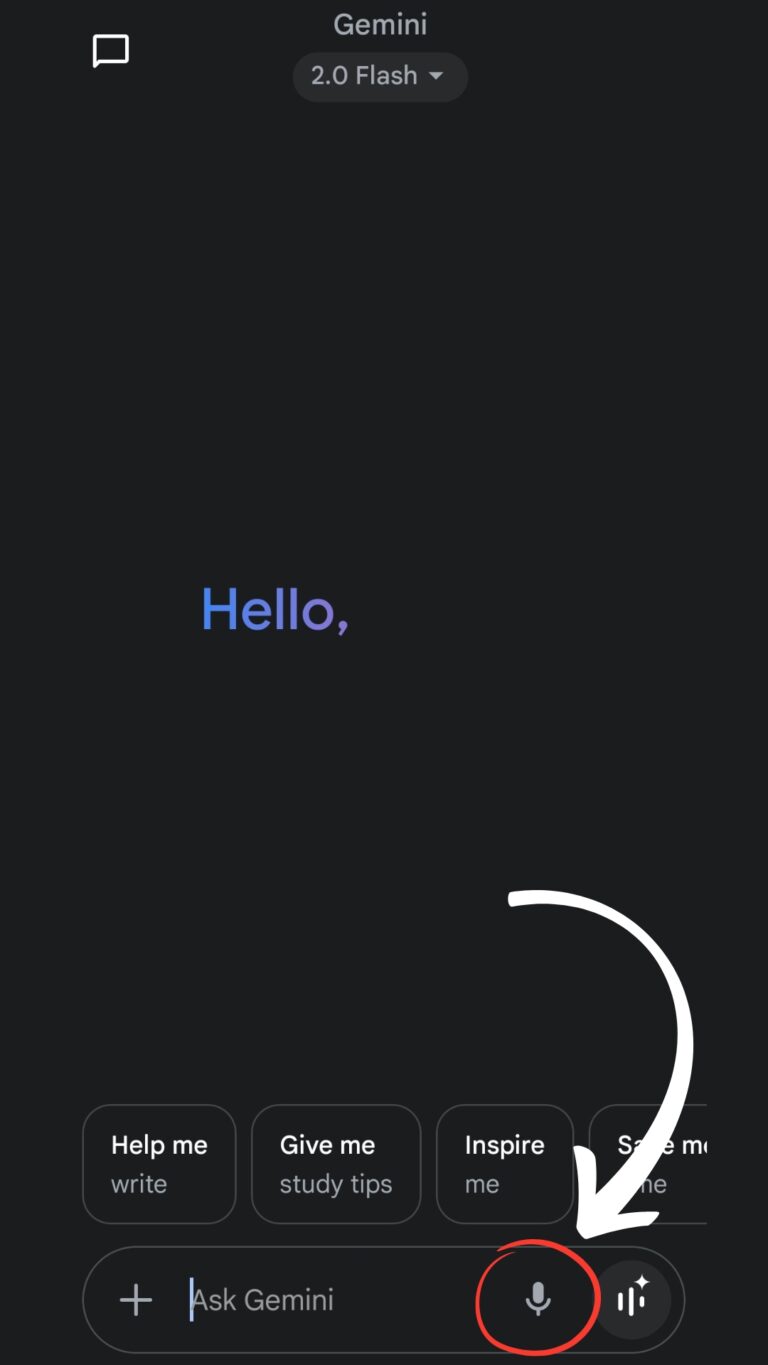
For quick conceptual clarifications during intensive study sessions, brainstorming points for essay writing, or even rapidly reviewing key facts, dates, and definitions on the go, utilize voice commands to interact with Gemini. This offers an incredibly convenient avenue for instant academic assistance, ensuring no crucial detail or challenging concept remains unresolved during your IAS preparation.
3. Image Input

When faced with a complex geographical map, a historical timeline, an economic survey graph, or a scientific diagram relevant to the IAS syllabus, simply capture a clear image and upload it to Gemini. You can then ask targeted questions about geographical phenomena, historical sequences, economic trends, or request explanations of scientific concepts illustrated visually.
Solving Questions From The IAS Syllabus Using Google Gemini.
Example 1: IAS Exam Indian Polity
Governance & Constitution
Official Path: GS Paper-II: Basic Structure Doctrine
The Deep Search Strategy
Research "Evolution of Basic Structure Doctrine in India" and "Conflict between Fundamental Rights and DPSPs." For the UPSC Civil Services Examination (CSE), understanding the "Tussle" between the Judiciary and the Legislature is vital. Grounding the prompt in the "Doctrine of Constitutionalism" ensures the AI explains the transition from parliamentary sovereignty to constitutional supremacy, providing the analytical depth required for the GS Paper-II mains.
Study Lab
UPSC Polity Module
"The evolution of the 'Basic Structure Doctrine' is a classic example of judicial creativity to preserve the spirit of the Constitution. Trace the judicial journey from the Shankari Prasad case to the Kesavananda Bharati case. Analyze how this doctrine has acted as a check on the amending power of the Parliament under Article 368."
"Act as a Constitutional Law Expert and UPSC CSE Mentor (Persona). Explain the Judicial Evolution of the Basic Structure Doctrine (Subject) in the context of the 24th and 25th Constitutional Amendment Acts (Context). Focus on the 'Doctrine of Implied Limitations.' Provide a chronological summary (Format) of how the Supreme Court redefined the scope of Article 368."
"Analyze the Check and Balance mechanism of the Basic Structure using Chain-of-Thought. Step 1: Define Article 368 and its original scope. Step 2: Explain the 'Judicial Review' aspect as a part of the basic structure. Step 3: Evaluate the Minerva Mills case (1980) and the Waman Rao case (1981). Step 4: Verify the 'Prospective Overruling' logic."
"Create a Constitutional Articles and Judicial Landmark Matrix for IAS aspirants. Structure: Core Concept, Associated Landmark Case, The 'UPSC Trap', and Mains Answer Value-Add. Constraints: Use a structured hierarchical list. No conversational filler. Ensure 100% accuracy for UPSC standards."
UPSC Logic Lab • Constitutional Framework
Gemini can further assist by:
- Providing the text of specific constitutional articles and amendments.
- Explaining the debates and controversies surrounding key constitutional provisions.
- Comparing and contrasting different constitutional amendments relevant to the IAS exam.
Example 2: IAS Exam Indian Economy, Analyzing Fiscal Policy.
Economic Development
Official Path: GS Paper-III: Fiscal Policy & Deficit Management
The Deep Search Strategy
Research "N.K. Singh Committee on FRBM Act" and "Components of Fiscal Deficit in India." For the UPSC CSE, understanding the "Quality of Deficit" is more important than the "Quantity." Grounding the prompt in the "Macroeconomic Stability" framework ensures the AI explains the link between fiscal prudence and private investment (crowding out effect), providing the analytical depth required for GS Paper-III mains.
Study Lab
UPSC Economy Module
"Act as a Former Finance Secretary and UPSC Economics Mentor (Persona). Explain the FRBM Act and Fiscal Consolidation (Subject) in the context of India's post-2003 trajectory (Context). Focus on the 'Escape Clause' and the 'Debt-to-GDP Ratio.' Provide a policy-oriented summary (Format)."
"Analyze the Impact of Fiscal Slippage and Off-Budget Borrowings using Chain-of-Thought. Step 1: Define Fiscal vs Primary Deficit. Step 2: Explain Extra-Budgetary Borrowings (EBBs). Step 3: Evaluate the Crowding Out Effect. Step 4: Verify the Quality of Expenditure."
"Create an Economic Indicators and Institutional Framework Matrix for IAS aspirants. Structure: Indicator/Concept, Measuring Body, The 'UPSC Trap', and Mains Value-Add. Constraints: Structured hierarchical list. No conversational filler. 100% accuracy."
UPSC Economy Lab • Fiscal Management Module
Gemini can further assist by:
- Providing data and trends related to India’s fiscal policy.
- Explaining different schools of thought on fiscal policy effectiveness.
- Analyzing the impact of specific government policies on the Indian economy relevant to the IAS exam.
Example 3: IAS Exam Modern Indian History, Understanding Social Reform Movements with Gemini
Freedom Struggle
Official Path: GS Paper-I: Non-Cooperation Movement
The Deep Search Strategy
Research "Causes of the Non-Cooperation Movement" and "Impact of the Khilafat Issue on Indian Nationalism." For the UPSC CSE, understanding the "Mass Mobilization" strategy of Gandhi is vital. Grounding the prompt in the "Transition from Elite Politics to Mass Politics" ensures the AI explains how the movement bridged communal and class divides, providing the analytical depth required for GS Paper-I mains.
Study Lab
UPSC History Module
"Act as a Historian and UPSC Modern History Faculty (Persona). Explain the Genesis of the Non-Cooperation Movement (Subject) in the context of the post-World War I era (Context). Focus on the 'Rowlatt Act,' 'Jallianwala Bagh Massacre,' and 'Economic distress.' Provide a thematic summary (Format)."
"Analyze the Withdrawal and Significance of the NCM using Chain-of-Thought. Step 1: Describe resistance methods. Step 2: Explain Chauri Chaura (1922). Step 3: Evaluate strategic logic behind withdrawal. Step 4: Verify Long-term Gains."
"Create a Modern History Events and Institutional Evolution Matrix for IAS aspirants. Structure: Event/Phase, Key Social Base, The 'UPSC Trap', and Mains Answer Value-Add. Constraints: Structured hierarchical list. No filler. 100% accuracy."
UPSC History Lab • Freedom Struggle Module
Gemini can further assist by:
- Providing timelines of social and religious reform movements.
- Explaining the contributions of other key reformers.
- Comparing and contrasting the ideologies of different reform movements relevant to the IAS exam.
Using Google Gemini for IAS Exam Deep Research
What is Deep Research?
Deep research for the IAS (UPSC Civil Services) involves using Google Gemini to connect static textbook knowledge with dynamic government policies and global geopolitics. It turns the AI into an administrative partner that helps you find the "Why" behind India's socio-economic challenges, moving beyond rote learning to the analytical depth needed for Mains answer writing and the Interview.
How It Helps You
- Dynamic Current Affairs Mapping: UPSC rarely asks direct questions. Gemini helps you link a single current event to GS Paper 1 (History/Geo), 2 (Governance), and 3 (Economy/Sec), providing a 360-degree view.
- Analytical Answer Writing: Deep research allows you to find balanced pro-con arguments for Mains topics, helping you structure answers that show administrative neutral thinking.
- Policy & Report Synthesis: Stay updated on the latest reports from NITI Aayog, ARC, and Economic Surveys—topics that are essential for high-scoring case studies and value-addition.
- Prelims Logic & Elimination: Instead of just memorizing facts, Gemini can research the "logic" behind constitutional provisions or economic trends to help you solve tricky elimination-based questions.
Grounding and Context
What it is: "Grounding" means tethering Gemini to official UPSC syllabi and government data so it doesn't give you unverified news or "hallucinated" political bias.
Why it matters: UPSC expects factual accuracy and official perspectives. Grounding ensures you use sources like PIB, PRS Legislative Research, and India Year Book.
How you do it:
1. Download the latest official UPSC CSE notification or the PDF of a standard report like the Economic Survey.
2. Upload the PDF to Gemini.
3. Use the command: "Filter all your future research through the administrative perspective and syllabus modules found in this official UPSC guide."
System-Task-Range Prompting
The Google Suggested MethodThis structured framework allows you to customize the AI's persona and objective. Use it to create multi-purpose research tasks for Prelims or Mains.
“System: (Senior UPSC Evaluator | Top Ranker Analyst | Expert Policy Consultant). Task: (Audit my answer structure | Predict prelims traps | Critique a policy draft | Synthesize cross-paper data). Range: (Mains General Studies only | Current affairs from last 12 months | GS Paper 4 Ethics focus | High-yield topics). Research the latest developments in [UPSC Topic, e.g., Green Hydrogen Policy]. Summarize the top 3 administrative challenges and create a 150-word Mains-style practice question. Use only official PIB and government sources.”
The India Should Know Technique
The "Reverse Engineering" MethodThis method lets you dictate the exact outcome before the AI processes data. Use it to specify the required info, sources, emphasis, style, and exclusions.
“I want to create a high-density study brief for [IAS Topic, e.g., Decentralized Planning in India]. Information Required: (Constitutional links | Major challenges in 2025 | Impact on rural economy | Administrative solutions). Sources: (Official NITI Aayog reports | PIB press releases | Rajya Sabha TV debates | standard UPSC textbooks). Emphasis: (Bottom-up approach | Federalism issues | Success stories from Indian states | Key keywords for Mains). Presentation: (Structured list with bullet points | Comparison table for states | Step-by-step logic summary | Flowchart description). Exclusions: (Generic political opinions | Vague data | Basic definitions | Unverified news clips | Long paragraphs). Once generated, I will ask you to create a logic-based case study for this brief.”
Tips for Better Deep Research
- The "Logic Loop": After an answer, ask: "What is the most common reason a candidate fails to address the 'critical' part of this question?" to identify answer-writing traps.
- Verify Data with Google: Always use the "Google" search button to verify the latest GDP figures, forest survey numbers, or recent constitutional amendments mentioned in your research.
- Visual to Text: If you are studying complex geographical maps or satellite data, describe the terrain to Gemini and ask it to explain the "unseen" strategic or economic importance of that area.
- Chain of Reasoning: For GS Paper 4 (Ethics), tell Gemini: "Explain the transition from the ethical dilemma to the final decision step-by-step so I can write a balanced case study response."
Guided Learning For IAS With Google Gemini As Your Personal Coach
What is Guided Learning with AI?
For IAS aspirants, guided learning with AI is like having a personal UPSC mentor available 24/7 to help you crack the logic behind multi-dimensional analysis, ethical dilemmas, and General Studies. Instead of just searching for facts, you use Gemini to simulate a high-level coaching dialogue. It identifies gaps in your fundamental reasoning and explains complex policy and historical links in ways that match the analytical mindset required for the civil services.
How it helps you for this course/exam
- Master Multi-dimensional Analysis: The UPSC Mains requires you to link History, Geography, and Economy to a single issue. Gemini can help you break down these links, ensuring you understand the "Why" behind administrative decisions rather than just memorizing a timeline.
- Improve Mains Answer Structuring: Whether it is an Ethics case study or a GS Paper II argument, Gemini can help you identify the logical gap in your structure, teaching you how to write balanced answers with a proper Intro, Body, and Conclusion.
- CSIR & Aptitude Efficiency: It can act as a technical logic coach, helping you find time-saving shortcuts for CSAT problems and providing reasoning for data interpretation, which is critical for clearing the Prelims barrier.
How to do it in short
1. Define the Role: Tell Gemini it is an expert UPSC Mentor specializing in General Studies, Ethics, or your Optional subject.
2. Set the Boundary: Tell it NOT to give you a model answer immediately—insist on guiding you through the analysis first.
3. Interactive Dialogue: Ask it to explain a policy implication or quiz you on a historical link one question at a time.
4. Feedback Loop: Provide your points for an answer, and let the AI correct your reasoning based on UPSC standards.
Google Suggested Method: Conversational Scaffolding
Google’s recommended approach focuses on "conversational scaffolding." For IAS, this means starting with basic NCERT rules or facts and letting the AI guide you step-by-step toward solving full-scale complex Mains-level questions through a back-and-forth chat.
“I am studying for the IAS (UPSC CSE) exam, specifically focusing on [Subject/Chapter]. I want you to act as a supportive mentor. Start by asking me what I already know about [Specific Topic], and then help me build my understanding by asking follow-up questions that connect basic NCERT facts to advanced analytical issues. Don't give me all the information at once; let's take it step-by-step.”
Google Suggested Method: The Socratic Method
The Socratic method is the gold standard for mastering UPSC logic. Instead of the AI explaining an ethical theory or a policy change to you, it asks you a series of disciplined questions. This forces you to think through the logical and administrative flow yourself, which is critical for the Interview stage.
“I want to learn the core logic behind [Topic]. Act as a Socratic tutor for IAS prep. Do not give me the explanation. Instead, ask me a leading question that helps me realize the core principle or administrative logic behind this. Once I answer, ask another question to push my thinking into real-world policy application until I have fully grasped the concept.”
The India Should Know Method
The "Reverse Engineering" MethodThe India Should Know method is about Reverse Engineering. Instead of letting the AI wander, you put heavy constraints on the output. You define the exact "shape" of the session—specifying the need for high-density analytical formats like 'Critical Analysis'—before you ever give it the raw data or syllabus details.
“Intent: Act as an expert UPSC Professor specializing in [Subject]. Context: I am preparing for my Mains exam and need to master [Chapter/Topic]. Format Constraints: * Conduct a 'Step-by-Step Critical Analysis' or 'Interdisciplinary Quiz' session. * Ask exactly one question or sub-part at a time. * Wait for my response before moving to the next part of the analysis. * If I am wrong, provide a logical hint rather than the final answer. * Use a professional and balanced tone. * After 5 questions, provide a 'Conceptual Gap Report' in a table format (Column 1: GS Concept, Column 2: Mastery Level 1-10, Column 3: Multi-dimensional Improvement Area). Raw Data: [Paste your notes, current affairs snippets, or syllabus here] Instruction: Once you understand these constraints and the data provided, acknowledge this by asking the first question.”
Tips for Guided Learning
- Be Honest with the AI: If you don't understand an analytical hint, say "I don't understand the economic significance here, explain it using a everyday analogy." The AI can pivot its teaching style immediately.
- Use Voice Mode for Interviews: If you are on the Gemini app, use Gemini Live. Talking through the logic of an ethical dilemma or a current issue out loud helps build the clarity and confidence needed for the UPSC Interview.
- Feed it Past Year Papers: Paste specific tricky questions from previous year GS papers into the "Raw Data" section. This ensures the AI quizzes you on the exact level of analytical rigor expected in the IAS exam.
- Review the Gap Report: Don't just finish the session. Look at the "Conceptual Gap Report" and ask Gemini to create a 10-minute focus summary sheet just for the areas where you need more interdisciplinary clarity.
Note: Once Gemini produces the outcome based on these prompts, you can further improve it by saying: "That was great, but make the questions more focused on [Specific Sub-topic] and use more real-world, administrative-style examples."
Important Links for IAS Aspirants
Official UPSC Exam Portals
UPSC Online Application (UPSCOnline): The portal for One-Time Registration (OTR) and submitting your Prelims/Mains application forms.
UPSC Previous Year Papers: Direct access to official question papers to understand the 2026 trend shifts.
Current Affairs & Policy Research
Press Information Bureau (PIB): The most critical source for real-time government updates, scheme launches, and the Year End Review 2025-2026.
PRS Legislative Research: An absolute must for GS-2 (Polity). Use this to track Bills & Acts and read the “Monthly Policy Review.”
NITI Aayog Reports: Essential for GS-3 (Economy/Environment) value addition. Look for the SDG India Index and latest sectoral reports.
India Budget & Economic Survey: The definitive source for all economic data, themes, and budgetary allocations for the 2026-27 cycle.
Core Academic Resources
NCERT Digital Repository: Free PDF downloads of all NCERT textbooks (Class 6-12) for your static foundation.
Yojana & Kurukshetra Magazines: Monthly government journals providing deep-dives into socio-economic issues for Mains and Essays.
Ministry of External Affairs (MEA): The go-to source for India’s foreign policy updates and bilateral relations (GS-2 International Relations).
How to use these with Gemini?
Direct Analysis: You can copy a link from PRS India or PIB and ask Gemini: “Summarize the 3 most important points of this bill for a UPSC GS-2 Mains answer.”
Data Extraction: Paste the URL of the latest Economic Survey and ask: “Extract 5 key statistics related to Agricultural Growth that I can use in my GS-3 notes.”
Your AI-Powered Edge in Tackling the IAS Exam
Google Gemini, with its comprehensive ability to process information across text and images, coupled with its vast and constantly updated knowledge base, offers an unparalleled advantage in your rigorous preparation for the IAS exam. By acting as an intelligent and readily available tutor, capable of clarifying intricate concepts, providing insightful analyses, and guiding you through the vast syllabus on demand, it empowers you to engage with the demanding curriculum on a deeper and more effective level.
Seamlessly integrating Gemini with your IAS study material creates a dynamic and highly supportive learning ecosystem, enabling you to tackle complex topics, stay updated with current affairs, and develop the critical thinking and essay writing skills necessary to excel in this prestigious examination. Embrace this powerful AI tool as your dedicated ally, and unlock your full potential to achieve your civil service aspirations.
The future of personalized, insightful, and comprehensive learning is here, empowering you to conquer the IAS exam.
Written By
Prateek Singh.
Last Updated – December, 2025
About The Author
Prateek Singh believes the best way to learn is to apply knowledge directly. He leverages AI tools every day for his professional work, using them to create sales presentations, perform lead generation, execute data visualization, and manage all digital marketing and SEO efforts. He also used AI to learn the diverse skill set required to build IndiaShouldKnow.com from the ground up, including web development, UI/UX design, color theory, and graphic design. Having researched and utilized dozens of AI tools, Prateek has written over a hundred articles detailing how others can use them to enhance their own learning and productivity. He shares this practical, self-taught knowledge to empower others on their own journey of continuous learning.
FAQs About AI Use.
Can I trust every answer an AI tool gives me for my studies?
A: No, you should not trust every answer completely. Think of an AI as a super-smart assistant that has read most of the internet—but not every book in the library is accurate.
AI can sometimes make mistakes, misunderstand your question, or use outdated information.
It can even “hallucinate,” which means it confidently makes up an answer that sounds real but is completely false.
Rule of Thumb: Use AI answers as a great starting point, but never as the final, absolute truth. Always double-check important facts.
How can I verify the information I get from an AI for my academic work?
A: Verifying information is a crucial skill. It’s like being a detective for facts. Here are four simple steps:
Check Your Course Material: Is the AI’s answer consistent with what your textbook, lecture notes, or professor says? This is your most reliable source.
Look for Reputable Sources: Ask the AI for its sources or search for the information online. Look for links from universities (.edu), government sites (.gov), respected news organizations, or published academic journals.
Cross-Reference: Ask a different AI the same question, or type your question into a standard search engine like Google. If multiple reliable sources give the same answer, it’s more likely to be correct.
Use Common Sense: If an answer seems too perfect, too strange, or too good to be true, be extra skeptical and investigate it further.
What is the difference between using AI for research and using it to plagiarize?
A: This is a very important difference. It’s all about who is doing the thinking.
Using AI for Research (Good ✅):
Brainstorming topics for a paper.
Asking for a simple explanation of a complex theory.
Finding keywords to use in your library search.
Getting feedback on your grammar and sentence structure.
You are using AI as a tool to help you think and write better.
Using AI to Plagiarize (Bad ❌):
Copying and pasting an AI-generated answer directly into your assignment.
Asking the AI to write an entire essay or paragraph for you.
Slightly rephrasing an AI’s answer and submitting it as your own original thought.
You are letting the AI do the thinking and work for you.
How can I use AI ethically to support my learning without violating my school's academic honesty policy?
A: Using AI ethically means using it to learn, not to cheat. Here’s how:
Know the Rules: First and foremost, read your school’s or professor’s policy on using AI tools. This is the most important step.
Be the Author: The final work you submit must be yours. Your ideas, your structure, and your arguments. Use AI as a guide, not the writer.
Do the Heavy Lifting: Use AI to understand a topic, but then close the chat and write your summary or solve the problem yourself to make sure you have actually learned it.
Be Transparent: If you used an AI in a significant way (like for brainstorming), ask your professor if you should mention it. Honesty is always the best policy.
Can an AI's answer be biased? How can I detect this in its responses?
A: Yes, an AI’s answer can definitely be biased. Since AI learns from the vast amount of text on the internet written by humans, it can pick up and repeat human biases.
Here’s how to spot potential bias:
Look for Opinions: Does the answer present a strong opinion as a fact?
Check for One-Sidedness: On a topic with multiple viewpoints (like politics or economics), does the AI only show one side of the argument?
Watch for Stereotypes: Does the answer use generalizations about groups of people based on their race, gender, nationality, or other characteristics?
To avoid being misled by bias, always try to get information from multiple, varied sources.
Is it safe to upload my personal notes, research papers, or assignments to an AI tool?
A: It is best to be very careful. You should not consider your conversations with most public AI tools to be private.
Many AI companies use your conversations to train their systems, which means employees or contractors might read them.
There is always a risk of data breaches or leaks.
A Simple Safety Rule: Do not upload or paste any sensitive information that you would not want a stranger to see. This includes:
Personal identification details.
Confidential research or unpublished papers.
Your school assignments before you submit them.
Any financial or private data.
Sign Up for Our Newsletter To Learn More About the Latest In AI And Learn How To Use It.
Unlock your learning potential and stay ahead in the age of AI! Join the IndiaShouldKnow.com newsletter to discover how to seamlessly integrate Google AI into your studies for school, entrance exams, and college. Plus, get the latest insights on cutting-edge AI tools that can empower your career and enrich your life. Subscribe now for monthly updates.