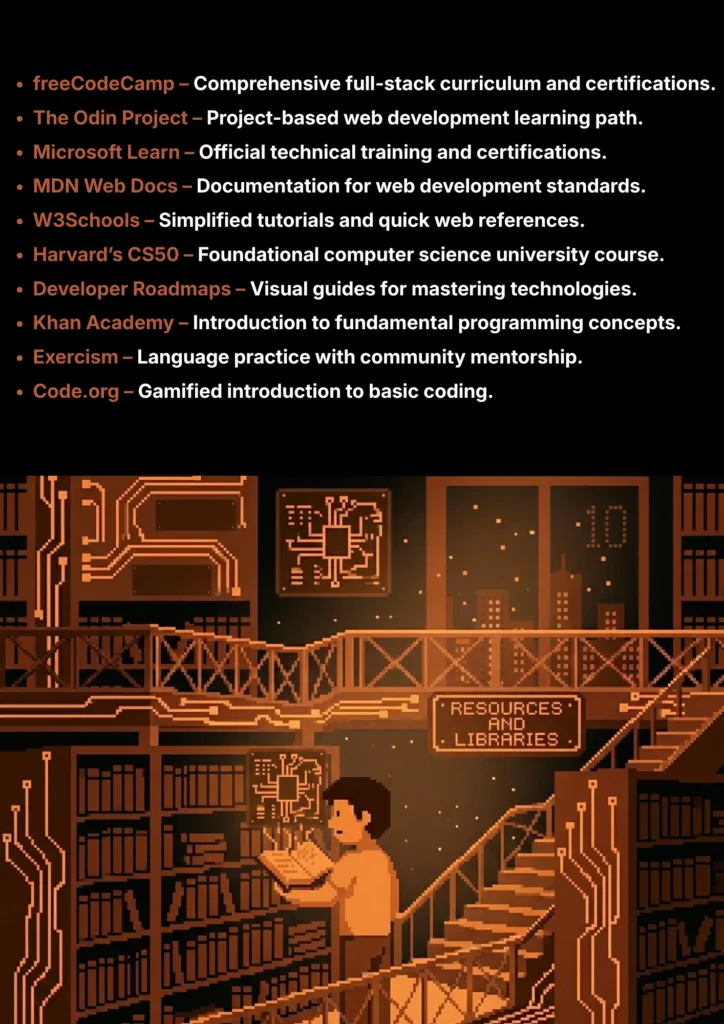
10 Amazing Free Resources to Learn Coding & Web Development
So, you want to learn how to code. That’s awesome! But it can be tough to know where to start. Coding bootcamps can cost a fortune, and many online courses are hidden behind expensive subscriptions. It’s easy to feel stuck, wondering how you can possibly gain the skills you need for a career in tech without a big budget.
What if you could access a complete, university-level education in web development, build a portfolio of real-world projects, and join a global community of learners, all for free?
That’s the reality today, thanks to an incredible number of high-quality, free resources. This guide is built for students who are ready to learn and build. We’ve done a deep dive to find the best platforms for learning coding and web development that are genuinely free forever, allowing you to go from an absolute beginner to a job-ready developer.
But what if you could access a world-class education in AI and prompting, taught by experts from Google, DeepLearning.AI, and top universities, all for free?
That’s the incredible reality of the modern learning landscape. This guide is built for students who are eager to learn but are on a budget. We’ve done a deep dive to find the best resources for learning AI that are genuinely free forever or offer extensive free tiers, allowing you to build valuable, career-ready skills
What Can You Actually Do With These Resources?
Before we dive into the list, it's helpful to understand what makes these resources so game-changing for students.
- Learn Job-Ready Skills: Master the full stack of web development, from HTML, CSS, and JavaScript to backend technologies like Node.js and databases.
- Build a Professional Portfolio: Create a collection of impressive, real-world projects that you can showcase to potential employers.
- Get Hands-On Practice: Solve hundreds of coding challenges and get feedback on your code from a community of peers and mentors.
- Earn Free Certifications: Gain valuable credentials to add to your resume and LinkedIn profile to prove your skills.
Quick Comparison Table
| Tool Name | Best For | Pricing Model | Ease of Use |
|---|---|---|---|
| freeCodeCamp | Full-Stack Curriculum & Certs | Completely Free | Beginner |
| The Odin Project | Project-Based Web Development | Completely Free | Beginner |
| Microsoft Learn | Official Microsoft Certifications | Completely Free | Beginner to Intermediate |
| MDN Web Docs | The “Bible” of Web Standards | Completely Free | Intermediate |
| W3Schools | Quick Reference & Examples | Completely Free | Beginner |
| Harvard’s CS50 | Foundational Computer Science | Free Course Access | Intermediate |
| Developer Roadmaps | Visual Learning Paths | Completely Free | Beginner |
| Khan Academy | Intro to Programming Concepts | Completely Free | Beginner |
| Exercism | Code Practice with Mentorship | Free (Non-Profit) | Intermediate |
| Code.org | Fun, Gamified Introduction to Coding | Completely Free | Beginner |
1. freeCodeCamp
freeCodeCamp is a non-profit organization that has helped millions learn to code through a massive, project-based curriculum. You learn by building real-world projects, and after completing each section, you earn a respected, completely free certification. It is one of the most supportive and comprehensive learning communities available.
- Best For: Full-stack curriculum with free certifications and project-based learning.
- Use Case Example: An absolute beginner starts the "Responsive Web Design" course and builds a portfolio site to earn their first certification.
- Pricing Details: Completely Free. The entire curriculum and all 11 certifications are 100% free forever.
- What You’ll Need: A web browser.
- Learning Curve: Beginner. Designed to take you from the very basics to advanced topics step-by-step.
- What to Watch Out For: It is entirely self-paced, which requires high self-discipline to stay on track.
2. The Odin Project
The Odin Project focuses on building a deep understanding of web development through hands-on practice. It provides a highly structured curriculum that guides you through building a portfolio of complex, real-world projects. It teaches you how to think like a developer by solving problems independently.
- Best For: Rigorous, project-based web development curriculum for a deep understanding.
- Use Case Example: A student builds a full-stack social media clone to demonstrate professional-level skills to employers.
- Pricing Details: Completely Free. Open-source and maintained entirely by a community of volunteers.
- What You’ll Need: A computer capable of running Linux or a Virtual Machine.
- Learning Curve: Beginner (Challenging). Less hand-holding compared to browser-based platforms.
- What to Watch Out For: Installing a real developer environment (Linux) can be a hurdle for some beginners.
3. Microsoft Learn
Microsoft Learn is the official platform for interactive online training on Microsoft technologies. It offers hundreds of free learning paths covering cloud computing (Azure), C#, and Power Platform, helping you prepare for industry-recognized Microsoft certifications.
- Best For: Official Microsoft training and certifications for technologies like Azure and C#.
- Use Case Example: A student completes the Azure Fundamentals path to prepare for an official cloud certification exam.
- Pricing Details: Completely Free. All learning paths and interactive modules are free to access.
- What You’ll Need: A web browser and a free Microsoft account for tracking progress.
- Learning Curve: Beginner to Intermediate. Clear, modular content suitable for all levels.
- What to Watch Out For: Content is specifically focused on the Microsoft ecosystem and tools.
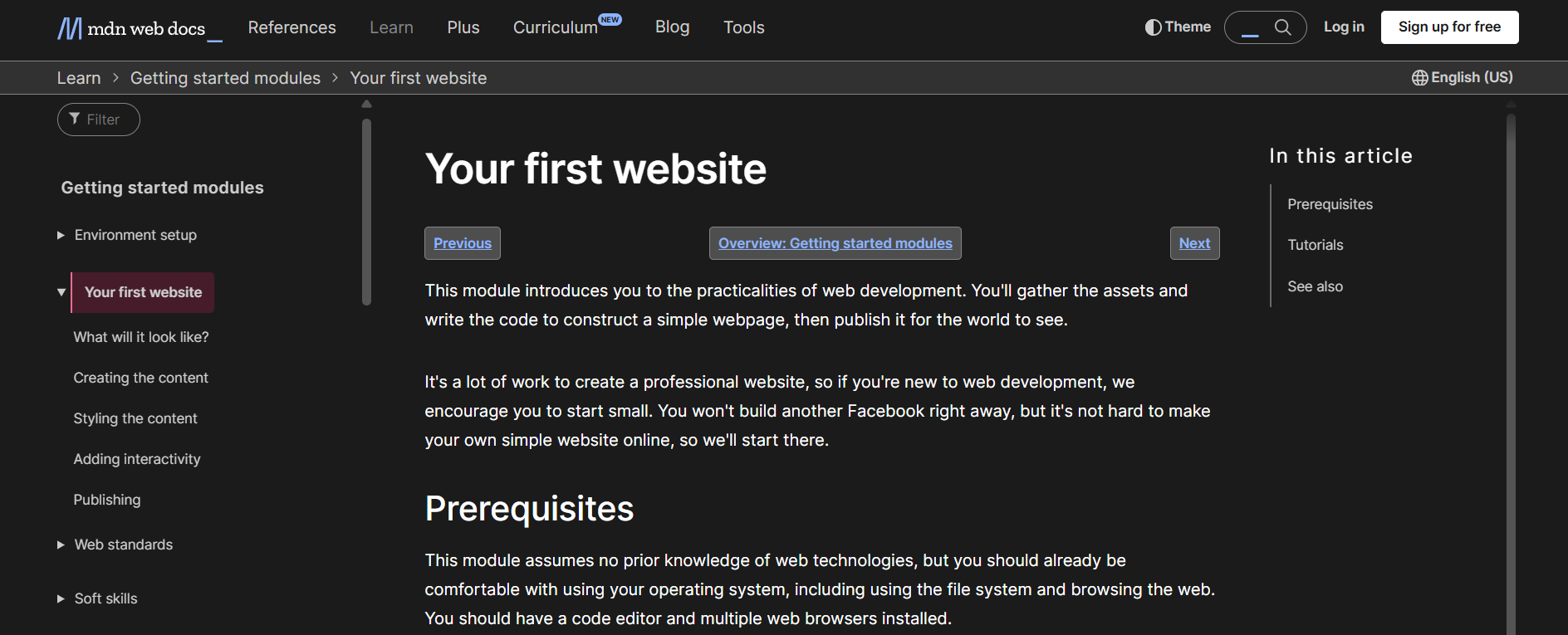
4. MDN Web Docs
Maintained by Mozilla, MDN Web Docs is often called the "Bible" of web development. It provides the most accurate and up-to-date documentation for HTML, CSS, and JavaScript. It is the go-to resource for professional developers to understand how web technologies actually work.
- Best For: The ultimate reference and documentation for web standards and technologies.
- Use Case Example: A developer looks up the technical details of a new CSS property to ensure cross-browser compatibility.
- Pricing Details: Completely Free. Open-source documentation accessible to everyone.
- What You’ll Need: A web browser.
- Learning Curve: Intermediate. Content is very technical and detailed.
- What to Watch Out For: Can be overwhelming for absolute beginners due to its high level of technical detail.
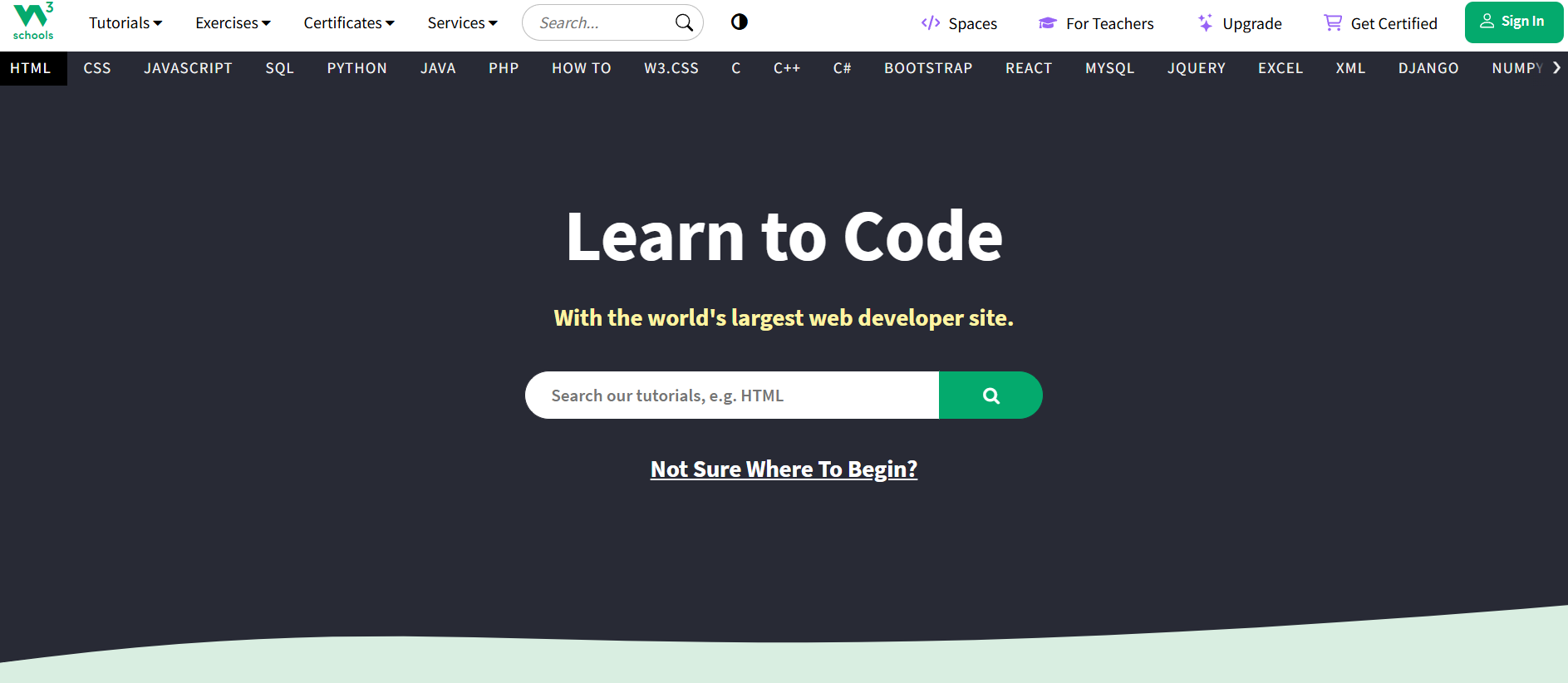
5. W3Schools
W3Schools is a beginner-friendly platform famous for its "Try it Yourself" interactive examples. It provides clear, simple explanations of web coding languages, making it an excellent quick reference for learners who want to see code in action immediately.
- Best For: Quick reference, simple explanations, and interactive code examples.
- Use Case Example: A student quickly checks the syntax for an HTML table and tests it using the built-in editor.
- Pricing Details: Completely Free. The vast majority of tutorials and examples are 100% free.
- What You’ll Need: A web browser.
- Learning Curve: Beginner. Designed for simplicity and immediate feedback.
- What to Watch Out For: Less in-depth than MDN; focused more on "how to use" rather than deep technical theory.
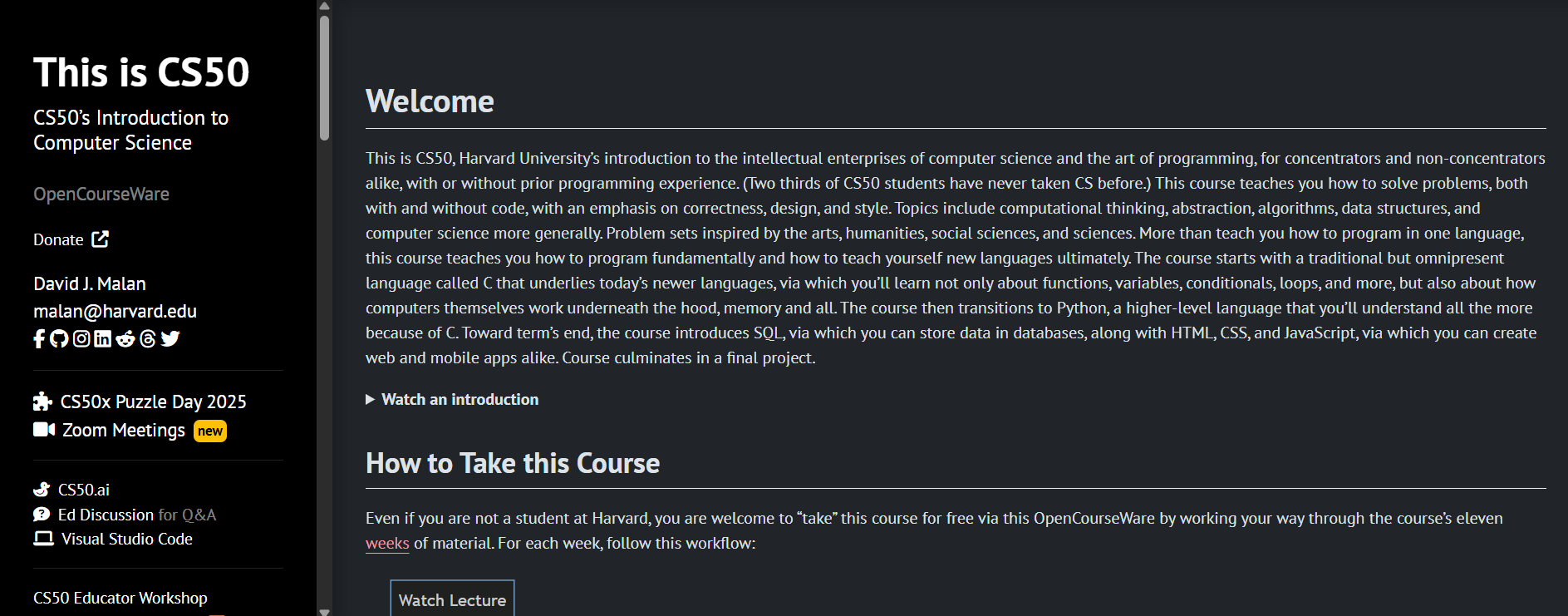
6. Harvard’s CS50
CS50 is Harvard University's legendary introduction to computer science. The course is available online for free and teaches you how to think like a programmer. It covers foundational concepts like algorithms, data structures, and memory through engaging lectures and rewarding problem sets.
- Best For: Building a strong foundational understanding of computer science principles.
- Use Case Example: A student learns the "why" behind their code by studying memory management and algorithms.
- Pricing Details: Free Course Access. All lectures and problem sets are free via edX (paid for verified certificate).
- What You’ll Need: A web browser.
- Learning Curve: Intermediate. Fast-paced and famously challenging problem sets.
- What to Watch Out For: Requires a significant time commitment and serious dedication to complete.
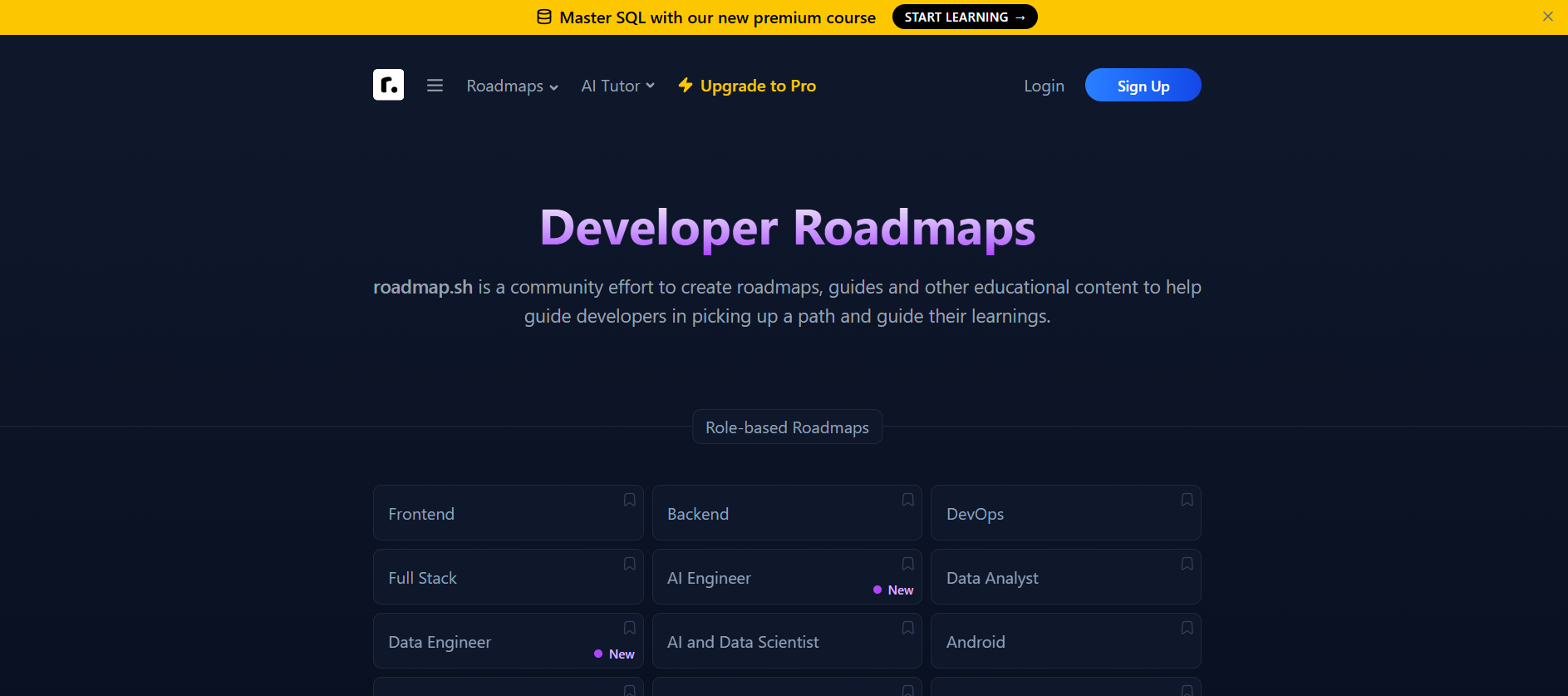
7. Developer Roadmaps
Roadmap.sh is a community-driven effort that provides visual learning paths for tech careers. It helps you understand what technologies to learn and in what order, giving you a clear picture of the entire journey to becoming a frontend, backend, or DevOps engineer.
- Best For: Visual learning paths to understand what to learn and the correct order of study.
- Use Case Example: A student who knows basic JS uses the roadmap to see that they should learn Git and React next.
- Pricing Details: Completely Free. An open-source project with free roadmaps and guides.
- What You’ll Need: A web browser.
- Learning Curve: Beginner. Visual charts make the complex world of tech easy to understand.
- What to Watch Out For: It maps out the path but doesn't host the tutorials; you'll need other resources for actual study.
8. Khan Academy
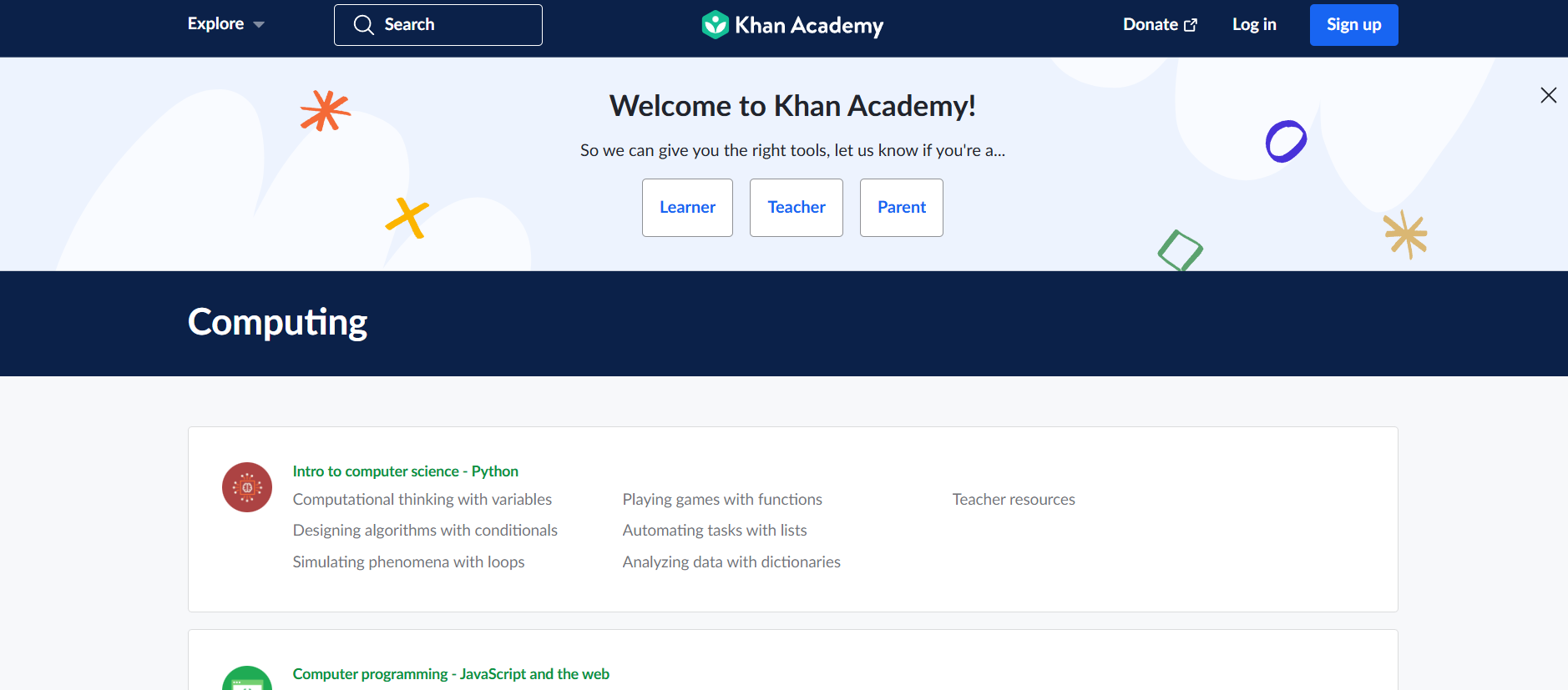
Khan Academy offers a gentle, non-intimidating introduction to programming. Its interactive tutorials allow you to write code directly in your browser and see the results instantly. It is perfect for learning the absolute fundamentals of logic and syntax through drawing and animation.
- Best For: A friendly introduction to the core concepts of programming for absolute beginners.
- Use Case Example: A student with zero experience learns the basics of JS by drawing shapes on a screen with code.
- Pricing Details: Completely Free. As a non-profit, all content is 100% free forever.
- What You’ll Need: A web browser.
- Learning Curve: Beginner. Extremely welcoming and easy to follow.
- What to Watch Out For: Focused on absolute fundamentals; you'll need other resources for job-ready skills.
9. Exercism
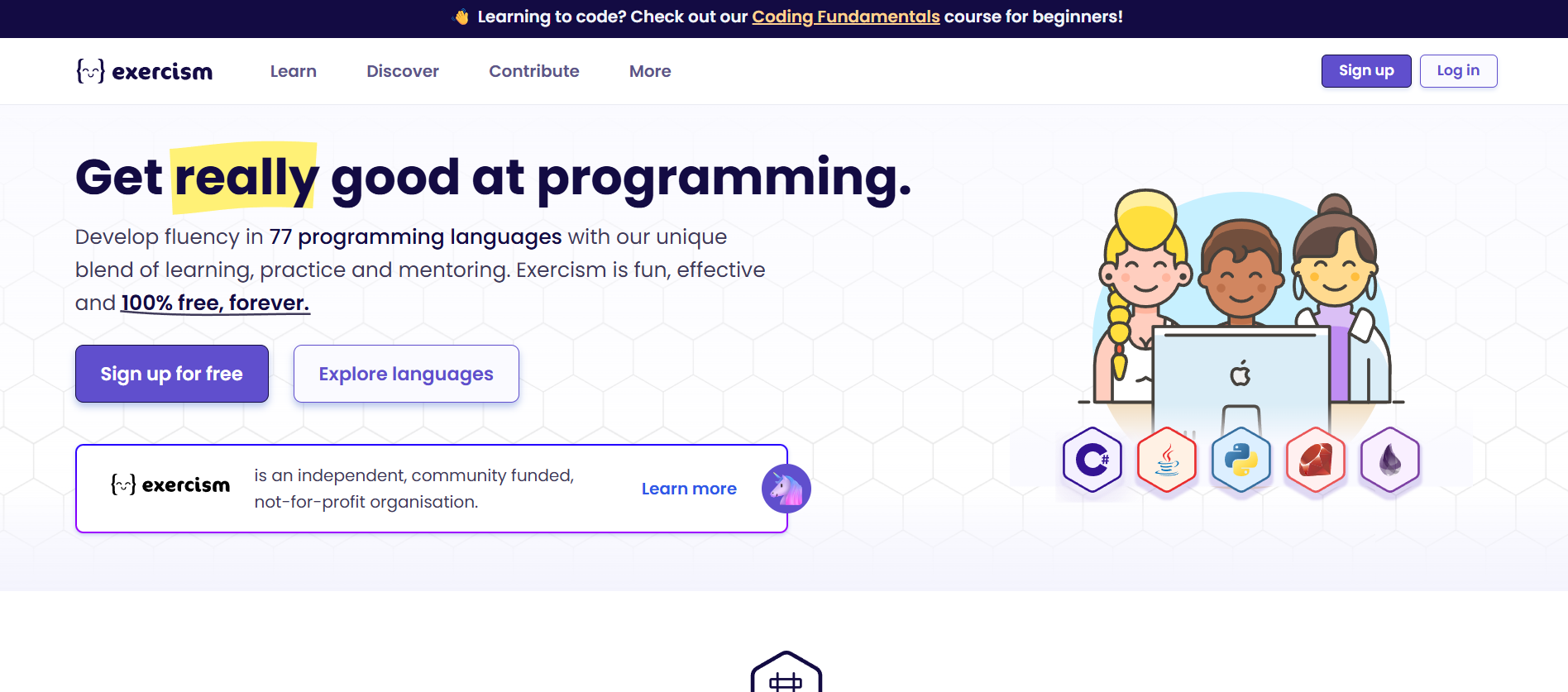
Exercism is a non-profit platform focused on mastering a language through practice and human mentorship. You solve challenges in over 60 languages and get one-on-one feedback from volunteer mentors to improve your code quality and efficiency.
- Best For: Practicing coding skills and getting free, one-on-one mentorship from real developers.
- Use Case Example: A student submits a Python solution and receives feedback from a mentor on how to write cleaner loops.
- Pricing Details: Completely Free. Platform and mentorship are supported by donations and volunteers.
- What You’ll Need: Local language installation and the Exercism command-line interface.
- Learning Curve: Intermediate. Best for those who already know the basics of a language.
- What to Watch Out For: Requires using the command line, which can be tricky for absolute beginners.
10. Code.org
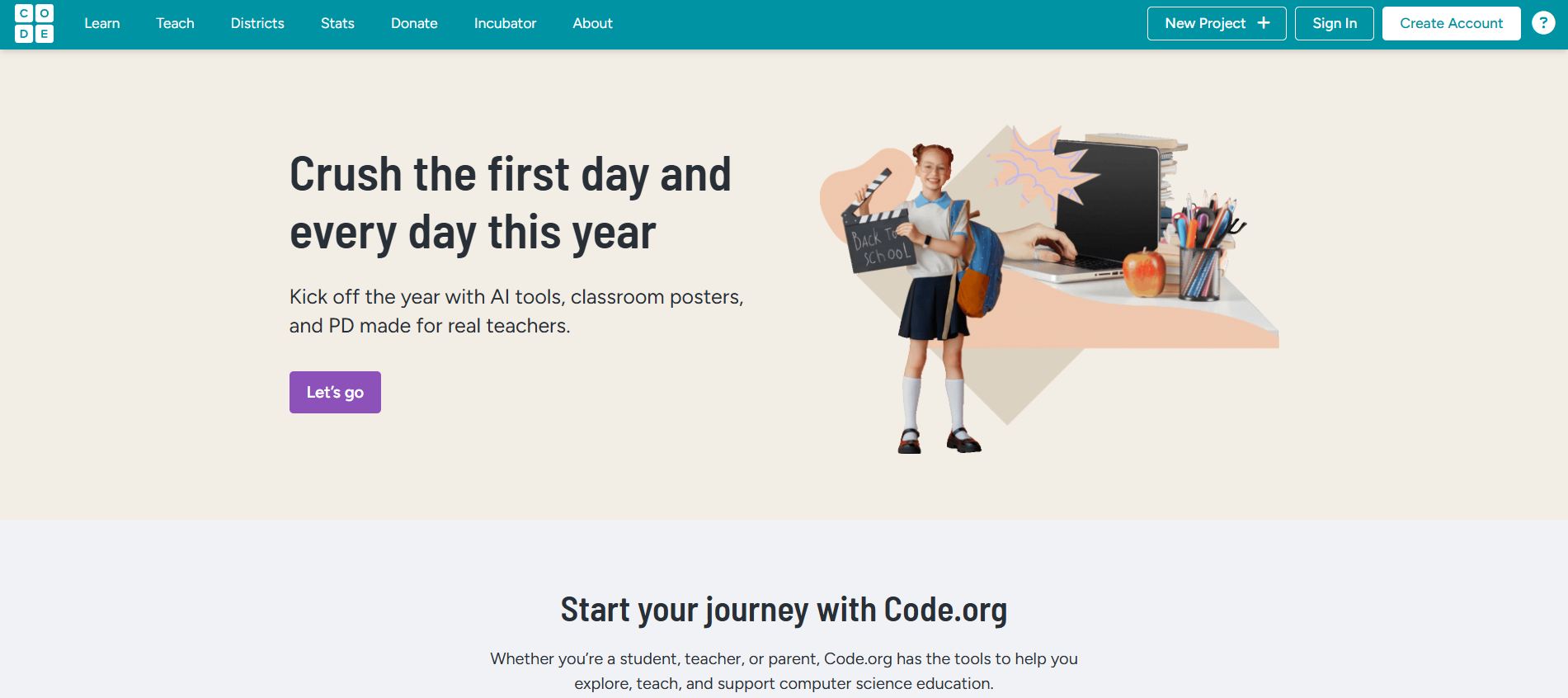
Code.org is dedicated to making computer science accessible through fun, gamified activities. It uses popular characters from games and movies to teach fundamental logic through block-based coding, making it a pressure-free way to explore the world of technology.
- Best For: A fun, gamified, and highly accessible introduction to coding logic.
- Use Case Example: An unsure student tries an "Hour of Code" activity to see if they enjoy programming logic.
- Pricing Details: Completely Free. Non-profit resource that is 100% free for everyone.
- What You’ll Need: A web browser.
- Learning Curve: Beginner. Very easy and designed to be approachable for young learners and beginners.
- What to Watch Out For: Primarily aimed at introducing logic rather than teaching production-level syntax.
Which Resource Should You Start With?
Feeling a bit overwhelmed by the options? Here’s a quick guide:
- Structured Developer Curriculum: If you want a complete, structured curriculum from start to finish, choose freeCodeCamp or The Odin Project because they are the most comprehensive paths to becoming a job-ready developer.
- Beginner-Friendly Foundations: If you want a gentle and fun introduction to the very basics, start with Code.org or Khan Academy since their gamified approach is very motivating.
- University-Level Fundamentals: If you want a university-level understanding of computer science fundamentals, there is nothing better than Harvard's CS50 for a world-class education.
- Language Practice & Mentorship: If you just want to practice and get better at a language you already know, go to Exercism and get valuable feedback from a real human mentor.
Your Path To Becoming The Best Coder You Can Be Starts Today
As you can see, you have access to a world-class education in coding and web development without needing to spend a single rupee. From comprehensive, project-based curricula to interactive tutorials and one-on-one mentorship, these free resources provide a clear path for any student to build the skills that are shaping the future.
The best way to learn to code is by writing code. Pick one resource from this list that excites you the most, whether it’s a full curriculum or a fun interactive course, and write your first line of code today. You’ll be amazed at what you can build.
Written By
Prateek Singh.
Last Updated – March, 2026
About The Author
Prateek is a self-taught practitioner who believes the only real way to learn is by doing. He created IndiaShouldKnow.com from scratch, using AI as his primary learning partner to navigate everything from web development and UI/UX design to color theory and graphic engineering.
He works within the “engine room” of AI daily, using these tools to manage professional workflows including data visualization, digital marketing systems, and SEO architecture. Having personally tested and refined dozens of AI models across hundreds of real-world scenarios, Prateek focuses on the “how” behind the technology. He shares his self-taught workflows and prompting pillars to help others move past basic chat interactions and start using AI as a high-precision tool for their own goals.
FAQs About AI Use.
Can I trust every answer an AI tool gives me for my studies?
A: No, you should not trust every answer completely. Think of an AI as a super-smart assistant that has read most of the internet—but not every book in the library is accurate.
AI can sometimes make mistakes, misunderstand your question, or use outdated information.
It can even “hallucinate,” which means it confidently makes up an answer that sounds real but is completely false.
Rule of Thumb: Use AI answers as a great starting point, but never as the final, absolute truth. Always double-check important facts.
How can I verify the information I get from an AI for my academic work?
A: Verifying information is a crucial skill. It’s like being a detective for facts. Here are four simple steps:
Check Your Course Material: Is the AI’s answer consistent with what your textbook, lecture notes, or professor says? This is your most reliable source.
Look for Reputable Sources: Ask the AI for its sources or search for the information online. Look for links from universities (.edu), government sites (.gov), respected news organizations, or published academic journals.
Cross-Reference: Ask a different AI the same question, or type your question into a standard search engine like Google. If multiple reliable sources give the same answer, it’s more likely to be correct.
Use Common Sense: If an answer seems too perfect, too strange, or too good to be true, be extra skeptical and investigate it further.
What is the difference between using AI for research and using it to plagiarize?
A: This is a very important difference. It’s all about who is doing the thinking.
Using AI for Research (Good ✅):
Brainstorming topics for a paper.
Asking for a simple explanation of a complex theory.
Finding keywords to use in your library search.
Getting feedback on your grammar and sentence structure.
You are using AI as a tool to help you think and write better.
Using AI to Plagiarize (Bad ❌):
Copying and pasting an AI-generated answer directly into your assignment.
Asking the AI to write an entire essay or paragraph for you.
Slightly rephrasing an AI’s answer and submitting it as your own original thought.
You are letting the AI do the thinking and work for you.
How can I use AI ethically to support my learning without violating my school's academic honesty policy?
A: Using AI ethically means using it to learn, not to cheat. Here’s how:
Know the Rules: First and foremost, read your school’s or professor’s policy on using AI tools. This is the most important step.
Be the Author: The final work you submit must be yours. Your ideas, your structure, and your arguments. Use AI as a guide, not the writer.
Do the Heavy Lifting: Use AI to understand a topic, but then close the chat and write your summary or solve the problem yourself to make sure you have actually learned it.
Be Transparent: If you used an AI in a significant way (like for brainstorming), ask your professor if you should mention it. Honesty is always the best policy.
Can an AI's answer be biased? How can I detect this in its responses?
A: Yes, an AI’s answer can definitely be biased. Since AI learns from the vast amount of text on the internet written by humans, it can pick up and repeat human biases.
Here’s how to spot potential bias:
Look for Opinions: Does the answer present a strong opinion as a fact?
Check for One-Sidedness: On a topic with multiple viewpoints (like politics or economics), does the AI only show one side of the argument?
Watch for Stereotypes: Does the answer use generalizations about groups of people based on their race, gender, nationality, or other characteristics?
To avoid being misled by bias, always try to get information from multiple, varied sources.
Is it safe to upload my personal notes, research papers, or assignments to an AI tool?
A: It is best to be very careful. You should not consider your conversations with most public AI tools to be private.
Many AI companies use your conversations to train their systems, which means employees or contractors might read them.
There is always a risk of data breaches or leaks.
A Simple Safety Rule: Do not upload or paste any sensitive information that you would not want a stranger to see. This includes:
Personal identification details.
Confidential research or unpublished papers.
Your school assignments before you submit them.
Any financial or private data.