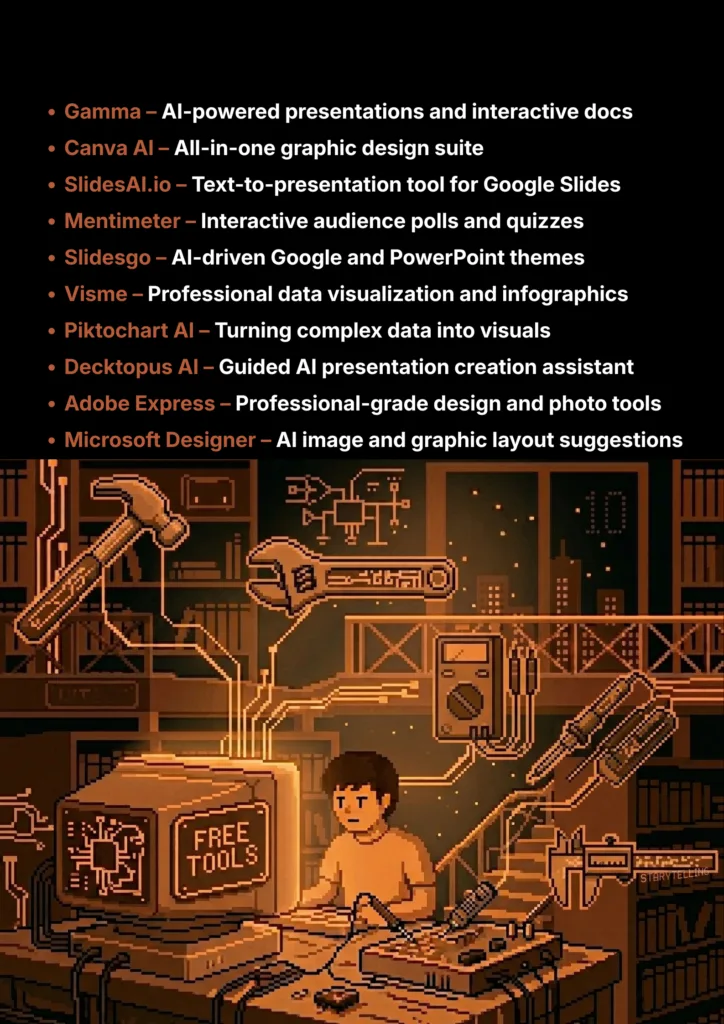
10 Great Free Tools For Creating Presentations & Designs.
Create stunning slides, infographics, and visuals in minutes with these powerful AI assistants.
We’ve all been there. It’s midnight, your presentation is due tomorrow, and you’re staring at a blank, white slide, completely out of ideas. Creating presentations and graphics that look professional and engaging is tough, especially when you’re not a design expert. It can be a time-consuming and frustrating part of any school or college project.
But what if you had an AI design assistant that could help you brainstorm ideas, generate entire slide decks, and create stunning visuals in minutes?
That’s the power of the new wave of AI design tools. This guide is built for students who need to create high-quality work without the high price tag. We’ve done a deep dive to find the best AI tools for presentations and design that offer incredible “free forever” plans or very generous free tiers, perfect for long-term use throughout your academic career.
What Can You Actually Do With These AI Tools?
Before we dive into the list, it's helpful to understand what makes these tools so game-changing for students.
- Create Full Presentations from a Single Prompt: Go from a simple idea to a complete, well-structured slide deck in minutes.
- Design Professional Graphics Instantly: Generate logos, social media posts, and report covers without any design experience.
- Visualize Your Data Beautifully: Turn boring spreadsheets into clear, easy-to-understand charts and infographics.
- Save Hours of Time: Automate the most time-consuming parts of the design process so you can focus on your content.
Quick Comparison Table
| Tool Name | Best For | Pricing Model | Ease of Use |
|---|---|---|---|
| Gamma | AI-Powered Presentations & Docs | Freemium (with credits) | Beginner |
| Canva AI | All-in-One Design Suite | Freemium | Beginner |
| SlidesAI.io | Text-to-Presentation in Google Slides | Freemium | Beginner |
| Tome | AI Storytelling & Narratives | Freemium (with credits) | Beginner |
| Slidesgo | AI Presentations with Google Themes | Freemium | Beginner |
| Visme | Data Visualization & Infographics | Freemium | Intermediate |
| Piktochart AI | Turning Data into Infographics | Freemium | Beginner |
| Decktopus AI | Guided Presentation Creation | Freemium | Beginner |
| Adobe Express | Professional Design & Photo Tools | Freemium | Beginner |
| Microsoft Designer | AI Image & Graphic Design | Freemium | Beginner |
1. Gamma
Gamma is a revolutionary tool that rethinks what a presentation can be. Instead of individual slides, you build interactive "apps" or documents. Simply give its AI a topic, and it generates a complete, beautifully designed presentation with text, layouts, and images already in place. It’s the fastest way to go from an idea to a ready-to-share presentation.
- Best For: AI-Powered Presentations & Docs created from a single text prompt.
- Use Case Example: A student types "History of Space Exploration" and Gamma generates a full deck with an introduction, timeline, and milestones instantly.
- Pricing Details: Freemium (400 one-time credits for free upon signup).
- What You’ll Need: A web browser.
- Learning Curve: Beginner. Simple guided interface.
- What to Watch Out For: One-time credit system; once gone, you need to refer others or upgrade.
2. Canva AI
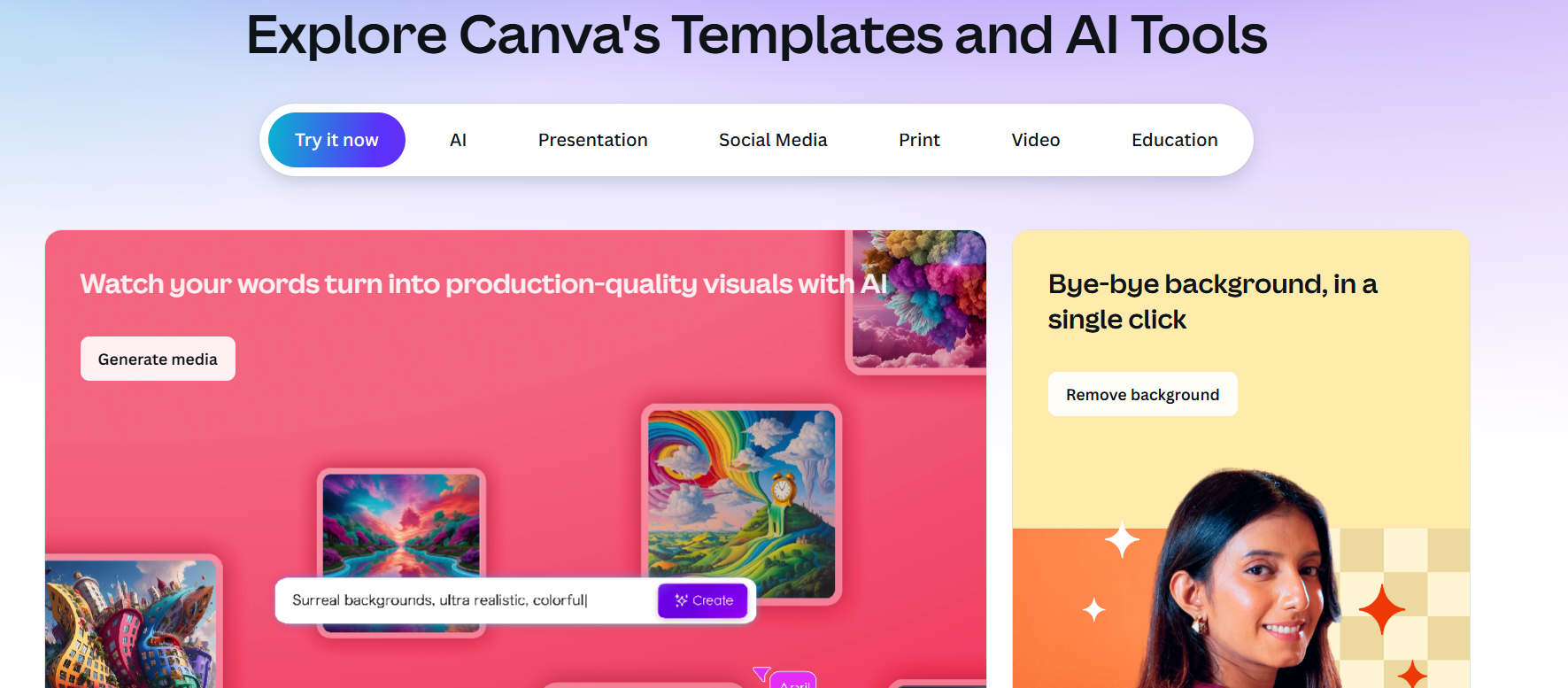
Canva's "Magic Studio" has brought powerful AI features to the popular design platform. You can generate entire presentation designs, write slide text, and create custom images from prompts. It’s a one-stop shop for creating graphics, presentations, and short videos for school or college projects.
- Best For: All-in-One Design Suite for presentations and social media.
- Use Case Example: Using "Magic Media" to generate a specific image like "a scientist looking at a glowing beaker" instead of searching stock photos.
- Pricing Details: Excellent Freemium Model. Core AI features are accessible on the free plan.
- What You’ll Need: A web browser or desktop/mobile app.
- Learning Curve: Beginner. Famous for its user-friendly drag-and-drop mechanics.
- What to Watch Out For: Advanced features like "Magic Switch" require a Pro subscription.
3. SlidesAI.io
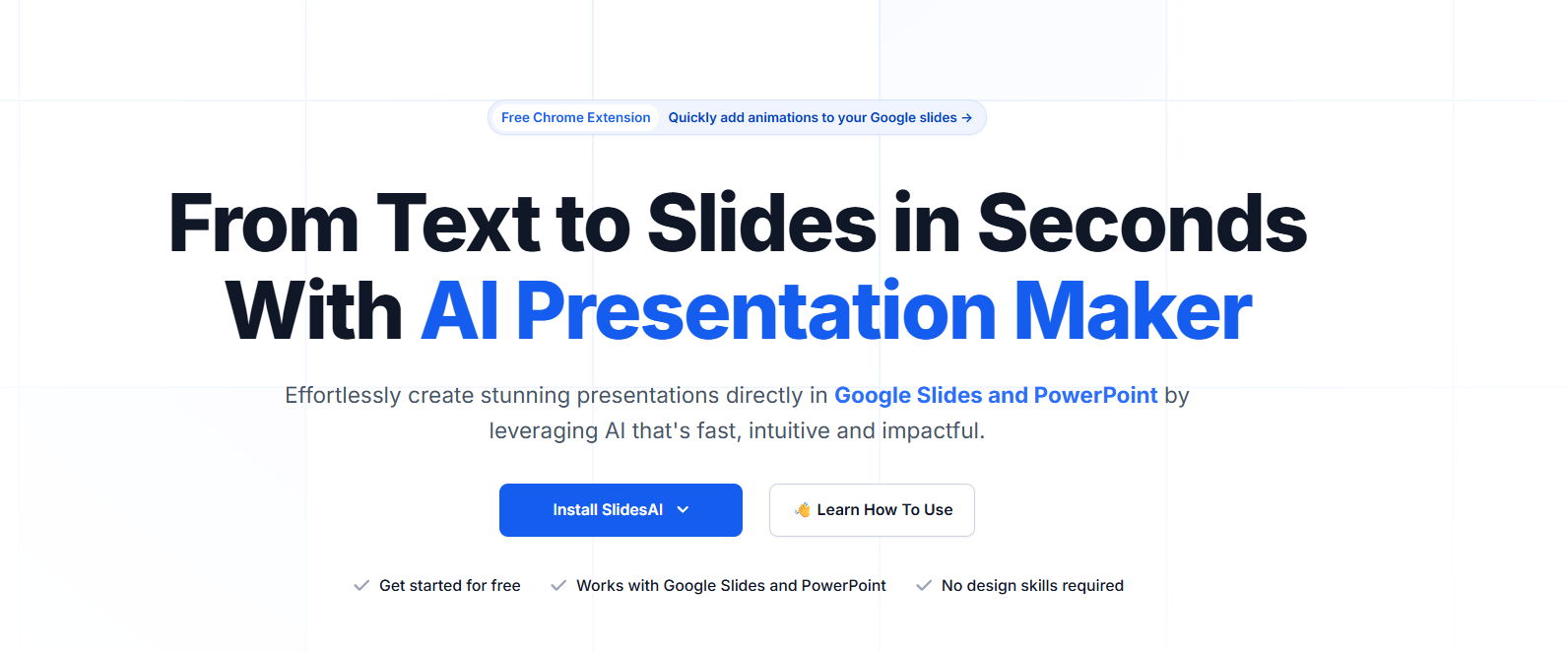
SlidesAI.io is an add-on that works directly inside Google Slides. It’s designed to turn existing text—like essays or notes—into a presentation. Paste your text, and the AI automatically summarizes content, breaks it into slides, and adds relevant visuals.
- Best For: Text-to-Presentation conversion directly in Google Slides.
- Use Case Example: Copying a 5-page report into the add-on to instantly generate a 15-slide deck with titles and visuals.
- Pricing Details: Generous Freemium Model (3 presentations per month for free).
- What You’ll Need: A Google account and Google Slides.
- Learning Curve: Beginner. Integrated into an app you likely already use.
- What to Watch Out For: Design options are simpler and less advanced than standalone tools.

4. Mentimeter
Mentimeter focuses on making presentations interactive and engaging. It’s the best tool for students who want to involve their audience through live polls, Q&As, and quizzes. It helps transform a passive lecture into an active discussion.
- Best For: Engaging audiences with live interactive polls and Q&A.
- Use Case Example: A student adds a live word-cloud poll at the start of their presentation to get real-time feedback from their classmates.
- Pricing Details: Freemium (Free plan includes unlimited audience members).
- What You’ll Need: A web browser.
- Learning Curve: Beginner. Very easy to create interactive slides.
- What to Watch Out For: Free version has limits on the number of interactive slides per presentation.
5. Slidesgo
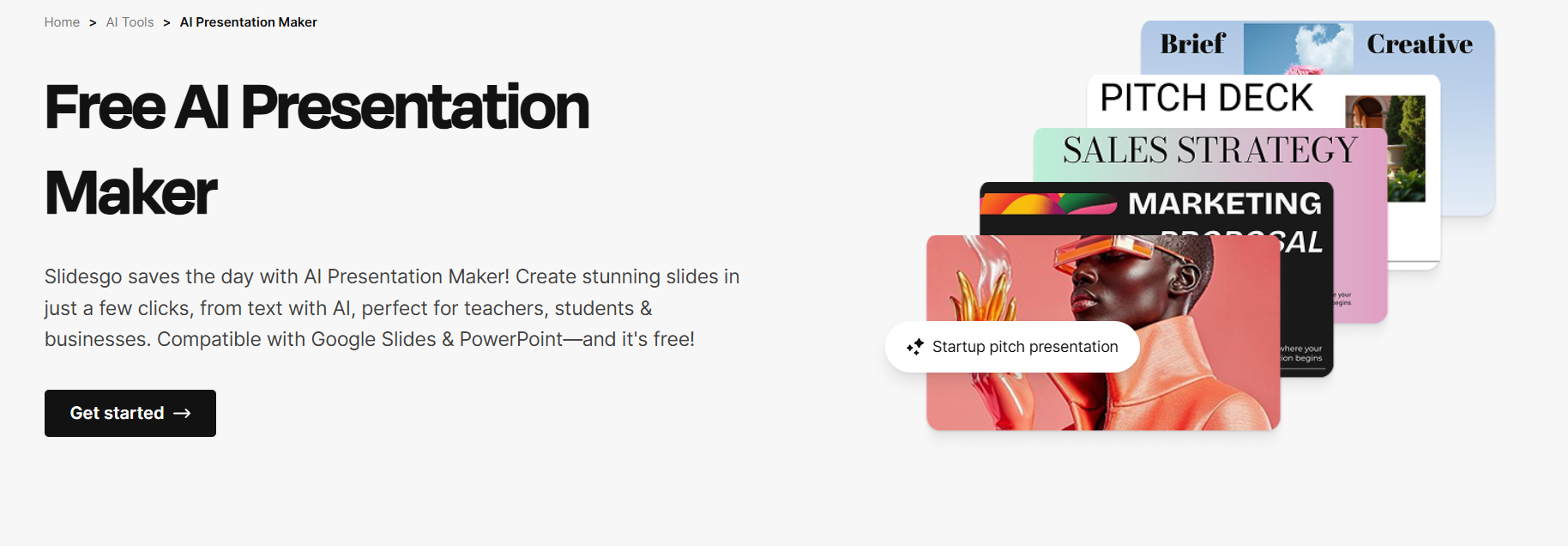
Slidesgo is known for its high-quality templates, and their AI Presentation Maker leverages that design expertise. Give it a topic, and it generates a complete presentation using one of their signature themes, which you can then edit in Google Slides or PowerPoint.
- Best For: AI Presentations based on high-quality Google/PowerPoint themes.
- Use Case Example: Creating a modern, illustrative marketing presentation in minutes by choosing an AI-generated signature style.
- Pricing Details: Excellent Freemium Model. Generate a good number of AI decks per month for free.
- What You’ll Need: A web browser.
- Learning Curve: Beginner. Straightforward prompt-to-result process.
- What to Watch Out For: Most popular templates are reserved for premium users and require attribution for free use.
6. Visme
Visme is a powerful design platform that excels at turning complex data into beautiful visuals. While it builds presentations, its real strength lies in charts and infographics. Its AI features suggest data visualizations, perfect for heavy data-driven projects.
- Best For: Data Visualization, Infographics, and professional reports.
- Use Case Example: Turning a large spreadsheet of economic data into a clean, professional-looking infographic.
- Pricing Details: Generous Freemium Model. Free "Basic" plan includes good storage and assets.
- What You’ll Need: A web browser.
- Learning Curve: Intermediate. Feature-rich, so it takes more time to master than Canva.
- What to Watch Out For: Free plan projects will carry a Visme watermark.
7. Piktochart AI
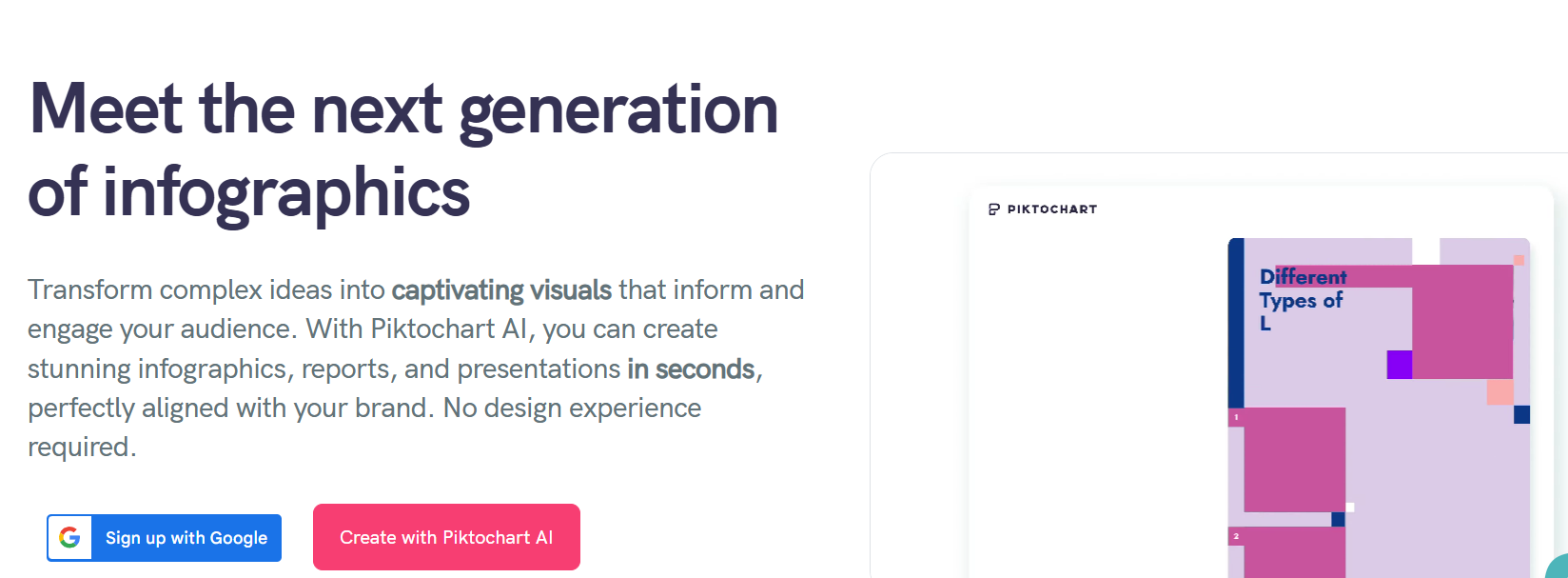
Piktochart AI makes creating infographics incredibly fast. Provide a topic or paste data, and the AI automatically generates a professional visual. It’s ideal for summarizing research papers or processes for social media and reports.
- Best For: Quickly turning complex data or text into a simple infographic.
- Use Case Example: A science student creates a visual summary of a biological process with clear steps and icons automatically.
- Pricing Details: Generous Freemium Model with a wide range of free templates.
- What You’ll Need: A web browser.
- Learning Curve: Beginner. Designed for speed and ease of use.
- What to Watch Out For: Advanced export features are part of the paid plans.
8. Decktopus AI
Decktopus uses a guided approach to presentation creation. The AI asks questions about your audience and goal before generating a customized deck. It even suggests talking points and notes for your presentation.
- Best For: Guided presentation creation with AI-suggested notes and talking points.
- Use Case Example: A student gets a structured deck for a project including a script for their oral presentation.
- Pricing Details: Freemium model. Basic AI generation features available for free.
- What You’ll Need: A web browser.
- Learning Curve: Beginner. Guided question-based setup.
- What to Watch Out For: High-res exports and brand customization are paid features.
9. Adobe Express
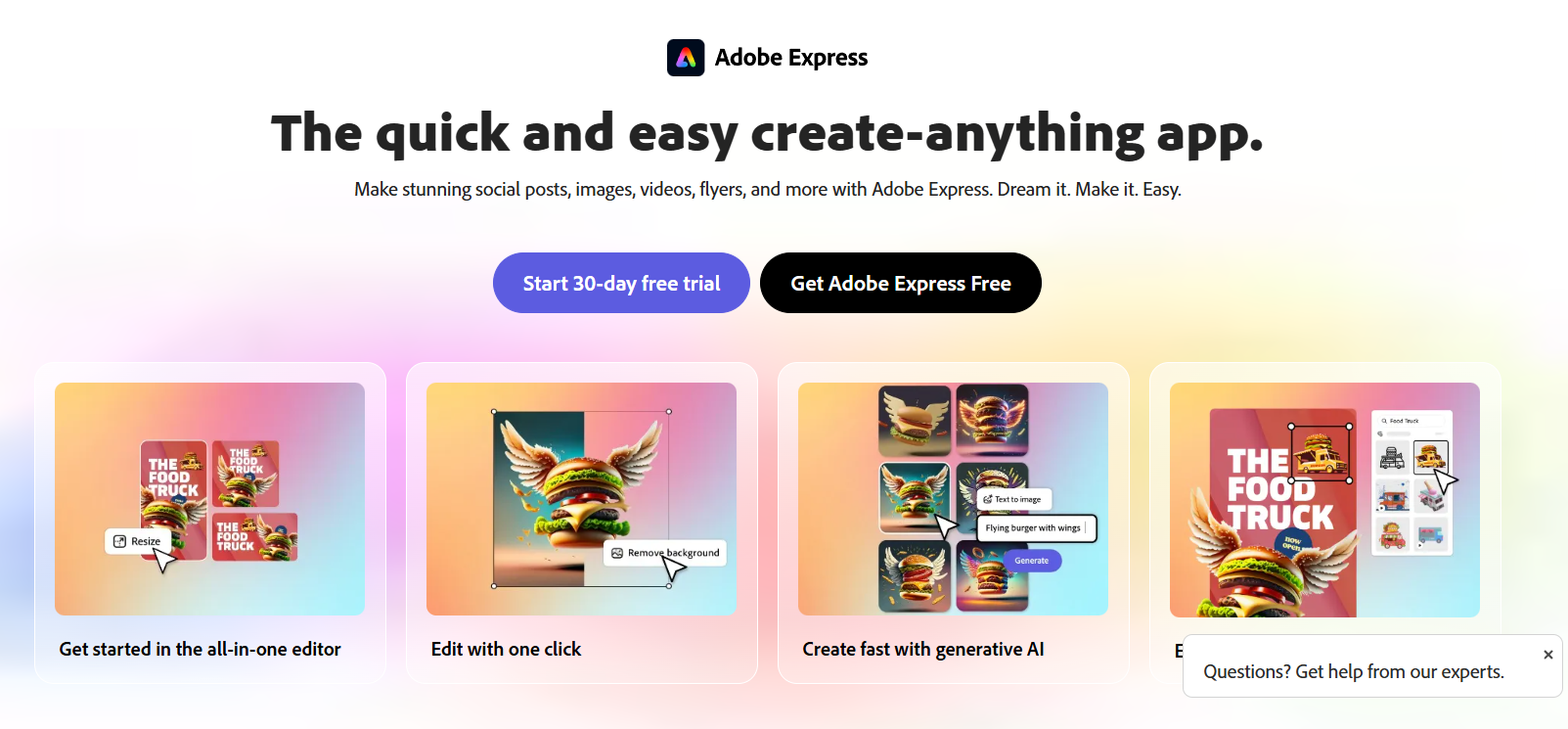
Adobe Express brings professional design tools to everyone through AI. You can generate images, remove backgrounds, and create posters or social posts using Adobe's world-class design engine. Its "Text to Template" feature is a powerful way to start any project.
- Best For: Professional-grade design and photo editing tools with AI ease.
- Use Case Example: Instantly removing backgrounds from photos for a project poster and adding AI-generated text effects.
- Pricing Details: Excellent Freemium model with thousands of free assets.
- What You’ll Need: A web browser or mobile app.
- Learning Curve: Beginner. Very intuitive for an Adobe product.
- What to Watch Out For: Adobe stock images and premium fonts require a subscription.
10. Microsoft Designer
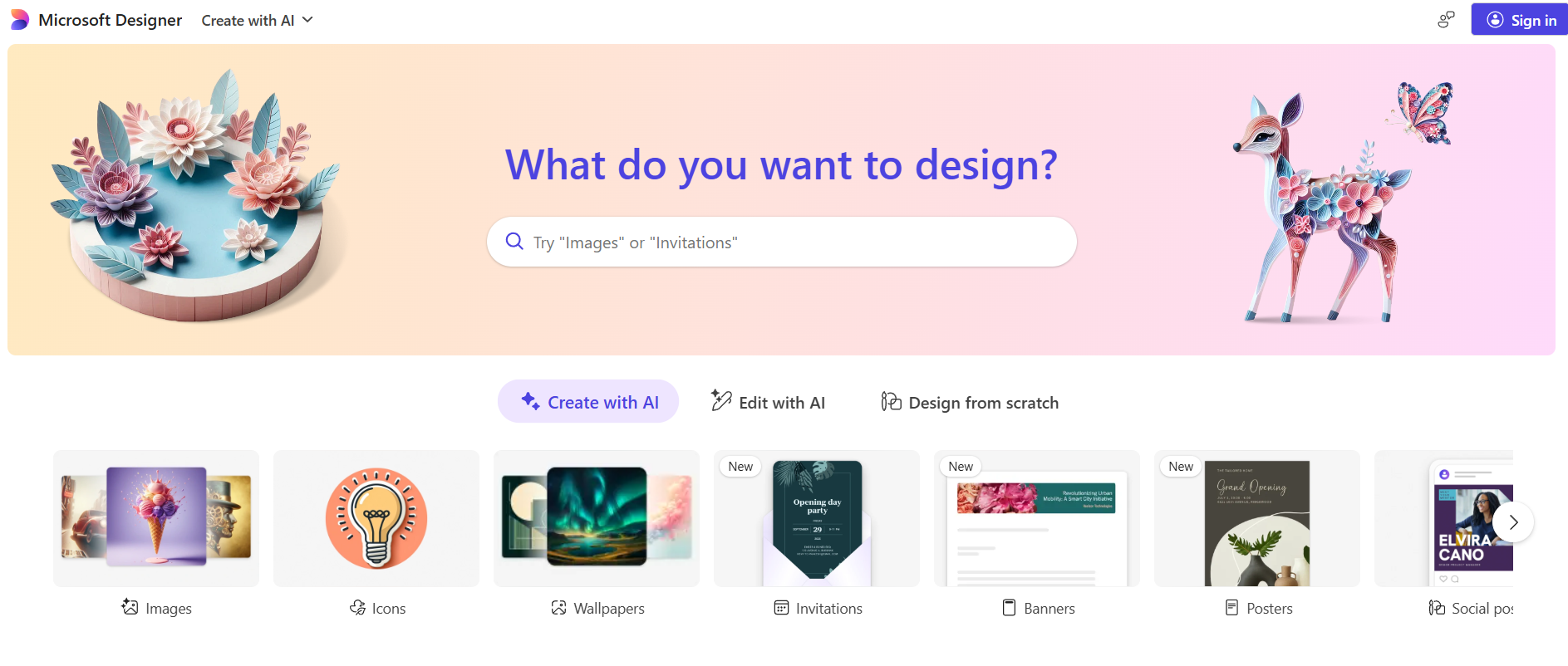
Microsoft Designer uses DALL-E technology to create high-quality graphics and images from text prompts. It’s perfect for generating unique social media posts, invitations, or visual assets for your presentations. It provides creative layouts and design suggestions automatically.
- Best For: AI-powered image generation and quick graphic design layout suggestions.
- Use Case Example: Describing a dream-like landscape to generate a custom background image for a creative writing presentation.
- Pricing Details: Completely Free (via Microsoft Account).
- What You’ll Need: A web browser and a Microsoft account.
- Learning Curve: Beginner. Chat-based prompting style.
- What to Watch Out For: Not as advanced as dedicated slide tools for building full multi-slide decks.
Which Tool Should You Start With?
Feeling a bit confused about where to start? Here’s a quick guide:
- Rapid Presentation Creation: If you need to create a presentation fast, start with Gamma because its text-to-presentation feature is the quickest way to get a beautiful first draft.
- All-in-One Design Hub: If you need an all-around design tool for everything, use Canva or Adobe Express since their free plans are incredibly powerful and versatile.
- Interactive Audience Engagement: If you want to make your presentation interactive, try Mentimeter as it is the best tool for engaging your audience with live polls and Q&As.
- Data Visualization & Infographics: If you need to create a data-heavy infographic, try Visme or Piktochart AI because they are specifically designed to make your data look amazing.
Power Up Your Creativity With AI
As you can see, you no longer need to be a professional designer to create stunning, high-quality presentations and graphics. These AI tools act as your personal creative assistant, helping you turn your ideas into beautiful visuals, save countless hours, and present your work with confidence.
The best way to learn is by doing. Pick one tool from this list that solves a problem you’re facing right now and try it out for your next project. You’ll be amazed at how much easier and more fun the creative process can be.
Written By
Prateek Singh.
Last Updated – Febuary, 2026
About The Author
Prateek is a self-taught practitioner who believes the only real way to learn is by doing. He created IndiaShouldKnow.com from scratch, using AI as his primary learning partner to navigate everything from web development and UI/UX design to color theory and graphic engineering.
He works within the “engine room” of AI daily, using these tools to manage professional workflows including data visualization, digital marketing systems, and SEO architecture. Having personally tested and refined dozens of AI models across hundreds of real-world scenarios, Prateek focuses on the “how” behind the technology. He shares his self-taught workflows and prompting pillars to help others move past basic chat interactions and start using AI as a high-precision tool for their own goals.
FAQs About AI Use.
Can I trust every answer an AI tool gives me for my studies?
A: No, you should not trust every answer completely. Think of an AI as a super-smart assistant that has read most of the internet—but not every book in the library is accurate.
AI can sometimes make mistakes, misunderstand your question, or use outdated information.
It can even “hallucinate,” which means it confidently makes up an answer that sounds real but is completely false.
Rule of Thumb: Use AI answers as a great starting point, but never as the final, absolute truth. Always double-check important facts.
How can I verify the information I get from an AI for my academic work?
A: Verifying information is a crucial skill. It’s like being a detective for facts. Here are four simple steps:
Check Your Course Material: Is the AI’s answer consistent with what your textbook, lecture notes, or professor says? This is your most reliable source.
Look for Reputable Sources: Ask the AI for its sources or search for the information online. Look for links from universities (.edu), government sites (.gov), respected news organizations, or published academic journals.
Cross-Reference: Ask a different AI the same question, or type your question into a standard search engine like Google. If multiple reliable sources give the same answer, it’s more likely to be correct.
Use Common Sense: If an answer seems too perfect, too strange, or too good to be true, be extra skeptical and investigate it further.
What is the difference between using AI for research and using it to plagiarize?
A: This is a very important difference. It’s all about who is doing the thinking.
Using AI for Research (Good ✅):
Brainstorming topics for a paper.
Asking for a simple explanation of a complex theory.
Finding keywords to use in your library search.
Getting feedback on your grammar and sentence structure.
You are using AI as a tool to help you think and write better.
Using AI to Plagiarize (Bad ❌):
Copying and pasting an AI-generated answer directly into your assignment.
Asking the AI to write an entire essay or paragraph for you.
Slightly rephrasing an AI’s answer and submitting it as your own original thought.
You are letting the AI do the thinking and work for you.
How can I use AI ethically to support my learning without violating my school's academic honesty policy?
A: Using AI ethically means using it to learn, not to cheat. Here’s how:
Know the Rules: First and foremost, read your school’s or professor’s policy on using AI tools. This is the most important step.
Be the Author: The final work you submit must be yours. Your ideas, your structure, and your arguments. Use AI as a guide, not the writer.
Do the Heavy Lifting: Use AI to understand a topic, but then close the chat and write your summary or solve the problem yourself to make sure you have actually learned it.
Be Transparent: If you used an AI in a significant way (like for brainstorming), ask your professor if you should mention it. Honesty is always the best policy.
Can an AI's answer be biased? How can I detect this in its responses?
A: Yes, an AI’s answer can definitely be biased. Since AI learns from the vast amount of text on the internet written by humans, it can pick up and repeat human biases.
Here’s how to spot potential bias:
Look for Opinions: Does the answer present a strong opinion as a fact?
Check for One-Sidedness: On a topic with multiple viewpoints (like politics or economics), does the AI only show one side of the argument?
Watch for Stereotypes: Does the answer use generalizations about groups of people based on their race, gender, nationality, or other characteristics?
To avoid being misled by bias, always try to get information from multiple, varied sources.
Is it safe to upload my personal notes, research papers, or assignments to an AI tool?
A: It is best to be very careful. You should not consider your conversations with most public AI tools to be private.
Many AI companies use your conversations to train their systems, which means employees or contractors might read them.
There is always a risk of data breaches or leaks.
A Simple Safety Rule: Do not upload or paste any sensitive information that you would not want a stranger to see. This includes:
Personal identification details.
Confidential research or unpublished papers.
Your school assignments before you submit them.
Any financial or private data.