BCA With Google Gemini - The 2026 AI Master Class
Your Journey To Mastering AI For BCA And Much More Starts Here
Studying for your BCA (Bachelor of Computer Applications) degree is your launchpad to a high-value career in Software Development, Web Design, System Analysis, and IT Management, offering excellent career growth. To achieve this, you must clear entrance exams and master complex subjects like Data Structures, Programming Logic, and Database Management. It’s easy to feel frustrated and lost in the code, but the fact that you are actively seeking advanced tools proves your commitment—dominating your BCA studies is guaranteed with the right strategy. You have a brilliant coding partner who never crashes: Artificial Intelligence (AI) is your secret weapon for computer applications. AI can instantly explain complex algorithms, debug tricky code logic, and clarify detailed theories in real-time. I know this power works because I rely on AI daily for complex professional tasks like sales work, web development, and digital marketing. This guide shows you exactly how to transform AI into a powerful, personalized tool for tackling your BCA subjects and coding projects. Get ready to stop studying harder and start computing your success smarter.
Note :
- “The techniques and prompt engineering principles you learn in this guide are universally applicable to any large language model (LLM), including ChatGPT and Perplexity AI. We use Google Gemini for all examples because its latest multimodal features and integration with Google Search provide a best-in-class learning experience.”
- “Remember: The quality of the AI’s answer depends entirely on the clarity of your prompt. Always be specific, detailed, and clear with the AI to avoid irrelevant or incorrect (hallucinated) responses.”
How Gemini Helps With Every Subject For BCA
| Focus Area | What Gemini Does | Your Benefit |
|---|---|---|
|
|
Code Logic Debugger
|
You stop feeling stuck on code errors. By learning how to think like a computer, you build the skills needed for real software jobs. |
|
|
Logic Step Simulator
|
You stop memorizing code. When you can see the logic flow in your mind, you can solve much harder problems in your lab exams. |
|
|
Schema Design Architect
|
You learn the right way to design data. This helps you build fast and professional apps that can handle lots of information. |
|
|
System Flow Analyst
|
You connect theory to reality. Understanding how the internet and computers really work is key to passing your viva-voce tests. |
|
|
SDLC Project Mentor
|
You prepare for professional work. Learning to manage projects with AI help builds the leadership skills employers want. |
|
|
Logic Proof Coach
|
You bridge the gap between math and code. Mastering logic makes you better at writing smart loops and conditions in your apps. |
|
|
Full-Stack Contextualizer
|
You build a great portfolio. With AI help, you can create impressive websites that help you get noticed by big tech companies. |
How AI Boosts Your Efforts : Data From Recent Studies
For a BCA student, using Gemini isn’t just a shortcut; it is a scientifically proven way to learn technical skills faster and better. In computer science, the biggest struggle is often the “Gap”—the space between reading a textbook and actually writing code that works.
Here is the deep evidence, explained simply, on why AI-driven study is the most effective way for you to master your BCA degree in 2025.
| Research Metric | Evidence & Analysis | Academic Significance |
|---|---|---|
| 20–30% higher problem-solving scores Active Learning Meta-Analysis |
AI Improves Logical & Programming Performance
|
What This Means
AI strengthens the way BCA students think through code, not just how much syntax they memorise.
BCA Edge: Higher marks in Programming, Data Structures, and Algorithms.
|
| 25–35% accuracy improvement Microsoft–Cambridge (2025) |
AI Diagnoses Deep Coding & Concept Gaps
|
What This Means
AI identifies the exact step where your logic or code breaks, instead of letting errors repeat across exams.
BCA Edge: Fewer silly errors in coding labs and written exams.
|
| 30–40% better long-term retention Spaced Practice Research (Cepeda et al.) |
AI-Spaced Revision Preserves Core CS Concepts
|
What This Means
AI keeps fundamentals like loops, recursion, SQL, and OOP active in memory throughout the degree.
BCA Edge: Stronger recall during finals, vivas, and interviews.
|
| 20–30% better performance under pressure Cognitive Load Research |
AI Reduces Cognitive Overload in Complex Coding
|
What This Means
AI helps you think clearly during long coding or theory questions, instead of freezing under complexity.
BCA Edge: Cleaner answers in exams and better performance in placements.
|
Advanced Prompting Techniques by Google for 2026, with Examples Prompts For BCA
Google Gemini is a Reasoning Engine. To get "A+ Grade" results for BCA and professional computer application students, move beyond basic questions using these six pillars.
- The Technique: Setting the Persona, Task, Context, and Format.
- The Logic: BCA is a blend of computer applications and business logic. Assigning a specialized role like "Software Developer" or "Database Administrator" forces the AI to use professional syntax and logic, while the Context "fences" the AI into a specific programming language or academic syllabus (like IGNOU or a specific University).
Persona: Act as an [Any Expert Role: e.g., Senior Java Developer, Database Architect, System Analyst]. Task: Explain [Your Topic: e.g., Object-Oriented Programming, SQL Joins, SDLC Models]. Context: Apply this specific background: [Source Context: e.g., Use only the Java SE 21 documentation] [Difficulty Context: e.g., Explain for a 2nd-year BCA student] [Platform Context: e.g., Assume the application is being built for Android] Format: Provide the answer as a [Structure: e.g., Code Walkthrough, 5-Point High-Yield List].
- The Technique: Breaking a problem into a "Step-by-Step" sequence with logic checks.
- The Logic: Programming and discrete math require a clear logical flow. This version forces the AI to "Self-Correct"—cross-checking the logic of Step 1 (identifying logic gates or variables) before it attempts Step 2 (the algorithm/truth table) to ensure the solution is optimized.
Solve this [Subject: e.g., Data Structures, Discrete Mathematics, Computer Architecture] problem using Chain-of-Thought. Step 1: List all given [Input Constraints/Data Variables] and logic parameters. Step 2: State the core [Algorithm/Logical Law] and verify its relevance to the problem. Step 3: Show the step-by-step logical progression or dry run, verifying each line before moving forward. Question: [Insert your coding or logic question here]
- The Technique: Limiting the AI to official technical documentation or university portals with a focus on recent data.
- The Logic: Technology frameworks (like React or Python libraries) change every few months. This "Time-Stamp" filter forces the AI to ignore outdated tutorials and prioritize official documentation from the last 12 months for 100% current accuracy.
Research the [Topic: e.g., Latest Python 3.x features, New HTML5 semantic tags]. Constraint: Only use info from official portals: [Domain 1: e.g., docs.python.org] and [Domain 2: e.g., w3.org]. Recency Rule: Prioritize data published in the last 12 months. Output: Provide the technical summary and the direct link to the official documentation.
- The Technique: Setting strict "Rules of Play" including forbidden keywords.
- The Logic: Programming notes should be sharp. By setting hard boundaries and forbidding "AI-voice" fillers (like "Essentially" or "I hope this helps"), you get clean, usable code snippets and definitions without unnecessary commentary.
Explain [Concept: e.g., Normalization in DBMS, Virtual Functions in C++]. Constraint 1: Use only [Specific Source: e.g., Standard BCA Textbook, Official Docs] terminology. Constraint 2: Keep the response under [Limit: e.g., 80 words]. Constraint 3 (Negative): Do not use AI-filler phrases like "It is important to note" or "In conclusion." Format: Use simple bullet points.
- The Technique: Using a Feedback Loop with an "Active Recall" check.
- The Logic: Treat the AI like a senior lab supervisor. This version forces the AI to stop and ask you a question after its explanation, ensuring you understand the underlying logic (like how a stack works) before moving to advanced implementations.
Explain [Topic: e.g., Memory Management in OS, How a Compiler works]. Instruction: Provide a high-level conceptual summary first. Feedback Loop: Ask me if I want a code example or a technical deep-dive into the architecture. Active Recall: Once I am satisfied, provide one 'Check-for-Understanding' question based on your explanation.
- The Technique: Providing a structural blueprint before injecting raw data.
- The Logic: This is the most efficient way to build tools for your BCA projects. You command the AI to build a specific result (like an ER Diagram description or a tech-stack comparison) using a layout you provide, ensuring it is 100% ready for your lab file or project.
Make a [Desired Output: e.g., ER Diagram Description, Technology Comparison Table, Project Roadmap]. Layout Blueprint: [Structure: e.g., 3-column table, Markdown list, JSON]. Style: [Vibe: e.g., Technical, Professional Minimalist]. Strict Rule: Adhere to the structure provided; no conversational filler. Use this information: [PASTE_LAB_MANUAL_DATA_OR_PROJECT_SPECS_HERE]
Using Google Gemini App Input Methods For BCA
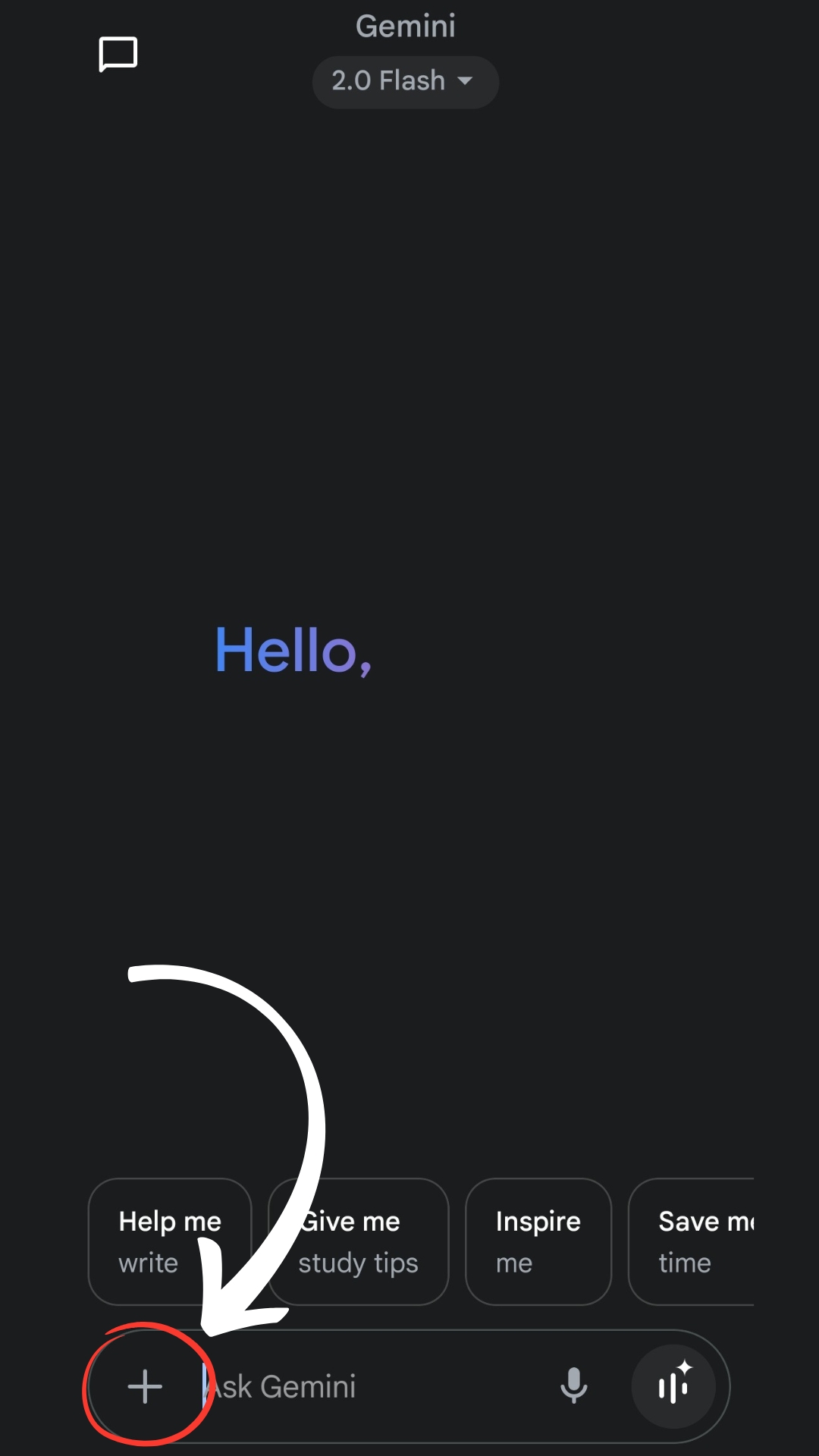
Analyze Code & Documentation
Upload **PDFs of technical manuals or source code files**. Use it to summarize software requirements, debug logic in documentation, or simplify complex database schemas.
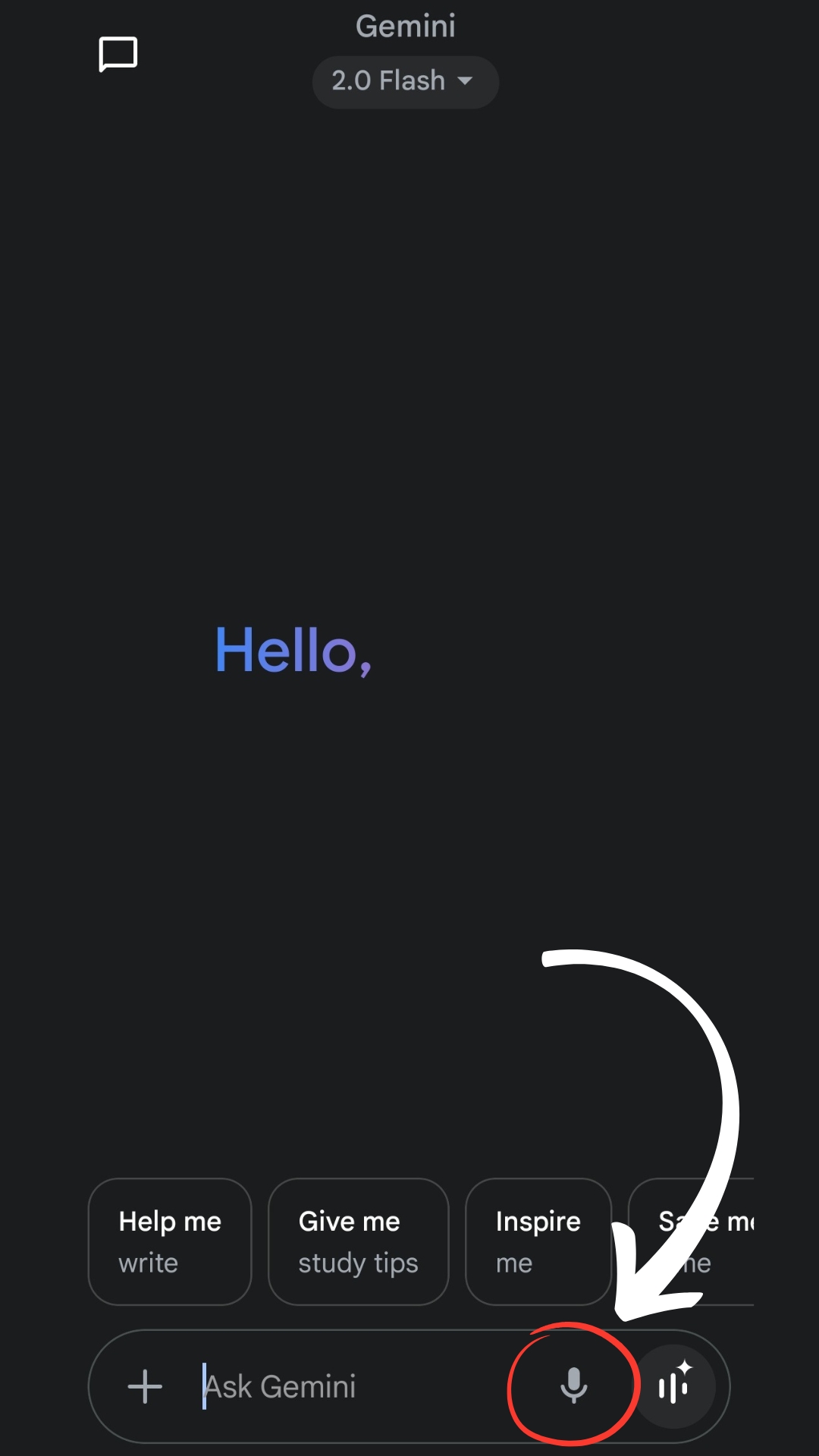
Rapid Logic & Syntax Checks
Check **coding logic or OS principles hands-free**. Perfect for verifying memory-based syntax, data structure definitions, or networking protocols while you're busy in the lab.
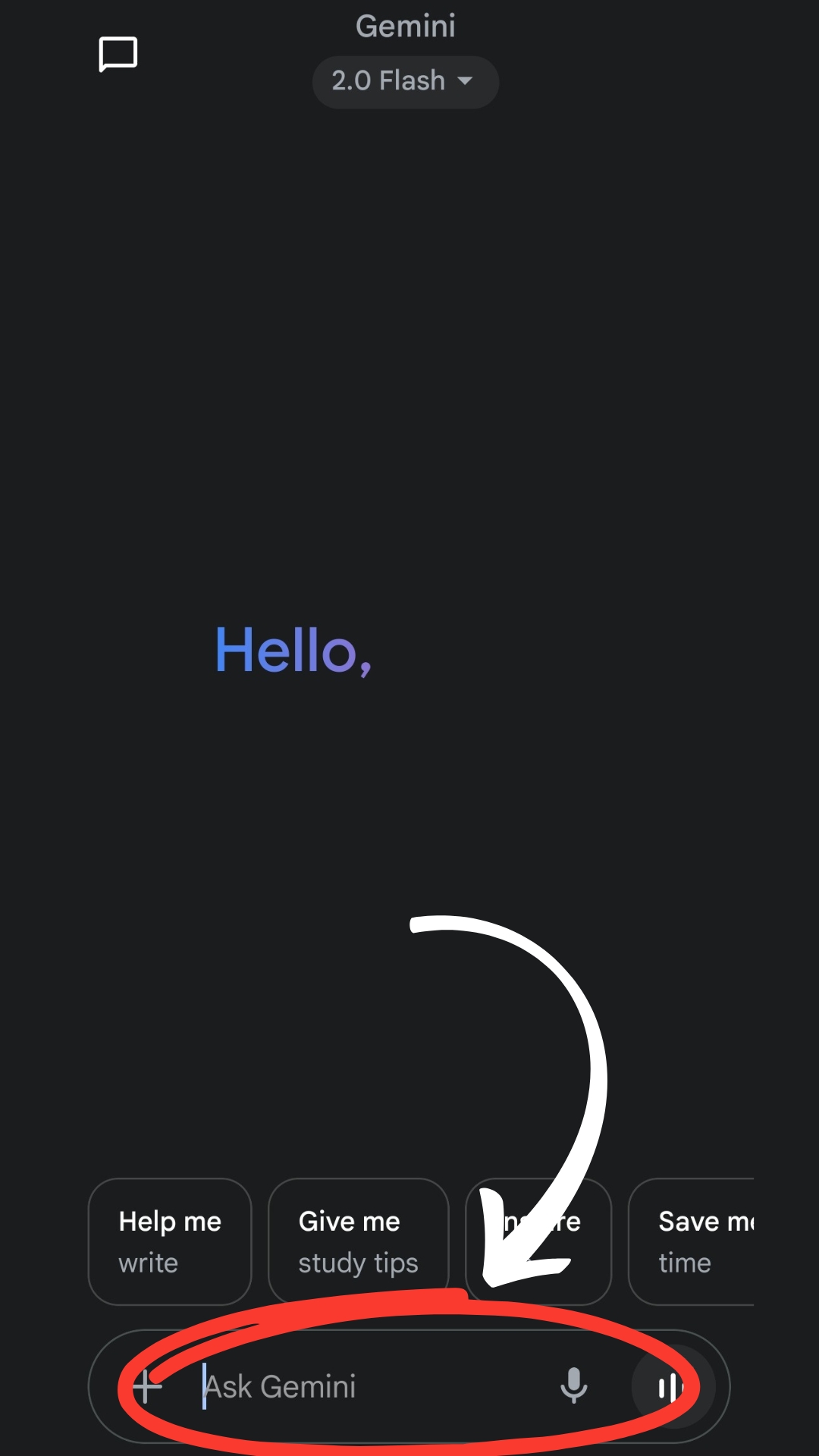
Applied Coding & Math Solutions
Your primary tool for **detailed programming support**. Ask about algorithm complexity, step-by-step math derivations, or detailed explanations for difficult web development queries.
Solving Questions From The BCA Syllabus Using Google Gemini
Example 1: BCA Object-Oriented Programming (OOP)
Core Java / C++ (Inheritance and Polymorphism)
Official Path: Object-Oriented Programming: Inheritance, Polymorphism, and Dynamic Binding
Upcasting and Dynamic Method Dispatch in Inheritance
Research "Method Overriding in Java vs. Virtual Functions in C++" and "Upcasting and Dynamic Method Dispatch." In BCA, understanding how a single interface can trigger different behaviors is the most critical concept for building scalable applications. Grounding the prompt in the "Is-A Relationship" ensures the AI explains why polymorphism reduces code complexity and enables the "Open-Closed Principle," providing the technical logic required for university lab exams and software development interviews.
Study Lab
BCA Computer Science Prep
"A software system for a 'Vehicle Rental Agency' requires a base class Vehicle and two derived classes Car and Bike. The base class has a method calculateRent(). In the Car class, the rent is calculated as basePrice + (kilometers * 10), while in the Bike class, it is basePrice + (kilometers * 5). Explain the concept of 'Method Overriding' and 'Runtime Polymorphism.' Write a code snippet to demonstrate how the correct rent is calculated at runtime using a base class reference."
"Act as a Senior Java Developer and Technical Architect (Persona). Explain the concepts of Inheritance and Method Overriding (Subject) in the context of a Vehicle Management System (Context). Focus on the 'Override' annotation and the 'super' keyword. Provide a conceptual breakdown (Format) of how a derived class modifies the behavior of a base class method."
"Analyze the Implementation of Runtime Polymorphism using Chain-of-Thought. Step 1: Define the base class 'Vehicle' with a default rent method. Step 2: Implement the 'Car' and 'Bike' classes with overridden rent formulas. Step 3: Demonstrate 'Upcasting' by assigning subclass objects to a base class reference. Step 4: Verify that the correct method is called at runtime based on the actual object type, not the reference type."
"Create an OOP Design Principle and Refactoring Map for software developers. Structure: Code Smells, OOP Solution, Design Benefit, Implementation Rule. Constraints: Use a structured hierarchical list. No conversational filler. Ensure 100% accuracy for BCA Computer Science standards."
BCA Study Lab • Optimized for Software Development
Example 2: BCA Database Management Systems (DBMS).
Relational Algebra and SQL (Query Optimization)
Official Path: Database Management Systems: Relational Algebra and Structured Query Language
Relational Algebra Operators and Join Predicates in Query Design
Research "Relational Algebra Operators" and "Equi-Join vs. Natural Join." In BCA, mastering the bridge between mathematical set theory (Relational Algebra) and practical implementation (SQL) is the most critical hurdle. Grounding the prompt in "Schema Mapping" and "Join Predicates" ensures the AI explains why uncontrolled joins lead to "Data Explosion," providing the logical rigor required for university exams and database administrator (DBA) interviews.
Study Lab
BCA Computer Science Prep
"A database for an 'E-commerce Platform' contains two tables: Customers (CustomerID, Name, City) and Orders (OrderID, CustomerID, OrderDate, TotalAmount). Explain the difference between a Cartesian Product and a Natural Join in Relational Algebra. Write the SQL query to find the names of all customers who have placed an order exceeding Rs. 5,000, and describe how a 'Join' operation is processed internally."
"Act as a Database Administrator (DBA) and SQL Developer (Persona). Explain the concepts of Cartesian Product (Cross Join) and Natural Join (Subject) using a Customer-Order database (Context). Focus on the 'Join Condition' and the removal of redundant columns. Provide a technical breakdown (Format) of the notation used in Relational Algebra for these operations."
"Analyze the SQL Query Execution and Logic for finding high-value orders using Chain-of-Thought. Step 1: Identify necessary columns. Step 2: Formulate the Join condition. Step 3: Apply the 'WHERE' clause filter. Step 4: Verify the 'Projection' and explain how the database engine optimizes this search."
"Create a SQL Query Performance and Indexing Matrix for developers. Structure: Common Query Bottleneck, DBMS Solution, Algebraic Justification, Developer Best Practice. Constraints: Use a structured hierarchical list. No conversational filler. Ensure 100% accuracy for BCA DBMS standards."
BCA Study Lab • Optimized for Database Management
Example 3: BCA Discrete Mathematics
Graph Theory (Trees and Spanning Trees)
Official Path: Discrete Mathematical Structures: Graph Theory and Algorithms
Properties of Trees in Discrete Math and Greedy Algorithms for MST
Research "Properties of Trees in Discrete Math" and "Greedy Algorithms for MST." In BCA, understanding how to connect nodes with minimum cost while avoiding redundancy is the foundation of network topology and circuit design. Grounding the prompt in the "Cycle Detection" and "Edge Selection Criteria" ensures the AI explains why a spanning tree must contain exactly $n-1$ edges, providing the mathematical rigor required for university exams and competitive coding.
Study Lab
BCA Computer Science Prep
"A network of 5 computer labs needs to be connected with fiber optic cables. The costs of connecting each pair of labs are given as weights on the edges of a graph. Explain the properties of a Tree in graph theory and the concept of a Minimum Spanning Tree (MST). Use Kruskal’s Algorithm to find the minimum cost to connect all labs without forming any cycles, given the edge weights: (1,2)=2, (1,3)=4, (2,3)=1, (2,4)=7, (3,4)=3, (3,5)=5, (4,5)=6."
"Act as a Network Architect and Discrete Mathematician (Persona). Explain the Mathematical Properties of a Tree (Subject) in the context of network infrastructure (Context). Focus on the relationship between vertices (v) and edges (e), and the definition of a 'Spanning Tree.' Provide a technical summary (Format) of the conditions required for a graph to be classified as a tree."
"Analyze the Execution of Kruskal’s Algorithm for the given lab network using Chain-of-Thought. Step 1: Sort all edges in non-descending order of their weights. Step 2: Select the smallest edge and check if it forms a cycle with already selected edges. Step 3: Continue selecting edges until (n-1) edges are included. Step 4: Verify the total minimum cost and confirm that the final structure is a tree."
"Create a Graph Algorithm Selection and Optimization Matrix for computer scientists. Structure: Problem Goal, Recommended Algorithm, Mathematical Complexity, Practical Use Case. Constraints: Use a structured hierarchical list. No conversational filler. Ensure 100% accuracy for BCA Discrete Mathematics standards."
BCA Study Lab • Optimized for Graph Theory
Using Google Gemini for BCA Deep Research
What is Deep Research?
Deep research for BCA (Bachelor of Computer Applications) involves using Google Gemini to connect abstract programming concepts with real-world software architecture, database management, and system logic. It turns the AI into a technical architect that helps you understand the "Why" behind coding standards and hardware interactions, moving beyond basic syntax to the high-level logic required for development projects and exams.
How It Helps You
- Algorithmic Logic Breakdown: BCA exams often focus on Data Structures and Algorithms. Gemini helps you find the bridge between textbook pseudocode and practical implementation in languages like C++, Java, or Python.
- Database Design Integration: Deep research allows you to apply normalization rules to real-world datasets, helping you master the logic behind efficient SQL queries and schema design.
- Linking OS Theory to Practice: Stay updated on how Operating System concepts (like process scheduling or memory management) are applied in modern systems like Linux or Android—topics that are critical for lab vivas.
- Software Engineering Insights: Instead of just learning SDLC models, Gemini can research case studies of software project failures or successes to help you understand the practical application of agile and waterfall methods.
Grounding and Context
What it is: "Grounding" means tethering Gemini to official documentation and technical manuals so it doesn't give you unverified "hallucinated" code or outdated library specs.
Why it matters: Programming languages and tech stacks update constantly. Grounding ensures you are studying from sources like Official Developer Docs, IEEE Journals, and University Syllabus Handbooks.
How you do it:
1. Download the latest official University syllabus or BCA course outline PDF.
2. Upload the PDF to Gemini.
3. Use the command: "Filter all your future research through the specific technical modules and programming requirements found in this official BCA syllabus."
Google Suggested Prompt Method
The "System, Task, Range" MethodUse this structured method to ensure Gemini acts like a Senior Systems Architect or Computer Science Professor rather than a basic code generator.
“Act as a Computer Science Professor. Your task is to research the latest industrial shifts in Cloud Computing and DevOps for 2025. Write a 200-word summary of how these shifts impact the 'Advanced Web Technologies' chapter in my BCA syllabus. Use only official technical documentation and verified developer journals.”
The India Should Know Technique
The "Reverse Engineering" MethodReverse-engineer your study notes by describing the exact technical depth and tabular format you need before the AI processes raw computer science data.
“I want to create a high-density comparison table for [Technical Concepts, e.g., SQL vs NoSQL]. Format: A 4-column table (Basis of Difference, SQL, NoSQL, Why Developers Choose This). Tone: Technical, direct, and analytical. Intent: To master core architectural differences for a final year viva. Constraints: No fluff. Every point must be under 15 words. Use the official textbook context I provided. Once generated, I will ask you to create a logic-based code snippet for this table.”
Tips for Better Deep Research
- The "Logic Loop": After an answer, ask: "What is the most common reason a technical system fails in this specific coding logic?" to identify common debugging traps.
- Verify Tech Stats: Always use the "Google" search button to verify the latest stable releases of libraries, language versions, or hardware benchmarks mentioned in your research.
- Visual to Text: If you are studying complex ER diagrams or network topology flowcharts, describe the nodes to Gemini and ask it to explain the "unseen" efficiency bottlenecks.
- Chain of Reasoning: For mathematical logic or complexity analysis, tell Gemini: "Explain the logical impact of changing the input size step-by-step so I can apply the Big-O notation logic during a technical interview."
Guided Learning For BCA With Google Gemini As Your Personal Tutor
What is Guided Learning with AI?
For BCA students, guided learning with AI is like having a senior developer or a software architect available 24/7 to help you crack the logic behind programming syntax, data structures, and database relations. Instead of just searching for a code snippet to copy-paste, you use Gemini to simulate a coding lab session. It identifies gaps in your logical thinking and explains complex computer application concepts in ways that match your specific learning style.
How it helps you for this course/exam
- Master Coding Logic: Struggling with 'Recursion' or 'Pointer Arithmetic'? Gemini can break down the flow of execution step-by-step, ensuring you understand how the computer processes your code rather than just memorizing a specific program.
- Logical Troubleshooting: Whether it is a syntax error in your Java project or a flawed ER diagram in DBMS, Gemini can help you identify the logical gap in your approach, teaching you how to debug and architect systems like a professional.
- System Design Mastery: It can act as a technical mentor, helping you visualize how academic subjects like Operating Systems or Networking are applied in modern-day software development through practical, real-world examples.
How to do it in short
1. Define the Role: Tell Gemini it is an expert BCA Professor specializing in technical subjects like Data Structures, DBMS, or C++.
2. Set the Boundary: Tell it NOT to write the full code for you—insist on guiding you through the logic and pseudo-code first.
3. Interactive Dialogue: Ask it to quiz you on a specific technical concept or a logic pattern one question at a time.
4. Feedback Loop: Provide your logic for an algorithm or a database query, and let the AI correct your technical reasoning.
Google Suggested Method: Conversational Scaffolding
Google’s recommended approach focuses on "conversational scaffolding." For BCA, this means starting with basic technical syntax or logic rules and letting the AI guide you toward solving full-scale programming problems through a back-and-forth chat.
“I am studying for my BCA exams, specifically focusing on [Subject/Chapter]. I want you to act as a supportive professor. Start by asking me what I already know about [Specific Topic], and then help me build my understanding by asking follow-up questions that connect basic logic to advanced programming problems. Don't give me all the information at once; let's take it step-by-step.”
Google Suggested Method: The Socratic Method
The Socratic method is the gold standard for mastering algorithmic logic. Instead of the AI explaining a function or a sorting method to you, it asks you a series of disciplined questions. This forces you to think through the logical and technical flow yourself, which is critical for long-term retention in coding.
“I want to learn the core logic behind [Topic]. Act as a Socratic tutor for BCA prep. Do not give me the explanation. Instead, ask me a leading question that helps me realize the core technical principle behind this. Once I answer, ask another question to push my thinking into real-world application until I have fully grasped the concept.”
The India Should Know Method
The "Reverse Engineering" MethodThe India Should Know method is about Reverse Engineering. Instead of letting the AI wander, you put heavy constraints on the output. You define the exact "shape" of the session—specifying the need for high-density technical formats—before you ever give it the raw code or semester syllabus.
“Intent: Act as an expert BCA Professor specializing in [Subject]. Context: I am preparing for my end-semester exams and need to master [Chapter/Topic]. Format Constraints: * Conduct a 'Step-by-Step Technical Logic' or 'Algorithmic Flow' session. * Ask exactly one question or logic-part at a time. * Wait for my response before moving to the next part of the logic. * If I am wrong, provide a technical hint rather than the final code solution. * Use a professional and encouraging tone. * After 5 questions, provide a 'Technical Gap Report' in a table format (Column 1: Tech Concept, Column 2: Mastery Level 1-10, Column 3: High-Yield Improvement Area). Raw Data: [Paste your notes, project code, or syllabus here] Instruction: Once you understand these constraints and the data provided, acknowledge this by asking the first question.”
Tips for Guided Learning
- Be Honest with the AI: If you don't understand a technical hint, say "I don't understand the logic behind this loop, explain it using a real-world analogy." The AI can pivot its teaching style immediately.
- Use Voice Mode for Viva Prep: If you are on the Gemini app, use Gemini Live. Talking through the logic of your technical project or a complex algorithm out loud helps build the clarity needed for viva sessions and written exams.
- Feed it Marking Schemes: Paste specific tricky questions from previous university exams or industrial certifications into the "Raw Data" section. This ensures the AI quizzes you on the exact level of technical rigor expected in your BCA degree.
- Review the Gap Report: Don't just finish the session. Look at the "Technical Gap Report" and ask Gemini to create a 10-minute focus summary sheet just for the areas where you need more technical clarity.
Note: Once Gemini produces the outcome based on these prompts, you can further improve it by saying: "That was great, but make the questions more focused on [Specific Sub-topic] and use more practical, industrial-style examples."
Important Links for BCA Students
The apex body for technical education in India. Access official notifications regarding BCA course approvals, curriculum standards, and digital empowerment schemes for students.
An official initiative of IITs and IISc. Provides free access to high-quality BCA-level video lectures and study materials for subjects like C++, Java, and DBMS.
Advanced reasoning model for debugging code, explaining complex logic gates, and providing structured explanations for computer architecture concepts.
The primary government body for digital policy in India. Essential for BCA students to track official notices on cyber security laws and digital infrastructure.
The premier science and technology organization of the government. Offers official insights into the IT solutions powering India's public digital systems.
Your Journey To Mastering AI Has Just Begun, Go Practice Now
AI knows a lot about both text and images. It also deeply understands all the main topics in computer applications. This gives you a huge advantage for your tough BCA degree.
Think of AI as a brilliant tutor who is always ready to help. It can easily explain tricky programming ideas or guide you through complicated database work. It can help you understand computer networks and quickly brainstorm the best ways to solve problems with algorithms.
This personalized help allows you to focus and learn better. By simply using AI with your BCA study materials, you build a powerful way to learn. This lets you handle difficult subjects, grasp core computer principles, and feel confident about your exams and future job in the digital world. Use this powerful AI tool to reach your full potential and build a strong base for success in computer applications.
Written By
Prateek Singh.
Last Updated – Febuary, 2026
About The Author
Prateek is a self-taught practitioner who believes the only real way to learn is by doing. He created IndiaShouldKnow.com from scratch, using AI as his primary learning partner to navigate everything from web development and UI/UX design to color theory and graphic engineering.
He works within the “engine room” of AI daily, using these tools to manage professional workflows including data visualization, digital marketing systems, and SEO architecture. Having personally tested and refined dozens of AI models across hundreds of real-world scenarios, Prateek focuses on the “how” behind the technology. He shares his self-taught workflows and prompting pillars to help others move past basic chat interactions and start using AI as a high-precision tool for their own goals.
FAQs About AI Use.
Can I trust every answer an AI tool gives me for my studies?
A: No, you should not trust every answer completely. Think of an AI as a super-smart assistant that has read most of the internet—but not every book in the library is accurate.
AI can sometimes make mistakes, misunderstand your question, or use outdated information.
It can even “hallucinate,” which means it confidently makes up an answer that sounds real but is completely false.
Rule of Thumb: Use AI answers as a great starting point, but never as the final, absolute truth. Always double-check important facts.
How can I verify the information I get from an AI for my academic work?
A: Verifying information is a crucial skill. It’s like being a detective for facts. Here are four simple steps:
Check Your Course Material: Is the AI’s answer consistent with what your textbook, lecture notes, or professor says? This is your most reliable source.
Look for Reputable Sources: Ask the AI for its sources or search for the information online. Look for links from universities (.edu), government sites (.gov), respected news organizations, or published academic journals.
Cross-Reference: Ask a different AI the same question, or type your question into a standard search engine like Google. If multiple reliable sources give the same answer, it’s more likely to be correct.
Use Common Sense: If an answer seems too perfect, too strange, or too good to be true, be extra skeptical and investigate it further.
What is the difference between using AI for research and using it to plagiarize?
A: This is a very important difference. It’s all about who is doing the thinking.
Using AI for Research (Good ✅):
Brainstorming topics for a paper.
Asking for a simple explanation of a complex theory.
Finding keywords to use in your library search.
Getting feedback on your grammar and sentence structure.
You are using AI as a tool to help you think and write better.
Using AI to Plagiarize (Bad ❌):
Copying and pasting an AI-generated answer directly into your assignment.
Asking the AI to write an entire essay or paragraph for you.
Slightly rephrasing an AI’s answer and submitting it as your own original thought.
You are letting the AI do the thinking and work for you.
How can I use AI ethically to support my learning without violating my school's academic honesty policy?
A: Using AI ethically means using it to learn, not to cheat. Here’s how:
Know the Rules: First and foremost, read your school’s or professor’s policy on using AI tools. This is the most important step.
Be the Author: The final work you submit must be yours. Your ideas, your structure, and your arguments. Use AI as a guide, not the writer.
Do the Heavy Lifting: Use AI to understand a topic, but then close the chat and write your summary or solve the problem yourself to make sure you have actually learned it.
Be Transparent: If you used an AI in a significant way (like for brainstorming), ask your professor if you should mention it. Honesty is always the best policy.
Can an AI's answer be biased? How can I detect this in its responses?
A: Yes, an AI’s answer can definitely be biased. Since AI learns from the vast amount of text on the internet written by humans, it can pick up and repeat human biases.
Here’s how to spot potential bias:
Look for Opinions: Does the answer present a strong opinion as a fact?
Check for One-Sidedness: On a topic with multiple viewpoints (like politics or economics), does the AI only show one side of the argument?
Watch for Stereotypes: Does the answer use generalizations about groups of people based on their race, gender, nationality, or other characteristics?
To avoid being misled by bias, always try to get information from multiple, varied sources.
Is it safe to upload my personal notes, research papers, or assignments to an AI tool?
A: It is best to be very careful. You should not consider your conversations with most public AI tools to be private.
Many AI companies use your conversations to train their systems, which means employees or contractors might read them.
There is always a risk of data breaches or leaks.
A Simple Safety Rule: Do not upload or paste any sensitive information that you would not want a stranger to see. This includes:
Personal identification details.
Confidential research or unpublished papers.
Your school assignments before you submit them.
Any financial or private data.