CSIR UGC NET With Google Gemini - The 2026 AI Master Class
Your Journey To Mastering AI For AIIMS And Much More Starts Here
The reward for conquering the CSIR UGC NET is massive: direct access to scientific research careers (JRF) and a guaranteed path to a teaching position (Lectureship) in India’s top universities. The requirement is a sharp aptitude for logical, quantitative, and subject-specific reasoning across a vast syllabus—a challenge that can easily feel overwhelming. But the fact that you are seeking advanced help proves your dedication; success is inevitable with the right strategy. Your secret weapon is Artificial Intelligence (AI), which closes the preparation gap by becoming a 24/7 personalized tutor that instantly solves complex doubts, rapidly generates specific practice questions, and helps you master intricate topics. This high-efficiency approach is trusted because it is built on my real-world experience using AI daily for complex professional tasks like sales, web development, and SEO, giving you a proven strategy to master the CSIR UGC NET.
Note :
- “The techniques and prompt engineering principles you learn in this guide are universally applicable to any large language model (LLM), including ChatGPT and Perplexity AI. We use Google Gemini for all examples because its latest multimodal features and integration with Google Search provide a best-in-class learning experience.”
- “Remember: The quality of the AI’s answer depends entirely on the clarity of your prompt. Always be specific, detailed, and clear with the AI to avoid irrelevant or incorrect (hallucinated) responses.”
How Gemini Helps With Every Subject For CSIR UGC NET
| Focus Area | What Gemini Does | Your Benefit |
|---|---|---|
|
|
Logic Builder
|
You save time on basic math so you can spend more minutes on your main science topic. |
|
|
Biology Guide
|
You stop just memorizing. You start to understand how science really works in a lab. |
|
|
Chemistry Expert
|
It turns hard formulas into a clear map. You can solve complex mix-and-match problems with ease. |
|
|
Proof Partner
|
You will spot the traps that the examiners set. You learn to think like a master of math. |
|
|
Physics Visualizer
|
It takes away the fear of hard math. You gain a steady plan for solving the most difficult questions. |
|
|
Nature Linker
|
You see how different topics fit together. This makes it much easier to remember facts for the long term. |
How AI Boosts Your Efforts : Data From Recent Studies
| Research Metric | Evidence & Analysis | Academic Significance |
|---|---|---|
| 20–35% overall score improvement Active Learning Meta-Analyses |
Active Learning Improves CSIR-NET Performance
|
What This Means
AI-driven active learning raises your baseline performance in CSIR-NET, where rank separation depends on accuracy, not attempts.
CSIR NET Edge: Broad score lift across Part B and Part C.
|
| 25–40% numerical accuracy gain STEM Problem-Solving Studies |
Fewer Calculation & Logic Errors
|
What This Means
AI corrects how you solve numericals, not just the final answer, which is critical for CSIR-NET Part C problems.
CSIR NET Edge: Strong gains in Physics, Chemistry, and Maths numericals.
|
| 30–40% long-term retention gain Spaced-Learning Research |
Retention Across Long Prep Cycles
|
What This Means
AI keeps abstract theories and formulas alive in memory, even when preparation stretches over many months.
CSIR NET Edge: Protects marks in early-studied core units.
|
| 65–70% study consistency improvement Higher-Education Analytics |
Consistency Under High Cognitive Load
|
What This Means
AI removes daily planning friction, allowing sustained preparation without mental fatigue.
CSIR NET Edge: Maintains momentum till the final exam attempt.
|
Advanced Prompting Techniques by Google for 2026, with Examples Prompts For CSIR UGC NET
Google Gemini is a Reasoning Engine. To get "A+ Grade" results for CSIR NET (JRF/LS) aspirants, move beyond basic questions using these six pillars.
- The Technique: Setting the Persona, Task, Context, and Format.
- The Logic: AI is a reasoning engine that adapts to the "identity" and "environment" you provide. Assigning an expert role ensures high-level academic vocabulary, while the Context "fences" the AI into the specific CSIR NET syllabus (JRF/LS standards) to prevent it from providing undergraduate-level data or irrelevant research-grade noise.
Persona: Act as an [Any Expert Role: e.g., Senior Research Scientist, CSIR NET Faculty, Doctoral Supervisor]. Task: Explain [Your Topic: e.g., Operon Model, Phase Velocity vs Group Velocity, Symmetry Elements]. Context: Apply this specific background: [Source Context: e.g., Use the standard reference books for CSIR NET Life Sciences/Physical Sciences] [Difficulty Context: e.g., Focus on 'Part C' type analytical and experimental questions] [Environment Context: e.g., Assume the context of a PhD Entrance or JRF Fellowship interview] Format: Provide the answer as a [Structure: e.g., Technical Abstract, High-Yield Concept Map, Experimental Design].
- The Technique: Breaking a problem into a "Step-by-Step" sequence with logic checks.
- The Logic: CSIR NET problems often involve complex derivations or multi-variable data. This improved version forces the AI to "Self-Correct"—cross-checking the logic of Step 1 (assumptions and constants) before it attempts Step 2 (the derivation) to ensure the solution is mathematically and theoretically sound.
Solve this [Subject: e.g., Quantum Mechanics, Genetics, Thermodynamics] problem using Chain-of-Thought. Step 1: List all given [Physical Constants/Biological Variables] and boundary conditions. Step 2: State the core [Governing Equation/Principle] and verify its applicability. Step 3: Show the step-by-step derivation, verifying the mathematical or logical consistency of each line before moving forward. Question: [Insert your CSIR NET Part B or C question here]
- The Technique: Limiting the AI to official domains with a focus on recent data.
- The Logic: CSIR NET eligibility, exam patterns, and research fellowships are frequently updated. This "Time-Stamp" filter forces the AI to ignore third-party coaching blogs and prioritize official portals like the NTA, CSIR-HRDG, or Nature/Science journals from the last 12 months.
Research the [Topic: e.g., CSIR NET 2026 JRF Age Limit updates, New UGC rules for JRF to SRF conversion]. Constraint: Only use info from official portals: [Domain 1: e.g., csirhrdg.res.in] and [Domain 2: e.g., nta.ac.in]. Recency Rule: Prioritize data published in the last 12 months. Output: Provide the official summary and the direct link to the source.
- The Technique: Setting strict "Rules of Play" including forbidden keywords.
- The Logic: Research-level studies can be wordy. By setting hard boundaries and forbidding "AI-voice" fillers (like "It’s worth mentioning" or "In conclusion"), you get sharp, technical, high-yield notes that are perfect for rapid revision before the exam.
Explain [Concept: e.g., Pedigree Analysis, Blackbody Radiation, SN1 vs SN2]. Constraint 1: Use only [Specific Source: e.g., Campbell Biology, Griffith’s Physics] terminology. Constraint 2: Keep the response under [Limit: e.g., 80 words]. Constraint 3 (Negative): Do not use AI-filler phrases like "Basically" or "I hope this helps." Format: Use simple bullet points.
- The Technique: Using a Feedback Loop with an "Active Recall" check.
- The Logic: Treat the AI like a senior post-doc mentor. This version forces the AI to stop and ask you an analytical question after its explanation, ensuring you grasp the experimental logic (like the "Why" behind a specific buffer in a Western Blot) before moving on.
Explain [Topic: e.g., CRISPR-Cas9 Mechanism, Perturbation Theory, Polymerase Chain Reaction]. Instruction: Provide a high-level technical summary of the mechanism first. Feedback Loop: Ask me if I want an experimental case study or a mathematical derivation. Active Recall: Once I am satisfied, provide one 'Part-C Standard' analytical question based on your explanation.
- The Technique: Providing a structural blueprint before injecting raw data.
- The Logic: This is the most efficient way to organize complex biological or physical data. You command the AI to build a specific result (like a comparison table of metabolic pathways or particle classifications) using a layout you provide, ensuring it is 100% revision-ready.
Make a [Desired Output: e.g., Experimental Protocol Table, Pathway Comparison, Formula Sheet]. Layout Blueprint: [Structure: e.g., 4-column table, Mermaid diagram code]. Style: [Vibe: e.g., Academic Minimalist, Professional]. Strict Rule: Adhere to the structure provided; no conversational filler. Use this information: [PASTE_RESEARCH_DATA_OR_RAW_NOTES_HERE]
Using Google Gemini App Input Method's For CSIR UGC NET.
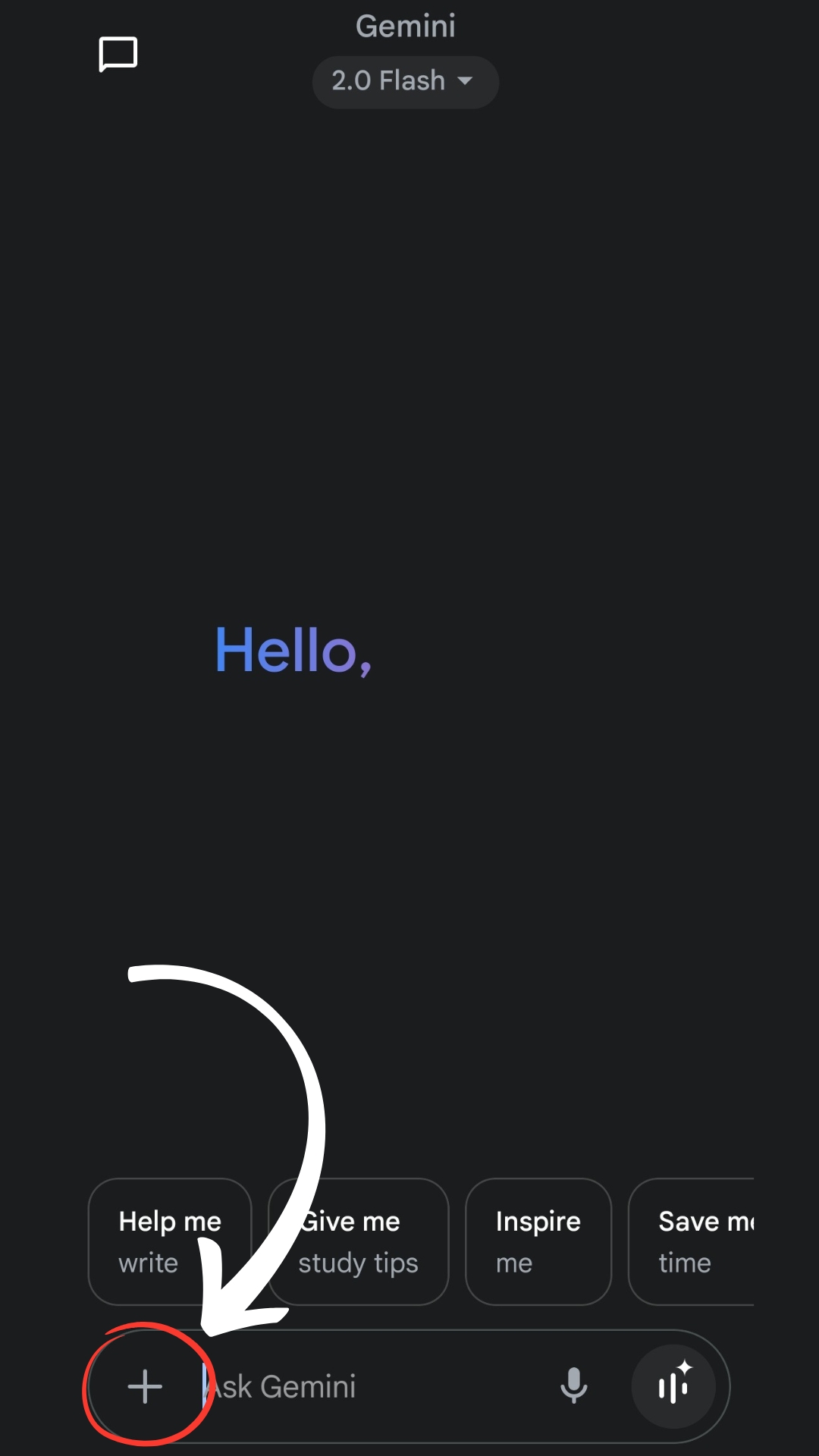
Analyze Research & Lab Data
Upload **scientific journals or experimental data**. Use it to master *Experimental Design*, summarize *Quantitative Research* papers, or break down complex *Statistical Significance* in research findings.
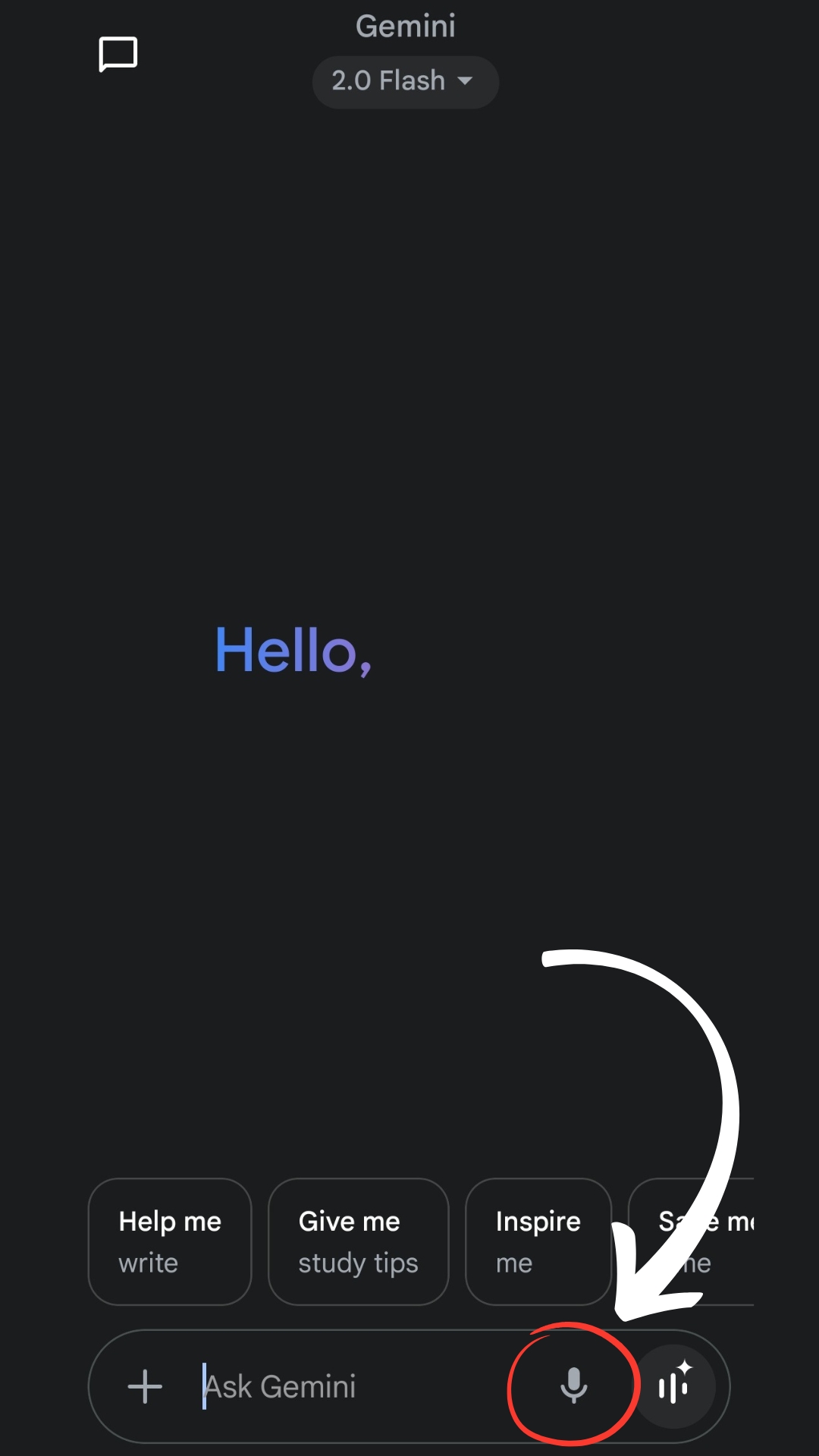
Scientific Formulas & General Aptitude
Review **scientific constants and Part A logic hands-free**. Practice *Hypothesis Testing* concepts or quickly check chemical structures and physical laws during your study breaks.
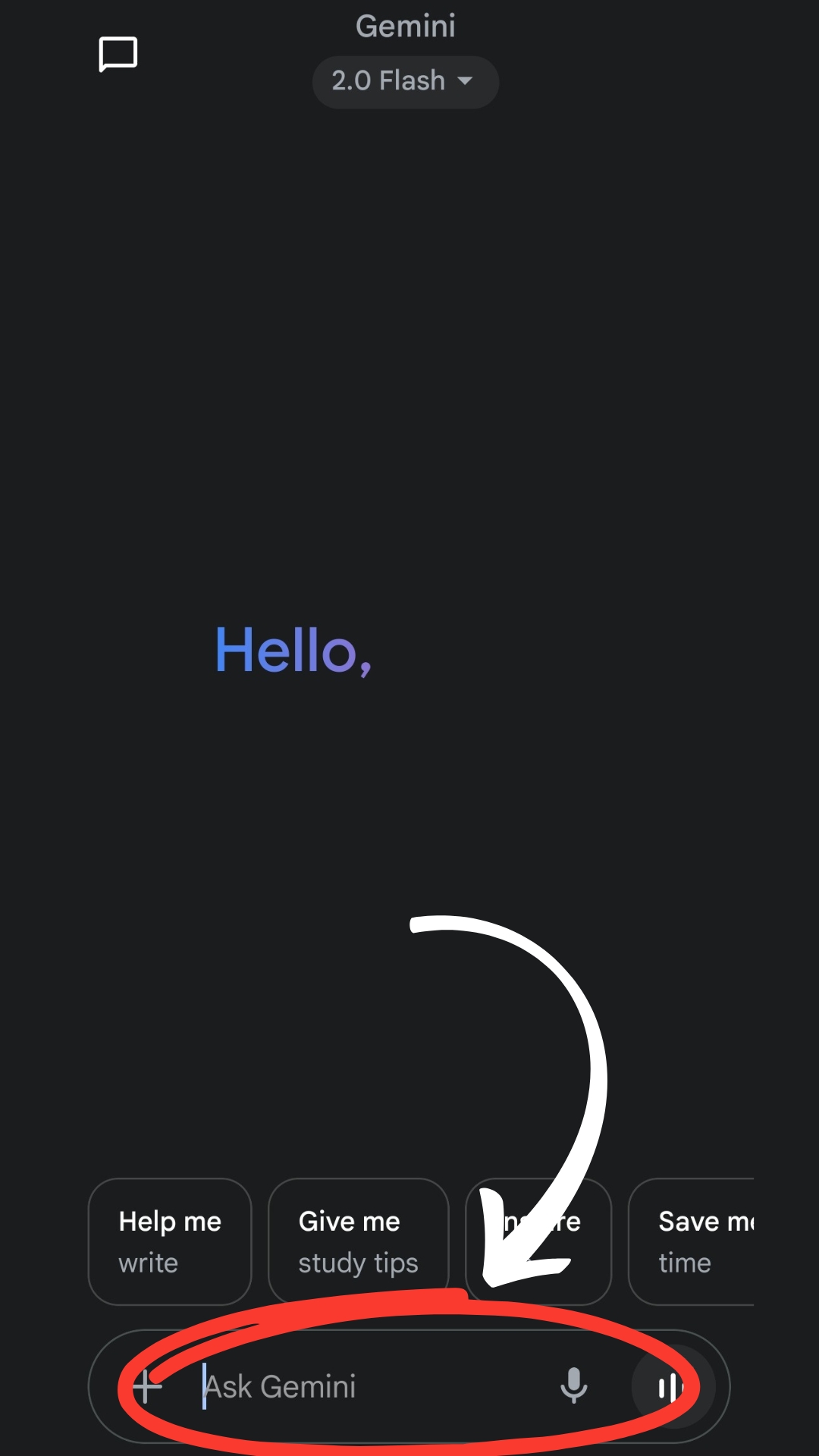
Part C Analytical Reasoning
Your main tool for **deep research-based questions**. Solve *Mathematical Modeling* problems, explain complex biological pathways, or dissect high-level physics derivations.
Solving Questions From The CSIR UGC NET Syllabus With Google Gemini
Example 1: CSIR UGC NET Life Science
Cell Biology (Cell Signaling and Communication)
Official Path: Molecules and Their Interaction Relevant to Biology: Cell Signaling
Molecular Strategy Analysis
Research "GPCR Signal Transduction Cascade" and "Regulatory Mechanisms of Secondary Messengers." In CSIR NET, the focus is on the molecular "on/off" switches and the kinetics of protein interactions. Grounding the prompt in "Allosteric Modulation" and "G-protein Cycle" ensures the AI explains the transition from the inactive GDP-bound state to the active GTP-bound state, providing the biochemical depth required for Part B and Part C of the examination.
Study Lab
Cell Biology: Signaling Lab
Question: "A researcher is studying the G-Protein Coupled Receptor (GPCR) signaling pathway in a mammalian cell line. Upon binding of a ligand to the receptor, the activation of Adenylate Cyclase leads to an increase in intracellular cAMP levels. Explain the role of the $G\alpha_s$ subunit in this activation. Furthermore, discuss the mechanism of signal termination via GTPase activity and the role of Phosphodiesterase (PDE) in regulating the secondary messenger."
"Act as a Senior Principal Investigator and CSIR NET Life Science Mentor (Persona). Explain the Architecture of GPCR Signaling (Subject) in the context of transmembrane communication (Context). Focus on the 'Seven-Transmembrane Alpha-Helices' and the 'Heterotrimeric G-protein Complex.' Provide a molecular summary (Format) of how the conformational change in the receptor facilitates GDP-GTP exchange."
"Analyze the cAMP-mediated Signaling and Termination using Chain-of-Thought. Step 1: Describe the activation of Adenylate Cyclase by the $G\alpha_s$ subunit. Step 2: Explain the subsequent activation of Protein Kinase A (PKA). Step 3: Detail the intrinsic GTPase activity of the Gα subunit. Step 4: Verify the role of Phosphodiesterase in signal dampening and preventing 'Constitutive Activation'."
"Create a Cell Signaling Pathway and Inhibitor Matrix for CSIR NET aspirants. Structure: Signaling Pathway, Key Secondary Messenger/Effector, The 'CSIR Trap', and Experimental Logic. Constraints: Use a structured hierarchical list. No conversational filler. Ensure 100% accuracy for CSIR UGC NET standards."
Cell Bio Lab • Molecular Signaling Module
Example 2: CSIR UGC NET General Aptitude
Logical Reasoning (Syllogisms and Venn Diagrams)
Official Path: Part A: General Aptitude - Graphical Analysis and Logical Reasoning
The Deep Search Strategy
Research "Syllogism Rules for CSIR NET Part A" and "Venn Diagram Logic for Categorical Propositions." In CSIR NET, the "General Aptitude" section often uses syllogisms to test deductive reasoning. Grounding the prompt in the "Distributed and Undistributed Middle" framework ensures the AI explains why a "possibility" is not a "certainty," providing the logical rigor required for the 20-question compulsory section.
Study Lab
General Aptitude: Logical Reasoning
Question: "Consider the following statements:
1. All scientists are researchers.
2. Some researchers are teachers.
3. No teacher is a politician.
Based on these statements, evaluate the validity of the following conclusions:
I. Some scientists are teachers.
II. No researcher is a politician.
III. Some researchers are not politicians.
Use the Venn Diagram method to justify your answer and explain the concept of 'Minimal Overlap'."
"Act as a Logical Reasoning Expert and CSIR NET Aptitude Coach (Persona). Explain the Venn Diagram Method for Syllogisms (Subject) in the context of set theory (Context). Focus on 'Universal Affirmative' (All A are B) and 'Particular Affirmative' (Some A are B) representations. Provide a visual methodology summary (Format) of how to handle the 'Some' constraint without assuming extra information."
"Analyze the Validity of Syllogistic Conclusions using Chain-of-Thought. Step 1: Draw the base diagram for 'All scientists are researchers.' Step 2: Add the 'Some researchers are teachers' circle using minimal overlap. Step 3: Add the 'No teacher is a politician' constraint. Step 4: Verify each conclusion (I, II, and III) against the diagram and identify 'Possible' vs. 'Definite' outcomes."
"Create a General Aptitude Logical Reasoning Matrix for CSIR NET aspirants. Structure: Question Pattern, The 'CSIR Shortcut', The Logical 'Anchor', and Candidate Pitfall. Constraints: Use a structured hierarchical list. No conversational filler. Ensure 100% accuracy for CSIR UGC NET standards."
Aptitude Lab • Graphical Analysis Module
Example 3: CSIR UGC NET Physical Sciences
CSIR UGC NET: Physical Sciences
Official Path: Physical Sciences: Quantum Mechanics (Non-degenerate Perturbation Theory)
The Deep Search Strategy
Research "First-order Energy Correction in Infinite Well" and "Matrix Elements of Perturbation Hamiltonian." In CSIR NET, the ability to solve integrals quickly using symmetry and normalization constants is vital. Grounding the prompt in the "Expectation Value of the Perturbing Potential" ensures the AI explains that the first-order correction is simply the average value of the perturbation over the unperturbed state, providing the mathematical rigor required for Part C.
Study Lab
Physical Sciences: Quantum Mechanics
Question: "A particle of mass $m$ is in an infinite square well of width $a$ (from $0$ to $a$). A small perturbation $V' = V_0$ is applied only in the region $0 < x < a/2$. Calculate the first-order correction to the energy for the ground state. Explain how the parity of the wavefunction affects the result and determine the condition under which the first-order correction would be exactly $V_0$."
"Act as a **Theoretical Physicist and CSIR NET Physics Faculty** (Persona). Explain the concept of **Time-Independent Non-degenerate Perturbation Theory** (Subject) in the context of an infinite potential well (Context). Focus on the 'First-order Correction Formula' and the role of the unperturbed wavefunction. Provide a **mathematical summary** (Format) of how the perturbation Hamiltonian $V'$ modifies the energy levels."
"Analyze the **Energy Correction Calculation for a Half-Well Perturbation** using **Chain-of-Thought**. **Step 1:** Define the integral for the ground state ($n=1$) energy correction. **Step 2:** Substitute the wavefunction and the potential $V'$ into the integral. **Step 3:** Evaluate the integral over the range $0$ to $a/2$. **Step 4:** Verify the result using the physical intuition of 'average probability density'."
"Create a **Quantum Mechanics Problem-Solving and Formula Matrix** for CSIR NET aspirants. Structure: System/Operator, Key Property, The 'CSIR Shortcut', and Candidate Pitfall. Constraints: Use a structured hierarchical list. No conversational filler. Ensure 100% accuracy for CSIR UGC NET standards."
Physical Science Lab • Quantum Mechanics Module
Using Google Gemini for CSIR UGC NET Deep Research
What is Deep Research?
Deep research for the CSIR UGC NET involves using Google Gemini to bridge high-level scientific theories with current experimental papers and analytical breakthroughs. It turns the AI into a research collaborator that helps you understand the "Why" behind experimental protocols and advanced mathematical derivations, moving beyond basic concepts to the high-density analysis required for Parts B and C of the national eligibility test.
How It Helps You
- Experimental Protocol Synthesis: CSIR NET often asks about advanced laboratory techniques. Gemini helps you find the logical basis for protocols in Molecular Biology, Spectroscopy, or Quantum Chemistry.
- Part C Analytical Reasoning: Deep research allows you to break down multi-statement scientific problems, helping you identify the link between variables in complex data-interpretation questions.
- Contextualizing Research Papers: Stay updated on the latest breakthroughs in journals like Nature, JACS, or Cell—topics that provide critical context for high-weightage conceptual questions.
- General Aptitude Mastery: Gemini can break down the logic of Part A mathematical puzzles and reasoning sets, providing step-by-step derivations for common shortcut methods.
Grounding and Context
What it is: "Grounding" means tethering Gemini to official CSIR-HRDG notifications and peer-reviewed databases so it doesn't give you unverified scientific data or "hallucinated" theories.
Why it matters: Science facts must be exact for JRF eligibility. Grounding ensures you are studying from sources like Official CSIR Syllabi, Historical Question Papers, and Standard Technical Handbooks.
How you do it:
1. Download the latest official CSIR UGC NET syllabus or a compilation of Part C research-based questions PDF.
2. Upload the PDF to Gemini.
3. Use the command: "Filter all your future research through the specific analytical depth and difficulty levels found in this official CSIR NET guide."
System-Task-Range Prompting
The Google Suggested MethodUse this structured method to ensure Gemini acts like a Senior Research Scientist or a Subject Expert rather than a general information chatbot.
“Act as a Senior Research Mentor specializing in [Your Subject, e.g., Life Sciences]. Your task is to research the most significant advancements in [Specific Topic, e.g., CRISPR-Cas9 or Organometallics] in the last 12 months. Write a 200-word summary of the experimental logic involved and create three Part C style questions based on this. Use only official research records and verified journals.”
Reverse Engineering Prompts
The India Should Know TechniqueReverse-engineer your study notes by describing the exact analytical depth and tabular format you need before the AI processes raw scientific data.
“I want to create a high-density comparison table for [Scientific Techniques, e.g., NMR vs Mass Spectrometry]. Format: A 4-column table (Principle, Application Case, Data Interpretation Tip, Why CSIR NET Tests This). Tone: Professional, direct, and analytical. Intent: To master core differences for Part B and C questions. Constraints: No fluff. Every point must be under 15 words. Use the official technical textbook context I provided. Once generated, I will ask you to create a logic-based data analysis question for this table.”
Tips for Better Deep Research
- The "Logic Loop": After an answer, ask: "What is the most common conceptual trap candidates fall into when solving Part C questions on this topic?" to identify negative marking traps.
- Verify Scientific Constants: Always use the "Google" search button to verify the latest physical constants, IUPAC names, or taxonomic classifications mentioned in your research.
- Visual to Text: If you are studying complex molecular pathways or spectroscopic graphs, describe the linkages to Gemini and ask it to explain the "unseen" chemical or physical constraints.
- Chain of Reasoning: For advanced derivations, tell Gemini: "Explain the transition between these two logical steps step-by-step so I can mentally derive this under exam pressure."
Guided Learning For CSIR UGC NET With Google Gemini As Your Personal Tutor
What is Guided Learning with AI?
For CSIR UGC NET aspirants, guided learning with AI is like having a PhD-level research assistant available 24/7 to help you crack the logic behind experimental data, advanced derivations, and complex scientific mechanisms. Instead of just searching for final answers, you use Gemini to simulate a high-level research dialogue. It identifies gaps in your fundamental understanding and explains difficult scientific concepts in ways that prepare you for the analytical depth of Part C.
How it helps you for this course/exam
- Master Part C Analytical Logic: CSIR NET Part C questions are application-based and worth 4 marks each. Gemini can break down the logic behind experimental observations, ensuring you understand the scientific reasoning rather than just memorizing a specific theorem.
- General Aptitude Mastery: Struggling with 'Probability' or 'Logical Reasoning' in Part A? Gemini can act as a coach, providing shortcuts and step-by-step logic to help you secure these scoring marks with speed and accuracy.
- Real-World Research Mastery: It can act as a technical mentor, helping you visualize how theoretical subjects like Spectroscopy, Cell Signaling, or Quantum Chemistry are applied in modern-day research papers and industrial laboratories.
How to do it in short
1. Define the Role: Tell Gemini it is an expert Senior Scientist specializing in [Subject].
2. Set the Boundary: Tell it NOT to solve the problem for you—insist on guiding you through the research methodology first.
3. Interactive Dialogue: Ask it to quiz you on a specific scientific principle or a complex theorem one question at a time.
4. Feedback Loop: Provide your logic for a derivation or an experimental result, and let the AI correct your technical reasoning.
Google Suggested Method: Conversational Scaffolding
Google’s recommended approach focuses on "conversational scaffolding." For CSIR NET, this means starting with basic scientific laws and letting the AI guide you step-by-step toward solving full-scale research problems through a back-and-forth chat.
“I am studying for the CSIR UGC NET exam, specifically focusing on [Subject/Chapter]. I want you to act as a supportive scientist mentor. Start by asking me what I already know about [Specific Topic], and then help me build my understanding by asking follow-up questions that connect basic logic to advanced research-level problems. Don't give me all the information at once; let's take it step-by-step.”
Google Suggested Method: The Socratic Method
The Socratic method is the gold standard for mastering scientific logic. Instead of the AI explaining a derivation or a biological cycle to you, it asks you a series of disciplined questions. This forces you to think through the logical and technical flow yourself, which is critical for solving unseen problems during the actual exam.
“I want to learn the core logic behind [Topic]. Act as a Socratic tutor for CSIR NET prep. Do not give me the explanation. Instead, ask me a leading question that helps me realize the core scientific principle or research logic behind this. Once I answer, ask another question to push my thinking into real-world application until I have fully grasped the concept.”
The India Should Know Method
The "Reverse Engineering" MethodThe India Should Know method is about Reverse Engineering. Instead of letting the AI wander, you put heavy constraints on the output. You define the exact "shape" of the session—specifying the need for high-density analytical formats—before you ever give it the raw research data or syllabus details.
“Intent: Act as an expert CSIR Professor specializing in [Subject]. Context: I am preparing for my JRF/NET exam and need to master [Chapter/Topic]. Format Constraints: * Conduct a 'Step-by-Step Technical Logic' or 'Experimental Data' quiz session. * Ask exactly one question or logic-part at a time. * Wait for my response before moving to the next part of the logic. * If I am wrong, provide a technical hint rather than the final solution. * Use a professional and encouraging tone. * After 5 questions, provide a 'Technical Gap Report' in a table format (Column 1: Science Concept, Column 2: Mastery Level 1-10, Column 3: High-Yield Improvement Area). Raw Data: [Paste your notes, research papers, or syllabus here] Instruction: Once you understand these constraints and the data provided, acknowledge this by asking the first question.”
Tips for Guided Learning
- Be Honest with the AI: If you don't understand a scientific hint, say "I don't understand the logic behind this mechanism, explain it using a different laboratory analogy." The AI can pivot its teaching style immediately.
- Use Voice Mode for Viva/Interview Prep: If you are on the Gemini app, use Gemini Live. Talking through the logic of your technical project or a complex research cycle out loud helps build the clarity needed for JRF interviews and Part C questions.
- Feed it Research Papers: Paste specific tricky paragraphs or experimental data from previous year Part C papers into the "Raw Data" section. This ensures the AI quizzes you on the exact level of analytical rigor expected in the CSIR NET exam.
- Review the Gap Report: Don't just finish the session. Look at the "Technical Gap Report" and ask Gemini to create a 10-minute focus summary sheet just for the areas where you need more technical clarity.
Note: Once Gemini produces the outcome based on these prompts, you can further improve it by saying: "That was great, but make the questions more focused on [Specific Sub-topic] and use more practical, research-style examples."
Important Links for CSIR UGC NET Aspirants
The primary gateway for candidate registration. Use this portal for official exam notifications, downloading admit cards, and checking result declarations administered by the National Testing Agency.
The official authority for JRF/Lectureship eligibility. Access verified syllabus copies, e-certificates, and fellowship guidelines for Junior Research Fellowship and Lectureship/Assistant Professor.
Advanced reasoning model for solving complex scientific derivations, analyzing research trends, and refining Part A General Aptitude strategies for the NET exam.
The apex government body for scientific R&D in India. Essential for tracking national scientific breakthroughs and institutional data relevant to Life, Chemical, and Physical Sciences.
The parent website of the National Testing Agency. Refer here for general public notices, technical instructions, and official exam calendars applicable to all national tests.
Your Journey To Mastering AI Has Just Begun, Go Practice Now
The CSIR UGC NET exam is a test of both knowledge and strategic thinking, where the depth of your preparation is as important as the efficiency of your study. While many tools promise to help, Google Gemini AI offers a dynamic, personalized approach that complements your hard work. From solving complex mathematical problems to clarifying intricate biological concepts and dissecting logical puzzles, Gemini is a partner that provides instant, tailored feedback. By integrating it into your daily study routine, you’re not just preparing—you’re strategically sharpening your skills, learning more efficiently, and building the confidence you need to succeed.
Written By
Prateek Singh.
Last Updated – Febuary, 2026
About The Author
Prateek is a self-taught practitioner who believes the only real way to learn is by doing. He created IndiaShouldKnow.com from scratch, using AI as his primary learning partner to navigate everything from web development and UI/UX design to color theory and graphic engineering.
He works within the “engine room” of AI daily, using these tools to manage professional workflows including data visualization, digital marketing systems, and SEO architecture. Having personally tested and refined dozens of AI models across hundreds of real-world scenarios, Prateek focuses on the “how” behind the technology. He shares his self-taught workflows and prompting pillars to help others move past basic chat interactions and start using AI as a high-precision tool for their own goals.
FAQs About AI Use
Can I trust every answer an AI tool gives me for my studies?
A: No, you should not trust every answer completely. Think of an AI as a super-smart assistant that has read most of the internet—but not every book in the library is accurate.
AI can sometimes make mistakes, misunderstand your question, or use outdated information.
It can even “hallucinate,” which means it confidently makes up an answer that sounds real but is completely false.
Rule of Thumb: Use AI answers as a great starting point, but never as the final, absolute truth. Always double-check important facts.
How can I verify the information I get from an AI for my academic work?
A: Verifying information is a crucial skill. It’s like being a detective for facts. Here are four simple steps:
Check Your Course Material: Is the AI’s answer consistent with what your textbook, lecture notes, or professor says? This is your most reliable source.
Look for Reputable Sources: Ask the AI for its sources or search for the information online. Look for links from universities (.edu), government sites (.gov), respected news organizations, or published academic journals.
Cross-Reference: Ask a different AI the same question, or type your question into a standard search engine like Google. If multiple reliable sources give the same answer, it’s more likely to be correct.
Use Common Sense: If an answer seems too perfect, too strange, or too good to be true, be extra skeptical and investigate it further.
What is the difference between using AI for research and using it to plagiarize?
A: This is a very important difference. It’s all about who is doing the thinking.
Using AI for Research (Good ✅):
Brainstorming topics for a paper.
Asking for a simple explanation of a complex theory.
Finding keywords to use in your library search.
Getting feedback on your grammar and sentence structure.
You are using AI as a tool to help you think and write better.
Using AI to Plagiarize (Bad ❌):
Copying and pasting an AI-generated answer directly into your assignment.
Asking the AI to write an entire essay or paragraph for you.
Slightly rephrasing an AI’s answer and submitting it as your own original thought.
You are letting the AI do the thinking and work for you.
How can I use AI ethically to support my learning without violating my school's academic honesty policy?
A: Using AI ethically means using it to learn, not to cheat. Here’s how:
Know the Rules: First and foremost, read your school’s or professor’s policy on using AI tools. This is the most important step.
Be the Author: The final work you submit must be yours. Your ideas, your structure, and your arguments. Use AI as a guide, not the writer.
Do the Heavy Lifting: Use AI to understand a topic, but then close the chat and write your summary or solve the problem yourself to make sure you have actually learned it.
Be Transparent: If you used an AI in a significant way (like for brainstorming), ask your professor if you should mention it. Honesty is always the best policy.
Can an AI's answer be biased? How can I detect this in its responses?
A: Yes, an AI’s answer can definitely be biased. Since AI learns from the vast amount of text on the internet written by humans, it can pick up and repeat human biases.
Here’s how to spot potential bias:
Look for Opinions: Does the answer present a strong opinion as a fact?
Check for One-Sidedness: On a topic with multiple viewpoints (like politics or economics), does the AI only show one side of the argument?
Watch for Stereotypes: Does the answer use generalizations about groups of people based on their race, gender, nationality, or other characteristics?
To avoid being misled by bias, always try to get information from multiple, varied sources.
Is it safe to upload my personal notes, research papers, or assignments to an AI tool?
A: It is best to be very careful. You should not consider your conversations with most public AI tools to be private.
Many AI companies use your conversations to train their systems, which means employees or contractors might read them.
There is always a risk of data breaches or leaks.
A Simple Safety Rule: Do not upload or paste any sensitive information that you would not want a stranger to see. This includes:
Personal identification details.
Confidential research or unpublished papers.
Your school assignments before you submit them.
Any financial or private data.