ICSE With Google Gemini - The 2026 AI Master Class
Your Journey To Mastering AI For ICSE And Much More Starts Here
The ICSE Class 10 board exams are a critical step, establishing the strong academic foundation needed for high-value future streams in Science, Commerce, and Arts and setting the stage for top university admissions. To succeed, you must clear the final board exams and master the diverse, comprehensive curriculum covering Science, Mathematics, Literature, and Commercial Studies. The pressure of juggling multiple subjects, understanding complex concepts, and ensuring thorough revision can feel overwhelming, but the fact that you are actively seeking powerful learning tools proves your dedication—acing your Class 10 boards is guaranteed with the right strategy. You need a personalized study companion available 24/7: Artificial Intelligence (AI) is your secret weapon for ICSE Class 10 preparation. AI can instantly demystify tricky math problems step-by-step, simplify complex scientific principles, and offer insightful literary interpretations across all your subjects. I’ve seen firsthand the transformative power of AI in my professional life, helping me master data analysis, SEO, and content creation, and I even used it to build this website. This guide shows you exactly how to integrate this powerful AI into a 360-degree learning strategy. Get ready to stop studying harder and start preparing smarter.
Note :
- “The techniques and prompt engineering principles you learn in this guide are universally applicable to any large language model (LLM), including ChatGPT and Perplexity AI. We use Google Gemini for all examples because its latest multimodal features and integration with Google Search provide a best-in-class learning experience.”
- “Remember: The quality of the AI’s answer depends entirely on the clarity of your prompt. Always be specific, detailed, and clear with the AI to avoid irrelevant or incorrect (hallucinated) responses.”
How Gemini Helps With Every Subject For ICSE
| Focus Area | What Gemini Does | Your Benefit |
|---|---|---|
|
|
Math Logic Coach
|
You understand the "why" behind every step. This helps you fix mistakes as you go and finish your board paper on time. |
|
|
Mechanism Visualizer
|
Complex science topics become simple stories. You build a clear mental picture that makes answering hard test questions much easier. |
|
|
Theme & Story Guide
|
You move beyond just knowing the story. You learn to analyze text like a pro, which is exactly what board examiners look for. |
|
|
Code Logic Builder
|
You stop guessing how code works. You build the "coding logic" needed to solve the tricky Section B questions with total confidence. |
|
|
Timeline Sync Specialist
|
You skip the boring memorization. By understanding "why" history happened, the dates and names stay in your memory naturally. |
|
|
Answer Strategy Lead
|
You stop writing long paragraphs that get zero points. You learn to hit every point in the marking scheme to maximize your score. |
How AI Boosts Your Efforts : Data From Recent Studies
In 2026, global data shows that AI is the most effective tool for moving information from your short-term memory to your long-term “Exam Day” memory.The following points are backed by recorded studies and data from the 2025-2026 academic cycle, proving that AI-driven study is a fundamental shift in educational performance:
| Research Metric | Evidence & Analysis | Academic Significance |
|---|---|---|
| 20–30% score improvement Active Learning Meta-Analyses |
Stronger Performance in Concept-Heavy Subjects
|
What This Means
AI improves how students understand concepts — not just how much they remember the night before the exam.
ICSE Class 10 Edge: Higher scores in Mathematics, Physics, Chemistry, and Biology.
|
| 25–35% weak-topic improvement Diagnostic Learning Research |
Targeted Fixing of Weak Chapters
|
What This Means
AI identifies exactly which chapters are dragging overall marks down — and fixes them early.
ICSE Class 10 Edge: Prevents one weak unit from pulling down final percentage.
|
| 15–25% net score gain Assessment Behaviour Studies |
Smarter Question Selection & Accuracy
|
What This Means
AI trains students to attempt questions they can score in — not panic-guess.
ICSE Class 10 Edge: Higher accuracy in Maths numericals and Science answers.
|
| 30–40% better retention Spaced Learning Research |
Long-Term Retention of Theory & Definitions
|
What This Means
AI prevents students from forgetting chapters already studied months earlier.
ICSE Class 10 Edge: Protects easy marks in English, History, Geography, and Biology.
|
Advanced Prompting Techniques by Google for 2026, with Examples Prompts For ICSE
Google Gemini is a Reasoning Engine. To get "A+ Grade" results for the ICSE (CISCE) Board and school aspirants, move beyond basic questions using these six pillars.
- The Technique: Setting the Persona, Task, Context, and Format.
- The Logic: ICSE (CISCE) demands high linguistic precision and a deeper application of concepts compared to other boards. Assigning a role like "Council Examiner" ensures the AI uses specific technical terms found in the Selina or Frank textbooks, while the Context "fences" the AI into the latest Scope of Syllabus to prevent it from giving irrelevant data.
Persona: Act as an [Any Expert Role: e.g., ICSE Board Examiner, Senior Physics Teacher, Language Specialist]. Task: Explain [Your Topic: e.g., Laws of Refraction, The Merchant of Venice Act 3, Mole Concept]. Context: Apply this specific background: [Source Context: e.g., Use only the 2026 CISCE Scope of Syllabus] [Difficulty Context: e.g., Explain for a Class 10 student aiming for 95%+] [Textbook Context: e.g., Align with Selina Concise / Morning Star standards] Format: Provide the answer as a [Structure: e.g., Structured Theory Answer, 5-Point High-Yield List].
- The Technique: Breaking a problem into a "Step-by-Step" sequence with logic checks.
- The Logic: ICSE Physics and Chemistry numericals require showing every sub-step for full marks. This version forces the AI to "Self-Correct"—verifying the Step 1 (SI unit conversions) before it attempts Step 2 (formula application), ensuring the final answer is mathematically airtight.
Solve this [Subject: e.g., Physics - Calorimetry, Chemistry - Stoichiometry, Math - GST] problem using Chain-of-Thought. Step 1: List all given [Physical Quantities/Variables] and convert them to their standard SI units. Step 2: State the core [Formula/Law] and verify its applicability to the specific problem. Step 3: Show the step-by-step calculation, verifying the mathematical logic of each line before moving forward. Question: [Insert your ICSE numerical here]
- The Technique: Limiting the AI to official domains with a focus on recent data.
- The Logic: The Council (CISCE) frequently updates specimen papers and internal assessment rules. This "Time-Stamp" filter forces the AI to prioritize official CISCE portals from the last 12 months for 100% accurate info on "Critical Thinking" question patterns.
Research the [Topic: e.g., ICSE 2026 Specimen Paper Pattern for History & Civics, New internal assessment rules]. Constraint: Only use info from official portals: [Domain 1: e.g., cisce.org]. Recency Rule: Prioritize data published in the last 12 months. Output: Provide the official summary and the direct link to the source.
- The Technique: Setting strict "Rules of Play" including forbidden keywords.
- The Logic: ICSE examiners look for specific "Keywords" in Biology and Chemistry. By setting hard boundaries and forbidding "AI-voice" fillers (like "Essentially"), you get sharp, technical definitions that match the marking scheme perfectly.
Explain [Concept: e.g., Plasmolysis, Refractive Index, Greenhouse Effect]. Constraint 1: Use only [Specific Source: e.g., ICSE Marking Scheme Keywords]. Constraint 2: Keep the response under [Limit: e.g., 60 words]. Constraint 3 (Negative): Do not use AI-filler phrases like "Basically" or "In conclusion." Format: Use bullet points with underlined keywords.
- The Technique: Using a Feedback Loop with an "Active Recall" check.
- The Logic: Treat the AI like a private ICSE tutor. This version forces the AI to stop and ask you a question after its explanation, ensuring you have actually understood the conceptual depth (like the difference between "Echo" and "Reverberation") before moving on.
Explain [Topic: e.g., Total Internal Reflection, Electrolysis of Water]. Instruction: Provide a high-level conceptual summary first. Feedback Loop: Ask me if I want a "2-mark definition" or a "4-mark structured explanation." Active Recall: Once I am satisfied, provide one 'ICSE-standard' MCQ or Short Question based on your explanation.
- The Technique: Providing a structural blueprint before injecting raw data.
- The Logic: Use this to build your "ICSE Revision Bible." You command the AI to build a specific result (like a comparison table of different types of Chemical Bonds) using a layout you provide, ensuring the data is ready for the "IndiaShouldKnow" platform or your personal revision.
Make a [Desired Output: e.g., Comparison Table of Plant Hormones, History Timeline (1857-1947), Math Formula Sheet]. Layout Blueprint: [Structure: e.g., 3-column table, Chronological list]. Style: [Vibe: e.g., Academic, Data-heavy, Minimalist]. Strict Rule: Adhere to the structure provided; no conversational filler. Use this information: [PASTE_CHAPTER_NOTES_OR_TEXTBOOK_DATA_HERE]
Using Google Gemini App Input Method's For ICSE.
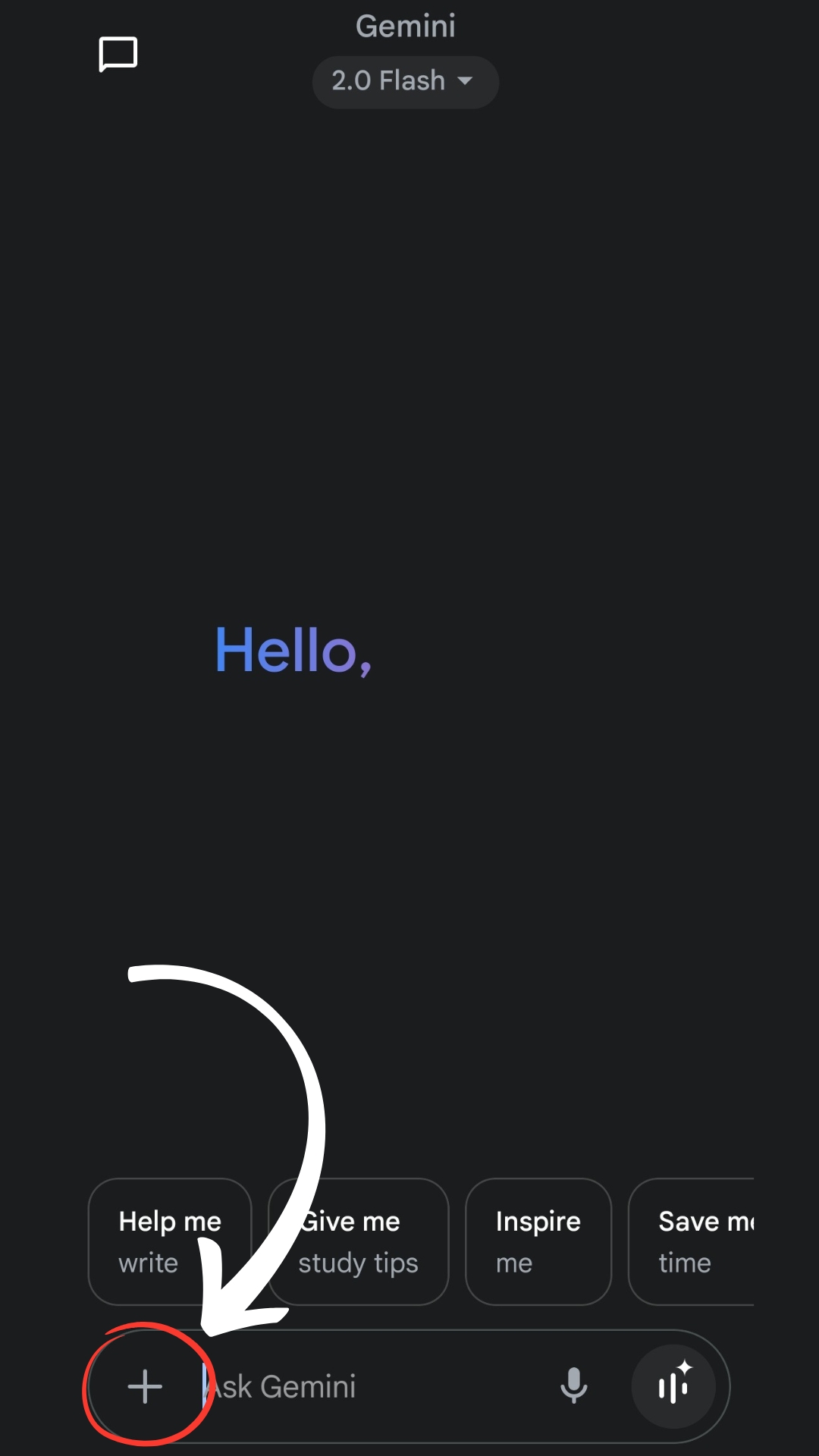
Analyze Past Papers & Concise Books
Upload **PDFs of Selina textbooks or past board papers**. Use *Content Analysis* to find high-weightage chapters or simplify complex Biology diagrams and Chemistry reactions into easy notes.
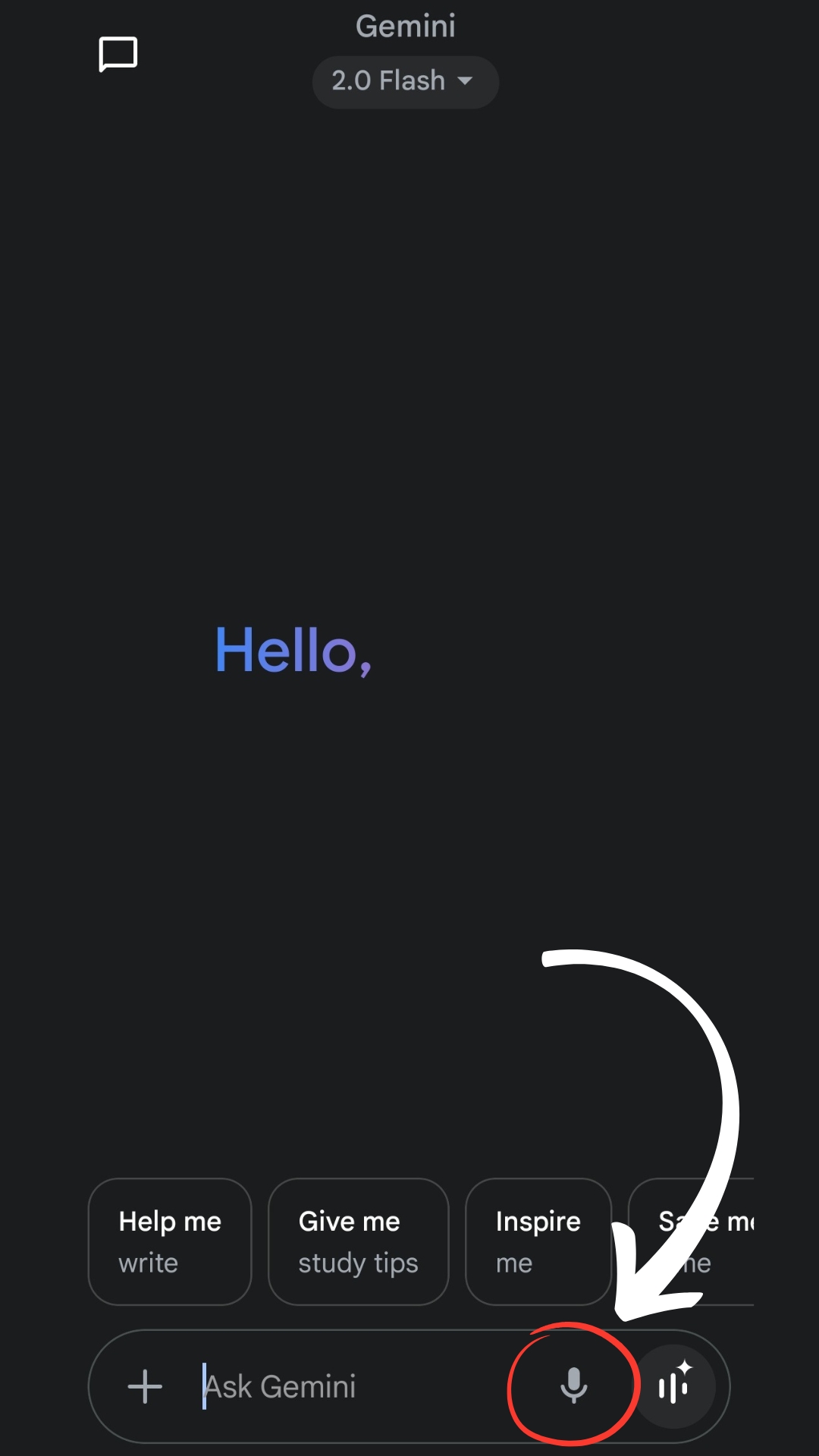
Shakespeare & History Fact Recall
Review **Merchant of Venice quotes or History dates hands-free**. Use *Active Recall* to verify Geography facts or Physics laws while you are away from your books or taking a quick break.
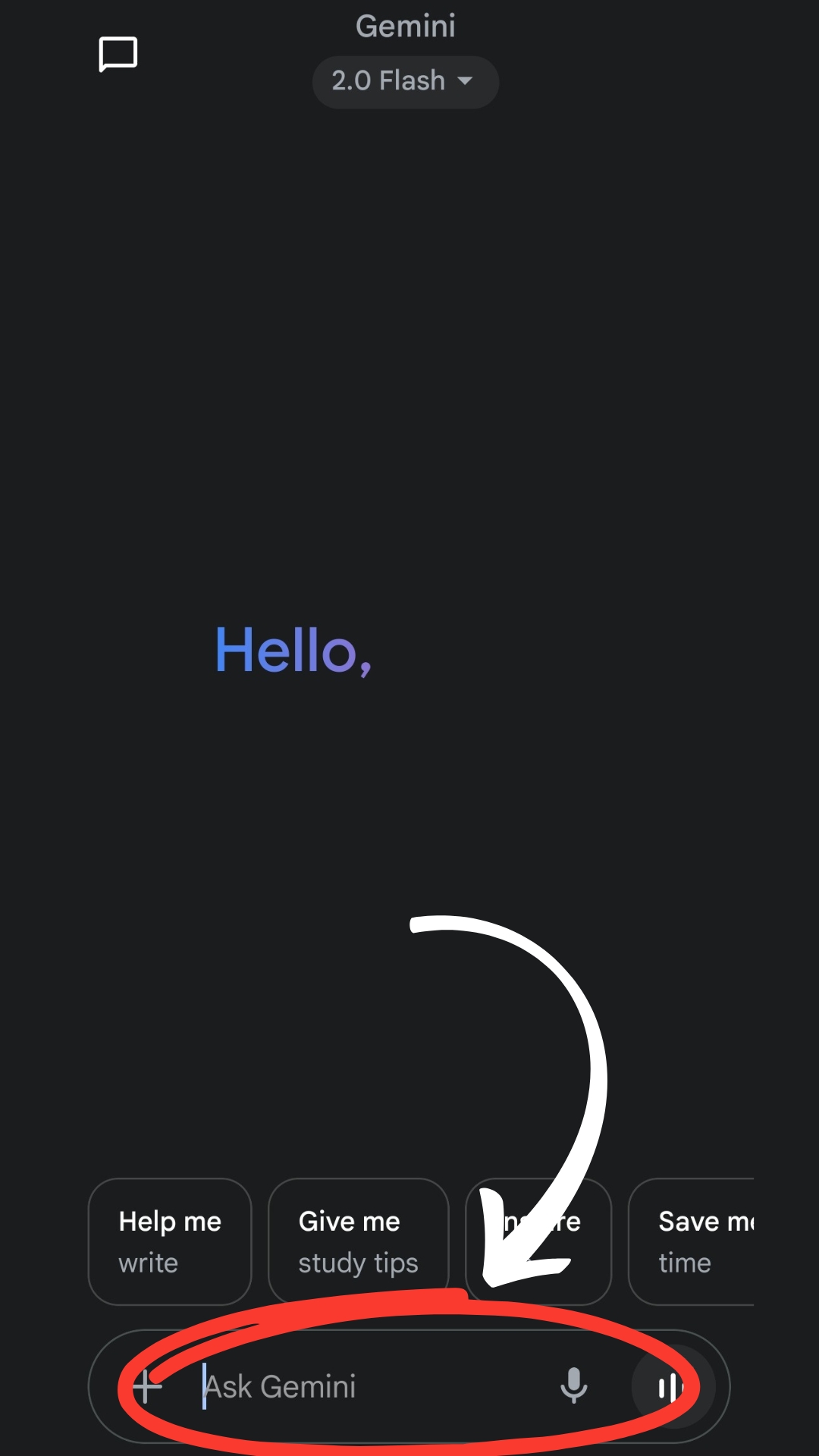
Physics Numericals & Math Logic
Your primary tool for **detailed solutions**. Ask for *Step-by-Step Problem Solving* for Trigonometry, Java coding logic (Computer Applications), or balancing tricky Chemistry equations.
Solving Questions From The ICSE Syllabus Using Google Gemini
Example 1. ICSE Mathematics
Trigonometry: Heights and Distances
Official Path: Mathematics: Trigonometry (Unit 5)
ICSE Heights and Distances Analysis
Research the "ICSE Heights and Distances Marking Scheme" and "Trigonometric Ratios of Complementary Angles." In the board exams, how you draw the diagram and show each step of math is just as important as the final answer. We focus on the "Angle of Depression to Angle of Elevation Equality" to help students understand how to solve Section B questions clearly.
Study Lab
ICSE Mathematics Prep
"From the top of a cliff $100$ meters high, the angles of depression of two ships out at sea are $60^\circ$ and $30^\circ$ respectively. If the ships are in a straight line with the foot of the cliff and on the same side of it, calculate the distance between the two ships. (Take $\sqrt{3} = 1.732$)."
"Act as an ICSE Mathematics Examiner and Senior Teacher. Explain the Concept of Angles of Depression in the context of real-world surveying. Focus on 'Horizontal Level of Sight' and 'Alternate Interior Angles.' Provide a summary of how to draw a board-standard diagram."
"Analyze the Distance Between Two Ships using Chain-of-Thought. Step 1: Define the heights and identify two right-angled triangles ($ABC$ and $ABD$). Step 2: Use $\tan 60^\circ$ to find the distance of the nearer ship. Step 3: Use $\tan 30^\circ$ to find the distance of the farther ship. Step 4: Verify the final distance by subtracting the results."
"Create an ICSE Class 10 Mathematics Logic Framework. Explain why we use $\tan$ instead of $\sin$ or $\cos$. Identify the 'Common Side' anchor. Highlight the 'Invisible Error' list like rounding $\sqrt{3}$ too early. Show a 10-second check to see if the answer is possible."
ICSE Study Lab • Optimized for Mathematics
Example 2. ICSE Science
Science (Paper 1: Physics, Paper 2: Chemistry, Paper 3: Biology)
Official Path: Integrated Science Mastery - Examiners' Anchors & Marking Precision
Precision Scoring Strategy
Research "ICSE Science Marking Schemes for Numerical Accuracy" and "Keyword-based evaluation in ICSE Biology." Examiners use a "Key Term" check. In Physics, the "Principle of Calorimetry" is mandatory; in Chemistry, "Selective Discharge" is the anchor; in Biology, the "Reflex Arc" sequence must be exact. Grounding in these anchors ensures full marks in theory papers.
Study Lab
ICSE Science Prep
Physics: "A calorimeter contains 50g of water at 20°C. If 20g of ice at 0°C is added, calculate the final temperature. ($c_w = 4.2\ J/g^\circ C$; $L_{ice} = 336\ J/g$)."
Chemistry: "During electrolysis of acidified water, identify the gases at the anode and cathode. Write relevant half-equations."
Biology: "Describe the path of a nerve impulse in a reflex action. Explain structural differences in spinal cord matter."
"Act as a Senior ICSE Science Moderator. Explain the Requirement for Technical Accuracy across the three sciences. Focus on 'S.I. Units,' 'State Symbols in Equations,' and 'Biological Nomenclature.' Provide a scoring-rubric summary of how marks are lost due to vague descriptions."
"Analyze the Calorimetry Numerical using Chain-of-Thought. Step 1: Calculate heat to melt ice. Step 2: Calculate heat available from water to reach 0°C. Step 3: Determine if all ice melts. Step 4: Verify the result against the range 0°C to 20°C."
"Create an ICSE Class 10 Science Mastery Framework. Focus on the 'Anchor' Method for Chemistry Equations, the 'Invisible Error' list for Physics Ray Diagrams, and the 'Reflex Arc' sequence for Biology."
ICSE Science Engine • Focused on Examiner Anchors
Example 3. ICSE Literature
ICSE English Paper 2: Drama (The Merchant of Venice)
Official Path: Literature in English - Shakespearean Analysis
Character Analysis Keyword Strategy
Research "ICSE Literature Marking Scheme for Merchant of Venice" and "Character Analysis Keywords for Portia and Shylock." In the ICSE exam, examiners look for "Textual Evidence" and "Thematic Keywords." Grounding study in terms like "Judicial Rigor," "Equitable Justice," and "Scriptural Reference" earns 3rd-level marks in long-form questions.
Study Lab
ICSE Literature Prep
"In Act IV, Scene i (The Court Scene), Portia, disguised as Balthazar, appeals to Shylock’s sense of mercy before applying the strict letter of the law. Analyze the 'Quality of Mercy' speech. Discuss how Portia uses the 'Divine Attribute' argument to persuade Shylock and explain the legal 'Double Trap' she sets for him regarding the 'Pound of Flesh'."
"Act as a Senior ICSE Literature Examiner and Shakespearean Scholar (Persona). Explain the Concept of Divine Justice vs. Human Law (Subject) in the context of the Venetian Court (Context). Focus on the 'Rain Metaphor' and 'Temporal Power.' Provide a thematic summary (Format) of how Portia establishes a moral hierarchy before the legal trial."
"Analyze the Legal Technicality of the Bond using Chain-of-Thought. Step 1: Identify Shylock’s insistence on the 'Letter of the Law.' Step 2: Explain the 'No Blood' constraint. Step 3: Detail the 'Exact Weight' constraint. Step 4: Verify the 'Double Trap' where Shylock is penalized for 'Attempted Homicide'."
"Create an ICSE Class 10 Literature Mastery Framework. Focus on the 'Anchor' Method for Quotes, the 'Context' Question for immediate scene setting, and Comparative Analysis of Dramatic Irony in the Trial Scene."
ICSE Literature Study Lab • Optimized for Textual Evidence
Using Google Gemini for ISCE Deep Research
What is Deep Research?
Deep research for ICSE Class 10 involves using Google Gemini to connect core scientific concepts and literary themes with real-world applications and professional standards. It turns the AI into a specialized academic tutor that helps you understand the "Why" behind difficult chemical reactions, historical events, and mathematical proofs, moving beyond simple memorization to the conceptual depth required for CISCE exams.
How It Helps You
- Reasoning-Based Mastery: ICSE exams focus on "Give Reasons" questions. Gemini helps you find the exact scientific or logical basis for phenomena in Physics, Biology, and Chemistry.
- Literary Tone Analysis: Deep research allows you to break down the structure of poems and plays (like Shakespeare's works), helping you identify themes, imagery, and authorial intent.
- Geography Map Precision: Stay updated on the exact symbols and topographical rules for map-work—topics that are critical for securing high marks in HCG Paper 2.
- Mathematical Logic Breakdown: Instead of just learning formulas, Gemini can research the "derivation logic" to help you solve non-routine problems in Trigonometry and Statistics.
Grounding and Context
What it is: "Grounding" means tethering Gemini to official CISCE syllabi and Concise/Selina textbooks so it doesn't give you information outside your board's specific scope.
Why it matters: ICSE evaluation is highly specific about keywords. Grounding ensures you use sources like CISCE Specimen Papers, Scope of Syllabus Documents, and Concise Science Series.
How you do it:
1. Download the latest official ICSE Class 10 Syllabus or a compilation of the last 5 years' Specimen Papers PDF.
2. Upload the PDF to Gemini.
3. Use the command: "Filter all your future research through the specific conceptual depth and reasoning requirements found in this official ICSE guide."
System-Task-Range Prompting
Expert Framework for Multi-Purpose ResearchThis structured framework allows you to customize the AI's persona and objective. Use it to create multi-purpose research tasks for Science, English, or HCG.
“System: (ICSE Subject Expert | Top Merit List Analyst | Expert School Teacher). Task: (Audit reasoning answers | Predict specimen patterns | Solve application-based sets | Synthesize project data). Range: (ICSE Scope of Syllabus only | 10-year paper analysis | Step-marking focus | High-yield topics). Research the latest patterns in [ICSE Subject, e.g., English Literature]. Summarize the top 3 themes and create three practice questions. Use only the provided syllabus and official specimen papers.”
The India Should Know Technique
The "Reverse Engineering" MethodThis method lets you dictate the exact outcome before the AI processes data. Use it to specify the required info, sources, emphasis, style, and exclusions.
“I want to create a high-density strategy guide for [ICSE Topic, e.g., Analytical breakdown of Shakespearean plays]. Information Required: (Mastery of character motives | Identification of imagery | Analysis of historical context | Logic of chemical reactions). Sources: (Official CISCE syllabus | Concise Science textbooks | Specimen papers | Official marking schemes). Emphasis: (Keywords for full marks | Logic of the answer | Step-by-step presentation | Critical analysis). Presentation: (Structured list for long answers | Comparison table for concepts | Character sketch summary | Flowchart description). Exclusions: (Generic CBSE trivia | Vague definitions | Unverified shortcuts | Long paragraphs | Out-of-syllabus content). Once generated, I will ask you to create a logic-based reasoning question for this guide.”
Tips for Better Deep Research
- The "Logic Loop": After an answer, ask: "What are the common technical keywords missing in this explanation that would lead to a loss of marks in ICSE?" to identify traps.
- Verify Scientific Data: Always use the "Google" search button to verify the latest material constants, IUPAC names, or classification updates mentioned in your science research.
- Visual to Text: If you are studying complex circuit diagrams, ray diagrams, or biological maps, describe the linkages to Gemini and ask it to explain the "unseen" force or logic at each junction.
- Chain of Reasoning: For mathematical proofs, tell Gemini: "Explain the transition between these two logical steps step-by-step so I can mentally solve this during the actual exam."
Guided Learning For ICSE With Google Gemini As Your Personal Tutor
ICSE Class 10: Science (Integrated Science Focus)
Official Path: Paper 1 (Physics), Paper 2 (Chemistry), Paper 3 (Biology)
Examiner Anchors Strategy
Research "ICSE Science Marking Schemes for Numerical Accuracy" and "Keyword-based evaluation in ICSE Biology." Examiners use a "Key Term" check. In Physics, the "Principle of Calorimetry" must be stated; in Chemistry, "Selective Discharge" is the anchor; in Biology, the "Reflex Arc" sequence is critical.
Study Lab
ICSE Science Prep
Physics: "A calorimeter contains 50g of water at 20°C. If 20g of ice at 0°C is added, calculate the final temperature of the mixture. (Specific heat capacity of water = $4.2\ J/g^\circ C$; Latent heat of ice = $336\ J/g$)."
Chemistry: "During the electrolysis of acidified water, identify the gases evolved at the anode and cathode. Write half-equations and explain why the volume of gas at the cathode is double that at the anode."
Biology: "Describe the path of a nerve impulse in a reflex action. Explain the structural difference between the gray matter and white matter of the spinal cord."
"Act as a Senior ICSE Science Moderator and Board Examiner. Explain the Requirement for Technical Accuracy across the three sciences. Focus on 'S.I. Units,' 'State Symbols in Equations,' and 'Biological Nomenclature.' Provide a scoring-rubric summary of how marks are lost due to 'vague descriptions' even when the concept is understood."
"Analyze the Ice-Water Mixture Final Temperature using Chain-of-Thought. Step 1: Calculate the heat required to melt the ice ($m \times L$). Step 2: Calculate the heat available from the water to reach 0°C. Step 3: Determine if all the ice melts. Step 4: If all ice melts, set up the final equation ($Q_{lost} = Q_{gained}$) to find the final temperature $T$ and verify the result."
"Create an ICSE Class 10 Science Mastery Framework using the IndiaShouldKnow Blueprint. Explain the 'Why' Factor behind Selective Discharge, identify Chemistry anchors, list Invisible Errors in Ray Diagrams/Biology, and provide a Science Speed-Scan for diagrams."
ICSE Science Study Lab • Optimized for Precision
Important Links for ICSE Students
The primary portal for the Council for the Indian School Certificate Examinations. Access official notifications for the ICSE exam, specimen papers, and syllabus updates.
The official platform for checking board examination results. Use this link to verify your ICSE scores and download official digital transcripts.
Advanced reasoning model for explaining complex ICSE Science concepts, analyzing Literature passages, and generating structured study plans for your exams.
Official source for board-approved textbooks and regulatory publications. Essential for ensuring your study materials align with the current ICSE curriculum.
India's national digital infrastructure for school education. Offers official video lessons and QR-coded digital content mapped to various board curricula.
Your Journey To Mastering AI Has Just Begun, Go Practice Now
Google Gemini, with its versatile input methods and powerful AI capabilities, offers an unprecedented opportunity to enhance your ICSE Class 10 preparation.By acting as a personalized tutor, ready to explain concepts, solve problems, and analyze texts on demand, it empowers you to take a more active and engaged role in your learning.
Combining Gemini with your textbooks and study materials creates a dynamic and supportive learning environment, helping you clarify doubts instantly, understand complex topics thoroughly, and ultimately approach your board exams with greater confidence and a deeper understanding of the subjects. Embrace this AI-powered assistant and unlock your full potential in your ICSE Class 10 journey.
The power to learn effectively is now in the palm of your hand.
Written By
Prateek Singh.
Last Updated – Febuary, 2026
About The Author
Prateek is a self-taught practitioner who believes the only real way to learn is by doing. He created IndiaShouldKnow.com from scratch, using AI as his primary learning partner to navigate everything from web development and UI/UX design to color theory and graphic engineering.
He works within the “engine room” of AI daily, using these tools to manage professional workflows including data visualization, digital marketing systems, and SEO architecture. Having personally tested and refined dozens of AI models across hundreds of real-world scenarios, Prateek focuses on the “how” behind the technology. He shares his self-taught workflows and prompting pillars to help others move past basic chat interactions and start using AI as a high-precision tool for their own goals.
FAQs About AI Use
Can I trust every answer an AI tool gives me for my studies?
A: No, you should not trust every answer completely. Think of an AI as a super-smart assistant that has read most of the internet—but not every book in the library is accurate.
AI can sometimes make mistakes, misunderstand your question, or use outdated information.
It can even “hallucinate,” which means it confidently makes up an answer that sounds real but is completely false.
Rule of Thumb: Use AI answers as a great starting point, but never as the final, absolute truth. Always double-check important facts.
How can I verify the information I get from an AI for my academic work?
A: Verifying information is a crucial skill. It’s like being a detective for facts. Here are four simple steps:
Check Your Course Material: Is the AI’s answer consistent with what your textbook, lecture notes, or professor says? This is your most reliable source.
Look for Reputable Sources: Ask the AI for its sources or search for the information online. Look for links from universities (.edu), government sites (.gov), respected news organizations, or published academic journals.
Cross-Reference: Ask a different AI the same question, or type your question into a standard search engine like Google. If multiple reliable sources give the same answer, it’s more likely to be correct.
Use Common Sense: If an answer seems too perfect, too strange, or too good to be true, be extra skeptical and investigate it further.
What is the difference between using AI for research and using it to plagiarize?
A: This is a very important difference. It’s all about who is doing the thinking.
Using AI for Research (Good ✅):
Brainstorming topics for a paper.
Asking for a simple explanation of a complex theory.
Finding keywords to use in your library search.
Getting feedback on your grammar and sentence structure.
You are using AI as a tool to help you think and write better.
Using AI to Plagiarize (Bad ❌):
Copying and pasting an AI-generated answer directly into your assignment.
Asking the AI to write an entire essay or paragraph for you.
Slightly rephrasing an AI’s answer and submitting it as your own original thought.
You are letting the AI do the thinking and work for you.
How can I use AI ethically to support my learning without violating my school's academic honesty policy?
A: Using AI ethically means using it to learn, not to cheat. Here’s how:
Know the Rules: First and foremost, read your school’s or professor’s policy on using AI tools. This is the most important step.
Be the Author: The final work you submit must be yours. Your ideas, your structure, and your arguments. Use AI as a guide, not the writer.
Do the Heavy Lifting: Use AI to understand a topic, but then close the chat and write your summary or solve the problem yourself to make sure you have actually learned it.
Be Transparent: If you used an AI in a significant way (like for brainstorming), ask your professor if you should mention it. Honesty is always the best policy.
Can an AI's answer be biased? How can I detect this in its responses?
A: Yes, an AI’s answer can definitely be biased. Since AI learns from the vast amount of text on the internet written by humans, it can pick up and repeat human biases.
Here’s how to spot potential bias:
Look for Opinions: Does the answer present a strong opinion as a fact?
Check for One-Sidedness: On a topic with multiple viewpoints (like politics or economics), does the AI only show one side of the argument?
Watch for Stereotypes: Does the answer use generalizations about groups of people based on their race, gender, nationality, or other characteristics?
To avoid being misled by bias, always try to get information from multiple, varied sources.
Is it safe to upload my personal notes, research papers, or assignments to an AI tool?
A: It is best to be very careful. You should not consider your conversations with most public AI tools to be private.
Many AI companies use your conversations to train their systems, which means employees or contractors might read them.
There is always a risk of data breaches or leaks.
A Simple Safety Rule: Do not upload or paste any sensitive information that you would not want a stranger to see. This includes:
Personal identification details.
Confidential research or unpublished papers.
Your school assignments before you submit them.
Any financial or private data.