IFS Exam With Google Gemini - The 2026 AI Master Class
Your Journey To Mastering AI For ICSE And Much More Starts Here
The Indian Forest Service (IFS) exam is your definitive entry point to a high-value career in environmental protection, forest management, and conservation policy in India. To secure this prize, you must conquer this challenging exam, requiring a science or engineering bachelor’s degree and deep mastery of subjects like Botany, Zoology, and Environmental Science. Trying to learn this vast syllabus, keep up with environmental news, and understand complex regulations can feel overwhelming, but the fact that you are actively seeking the most advanced tools proves your commitment to success—conquering the IFS exam is inevitable with the right strategy. Your smart, always-on study buddy is Google Gemini AI. It is your secret weapon, ready to instantly clarify complex biological processes, explain geological formations, give background on environmental rules, and help you master every detail of the syllabus. Trust this guide because I’ve personally harnessed AI’s power to conquer real-world challenges in data analysis, marketing, and web content creation, using it even to build this entire platform for you.
Note :
- “The techniques and prompt engineering principles you learn in this guide are universally applicable to any large language model (LLM), including ChatGPT and Perplexity AI. We use Google Gemini for all examples because its latest multimodal features and integration with Google Search provide a best-in-class learning experience.”
- “Remember: The quality of the AI’s answer depends entirely on the clarity of your prompt. Always be specific, detailed, and clear with the AI to avoid irrelevant or incorrect (hallucinated) responses.”
How Gemini Helps With Every Subject For The IFS Exam
| Focus Area | What Gemini Does | Your Benefit |
|---|---|---|
|
|
Pattern Analysis Expert
|
You save time by studying only what matters. This helps you hit the higher score needed to pass the Forest Service filter. |
|
|
Writing & Editor Tool
|
You learn to turn long, messy ideas into short, clean sentences. This is a must-have skill for the high-scoring English paper. |
|
|
Data Synthesis Engine
|
You build a specialized knowledge base. This allows you to answer tough technical questions with speed and factual authority. |
|
|
Technical Science Tutor
|
You master technical details that others find too hard. Gemini bridges the gap when your textbooks are too dense or confusing. |
Complete List of IFS Optional Subjects
Candidates must choose two optional subjects from the list below. Gemini can act as a tutor for any of these:
Agriculture
Agricultural Engineering
Animal Husbandry & Veterinary Science
Botany
Chemistry
Chemical Engineering
Civil Engineering
Forestry
Geology
Mathematics
Mechanical Engineering
Physics
Statistics
Zoology
Important Restriction (2026 Rules): You cannot choose certain combinations together, such as Agriculture & Forestry, Agriculture & Agricultural Engineering, or two Engineering subjects.
How AI Boosts Your Efforts : Data From Recent Studies
Evidence from 2025-2026 shows that candidates using AI-enhanced study methods don’t just study faster—they retain 1400 marks’ worth of technical data with much higher accuracy.
| Research Metric | Evidence & Analysis | Academic Significance |
|---|---|---|
| 30–40% stronger retention gain Spaced Repetition Science |
Preserving Scientific Memory Over 12–18 Months
|
What This Means
AI keeps difficult science topics alive in memory even when preparation spans multiple years.
IFS Edge: Prevents loss of early-studied subjects like Ecology and Geology.
|
| ↓ Load mental effort reduction Cognitive Load Theory |
Clear Thinking in Multi-Factor Scientific Reasoning
|
What This Means
AI helps you think clearly when questions involve many interacting scientific variables.
IFS Edge: Improves coherence in Mains answers where structure matters.
|
| 25–35% weak-topic improvement Adaptive Learning Research |
Stabilising Performance Across Optional Subjects
|
What This Means
AI identifies which subject or topic is silently pulling overall marks down.
IFS Edge: Balances preparation between GS, Optional, and science papers.
|
| 20–30% answer clarity gain Structured Writing Studies |
More Structured, Examiner-Friendly Answers
|
What This Means
AI helps translate deep knowledge into well-structured answers that fetch marks.
IFS Edge: Higher marks in Mains where clarity equals rank movement.
|
Advanced Prompting Techniques by Google for 2026, with Examples Prompts For The IFS Exam
Google Gemini is a Reasoning Engine. To get "A+ Grade" results for the Indian Forest Service (IFS) and environment aspirants, move beyond basic questions using these six pillars.
- The Technique: Setting the Persona, Task, Context, and Format.
- The Logic: The Indian Forest Service (IFS) exam requires a deep blend of administrative neutrality and high-level scientific expertise. Assigning a role like "Chief Conservator of Forests" or "IFS Technical Specialist" ensures the AI provides answers that balance environmental conservation with developmental needs, while the Context "fences" the AI into the specific science-heavy syllabus (Botany, Zoology, Forestry, etc.) unique to the IFS Mains.
Persona: Act as a [Any Expert Role: e.g., Chief Conservator of Forests, Environmental Scientist, IFS Subject Matter Expert]. Task: Explain [Your Topic: e.g., Silviculture Systems, Wildlife Protection Act 1972, Carbon Sequestration]. Context: Apply this specific background: [Source Context: e.g., Use the UPSC IFS 2026 Mains Syllabus and Forest Survey Reports] [Difficulty Context: e.g., Focus on Technical Optional Paper depth] [Analytical Context: e.g., Address the balance between Forest Rights and Biodiversity Conservation] Format: Provide the answer as a [Structure: e.g., Technical Brief, GS Paper Answer, 5-Point Strategic List].
- The Technique: Breaking a problem into a "Step-by-Step" sequence with logic checks.
- The Logic: IFS Optional papers (like Botany or Zoology) often require precise biological or mathematical derivations. This version forces the AI to "Self-Correct"—verifying the Step 1 (assumptions and biological classifications) before moving to Step 2, ensuring the final technical conclusion is scientifically sound.
Solve/Analyze this [Subject: e.g., Forestry Mensuration, Chemical Kinetics, Genetics Problem] using Chain-of-Thought. Step 1: Define all [Biological Constants/Physical Parameters] and assumptions. Step 2: State the core [Scientific Law/Mathematical Formula] and verify its applicability. Step 3: Show the step-by-step derivation, verifying the technical logic of each line before concluding. Question: [Insert your IFS technical question here]
- The Technique: Limiting the AI to official domains with a focus on recent data.
- The Logic: Forest data (ISFR Reports) and international climate agreements (COP updates) are updated periodically. This filter forces the AI to ignore outdated environmental blogs and prioritize official portals like MoEFCC, the Forest Survey of India, and IPCC from the last 12 months for 100% accuracy.
Research the [Topic: e.g., India State of Forest Report (ISFR) 2025/26 data, Latest COP30 Climate Commitments, New Tiger Census figures]. Constraint: Only use info from official portals: [Domain 1: e.g., fsi.nic.in], [Domain 2: e.g., moef.gov.in], and [Domain 3: e.g., pib.gov.in]. Recency Rule: Prioritize data published in the last 12 months. Output: Provide the official summary with key percentages/hectares and the direct link to the source.
- The Technique: Setting strict "Rules of Play" including forbidden keywords.
- The Logic: IFS Mains requires scientific precision. By setting hard boundaries and forbidding "AI-voice" fillers (like "Essentially"), you get sharp, professional notes that focus on binomial nomenclature and technical definitions, exactly how IFS examiners prefer.
Explain [Concept: e.g., Eutrophication, Mangrove Adaptations, Sustainable Forest Management]. Constraint 1: Use only [Specific Source: e.g., Standard Forestry/Botany Textbooks] terminology. Constraint 2: Keep the response under [Limit: e.g., 100 words]. Constraint 3 (Negative): Do not use AI-filler phrases like "It is worth noting" or "In conclusion." Format: Use structured bullet points with technical headings.
- The Technique: Using a Feedback Loop with an "Active Recall" check.
- The Logic: Treat the AI like a senior IFS mentor. This version forces the AI to stop and ask you a question after its explanation, ensuring you have grasped the "Ecological Application" (like the impact of an invasive species on local flora) before moving to the next technical topic.
Explain [Topic: e.g., Secondary Succession, Buffer Zone Management in National Parks]. Instruction: Provide a high-level conceptual and scientific summary first. Feedback Loop: Ask me if I want a "Case Study on Indian Forests" or a "Technical Biological Deep-dive." Active Recall: Once I am satisfied, provide one 'IFS Mains-standard' analytical question based on your explanation.
- The Technique: Providing a structural blueprint before injecting raw data.
- The Logic: Use this to build your "IFS Micro-notes." You command the AI to build a specific result (like a comparison table of different Forest Types in India) using a layout you provide, ensuring the data is ready for the "IndiaShouldKnow" platform or your revision notes.
Make a [Desired Output: e.g., Comparison Table of IUCN Categories, Forest Type Summary Grid, Wildlife Protection Act Schedule List]. Layout Blueprint: [Structure: e.g., 4-column table, Numbered list, Comparison grid]. Style: [Vibe: e.g., Scientific, Data-heavy, Professional]. Strict Rule: Adhere to the structure provided; no conversational filler. Use this information: [PASTE_FOREST_SURVEY_REPORT_OR_SYLLABUS_DATA_HERE]
Using Google Gemini App Input Method's For IFS Exam
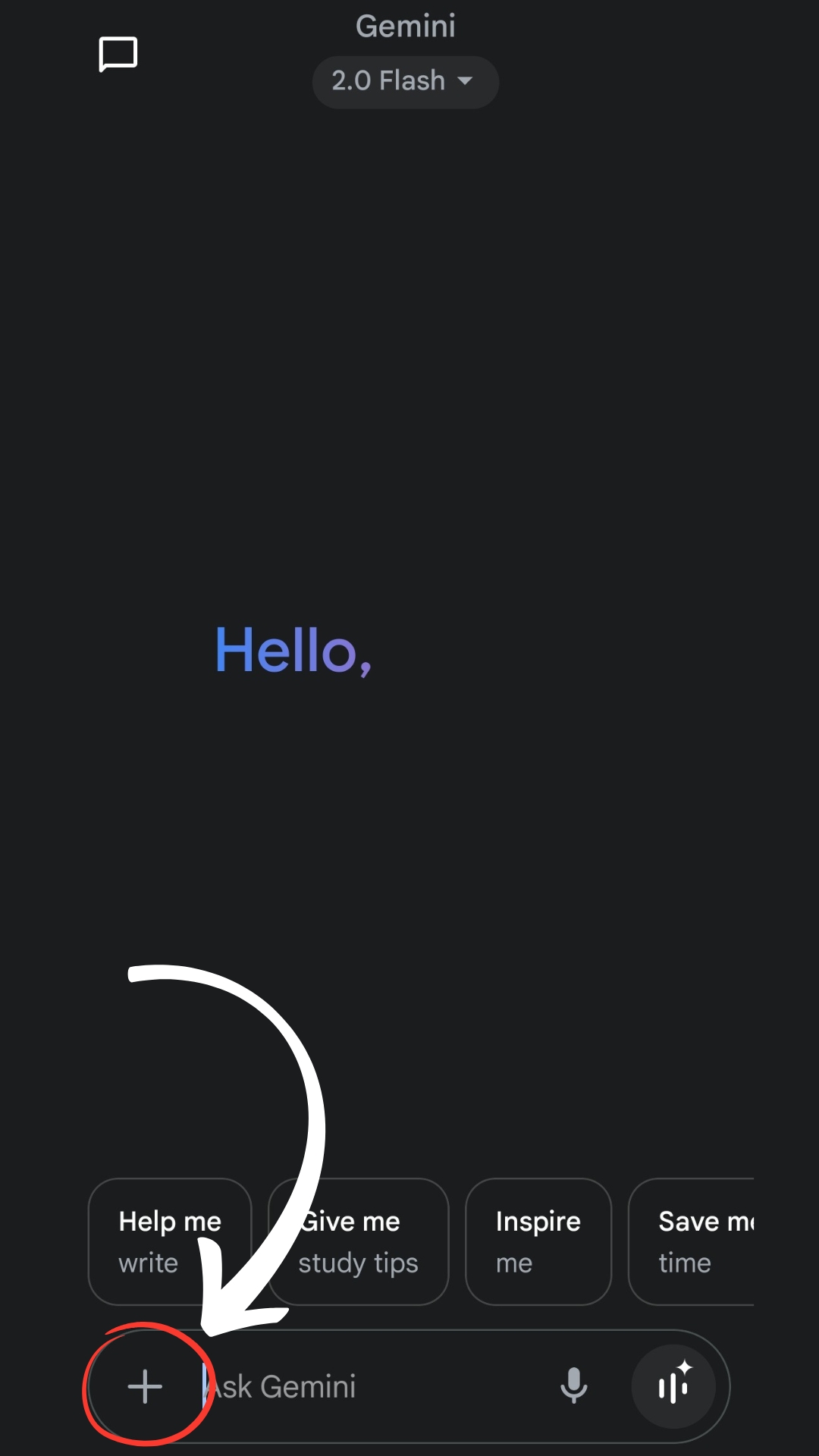
Analyze Forestry Journals & Reports
Upload **PDFs of Environment reports, Forestry journals, or optional subject notes**. Use *Secondary Data Analysis* to extract wildlife census data or summarize long forest policy documents for your Mains preparation.
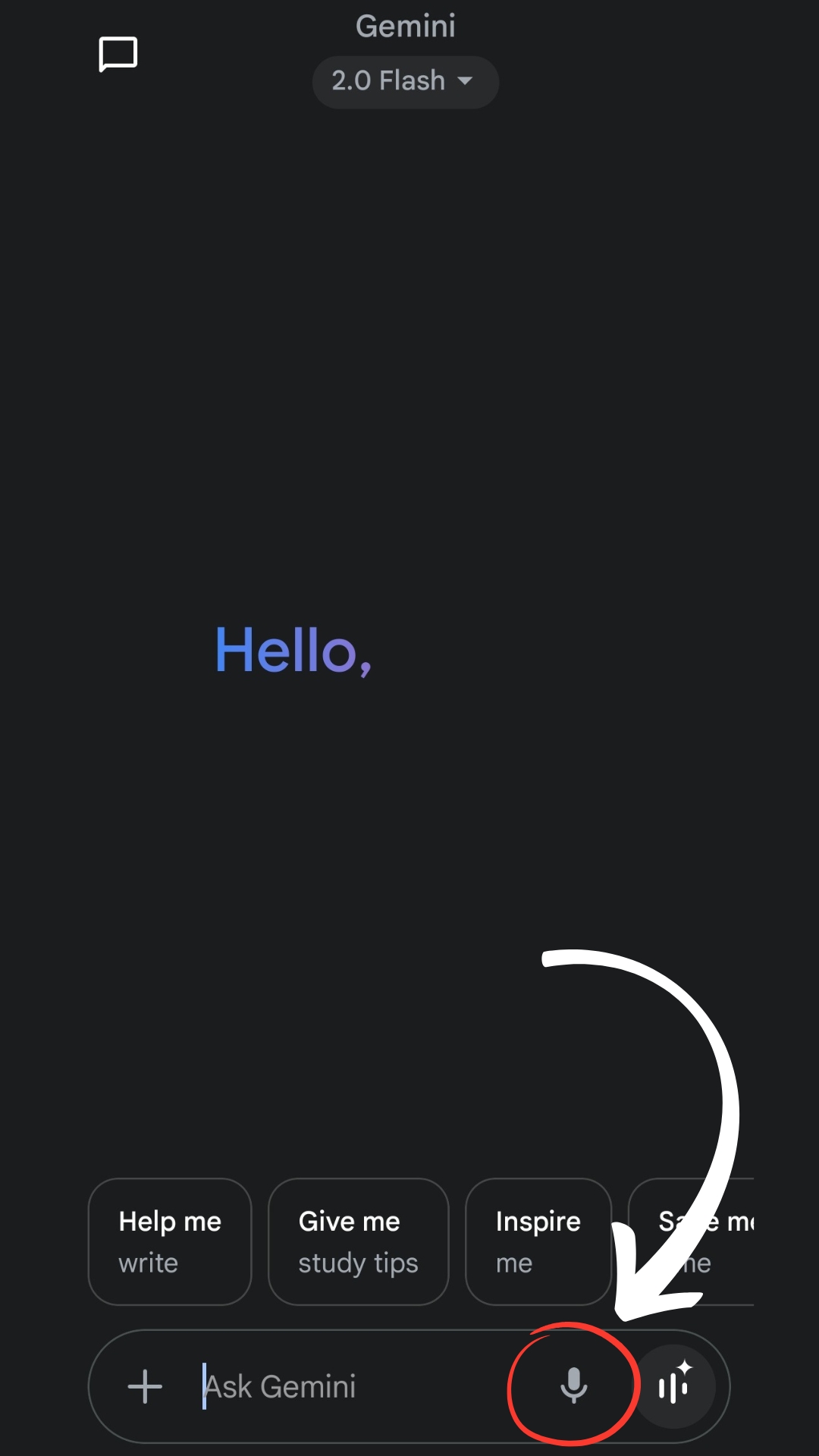
Biological Diversity & Law Recall
Review **Wildlife Acts or Botany classifications hands-free**. Use *Active Recall* to verify forest types, scientific names of flora/fauna, or environmental legislation while you're in the field or taking a break.
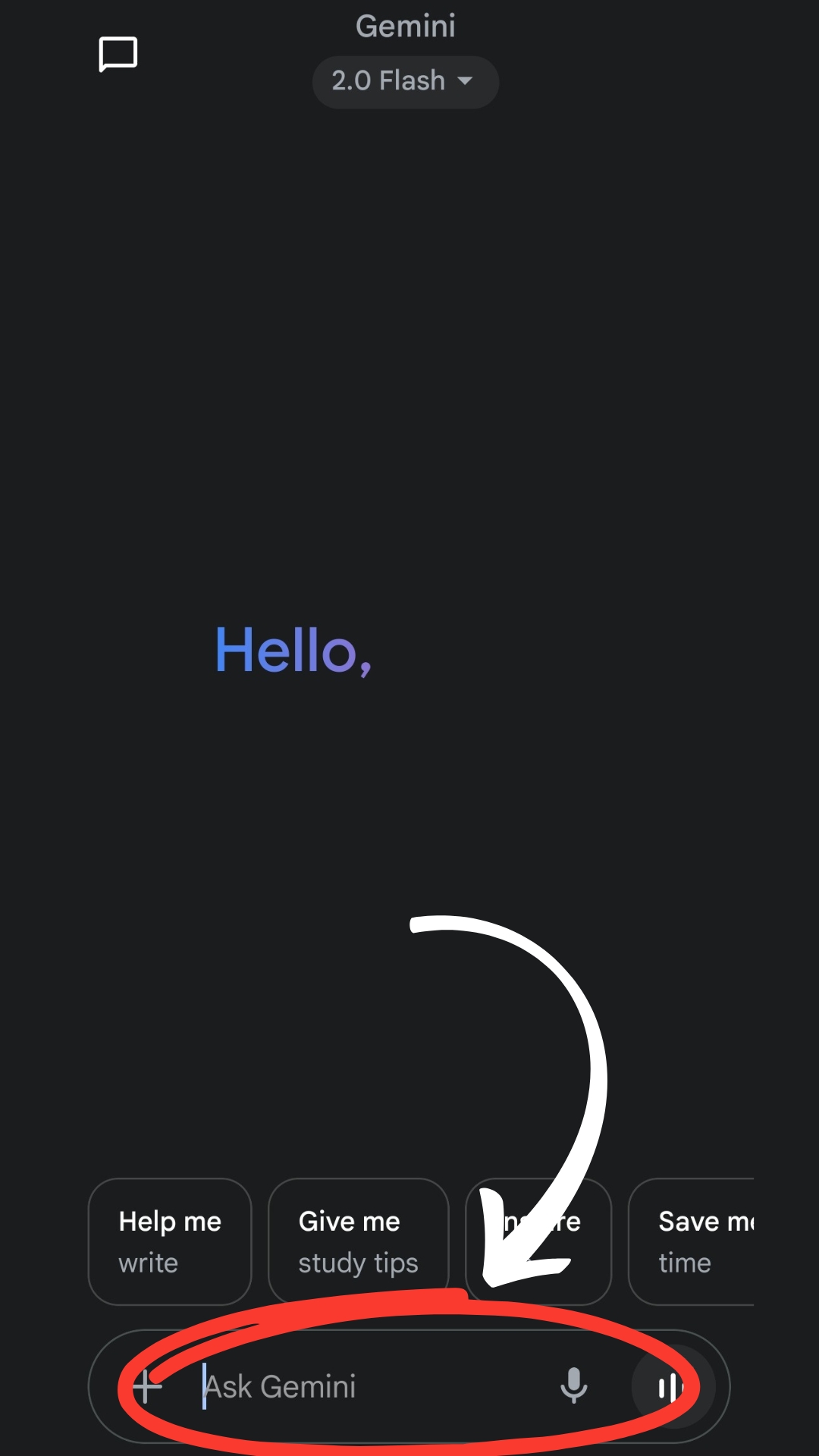
Scientific Logic & GS Solutions
Your primary tool for **structured scientific answers**. Ask for *Analytical Problem Solving* in your optional subjects, map out ecological successions, or solve complex General Studies logic questions.
Solving Questions From The IFS Exam Syllabus Using Google Gemini
Example 1: IFS Exam Botany
Phanerogams (Angiosperm Taxonomy and Systematic Botany)
Official Path: Botany Paper-I: Angiosperms (Taxonomy, Anatomy, Embryology)
Taxonomic Anchors for IFS
Research "UPSC IFS Botany Paper-I Previous Year Trends" and "Taxonomic Descriptions of Fabaceae." In the Indian Forest Service (IFS) exam, the "Floral Formula" and "Systematic Position" are the primary anchors for full marks. Grounding the study in terms like "Diadelphous Stamens," "Monocarpellary Ovary," and "Zygomorphic Symmetry" ensures botanical rigour required for descriptive papers.
Study Lab
IFS Aspirant Portal
"Describe the floral characteristics, floral formula, and floral diagram of the family Fabaceae (Papilionaceae). Explain the unique Vexillary Aestivation found in this family and discuss its significance in the context of 'Pollination Mechanisms'. Furthermore, list three plants of medicinal or economic importance belonging to this family."
"Act as a Senior IFS Officer and Botanical Taxonomist. Explain the Systematic Description of Fabaceae in the context of the Bentham and Hooker system of classification. Focus on 'Papilionaceous Corolla' and 'Marginal Placentation.' Provide a structured taxonomic summary of the floral organs."
"Analyze the Vexillary Aestivation and Keel Mechanism using Chain-of-Thought. Step 1: Identify the arrangement of the five petals ($1+2+2$). Step 2: Explain the 'Piston Mechanism' interaction during insect landing. Step 3: Describe how this ensures 'Sternotribic Pollination.' Step 4: Verify the 'Floral Formula' against these structural observations."
"Create an IFS Botany Paper-I Mastery Framework. Focus on the 'Anchor' Method for the Floral Diagram, the 'Invisible Error' check for Diadelphous vs Monadelphous stamens, and Successive Correction for Aestivation entries."
Systematic Study Lab • Optimized for IFS Exams
Example 2: IFS Exam Environmental Science
Ecosystem Dynamics and Energy Flow (Biogeochemical Cycles)
Official Path: Environmental Science Paper-I: Ecology and Ecosystems
The Deep Search Strategy
Research "Phosphorus vs Nitrogen cycle dynamics in tropical forests" and "Impact of nutrient loading on BOD levels." In the Indian Forest Service (IFS) Environmental Science paper, the distinction between "Reservoir" and "Exchange" pools is a high-yield marking anchor. Grounding the study in terms like "Mineralization," "Leaching," and "Cultural Eutrophication" ensures botanical and scientific depth required for the 200-mark descriptive papers.
Study Lab
IFS Aspirant Portal
"Explain the concept of Nutrient Cycling (Biogeochemical Cycles) in a forest ecosystem. Contrast the Gaseous Cycle (Nitrogen) with the Sedimentary Cycle (Phosphorus), highlighting the 'Reservoir Pool' for each. Analyze the phenomenon of Eutrophication in nearby water bodies as a consequence of Phosphorus runoff and discuss its impact on the 'Biological Oxygen Demand' (BOD) of the aquatic system."
"Act as an Environmental Scientist and IFS Ecology Mentor (Persona). Explain the Logic of Nutrient Reservoirs (Subject) in the context of the Nitrogen and Phosphorus cycles (Context). Focus on the 'Speed of Recirculation' and 'Atmospheric vs. Lithospheric sources.' Provide a comparative flow summary (Format) of how these nutrients enter the biotic community."
"Analyze the Mechanism of Eutrophication using Chain-of-Thought. Step 1: Identification of Phosphorus as the 'limiting nutrient' in freshwater. Step 2: Explain the 'Algal Bloom' following agricultural runoff. Step 3: Describe the 'Microbial Decomposition' of dead algae. Step 4: Verify the 'Oxygen Sag Curve' by linking decomposition to the rise in Biological Oxygen Demand (BOD)."
"Create an IFS Environmental Science Paper-I Mastery Framework focusing on the 'Anchor' Method for BOD, Gaseous vs Sedimentary reservoir traps, and the P/R Ratio speed-scan."
Systematic Study Lab • Environmental Science Division
Example 3: IFS Exam Forestry
Silvicultural Systems (Shelterwood vs. Clear-felling)
Official Path: Forestry Paper-I: Silviculture - Systems and Management
The Deep Search Strategy
Research "Comparative analysis of Indian Silvicultural Systems" and "Regeneration techniques for Shorea robusta." In the Indian Forest Service (IFS) Forestry paper, the ability to link a "System" to a specific "Species" and "Topography" is the primary marking anchor. Grounding the study in terms like "Seeding Fellings," "Secondary Fellings," and "Final Fellings" ensures the technical rigour required for descriptive papers.
Study Lab
IFS Aspirant Portal
"Define a Silvicultural System and provide a detailed classification. Contrast the Uniform Shelterwood System with the Clear-felling System, specifically focusing on the 'Regeneration Period' and 'Site Protection'. Analyze why a Shelterwood system is preferred for shade-tolerant species like Sal (Shorea robusta) in certain ecological zones of India."
"Act as a Working Plan Officer (WPO) and IFS Silviculture Expert (Persona). Explain the Logic of the Shelterwood System (Subject) in the context of mountain and tropical moist forests (Context). Focus on 'Overhead Cover' and 'Natural Regeneration.' Provide a chronological summary (Format) of the felling stages."
"Analyze the Comparison between Clear-felling and Uniform Shelterwood using Chain-of-Thought. Step 1: Compare the 'Exposure of Soil' in both systems. Step 2: Link soil exposure to 'Erosion Risk' in hilly terrains. Step 3: Evaluate the 'Light Requirement' of Sal (Shorea robusta). Step 4: Verify the 'Suitability Logic' by explaining why Clear-felling often fails for sensitive recruits."
"Create an IFS Forestry Paper-I Mastery Framework focusing on the 'Anchor' Method for Natural Regeneration, the CAI/MAI intersection for Rotation Age, and the Selection vs Shelterwood invisible error check."
Systematic Study Lab • Silviculture Division
Using Google Gemini for IFS Exam Deep Research
What is Deep Research?
Deep research for the IFS (Indian Forest Service) involves using Google Gemini to connect core scientific foundations with modern forestry management, environmental legislation, and global climate data. It turns the AI into a technical administrative partner that helps you understand the "Why" behind ecological conservation and technical scientific proofs, moving beyond basic facts to the analytical depth required for the UPSC technical papers and Interview.
How It Helps You
- Technical Science Synthesis: IFS technical papers (Forestry, Botany, Geology, etc.) require high precision. Gemini helps you find the logical links between scientific laws and their practical application in forest conservation.
- Environmental Policy Analysis: Deep research allows you to break down the Wildlife Protection Act and Forest Acts, helping you identify the administrative logic and current judicial interpretations.
- Geo-spatial & Climate Context: Stay updated on the latest State of Forest Reports (FSI) and global carbon sequestration data—topics that are critical for adding value to your technical and GS papers.
- Scientific Inquiry Logic: Instead of just memorizing terminologies, Gemini can research the "derivation logic" behind silvicultural systems and forest engineering to help you solve non-routine technical problems.
Grounding and Context
What it is: "Grounding" means tethering Gemini to official MoEFCC notifications and UPSC technical syllabi so it doesn't give you unverified environmental news or logic outside the scientific scope.
Why it matters: Technical evaluation in IFS is evidence-based. Grounding ensures you use sources like MoEFCC Annual Reports, Forest Survey of India (FSI), and Standard Scientific References.
How you do it:
1. Download the latest official IFS Syllabus or the most recent FSI State of Forest Report PDF.
2. Upload the PDF to Gemini.
3. Use the command: "Filter all your future research through the technical scientific depth and forestry requirements found in this official UPSC guide."
System-Task-Range Prompting
Expert Framework for Multi-Purpose ResearchThis structured framework allows you to customize the AI's persona and objective. Use it to create multi-purpose research tasks for Technical Forestry, Science, or General Knowledge.
“System: (Senior IFS Officer | Forestry Research Analyst | UPSC Science Consultant). Task: (Audit silviculture notes | Predict ecological trends | Solve high-difficulty technical sets | Synthesize conservation policy). Range: (Technical Forestry syllabus only | Environmental legislation focus | Botanical/Zoological integration | Sustainable yield focus). Research the latest trends in [IFS Technical Topic, e.g., Agroforestry Models]. Summarize the top 3 shifts and create a 200-word summary suitable for a technical paper. Use only official MoEFCC and verified scientific journals.”
The India Should Know Technique
The "Reverse Engineering" MethodThis method lets you dictate the exact outcome before the AI processes data. Use it to specify the required info, sources, emphasis, style, and exclusions.
“I want to create a high-density strategy guide for [IFS Topic, e.g., Silvicultural Systems of Indian Trees]. Information Required: (Mastery of regeneration logic | Identification of forest engineering traps | Analysis of tribal rights | Biodiversity laws). Sources: (Official MoEFCC reports | FSI State of Forest Report | Standard technical textbooks | Official marking schemes). Emphasis: (Technical keywords for full marks | Sustainable yield logic | Step-by-step presentation | Critical ecological analysis). Presentation: (Structured list for technical answers | Comparison table for concepts | Conservation sketch summary | Experimental flowchart). Exclusions: (Generic environmental fluff | Vague definitions | Unverified shortcuts | Long paragraphs | Non-technical trivia). Once generated, I will ask you to create a logic-based reasoning question for this guide.”
Tips for Better Deep Research
- The "Logic Loop": After an answer, ask: "What is the most common reason a conservation project fails technically in this ecological scenario?" to identify common planning traps.
- Verify Scientific Data: Always use the "Google" search button to verify the latest material constants, physical values, or biological classifications mentioned in your technical research.
- Visual to Text: If you are studying complex topographical maps, forest working plans, or biological cycles, describe the linkages to Gemini and ask it to explain the "unseen" force or logic at each junction.
- Chain of Reasoning: For mathematical derivations in forest engineering, tell Gemini: "Explain the transition between these two logical steps step-by-step so I can mentally solve this during the actual exam."
Guided Learning For IFS Exam With Google Gemini As Your Personal Tutor
What is Guided Learning with AI?
For IFS (Indian Forest Service) aspirants, guided learning with AI is like having a PhD-level scientist and a senior forest officer available 24/7 to help you crack the logic behind optional subjects like Forestry, Agriculture, or Botany. Instead of just searching for facts, you use Gemini to simulate a high-level technical lab session. It identifies gaps in your scientific understanding and explains complex ecological or mechanical cycles in a way that helps you build the depth required for the UPSC Mains.
How it helps you for this course/exam
- Master Technical Optionals: The IFS Mains is known for its high scientific rigor. Gemini can break down complex topics like 'Silviculture systems' or 'Wood anatomy', ensuring you understand the physical behavior behind the science rather than just memorizing a textbook.
- Structured Scientific Answers: UPSC IFS requires precise, fact-heavy answers with diagrams. Gemini can help you structure your responses, ensuring you include the necessary technical keywords and logical flows required for high scoring in optional papers.
- Geopolitics & Environmental Links: It can act as a technical mentor, helping you link academic subjects like Environmental Science to modern-day climate policy and global conservation through practical, real-world examples.
How to do it in short
1. Define the Role: Tell Gemini it is an expert IFS Mentor specializing in technical subjects like Forestry or Agriculture.
2. Set the Boundary: Tell it NOT to give you the answer immediately—insist on guiding you through the scientific logic first.
3. Interactive Dialogue: Ask it to explain a technical principle or quiz you on a complex cycle one question at a time.
4. Feedback Loop: Provide your logic for a derivation or an answer, and let the AI correct your reasoning based on UPSC standards.
Google Suggested Method: Conversational Scaffolding
Google’s recommended approach focuses on "conversational scaffolding." For IFS, this means starting with the basic rules of a topic (like the basics of plant physiology) and letting the AI guide you step-by-step toward solving complex application-based problems through a back-and-forth chat.
“I am studying for the IFS exam, specifically focusing on [Subject/Chapter]. I want you to act as a supportive technical mentor. Start by asking me what I already know about [Specific Topic], and then help me build my understanding by asking follow-up questions that connect basic science logic to advanced engineering or ecological problems. Don't give me all the information at once; let's take it step-by-step.”
Google Suggested Method: The Socratic Method
The Socratic method is the best way to master logic in subjects like Forestry and Wildlife Science. Instead of the AI explaining a cycle or a policy to you, it asks you small, leading questions. This forces you to think through the logic yourself, which is critical for answering the "critical analysis" type questions in the IFS papers.
“I want to learn the core logic behind [Topic]. Act as a Socratic tutor for my IFS prep. Do not give me the explanation. Instead, ask me a leading question that helps me realize the core scientific principle behind this topic. Once I answer, ask another question to push my thinking further until I have fully grasped the concept.”
The India Should Know Method
The "Reverse Engineering" MethodThe India Should Know method is about Reverse Engineering. Instead of letting the AI wander, you put heavy constraints on the output. You define the exact "shape" of the session—specifying the need for high-density scientific formats—before you ever give it the raw study material or syllabus data.
“Intent: Act as an expert scientist specializing in [Subject] for the IFS exam. Context: I am preparing for my final entrance exam and need to master [Chapter/Topic]. Format Constraints: * Conduct a 'Step-by-Step Technical Logic' or 'Scientific Breakdown' quiz session. * Ask exactly one question at a time. * Wait for my response before moving to the next question. * If I am wrong, provide a logic-based hint rather than the final answer. * Use a professional and encouraging tone. * After 5 questions, provide a 'Technical Gap Report' in a table format (Column 1: Science Concept, Column 2: Mastery Level 1-10, Column 3: How to score full marks in this according to UPSC standards). Raw Data: [Paste your notes, textbook text, or syllabus here] Instruction: Once you understand these constraints and the data provided, acknowledge this by asking the first question.”
Tips for Guided Learning
- Be Honest with the AI: If you don't understand a technical hint, say "I don't understand the physical logic here, explain it using a simpler analogy." The AI can pivot its teaching style instantly to match your science background.
- Use Voice Mode for Essay Prep: If you are on the Gemini app, use Gemini Live. Talking through the logic of an environmental essay out loud helps you remember the keywords and descriptions needed for the exam pressure.
- Feed it Technical Data: Paste specific observations from your science background or technical textbooks into the "Raw Data" section. This ensures the AI quizzes you on the exact level of analytical rigor expected in the IFS degree.
- Review the Gap Report: Don't just finish the session. Look at the "Technical Gap Report" and ask Gemini to create a 10-minute revision plan just for the areas where you need more technical clarity.
Note: Once Gemini produces the outcome based on these prompts, you can further improve it by saying: "That was great, but make the questions more focused on [Specific Sub-topic] and use more practical, scientific examples."
Important Links for IFS Aspirants
The primary portal for the Indian Forest Service Examination. Access official notifications for IFS, exam syllabus, calendars, and previous year question papers.
The official government gateway for IFS applications. Note that IFS Prelims is conducted through the Civil Services (Preliminary) Examination portal.
Advanced reasoning model for explaining complex biological and environmental science concepts, and generating structured study plans for IFS preparation.
India's apex body for environment, forests, and climate change. Official source for environmental reports, wildlife data, and forest policies critical for IFS aspirants.
Official government organization for forest resource assessment. Access the State of Forest Reports (ISFR) essential for General Knowledge and Forestry optional papers.
Your Journey To Mastering AI Has Just Begun, Go Practice Now
Google Gemini, with its comprehensive ability to process information across text and images, coupled with its vast and constantly updated knowledge base spanning the diverse scientific disciplines of the IFS exam, offers an unparalleled advantage in your rigorous preparation.
By acting as an intelligent and readily available tutor, capable of clarifying intricate biological processes, explaining complex geological formations, providing insightful analysis of environmental challenges, and guiding you through the principles of forestry management on demand, it empowers you to engage with the demanding curriculum on a deeper and more effective level.
Seamlessly integrating Gemini with your IFS study material creates a dynamic and highly supportive learning ecosystem, enabling you to tackle complex topics, stay updated with environmental issues, and develop the critical thinking and problem-solving skills necessary to excel in this prestigious examination.
Embrace this powerful AI tool as your dedicated ally, and unlock your full potential to achieve your aspirations of serving the nation in the Indian Forest Service. The future of personalized, insightful, and scientifically grounded learning is here, empowering you to cultivate success in the IFS exam.
Written By
Prateek Singh.
Last Updated – Febuary, 2026
About The Author
Prateek is a self-taught practitioner who believes the only real way to learn is by doing. He created IndiaShouldKnow.com from scratch, using AI as his primary learning partner to navigate everything from web development and UI/UX design to color theory and graphic engineering.
He works within the “engine room” of AI daily, using these tools to manage professional workflows including data visualization, digital marketing systems, and SEO architecture. Having personally tested and refined dozens of AI models across hundreds of real-world scenarios, Prateek focuses on the “how” behind the technology. He shares his self-taught workflows and prompting pillars to help others move past basic chat interactions and start using AI as a high-precision tool for their own goals.
FAQs About AI Use
Can I trust every answer an AI tool gives me for my studies?
A: No, you should not trust every answer completely. Think of an AI as a super-smart assistant that has read most of the internet—but not every book in the library is accurate.
AI can sometimes make mistakes, misunderstand your question, or use outdated information.
It can even “hallucinate,” which means it confidently makes up an answer that sounds real but is completely false.
Rule of Thumb: Use AI answers as a great starting point, but never as the final, absolute truth. Always double-check important facts.
How can I verify the information I get from an AI for my academic work?
A: Verifying information is a crucial skill. It’s like being a detective for facts. Here are four simple steps:
Check Your Course Material: Is the AI’s answer consistent with what your textbook, lecture notes, or professor says? This is your most reliable source.
Look for Reputable Sources: Ask the AI for its sources or search for the information online. Look for links from universities (.edu), government sites (.gov), respected news organizations, or published academic journals.
Cross-Reference: Ask a different AI the same question, or type your question into a standard search engine like Google. If multiple reliable sources give the same answer, it’s more likely to be correct.
Use Common Sense: If an answer seems too perfect, too strange, or too good to be true, be extra skeptical and investigate it further.
What is the difference between using AI for research and using it to plagiarize?
A: This is a very important difference. It’s all about who is doing the thinking.
Using AI for Research (Good ✅):
Brainstorming topics for a paper.
Asking for a simple explanation of a complex theory.
Finding keywords to use in your library search.
Getting feedback on your grammar and sentence structure.
You are using AI as a tool to help you think and write better.
Using AI to Plagiarize (Bad ❌):
Copying and pasting an AI-generated answer directly into your assignment.
Asking the AI to write an entire essay or paragraph for you.
Slightly rephrasing an AI’s answer and submitting it as your own original thought.
You are letting the AI do the thinking and work for you.
How can I use AI ethically to support my learning without violating my school's academic honesty policy?
A: Using AI ethically means using it to learn, not to cheat. Here’s how:
Know the Rules: First and foremost, read your school’s or professor’s policy on using AI tools. This is the most important step.
Be the Author: The final work you submit must be yours. Your ideas, your structure, and your arguments. Use AI as a guide, not the writer.
Do the Heavy Lifting: Use AI to understand a topic, but then close the chat and write your summary or solve the problem yourself to make sure you have actually learned it.
Be Transparent: If you used an AI in a significant way (like for brainstorming), ask your professor if you should mention it. Honesty is always the best policy.
Can an AI's answer be biased? How can I detect this in its responses?
A: Yes, an AI’s answer can definitely be biased. Since AI learns from the vast amount of text on the internet written by humans, it can pick up and repeat human biases.
Here’s how to spot potential bias:
Look for Opinions: Does the answer present a strong opinion as a fact?
Check for One-Sidedness: On a topic with multiple viewpoints (like politics or economics), does the AI only show one side of the argument?
Watch for Stereotypes: Does the answer use generalizations about groups of people based on their race, gender, nationality, or other characteristics?
To avoid being misled by bias, always try to get information from multiple, varied sources.
Is it safe to upload my personal notes, research papers, or assignments to an AI tool?
A: It is best to be very careful. You should not consider your conversations with most public AI tools to be private.
Many AI companies use your conversations to train their systems, which means employees or contractors might read them.
There is always a risk of data breaches or leaks.
A Simple Safety Rule: Do not upload or paste any sensitive information that you would not want a stranger to see. This includes:
Personal identification details.
Confidential research or unpublished papers.
Your school assignments before you submit them.
Any financial or private data.