JIPMER With Google Gemini - The 2026 AI Master Class
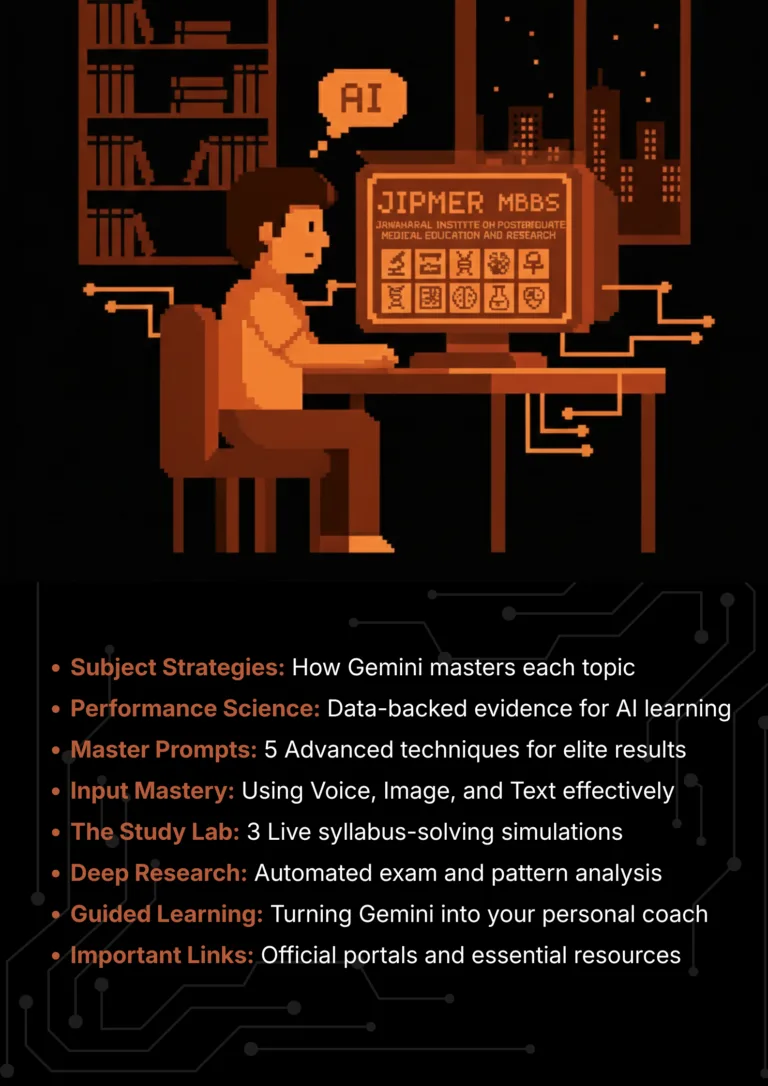
Your Journey To Mastering AI For JIPMER And Much More Starts Here
The JIPMER MBBS entrance exam is a critical component of the NEET UG selection process, offering your guaranteed entry point to a high-value career as a Doctor of Medicine (MBBS) at premier medical institutions. To secure this prize, you must conquer this single entrance test by demonstrating a rigorous grasp of the Physics, Chemistry, and Biology syllabus, demanding quick, accurate application of intricate scientific principles. Facing this huge syllabus and the need for flawless accuracy can feel overwhelming, but the fact that you are actively seeking the most advanced tools proves your commitment to saving lives—achieving your medical dream is absolutely inevitable with the right strategy. Your intelligent study partner is Google Gemini AI. It is your secret weapon, ready to instantly simplify complex biology, explain tricky physics, and navigate advanced chemistry concepts precisely tailored to the medical entrance level. Trust this guide because I’ve been a daily user of AI tools since 2022, personally applying them to master data analysis, SEO, and web creation to build this very platform for you.
Note :
- “The techniques and prompt engineering principles you learn in this guide are universally applicable to any large language model (LLM), including ChatGPT and Perplexity AI. We use Google Gemini for all examples because its latest multimodal features and integration with Google Search provide a best-in-class learning experience.”
- “Remember: The quality of the AI’s answer depends entirely on the clarity of your prompt. Always be specific, detailed, and clear with the AI to avoid irrelevant or incorrect (hallucinated) responses.”
How Gemini Helps With Every Subject For JIPMER
| Focus Area | What Gemini Does | Your Benefit |
|---|---|---|
|
|
Visual Memory Guide
|
You stop just memorizing and start truly understanding. This makes it easy to remember facts and draw diagrams during your big exam. |
|
|
Problem Roadmap Coach
|
You move from being "stuck" to having a clear plan for every problem. This builds the strong thinking skills needed for JIPMER. |
|
|
Reaction Pattern Expert
|
You get a deep grasp of how reactions work. This helps you avoid small mistakes and makes your math calculations much faster. |
|
|
Medical Vocab Specialist
|
Most students ignore English. By scoring high here with very little work, you move ahead of thousands of other people on the final list. |
|
|
Pattern Logic Guide
|
You develop the "detective's brain" needed for this section. You will stop losing easy marks on non-science questions. |
|
|
Professional Mock Coach
|
You walk into your admission meeting feeling ready. You will know exactly how to answer tough questions about being a doctor. |
How AI Boosts Your Efforts : Data From Recent Studies
| Research Metric | Evidence & Analysis | Academic Significance |
|---|---|---|
| 35–50% retention improvement Active Recall Science |
AI-Supported Active Recall in Medical Learning
|
What This Means
AI forces you to actively pull information from memory, exactly how theory papers and vivas test MBBS students.
JIPMER Edge: Big advantage in Anatomy, Biochemistry, and Pharmacology.
|
| 0.4–0.7 SD conceptual gain Intelligent Tutoring Research |
Reduction of Persistent Conceptual Errors
|
What This Means
AI identifies *why* your understanding is medically wrong, not just that an answer is incorrect.
JIPMER Edge: Prevents cascading errors across multiple questions.
|
| ↑Alignment thinking vs reality Metacognition Research |
AI-Guided Metacognitive Feedback
|
What This Means
AI exposes the gap between knowing facts and thinking like a doctor, which is critical in JIPMER-style assessments.
JIPMER Edge: Stronger case-based answers and viva performance.
|
| 65–70% study consistency Educational Data Mining |
Improved Endurance & Burnout Resistance
|
What This Means
AI supports sustained preparation across postings, internals, and final university exams without collapse.
JIPMER Edge: Maintains performance through long clinical schedules.
|
Advanced Prompting Techniques by Google for 2026, with Examples Prompts For JIPMER
Google Gemini is a Reasoning Engine. To get "A+ Grade" results for JIPMER-style depth and NEET medical aspirations, move beyond basic questions using these six pillars.
- The Technique: Setting the Persona, Task, Context, and Format.
- The Logic: While JIPMER is now part of NEET, the "JIPMER-style" focus remains on high-order Biology, clinical application, and English/Reasoning. Assigning an expert role ensures a medical-academic tone, while the Context "fences" the AI into the specific NCERT-plus-extra depth traditionally required for top-tier medical institutes.
Persona: Act as a [Any Expert Role: e.g., Senior Medical Faculty, Biology Olympiad Trainer, NEET-UG Specialist]. Task: Explain [Your Topic: e.g., Cardiac Cycle, Genetic Linkage, Coordination Chemistry]. Context: Apply this specific background: [Source Context: e.g., Use NCERT as base with JIPMER-level clinical extensions] [Difficulty Context: e.g., Focus on multi-statement Assertion-Reasoning questions] [Analytical Context: e.g., Emphasize the physiological 'Why' over 'What'] Format: Provide the answer as a [Structure: e.g., Clinical Breakdown, High-Yield Concept Map, 5-Point Summary].
- The Technique: Breaking a problem into a "Step-by-Step" sequence with logic checks.
- The Logic: Medical entrance numericals (Physics/Physical Chemistry) often have "hidden" biological contexts or specific unit traps. This version forces the AI to "Self-Correct"—verifying the Step 1 (identifying variables and unit consistency) before it attempts Step 2, ensuring the calculation is airtight for competitive scoring.
Solve this [Subject: e.g., Physics - Ray Optics, Physical Chemistry - Solutions] problem using Chain-of-Thought. Step 1: List all given [Variables/Constants] and convert them to standard SI units. Step 2: State the core [Formula/Law] and verify its relevance to the specific scenario. Step 3: Show the step-by-step calculation, verifying the mathematical logic of each line before moving forward. Question: [Insert your question here]
- The Technique: Limiting the AI to official domains with a focus on recent data.
- The Logic: Admission criteria for INI (Institutes of National Importance) like JIPMER/AIIMS through NEET change frequently. This filter forces the AI to prioritize official NTA and MCC portals from the last 12 months for 100% accurate info on seat matrix and counseling rules.
Research the [Topic: e.g., NEET 2026 JIPMER Seat Matrix, Puducherry Domicile Quota Rules, Internal Assessment Updates]. Constraint: Only use info from official portals: [Domain 1: e.g., jipmer.edu.in] and [Domain 2: e.g., mcc.nic.in]. Recency Rule: Prioritize data published in the last 12 months. Output: Provide the official summary and the direct link to the source.
- The Technique: Setting strict "Rules of Play" including forbidden keywords.
- The Logic: Medical revision needs "Dense Facts." By setting hard boundaries and forbidding "AI-voice" fillers (like "Essentially"), you get sharp, technical high-yield notes that focus on keywords, exactly how JIPMER-style AR questions are constructed.
Explain [Concept: e.g., Action Potential in Neurons, SN2 Mechanism, Bryophyte Life Cycle]. Constraint 1: Use only [Specific Source: e.g., NCERT Biology, Campbell Biology] terminology. Constraint 2: Keep the response under [Limit: e.g., 80 words]. Constraint 3 (Negative): Do not use AI-filler phrases like "Basically" or "In conclusion." Format: Use bullet points with bolded technical keywords.
- The Technique: Using a Feedback Loop with an "Active Recall" check.
- The Logic: Treat the AI like a medical mentor. This version forces the AI to stop and ask you a question after its explanation, ensuring you have grasped the "Mechanism of Action" (like the Bohr Effect in Respiration) before moving to the next system.
Explain [Topic: e.g., Sliding Filament Theory, Photoelectric Effect, p-Block trends]. Instruction: Provide a high-level conceptual summary first. Feedback Loop: Ask me if I want a "Diagrammatic Description" or an "Assertion-Reason Practice Set." Active Recall: Once I am satisfied, provide one 'JIPMER/NEET-standard' question based on your explanation.
- The Technique: Providing a structural blueprint before injecting raw data.
- The Logic: Use this to build your "Medical Revision Vault." You command the AI to build a specific result (like a comparison table of different Animal Kingdom Phylums) using a layout you provide, ensuring it is 100% revision-ready.
Make a [Desired Output: e.g., Comparison Table of Endocrine Glands, Physics Formula Grid, Organic Name Reaction Sheet]. Layout Blueprint: [Structure: e.g., 4-column table, Numbered list, Flowchart description]. Style: [Vibe: e.g., Minimalist, Medical, Professional]. Strict Rule: Adhere to the structure provided; no conversational filler. Use this information: [PASTE_MEDICAL_NOTES_OR_RAW_DATA_HERE]
Using Google Gemini App Input Method's For JIPMER
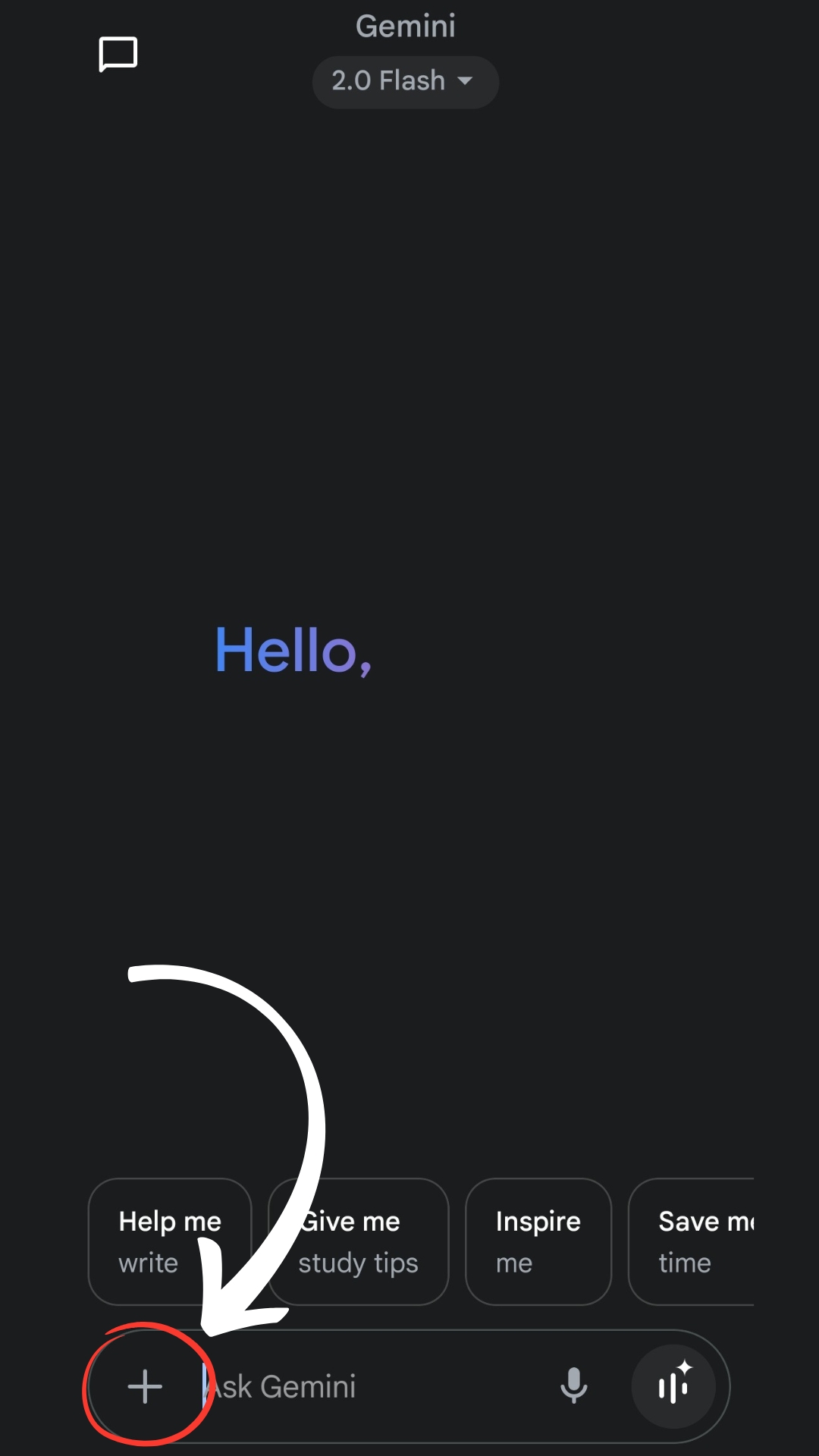
Decode Clinical Case Studies
Upload **PDFs of clinical vignettes or lab manuals**. Analyze patient data files, summarize high-yield Pathology findings, or simplify complex medical journal articles to match JIPMER's research-oriented approach.
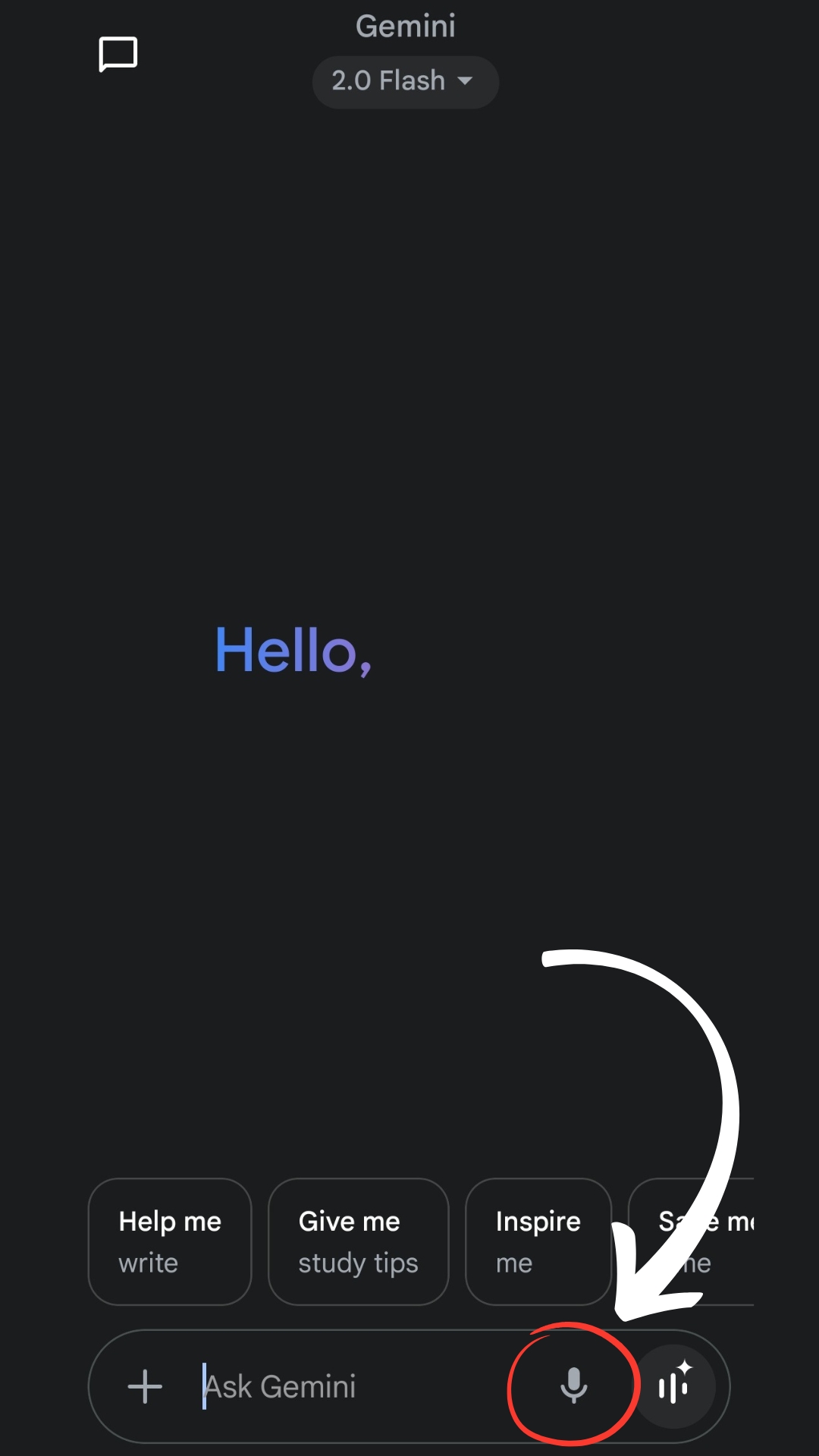
Interactive Viva Prep
Practice **Medical Ethics or English-based logic** vocally. Use voice commands to quickly verify Anatomy relations or clinical signs while staying mobile during your rigorous JIPMER study schedule.
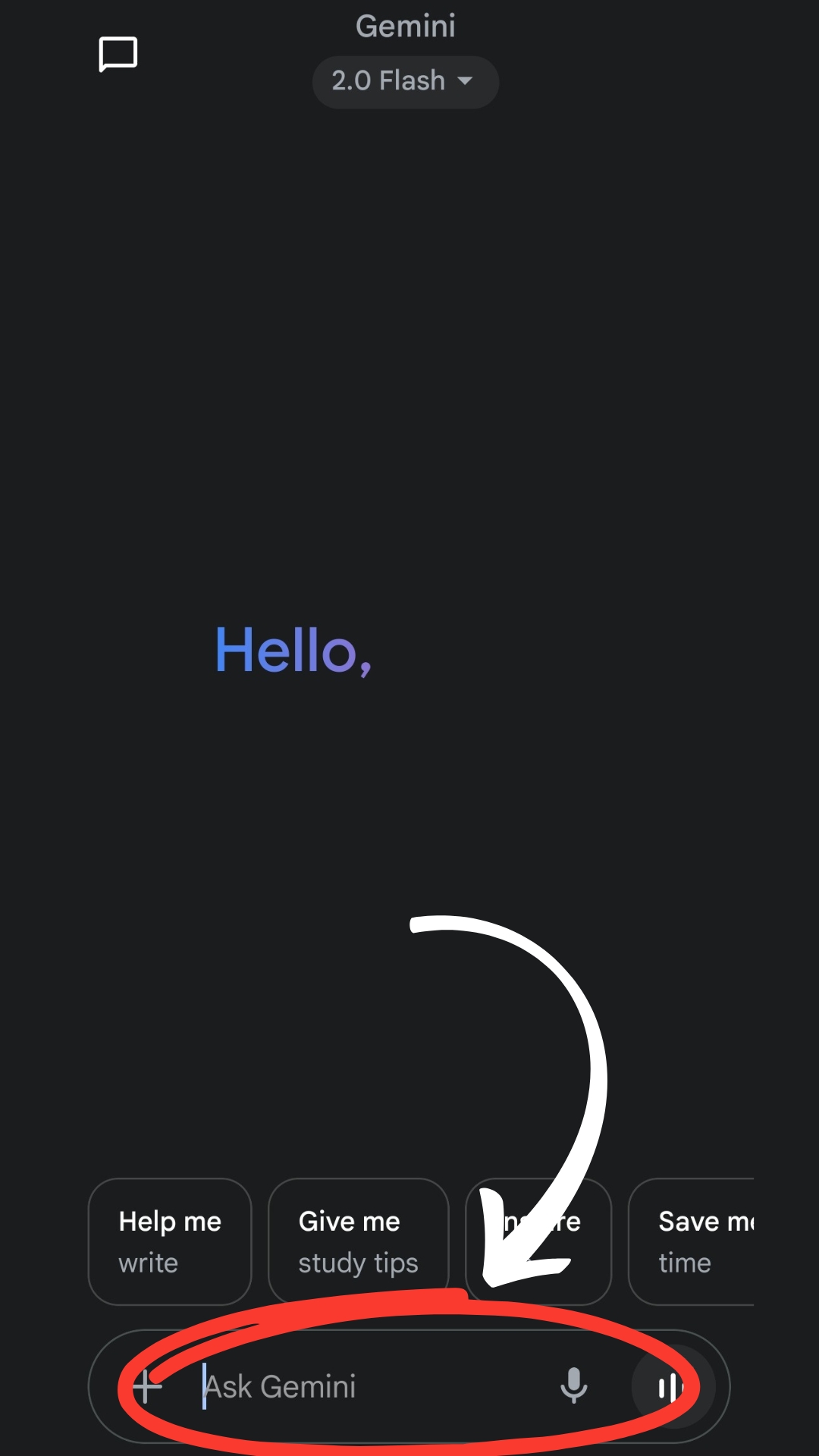
In-Depth Analytical Reasoning
Your primary tool for **multi-step reasoning questions**. Solve complex Physics applications, Genetics problems, and logical reasoning queries that are hallmarks of the JIPMER-level examination standard.
Questions From JIPMER Syllabus Solved Using Google Gemini
Example 1: JIPMER Biology
Biology: Human Physiology - Endocrine System
Chemical Coordination and Integration
Physiological Logic Analysis
Research "Diabetes Insipidus vs. Diabetes Mellitus differential diagnosis" and "Mechanism of Hormone Action: Fixed Membrane Receptor vs. Intracellular Receptor." For JIPMER/NEET medical entrance, the "Cellular Signaling" pathway is a Tier-1 high-weightage topic. Grounding the study in terms like "Aquaporins," "cAMP," and "Nuclear Receptor Complex" ensures the learner addresses the physiological precision required for the 90-question biology section.
Study Lab
Medical Physiology Expert
"A patient presents with symptoms of polyuria, polydipsia, and a high volume of dilute urine, but their blood glucose levels are normal. Analyze the hormonal deficiency responsible for this condition and discuss the role of the Hypothalamo-Hypophyseal axis. Furthermore, deconstruct the 'Second Messenger' mechanism of Protein Hormones vs. the direct action of Steroid Hormones on the genome."
"Act as a Senior Endocrinologist and Medical Professor (Persona). Explain the Regulation of Water Reabsorption (Subject) in the Kidney's Distal Convoluted Tubules (Context). Focus on the 'ADH-Aquaporin' link and the 'Posterior Pituitary Storage.' Provide a physiological flow summary (Format) of why an ADH deficiency leads to Diabetes Insipidus."
"Analyze the Mechanism of Hormone Action using Chain-of-Thought. Step 1: Categorize hormones based on solubility. Step 2: Explain the 'First Messenger' (Hormone) and 'Second Messenger' (cAMP/IP3) cascade. Step 3: Describe the 'Gene Expression' modification for steroids. Step 4: Verify the 'Time Constraint'."
"Create a JIPMER/NEET Biology Endocrine System Mastery Framework. Constraints: Direct Communication, The 'Why' Factor, Anchor Method, Invisible Error List, Comparative Analysis, Medical Speed-Scan, Successive Correction, Contextual Mapping."
Endocrine Lab • Medical Merit Optimized
Example 2: JIPMER Physics
Physics: Optics - Ray Optics and Optical Instruments
Applied Optics & Clinical Physics
Clinical Physics Strategy
Research "Defects of vision and their correction using lens formula" and "Magnifying power of compound microscopes for medical use." For JIPMER/NEET-level physics, "Applied Optics" is a high-frequency topic. Grounding the study in terms like "Accommodation," "Least Distance of Distinct Vision ($D$)," and "Visual Angle" ensures the learner addresses the clinical physics required for the entrance exam.
Optical Engine
Medical Physics Expert
"A patient is diagnosed with Presbyopia and Myopia simultaneously. Their far point is $2$ meters and their near point is $50\ cm$. Analyze the power of the lenses required for the distant vision and the reading vision. Furthermore, deconstruct the 'Compound Microscope' magnification logic used in medical pathology, and calculate total magnification if $f_o = 1\ cm$, $f_e = 5\ cm$, and $L = 20\ cm$."
"Act as a Medical Physicist (Persona). Explain the Logic of Corrective Lenses for Myopia and Presbyopia (Context). Focus on 'Converging vs. Diverging power' and Virtual Image formation. Provide a mathematical setup for calculating Power $P$ for both conditions."
"Analyze Total Magnification of a Compound Microscope. Step 1: Calculate linear magnification of objective ($m_o$). Step 2: Calculate angular magnification of eyepiece ($m_e$) for image at $D$. Step 3: Compute $M = m_o \times m_e$. Step 4: Verify 'Resolution Limit' logic."
"Create a JIPMER/NEET Physics Applied Optics Mastery Framework. Include the 'Why' Factor for Bifocals, the 'Anchor' Method for Far/Near points, and the 'Invisible Error' list for sign conventions."
Applied Optics Lab • Physics Merit Optimized
Example 3: JIPMER Chemistry
Biomolecules (Carbohydrates and Protein Structure)
Official Path: Chemistry: Biomolecules - Carbohydrates, Amino Acids, and Proteins
Biochemical Logic Analysis
Research "Biochemical tests for carbohydrates in medical entrance exams" and "Isoelectric point and Zwitterion formation." For JIPMER/NEET-level medical exams, the focus is on "Clinical Correlation." Grounding the study in terms like "Reducing Sugars," "Mutarotation," and "Peptide Bond Geometry" ensures the learner addresses the biological chemistry required for the 60-question chemistry section.
Study Lab
Medical Biochemist Expert
"A certain biomolecule (X) gives a positive Molisch's test. Upon hydrolysis, (X) yields two monosaccharides: Glucose and Galactose. Analyze the nature of the glycosidic linkage in (X) and discuss its behavior toward Benedict’s solution. Furthermore, explain the 'Zwitterion' nature of the amino acid Glycine and how its buffering capacity is utilized in physiological systems."
"Act as a Medical Biochemist and JIPMER Exam Specialist (Persona). Explain the Logic of the Glycosidic Linkage (Subject) in Lactose (Context). Focus on the '$\beta-1,4$ linkage' and 'Hemiacetal Carbon.' Provide a structural logic summary (Format) of why lactose is a reducing sugar despite being a disaccharide."
"Analyze the Zwitterionic State of Glycine using Chain-of-Thought. Step 1: Identify acidic and basic groups. Step 2: Explain internal proton transfer. Step 3: Calculate net charge at pI. Step 4: Verify amphoteric nature with $H^+$ and $OH^-$ ions."
"Create a JIPMER/NEET Chemistry Biomolecules Mastery Framework. Constraints: Direct Communication, The 'Why' Factor, Anchor Method, Invisible Error List, Comparative Analysis, Medical Speed-Scan, Successive Correction, Contextual Mapping."
Biomolecule Lab • Medical Merit Optimized
Using Google Gemini for JIPMER Deep Research
What is Deep Research?
Deep research for JIPMER MBBS (integrated into NEET) involves using Google Gemini to connect core NCERT Biology with clinical reasoning and logical deduction. It turns the AI into a senior medical mentor that helps you understand the "Why" behind complex physiological processes and reasoning-based English/Logic questions, moving beyond basic memorization to the precision and speed required for the nation's premier medical entrance.
How It Helps You
- Assertion-Reasoning Analysis: JIPMER-style questions reward deep conceptual links. Gemini helps you identify the hidden logical connections between biological facts that frequently appear in high-stakes medical papers.
- Clinical & Physiological Logic: Deep research allows you to break down the structure of complex Human Physiology and Genetics, helping you master the multi-step reasoning needed for diagram-based questions.
- NCERT Plus Detail Mapping: Stay updated on the exact nuances beyond NCERT line-by-line facts—topics critical for the "Logic and Quantitative Reasoning" and "English Language" sections.
- Medical Value Precision: Instead of just learning formulas, Gemini can research the "biochemical pathway" details and stoichiometric traps that often appear in Chemistry for medical entrance exams.
Grounding and Context
What it is: "Grounding" means tethering Gemini to the official NEET/NMC syllabus and NCERT Biology data so it doesn't give you engineering-specific math or unverified medical shortcuts.
Why it matters: Medical entrance evaluation is strictly fact-driven. Grounding ensures you use sources like NMC Official Syllabus, NCERT Biology Textbooks, and Verified JIPMER/AIIMS Archives.
How you do it:
1. Download the latest official NEET Syllabus or a compilation of the last 10 years' JIPMER Reasoning questions PDF.
2. Upload the PDF to Gemini.
3. Use the command: "Filter all your future research through the specific NCERT-based depth and clinical reasoning requirements found in this official medical entrance guide."
System-Task-Range Prompting
Expert Framework for Multi-Purpose ResearchThis structured framework allows you to customize the AI's persona and objective. Use it to create multi-purpose research tasks for Biology, Physics, or Logic.
“System: (Senior Medical Tutor | AIIMS/JIPMER Ranker Analyst | Expert NEET Coach). Task: (Audit reasoning logic | Predict diagram-based trends | Solve high-difficulty Biology sets | Synthesize clinical logic). Range: (JIPMER/NEET syllabus only | 45-second solving simulation | Assertion-Reasoning focus | High-yield medical topics). Research the latest patterns in [Medical Exam Section, e.g., Human Physiology]. Summarize the top 3 trends and create three practice questions based on recent papers. Use only official syllabus guides.”
The India Should Know Technique
The "Reverse Engineering" MethodThis method lets you dictate the exact outcome before the AI processes data. Use it to specify the required info, sources, emphasis, style, and exclusions.
“I want to create a high-density strategy guide for [Medical Exam Topic, e.g., Molecular Basis of Inheritance]. Information Required: (Mastery of Human Physiology | Identification of Organic traps | Strategy for English/Logic | Analysis of high-weightage Biology). Sources: (Official NEET/JIPMER syllabus | NCERT Biology data | Previous 10-year papers | Verified medical databases). Emphasis: (Clinical application | Diagrammatic accuracy | Common conceptual pitfalls | Pacing benchmarks). Presentation: (Structured list of concepts | Comparison table for cycles | Diagram-solving flowchart | Bio cheat-sheet). Exclusions: (Engineering math | Conversational filler | Redundant examples | Long paragraphs | Unverified shortcuts). Once generated, I will ask you to create a logic-based speed-test question for this guide.”
Tips for Better Deep Research
- The "Logic Loop": After an answer, ask: "What is the specific biological misconception that leads most students to choose the wrong 'reason' in this assertion-reason question?" to identify traps.
- Verify Scientific Constants: Always use the "Google" search button to verify the latest values for enzyme activities, physiological concentrations, or molar masses mentioned in your research.
- Visual to Text: If you are studying complex anatomical diagrams, metabolic pathways, or genetic linkages, describe the links to Gemini and ask it to explain the "fastest" path to identifying the label.
- Chain of Reasoning: For logical deduction, tell Gemini: "Explain the transition between these two logical steps in this reasoning question so I can mentally solve this in under 30 seconds."
Guided Learning For JIPMER With Google Gemini As Your Personal Tutor
What is Guided Learning with AI?
For JIPMER MBBS aspirants, guided learning with AI is like having a senior medical professor or a clinical expert available 24/7 to help you crack the logic behind biology, chemistry, and physics, as well as the English and Reasoning sections. Instead of just searching for the correct medical fact, you use Gemini to simulate a high-level diagnostic session. It identifies gaps in your basic understanding and explains complex biological behavior in ways that match the professional medical mindset required for India's top medical institutes.
How it helps you for this course/exam
- Speed and Clinical Accuracy: The JIPMER entrance (and medical prep in general) is a race for accuracy. Gemini can break down the logic of complex biological cycles and chemical reactions, ensuring you understand the clinical significance rather than just memorizing a textbook line.
- Logic and Reasoning Mastery: Whether it is a logical fallacy in the English section or a complex physics numerical, Gemini can help you identify the logical gap in your approach, teaching you how to troubleshoot medical and scientific problems like a professional.
- Active Recall for Biology: It can act as a technical mentor for Anatomy, Physiology, and Genetics, helping you visualize the relationship between variables and symptoms through practical, easy-to-remember examples.
How to do it in short
1. Define the Role: Tell Gemini it is an expert Medical Entrance Tutor specializing in Biology, Chemistry, or Physics.
2. Set the Boundary: Tell it NOT to give you the answer immediately—insist on guiding you through the medical logic first.
3. Interactive Dialogue: Ask it to explain a complex mechanism or quiz you on diagnostic facts one question at a time.
4. Feedback Loop: Provide your logic for a solution or an observation, and let the AI correct your professional reasoning.
Google Suggested Method: Conversational Scaffolding
Google’s recommended approach focuses on "conversational scaffolding." For the JIPMER MBBS prep, this means starting with basic physiological rules or chemical principles and letting the AI guide you step-by-step toward solving full-scale complex analytical problems through a back-and-forth chat.
“I am studying for the JIPMER medical entrance, specifically focusing on [Subject/Chapter]. I want you to act as a supportive medical mentor. Start by asking me what I already know about [Specific Topic], and then help me build my understanding by asking follow-up questions that connect basic logic to advanced medical-style problems. Don't give me all the information at once; let's take it step-by-step.”
Google Suggested Method: The Socratic Method
The Socratic method is the gold standard for mastering medical logic. Instead of the AI explaining a derivation or a biological cycle to you, it asks you a series of disciplined questions. This forces you to think through the logical flow yourself, which is critical for solving the high-difficulty questions in competitive medical exams.
“I want to learn the core logic behind [Topic]. Act as a Socratic tutor for medical prep. Do not give me the explanation. Instead, ask me a leading question that helps me realize the core principle behind this topic. Once I answer, ask another question to push my thinking into real-world medical application until I have fully grasped the concept.”
The India Should Know Method
The "Reverse Engineering" MethodThe India Should Know method is about Reverse Engineering. Instead of letting the AI wander, you put heavy constraints on the output. You define the exact "shape" of the session—specifying the need for high-density analytical formats—before you ever give it the raw medical data or syllabus details.
“Intent: Act as an expert Medical Professor specializing in [Subject]. Context: I am preparing for my entrance exam and need to master [Chapter/Topic]. Format Constraints: * Conduct a 'Step-by-Step Clinical Logic' or 'Diagnostic Breakdown' session. * Ask exactly one question or logic-part at a time. * Wait for my response before moving to the next part of the logic. * If I am wrong, provide a conceptual hint rather than the final answer. * Use a professional and encouraging tone. * After 5 questions, provide a 'Conceptual Gap Report' in a table format (Column 1: Medical Concept, Column 2: Mastery Level 1-10, Column 3: High-Yield Improvement Area). Raw Data: [Paste your notes, mock test questions, or syllabus here] Instruction: Once you understand these constraints and the data provided, acknowledge this by asking the first question.”
Tips for Guided Learning
- Be Honest with the AI: If you don't understand a medical hint, say "I don't understand the logic behind this symptom/reaction, explain it using a everyday analogy." The AI can pivot its teaching style immediately.
- Use Voice Mode for Rote Learning: If you are on the Gemini app, use Gemini Live. Talking through complex anatomy or pharmaceutical lists out loud helps build the clarity and speed needed for the actual exam.
- Feed it Clinical Caselets: Paste specific tricky questions from previous year papers into the "Raw Data" section. This ensures the AI quizzes you on the exact level of analytical rigor expected in the medical profession.
- Review the Gap Report: Don't just finish the session. Look at the "Conceptual Gap Report" and ask Gemini to create a 10-minute focus summary sheet just for the areas where you need more technical clarity.
Note: Once Gemini produces the outcome based on these prompts, you can further improve it by saying: "That was great, but make the questions more focused on [Specific Sub-topic] and use more practical, medical-style examples."
Important Links for JIPMER Aspirants
The central hub for all course announcements. Access details for MBBS, B.Sc. Nursing, Allied Health Sciences, and B.ASLP programs including exam schedules and results.
The official platform for JIPMER MBBS seat allocation. Essential for undergraduate aspirants to participate in the All India Quota and Central Institute counselling rounds.
Advanced reasoning model for explaining clinical concepts, cross-referencing pharmaceutical data, and generating structured study plans across all medical disciplines.
The official authority for JIPMER MD, MS, DM, M.Ch, and MDS admissions. Access registration, admit cards, and results for national-level postgraduate medical entrance.
Regulatory body for medical education in India. Access verified information on course standards, curriculum frameworks, and the National Exit Test (NExT) guidelines.
Access the institutional repository of digital books, medical journals, and clinical databases. Vital for research, case study analysis, and exam preparation.
Your Journey To Mastering AI Has Just Begun, Go Practice Now
Google Gemini, with its sophisticated ability to process complex medical and scientific information across diverse formats, offers an invaluable advantage in your rigorous preparation for medical entrance examinations at the JIPMER standard. By acting as an intelligent and readily accessible tutor, capable of dissecting intricate physiological mechanisms, clarifying challenging physics concepts with clinical relevance, and elucidating complex chemical principles with pharmacological implications on demand, it empowers you to engage with the demanding curriculum on a deeper, more analytical, and clinically-oriented level.
Seamlessly integrating Gemini with your dedicated study materials creates a dynamic and highly supportive learning ecosystem, enabling you to clarify the most challenging doubts instantly, achieve a profound conceptual understanding of even the most intricate topics, and ultimately approach the pinnacle of medical entrance examinations with significantly enhanced confidence, superior analytical skills, and a strategic mastery of the core medical sciences.
Embrace this powerful AI tool as your dedicated ally on your demanding journey, and unlock your full potential to achieve excellence in examinations relevant to JIPMER’s esteemed standards. The future of personalized, high-impact, and clinically-relevant learning is here, empowering you to excel.
Written By
Prateek Singh.
Last Updated – Febuary, 2026
About The Author
Prateek is a self-taught practitioner who believes the only real way to learn is by doing. He created IndiaShouldKnow.com from scratch, using AI as his primary learning partner to navigate everything from web development and UI/UX design to color theory and graphic engineering.
He works within the “engine room” of AI daily, using these tools to manage professional workflows including data visualization, digital marketing systems, and SEO architecture. Having personally tested and refined dozens of AI models across hundreds of real-world scenarios, Prateek focuses on the “how” behind the technology. He shares his self-taught workflows and prompting pillars to help others move past basic chat interactions and start using AI as a high-precision tool for their own goals.
FAQs About AI Use
Can I trust every answer an AI tool gives me for my studies?
A: No, you should not trust every answer completely. Think of an AI as a super-smart assistant that has read most of the internet—but not every book in the library is accurate.
AI can sometimes make mistakes, misunderstand your question, or use outdated information.
It can even “hallucinate,” which means it confidently makes up an answer that sounds real but is completely false.
Rule of Thumb: Use AI answers as a great starting point, but never as the final, absolute truth. Always double-check important facts.
How can I verify the information I get from an AI for my academic work?
A: Verifying information is a crucial skill. It’s like being a detective for facts. Here are four simple steps:
Check Your Course Material: Is the AI’s answer consistent with what your textbook, lecture notes, or professor says? This is your most reliable source.
Look for Reputable Sources: Ask the AI for its sources or search for the information online. Look for links from universities (.edu), government sites (.gov), respected news organizations, or published academic journals.
Cross-Reference: Ask a different AI the same question, or type your question into a standard search engine like Google. If multiple reliable sources give the same answer, it’s more likely to be correct.
Use Common Sense: If an answer seems too perfect, too strange, or too good to be true, be extra skeptical and investigate it further.
What is the difference between using AI for research and using it to plagiarize?
A: This is a very important difference. It’s all about who is doing the thinking.
Using AI for Research (Good ✅):
Brainstorming topics for a paper.
Asking for a simple explanation of a complex theory.
Finding keywords to use in your library search.
Getting feedback on your grammar and sentence structure.
You are using AI as a tool to help you think and write better.
Using AI to Plagiarize (Bad ❌):
Copying and pasting an AI-generated answer directly into your assignment.
Asking the AI to write an entire essay or paragraph for you.
Slightly rephrasing an AI’s answer and submitting it as your own original thought.
You are letting the AI do the thinking and work for you.
How can I use AI ethically to support my learning without violating my school's academic honesty policy?
A: Using AI ethically means using it to learn, not to cheat. Here’s how:
Know the Rules: First and foremost, read your school’s or professor’s policy on using AI tools. This is the most important step.
Be the Author: The final work you submit must be yours. Your ideas, your structure, and your arguments. Use AI as a guide, not the writer.
Do the Heavy Lifting: Use AI to understand a topic, but then close the chat and write your summary or solve the problem yourself to make sure you have actually learned it.
Be Transparent: If you used an AI in a significant way (like for brainstorming), ask your professor if you should mention it. Honesty is always the best policy.
Can an AI's answer be biased? How can I detect this in its responses?
A: Yes, an AI’s answer can definitely be biased. Since AI learns from the vast amount of text on the internet written by humans, it can pick up and repeat human biases.
Here’s how to spot potential bias:
Look for Opinions: Does the answer present a strong opinion as a fact?
Check for One-Sidedness: On a topic with multiple viewpoints (like politics or economics), does the AI only show one side of the argument?
Watch for Stereotypes: Does the answer use generalizations about groups of people based on their race, gender, nationality, or other characteristics?
To avoid being misled by bias, always try to get information from multiple, varied sources.
Is it safe to upload my personal notes, research papers, or assignments to an AI tool?
A: It is best to be very careful. You should not consider your conversations with most public AI tools to be private.
Many AI companies use your conversations to train their systems, which means employees or contractors might read them.
There is always a risk of data breaches or leaks.
A Simple Safety Rule: Do not upload or paste any sensitive information that you would not want a stranger to see. This includes:
Personal identification details.
Confidential research or unpublished papers.
Your school assignments before you submit them.
Any financial or private data.