SBI PO Exam With Google Gemini - The 2026 AI Master Class
Your Journey To Mastering AI For The SBI PO Exam And Much More Starts Here
The reward for conquering the SBI PO exam is massive: a prestigious Probationary Officer role in the State Bank of India, securing the highest-value, fastest-track career in India’s public sector banking. The requirement is absolute mastery over complex quantitative aptitude, advanced logical reasoning, and comprehensive general awareness across three rigorous phases—a multi-stage challenge that can feel totally overwhelming. But the fact that you are proactively seeking advanced help proves your fierce determination; success is inevitable with the right strategy. Your secret weapon is Artificial Intelligence (AI), which closes the preparation gap by acting as a 24/7 personalized tutor that instantly solves complex doubts, rapidly generates specific practice questions, and helps you master intricate core concepts. This high-efficiency approach is trusted because it is built on my real-world experience using AI daily for complex professional tasks like sales, web development, and SEO, giving you a proven strategy to master the SBI PO exam.
Note :
- “The techniques and prompt engineering principles you learn in this guide are universally applicable to any large language model (LLM), including ChatGPT and Perplexity AI. We use Google Gemini for all examples because its latest multimodal features and integration with Google Search provide a best-in-class learning experience.”
- “Remember: The quality of the AI’s answer depends entirely on the clarity of your prompt. Always be specific, detailed, and clear with the AI to avoid irrelevant or incorrect (hallucinated) responses.”
How Gemini Helps With Every Subject For The SBI PO Exam
| Focus Area | What Gemini Does | Your Benefit |
|---|---|---|
|
|
Chief Reading Manager
|
You learn better ways to speak and write. Gemini helps you master hard English so you can understand tricky passages faster than others. |
|
|
Chief Math Manager
|
You get better at looking at data. Gemini helps you build a strong plan to solve heavy math problems that carry the most marks in the test. |
|
|
Chief Puzzle Manager
|
You stop guessing on puzzles. Gemini trains your brain to find fixed points in hard logic, turning this section into a high scorer for you. |
|
|
Chief Info Manager
|
You become an expert. This section has many marks and Gemini keeps your knowledge fresh for both the test and your future interview. |
|
|
Chief Writing Manager
|
You master professional writing. Gemini helps you put your thoughts in order, making sure you score high on the typed writing test. |
|
|
Chief Officer Manager
|
You build confidence. The last part of the test decides your rank. Gemini helps you practice speaking clearly to impress the interview board. |
How AI Boosts Your Efforts : Data From Recent Studies
| Research Metric | Evidence & Analysis | Academic Significance |
|---|---|---|
| 20–30% complex-set score gain Active Learning Science |
AI-Supported Learning in Complex Reasoning & DI
|
What This Means
AI improves how you process complexity, not just how fast you calculate under pressure.
SBI PO Edge: Big gains in Reasoning puzzles, DI caselets, and Quant word problems.
|
| 25–35% high-difficulty accuracy Cognitive Diagnostic Science |
AI-Based Deep Concept Diagnostics
|
What This Means
AI identifies the exact step where your solution breaks, instead of treating mistakes as random errors.
SBI PO Edge: Crucial for advanced puzzles, mixed DI, and Quant–Reasoning hybrids.
|
| 20–30% decision quality boost Decision Science |
AI-Assisted Decision Structuring
|
What This Means
AI trains you to make better decisions mid-paper, instead of panicking when patterns look new.
SBI PO Edge: Protects marks in new-pattern Reasoning and surprise DI sets.
|
| 25–40% descriptive score lift Writing Analytics Science |
AI-Supported Descriptive Writing Improvement
|
What This Means
AI helps you write officer-level answers, not coaching-note paragraphs.
SBI PO Edge: Direct gains in Essay, Letter, and Precis writing.
|
Advanced Prompting Techniques by Google for 2026, with Examples Prompts For The SBI PO Exam
Google Gemini is a Reasoning Engine. To get "A+ Grade" results for SBI PO (Probationary Officer) and central banking success, move beyond basic questions using these six pillars.
- The Technique: Setting the Persona, Task, Context, and Format.
- The Logic: SBI PO is arguably the most challenging bank exam in India, requiring high-level data analysis and abstract reasoning. Assigning a role like "Chief Manager" or "Quantitative Analyst" forces the AI to move beyond basic arithmetic to focus on "Reasoning-based DI" and "Variable-based Algebra," while the Context "fences" the AI into the specific 2026 Mains standards.
Persona: Act as an [Any Expert Role: e.g., SBI Probationary Officer Mentor, Data Interpretation Specialist, Reasoning Architect]. Task: Explain [Your Topic: e.g., Cumulative DI, Critical Reasoning - Cause & Effect, Letter Writing for Descriptive Paper]. Context: Apply this specific background: [Source Context: e.g., Use the latest SBI PO 2026 Mains Pattern] — (Focuses on high-difficulty logic and variable-based questions). [Difficulty Context: e.g., Assume 'Very Hard' level where logic is intertwined with calculation] — (Sets the complexity level). [Analytical Context: e.g., Focus on the 'Why' behind the data trends for Descriptive Answer prep] — (Sets the managerial tone). Format: Provide the answer as a [Structure: e.g., Strategy Blueprint, 15-mark Answer Frame, 5-Point Logical Breakdown].
- The Technique: Breaking a problem into a "Step-by-Step" sequence with logic checks.
- The Logic: SBI PO Puzzles and DI are notoriously multi-layered (e.g., a Puzzle with two variables plus blood relations). This version forces the AI to "Self-Correct"—verifying the Step 1 (mapping constraints) before moving to Step 2, ensuring the logical derivation is airtight before committing to a conclusion.
Solve this [Subject: e.g., High-level Floor Puzzle with Variable, Arithmetic Caselet] using Chain-of-Thought. Step 1: Extract all [Negative Constraints and Hidden Clues] from the data. Step 2: State the core [Logical Law/Formula] and test it against the most restrictive variable first. Step 3: Show the solution step-by-step, verifying that every deduction satisfies all conditions simultaneously. Question: [Insert your SBI PO question here]
- The Technique: Limiting the AI to official domains with a focus on recent data.
- The Logic: For the General Awareness and Interview rounds, you need official stats on SBI’s market share, YONO 2.0 metrics, and RBI’s latest financial stability reports. This filter forces the AI to ignore outdated 2024 news and prioritize official SBI and RBI portals from the last 12 months for 100% accuracy in Phase III.
Research the [Topic: e.g., SBI's Q3 2025 Financial Results, Latest RBI Monetary Policy Statement, SBI Sustainability Initiatives 2026]. Constraint: Only use info from official portals: [Domain 1: e.g., sbi.co.in] and [Domain 2: e.g., rbi.org.in]. Recency Rule: Prioritize data published in the last 12 months. Output: Provide the official summary with key percentages and the direct link to the source.
- The Technique: Setting strict "Rules of Play" including forbidden keywords.
- The Logic: In the Descriptive section (Essay/Letter), SBI evaluators look for professional, formal tone. By setting hard boundaries and forbidding "AI-voice" fillers (like "In a world where"), you get sharp, technical drafts that focus on "Financial Inclusion" or "Digital Transformation" keywords.
Write an [Output: e.g., Formal Letter to HR about a Transfer, Essay on Ethical AI in Banking]. Constraint 1: Use only [Specific Tone: e.g., Professional Banking English]. Constraint 2: Keep the response under [Limit: e.g., 200 words]. Constraint 3 (Negative): Do not use AI-filler phrases like "Basically" or "In conclusion." Format: Use standard formal letter/essay structure.
- The Technique: Using a Feedback Loop with an "Active Recall" check.
- The Logic: Treat the AI like a mock interviewer or a senior mentor. This version forces the AI to stop and ask you an analytical question after its explanation, ensuring you can critically evaluate a topic (like the impact of Privatization of PSBs) before moving to the next concept.
Explain [Topic: e.g., Impact of Insolvency and Bankruptcy Code (IBC) on NPA levels, How to solve Reverse Syllogisms]. Instruction: Provide a conceptual and analytical summary first. Feedback Loop: Ask me if I want a "Mains-level High-Difficulty Set" or an "Interview-style Opinion." Active Recall: Once I am satisfied, provide one 'SBI PO-standard' question based on your explanation.
- The Technique: Providing a structural blueprint before injecting raw data.
- The Logic: Use this to build your "PO Success Kit." You command the AI to build a specific result (like a comparison table of different Bond instruments) using a layout you provide, ensuring the data is 100% revision-ready for the "IndiaShouldKnow" platform or your personal notes.
Make a [Desired Output: e.g., Banking GA Checklist, Financial Awareness Comparison Grid, Reasoning Pattern Table]. Layout Blueprint: [Structure: e.g., 4-column table, Hierarchical list, Comparison grid]. Style: [Vibe: e.g., Administrative, Data-heavy, Professional]. Strict Rule: Adhere to the structure provided; no conversational filler. Use this information: [PASTE_RBI_BULLETIN_OR_FINANCIAL_NEWS_HERE]
Using Google Gemini Input Method's For The SBI PO Exam.
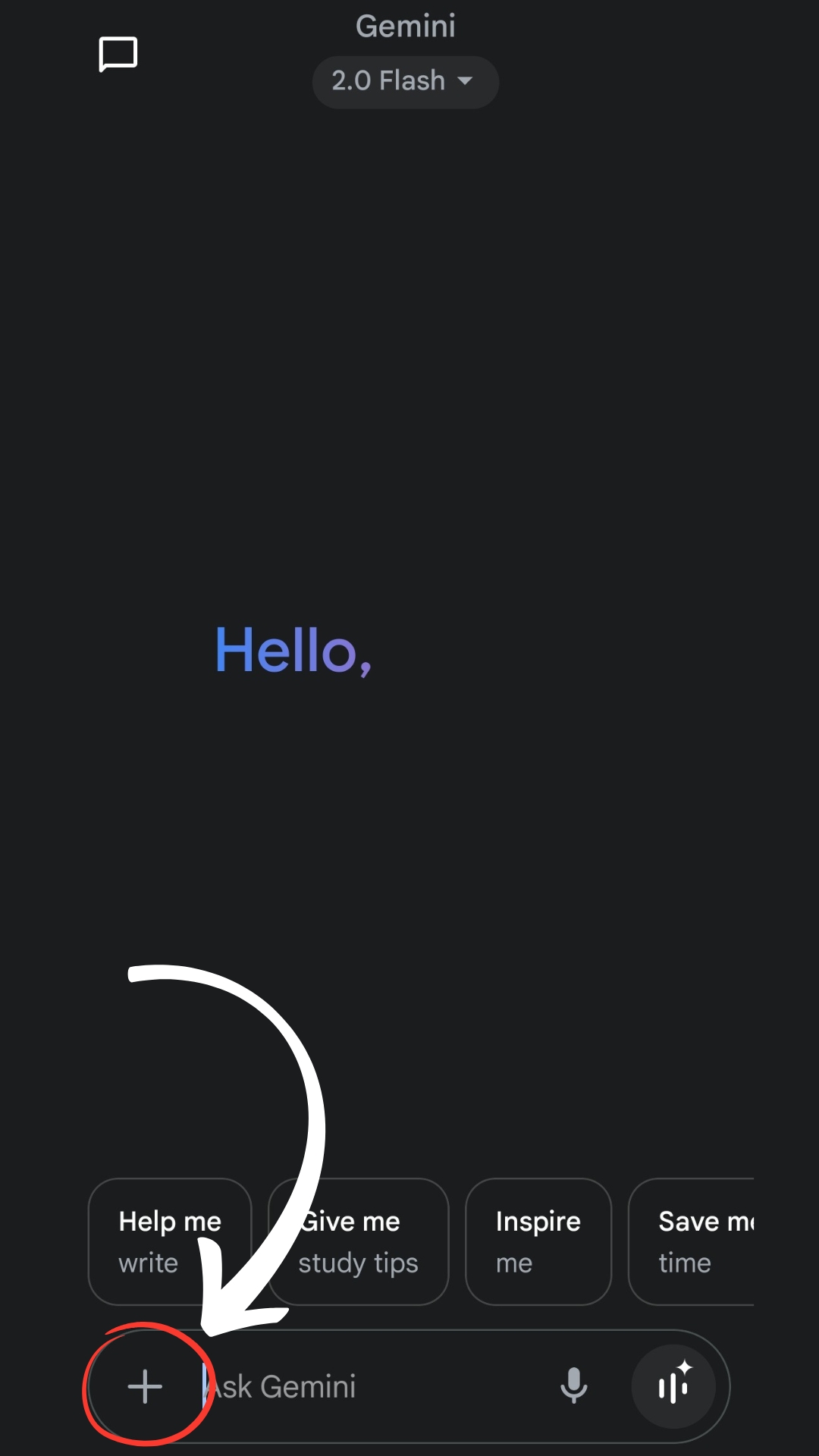
Analyze Reports & Heavy Capsules
Upload **PDFs of Economic Surveys or Banking reports**. Summarize lengthy Finance & Economy capsules, extract key data from Union Budgets, or simplify complex economic articles for Phase II.
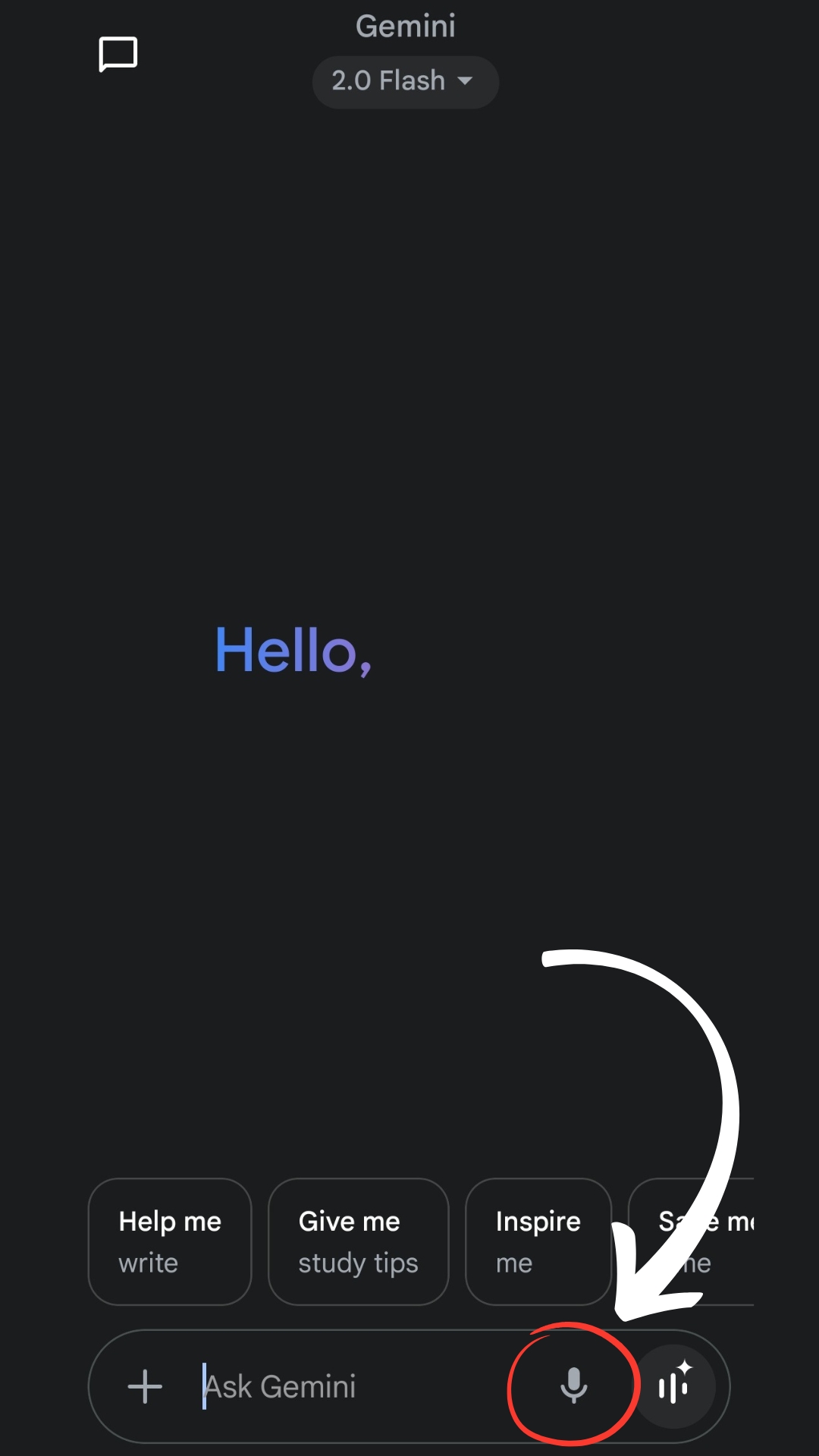
Descriptive & Interview Prep
Practice **essay outlines or current affairs recaps out loud**. Ideal for brainstorming descriptive letter topics or refining your verbal responses for the Phase III interview on the move.
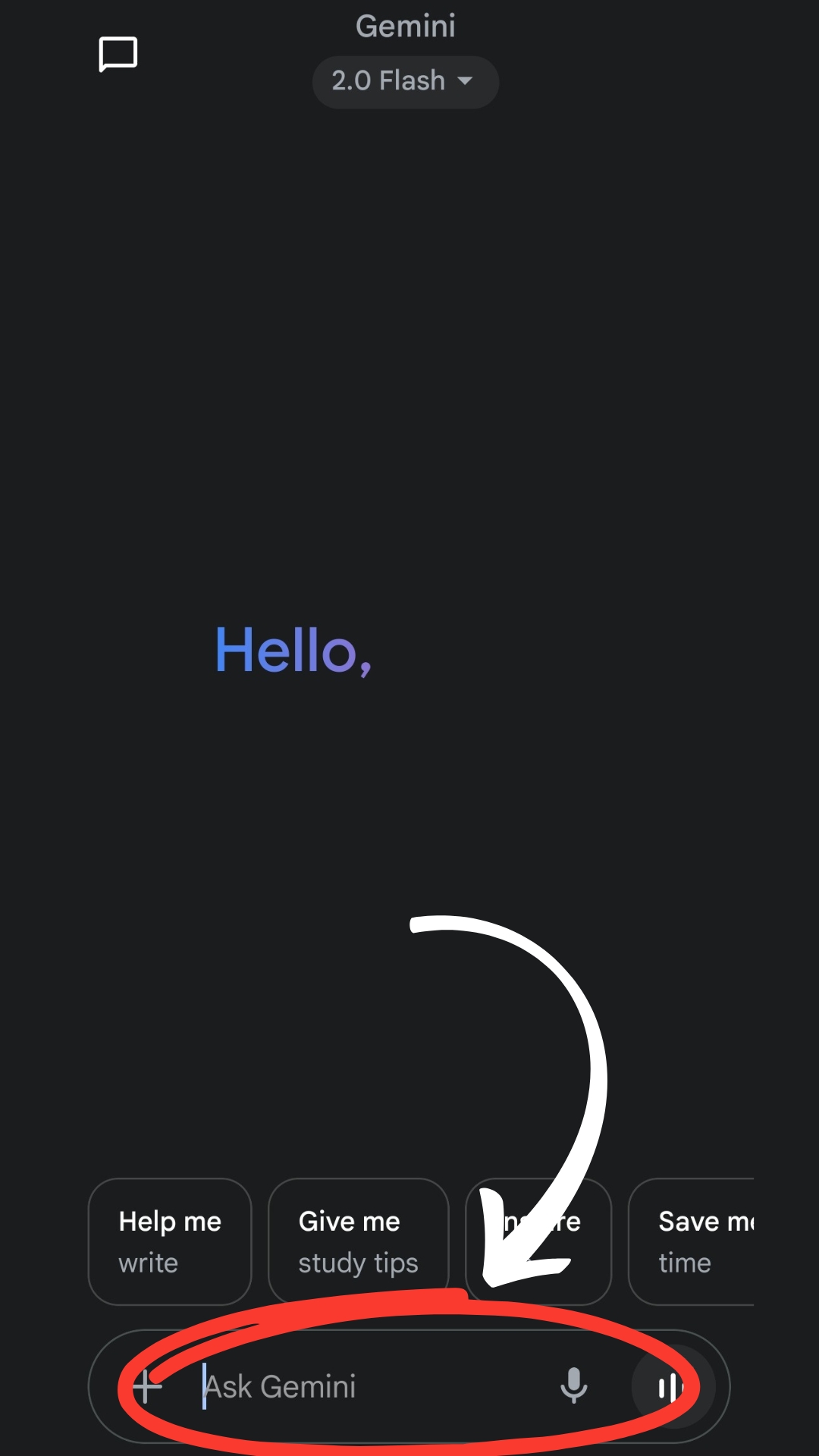
High-Level DI & Reasoning Logic
Your primary tool for **advanced problem-solving**. Ask about complex Data Interpretation sets, high-level puzzle logic, or structure checks for your descriptive writing pieces.
Solving Questions From SBI PO Exam Using Google Gemini.
Example 1: SBI PO Exam General & Banking Awareness
Probability and Permutation (Caselet DI)
Official Path: Data Analysis & Interpretation: Probability & Combinatorics
Mathematical Modelling Analysis
Research "SBI PO Mains Probability Caselet patterns" and "Multiplication Theorem of Probability." For SBI PO Mains, Data Interpretation is about Mathematical Modelling. Grounding the study in terms like "Dependent Events," "Reduced Sample Space," and "Case-Building" ensures the quantitative depth required for the 50-mark section.
Study Lab
SBI PO Mains
"A bag contains 5 Red, 4 Blue, and 3 Green balls. Two balls are drawn at random one after the other without replacement. Analyze the probability that the first ball is Red and the second ball is Blue. Furthermore, deconstruct the 'Conditional Probability' logic."
"Act as a Data Analyst and SBI PO Quant Expert. Explain the Logic of Dependent Events in the context of ball-picking problems. Focus on 'Sample Space Depletion' and 'Numerator-Denominator Shift.' Provide a mathematical mapping summary of the two-step draw process."
"Analyze the Probability of Red then Blue using Chain-of-Thought. Step 1: Probability of the first event. Step 2: Update total ball count for second event. Step 3: Multiply the fractions. Step 4: Verify the 'Order Sensitivity'."
"Create an SBI PO Data Analysis Mastery Framework. Explain Pillar 1/2/3 logic, highlight the 'At Least' complement method, and compare Permutation vs. Combination logic."
Data Interpretation Lab • SBI PO Optimized
Example 2: SBI PO Exam Reasoning & Computer Aptitude
Reasoning (Direction Sense & Coded Distances)
Official Path: Reasoning & Computer Aptitude: Analytical Reasoning
Cartesian Plane Mapping Analysis
Research "Coded Direction Sense patterns for SBI PO Mains" and "Shortcuts for distance-direction puzzles." In the SBI PO Mains, Computer Aptitude is often integrated into reasoning via Conditional Logic. Grounding the study in terms like "Cartesian Plane Mapping," "Pythagoras Theorem," and "Operator Precedence" ensures the candidate addresses the multi-layered complexity required for the 60-mark section.
Study Lab
SBI PO Mains
"In a data-coded navigation system: 'A @ B' is 6m North; 'A # B' is 9m South; 'A $ B' is 5m East; 'A % B' is 10m West.
Given 'P @ Q $ R # S % T', analyze the final displacement and direction of P with respect to T. Furthermore, deconstruct the Vector Addition logic."
"Act as a Strategic Reasoning Expert and IT Systems Analyst. Explain the Logic of Coded Directions. Focus on 'Point-by-Point Plotting' and 'Symbol Decoding.' Provide a notational summary of how to draw a rough sketch from a string of operators."
"Analyze the Path P-Q-R-S-T using Chain-of-Thought. Step 1: Fix 'T' at (0,0). Step 2: Translate symbols into (x, y) coordinate changes. Step 3: Sum total horizontal and vertical changes. Step 4: Verify the 'Shortest Distance' via Pythagoras."
"Create an SBI PO Reasoning & Computer Aptitude Mastery Framework. Explain the 'Anchor' of (0,0), highlight the 'Invisible Error' of subject-object reversal, and compare coordinate math vs. traditional drawing."
Reasoning Lab • SBI PO Optimized
Example 3: SBI PO Exam General and Banking Awareness
Digital Banking (NPCI & Payment Systems)
Official Path: General / Economy / Banking Awareness: Digital Finance & NPCI
NPCI Technical Infrastructure Analysis
Research "NPCI product updates and digital payment limits 2026" and "RBI guidelines on UPI Lite and BBPS cross-border payments." In the SBI PO Mains, technical depth in digital payment infrastructure is a primary anchor. Grounding the study in terms like "Non-internet based transactions," "Offline Ledger," and "Interoperable Bill Payment" ensures precision in operational nuances.
Study Lab
SBI PO Mains 2026
"Analyze the structural differences between UPI (Standard) and UPI Lite regarding the 'On-device Wallet' mechanism and the 'PIN-less' transaction limit. Furthermore, discuss the role of the Bharat Bill Payment System (BBPS) in facilitating cross-border inward bill payments for NRIs."
"Act as a Digital Banking Head at SBI. Explain the Logic of UPI Lite as a solution for 'Micro-payments'. Focus on 'CBS Load Reduction' and 'Transaction Success Rates.' Provide a notational summary of how money moves to the on-device wallet."
"Analyze the BBPS Cross-Border Inward Bill Payment using Chain-of-Thought. Step 1: Identify the 'Central Unit'. Step 2: Interface role. Step 3: NRI foreign account flow. Step 4: Verify 'Regulatory Safety'."
"Create an SBI PO Digital Banking Awareness Mastery Framework. Identify 'NPCI' as the anchor, highlight 'PIN-less limits', and compare Cross-Border shifts."
Digital Banking Lab • SBI PO Optimized
Using Google Gemini for SBI PO Exam Deep Research
What is Deep Research?
Deep research for the SBI PO exam involves using Google Gemini to connect complex banking theories with advanced analytical reasoning and leadership frameworks. It turns the AI into a virtual consultant that helps you understand the "Why" behind difficult Data Interpretation (DI) sets and Descriptive Writing patterns, moving beyond basic practice to the high-level logic required for a Probationary Officer.
How It Helps You
- Advanced DI & Caselet Logic: SBI PO Mains is known for tough, new-pattern DI sets. Gemini helps you find the logical links in caselets and multi-variable charts to identify the fastest solving path.
- Critical Reasoning & Puzzle Mastery: Deep research allows you to break down the structure of complex puzzles (Blood Relations + Seating + Coding) and mastering the "pre-thinking" needed for logical arguments.
- Descriptive Writing Strategy: Stay updated on the exact professional tone and data needed for high-scoring Essays and Letters—topics critical for the 50-mark Descriptive section in Mains.
- Interview & GD Value-Addition: Instead of just reading current news, Gemini can research the "administrative impact" of banking policies to help you stand out during the Group Discussion and Interview.
Grounding and Context
What it is: "Grounding" means tethering Gemini to the official SBI Careers portal and high-level financial reports so it doesn't give you simple clerical shortcuts or unverified economic data.
Why it matters: PO level questions expect an officer-like approach and factual accuracy. Grounding ensures you use sources like SBI Official Handbooks, RBI Annual Publications, and Professional Financial Journals.
How you do it:
1. Download a PDF of the latest SBI PO notification or a compilation of last year's Mains GA questions.
2. Upload the PDF to Gemini.
3. Use the command: "Filter all your future research through the high-level analytical depth and descriptive requirements found in this official SBI guide."
System-Task-Range Prompting
Expert Framework for Multi-Purpose ResearchThis structured framework allows you to customize the AI's persona and objective. Use it to create multi-purpose research tasks for Quant, Reasoning, or Descriptive Writing.
“System: (Senior Bank Consultant | SBI PO Exam Evaluator | Expert Analytical Coach). Task: (Audit descriptive essay structure | Predict mains puzzle trends | Solve high-difficulty DI sets | Synthesize financial policy impacts). Range: (SBI PO Mains syllabus only | Descriptive + Objective integration | Administrative focus | High-yield topics). Research the latest patterns in [SBI Section, e.g., General/Financial Awareness]. Summarize the top 3 shifts in question difficulty and create a 250-word practice set. Use only official syllabus guides.”
The India Should Know Technique
The "Reverse Engineering" MethodThis method lets you dictate the exact outcome before the AI processes data. Use it to specify the required info, sources, emphasis, style, and exclusions.
“I want to create a high-density strategy guide for [SBI PO Topic, e.g., Descriptive Essay Writing on Banking Reforms]. Information Required: (Mastery of PO-level DI logic | Identification of critical reasoning fallacies | Strategy for professional letter writing | Analysis of high-frequency finance terms). Sources: (Official SBI careers website | Economic Survey of India | Previous 3-year Mains papers | Verified financial journals). Emphasis: (Conceptual accuracy | Descriptive answer logic | Administrative tone | Common logical pitfalls). Presentation: (Structured list of bank functions | Comparison table for policies | Essay outline skeleton | DI solving flowchart). Exclusions: (Generic clerical math | Conversational filler | Redundant examples | Long paragraphs | Unverified banking news). Once generated, I will ask you to create a logic-based Mains-level question for this guide.”
Tips for Better Deep Research
- The "Logic Loop": After an answer, ask: "What is the specific administrative keyword or logical link missing in this descriptive response that an SBI PO evaluator would look for?" to find gaps.
- Verify Economic Data: Always use the "Google" search button to verify the latest GDP figures, Repo rates, or fiscal deficit numbers mentioned in your research.
- Visual to Text: If you are studying complex pie charts or multi-variable puzzle diagrams, describe the nodes to Gemini and ask it to explain the "unseen" logical constraints between them.
- Chain of Reasoning: For high-level DI, tell Gemini: "Explain the transition between the raw data and the final derived value step-by-step so I can mentally map this logic during the exam."
Guided Learning For The SBI PO Exam With Google Gemini As Your Personal Coach
What is Guided Learning with AI?
For SBI PO aspirants, guided learning with AI is like having a senior officer and a banking expert available 24/7 to help you crack the managerial logic behind Data Analysis & Interpretation, Reasoning, and General Awareness. Since this exam tests high-level analytical depth and decision-making for a leadership role, you use Gemini to simulate a one-on-one coaching dialogue. It identifies gaps in your logical foundation and explains complex patterns in ways that help you build the strategic mindset required for a Probationary Officer.
How it helps you for this course/exam
- Master Data Analysis & Interpretation: SBI PO focus is heavily on complex Caselets, Charts, and Probability-based DI. Gemini can break down the transition between raw data and analytical conclusions, ensuring you understand the logic behind the solution rather than just memorizing a formula.
- Advanced Puzzle Solving: Whether it is multi-parameter seating arrangements or high-level logical deductions, Gemini can help you identify the logical gap in your approach, teaching you how to troubleshoot your reasoning like a professional officer.
- Descriptive Writing & GD Prep: It can act as a technical mentor for your Essay and Letter writing, helping you structure arguments and providing feedback on the professional depth and clarity of your content.
How to do it in short
1. Define the Role: Tell Gemini it is an expert SBI PO Trainer specializing in Data Interpretation, Reasoning, or English.
2. Set the Boundary: Tell it NOT to give you a direct solution immediately—insist on guiding you through the analytical methodology first.
3. Interactive Dialogue: Ask it to quiz you on a specific logical pattern or a multi-layered DI set one question at a time.
4. Feedback Loop: Provide your logic for a solution, and let the AI correct your professional reasoning based on SBI standards.
Google Suggested Method: Conversational Scaffolding
Google’s recommended approach focuses on "conversational scaffolding." For SBI PO, this means starting with basic quantitative or logical rules and letting the AI guide you step-by-step toward solving full-scale complex analytical sets through a back-and-forth chat.
“I am studying for the SBI PO exam, specifically focusing on [Subject/Chapter]. I want you to act as a supportive mentor. Start by asking me what I already know about [Specific Topic like Probability DI or Linear Arrangement], and then help me build my understanding by asking follow-up questions that connect basic logic to advanced exam-level problems. Let's take it step-by-step.”
Google Suggested Method: The Socratic Method
The Socratic method is the gold standard for mastering officer-level logic. Instead of the AI explaining a math concept or a reasoning puzzle to you, it asks you a series of disciplined questions. This forces you to think through the logical flow yourself, which is critical for solving the multi-layered patterns during the actual exam.
“I want to learn the core logic behind [Topic]. Act as a Socratic tutor for SBI PO prep. Do not give me the explanation. Instead, ask me a leading question that helps me realize the core analytical principle or reasoning pattern behind this. Once I answer, ask another question to push my thinking into complex application until I have fully grasped the concept.”
The India Should Know Method
The "Reverse Engineering" MethodThe India Should Know method is about Reverse Engineering. Instead of letting the AI wander, you put heavy constraints on the output. You define the exact "shape" of the session—specifying the need for high-density analytical formats—before you ever give it the raw data or syllabus details.
“Intent: Act as an expert Professor specializing in SBI PO exam preparation. Context: I am preparing for my entrance exam and need to master [Chapter/Topic]. Format Constraints: * Conduct a 'Step-by-Step Analytical Depth' or 'Officer-level Logic' session. * Ask exactly one question or logic-part at a time. * Wait for my response before moving to the next part of the logic. * If I am wrong, provide a logical hint rather than the final answer. * Use a professional and encouraging tone. * After 5 questions, provide a 'Conceptual Gap Report' in a table format (Column 1: Subject Concept, Column 2: Mastery Level 1-10, Column 3: How to improve analytical depth for the Mains). Raw Data: [Paste your notes, mock test questions, or syllabus here] Instruction: Once you understand these constraints and the data provided, acknowledge this by asking the first question.”
Tips for Guided Learning
- Be Honest with the AI: If you don't understand an analytical hint, say "I don't understand how you reached this interpretation, explain it using a everyday analogy." The AI can pivot its teaching style immediately to match your pace.
- Use Voice Mode for GD/Interview: If you are on the Gemini app, use Gemini Live. Talking through your arguments on current economic issues or management cases out loud helps build the clarity and confidence needed for the final selection stages.
- Feed it Mock Test Logic: Paste specific tricky questions from SBI PO Mains PYQs or mock tests into the "Raw Data" section. This ensures the AI quizzes you on the exact level of rigor and multi-layered reasoning expected by the board.
- Review the Gap Report: Don't just finish the session. Look at the "Conceptual Gap Report" and ask Gemini to create a 10-minute focus plan just for the areas where you need more analytical clarity.
Note: Once Gemini produces the outcome based on these prompts, you can further improve it by saying: "That was great, but make the questions more focused on [Specific Sub-topic] and use more real-world, banking-management style examples."
Important Links for The SBI PO Exam
The primary portal for State Bank of India recruitment. Access official notifications for Probationary Officers (PO), syllabus, Phase I/II exam dates, and final interview schedules.
The official platform for submitting online applications for the PO cadre, managing candidate profiles, and downloading call letters for Prelims, Mains, and psychometric tests.
Advanced reasoning model for explaining complex banking and economy topics, solving high-level quantitative aptitude sets, and refining Descriptive English writing skills for PO Mains.
The official source for information on monetary policy, repo rates, and banking regulations essential for the General/Economy/Banking Awareness section of the PO exam.
Official government gateway for verified economic news and policy updates. Essential for tracking national financial schemes and banking reforms for the descriptive paper and interview.
Your Journey To Mastering AI Has Just Begun, Go Practice Now
In the demanding landscape of the SBI PO exam, preparation is everything. Google Gemini AI is not just another app; it’s a dynamic, personalized study partner that works in tandem with your existing resources. From providing detailed explanations of complex concepts to helping you break down intricate puzzles and master the art of descriptive writing, Gemini’s ability to respond to text, image, and voice inputs makes it an invaluable tool. It offers the kind of immediate feedback and tailored guidance that can significantly enhance your understanding and boost your confidence. By integrating it into your daily study routine, you’re not just preparing—you’re learning smarter, more efficiently, and with a true tutor by your side.
Written By
Prateek Singh.
Last Updated – Febuary, 2026
About The Author
Prateek is a self-taught practitioner who believes the only real way to learn is by doing. He created IndiaShouldKnow.com from scratch, using AI as his primary learning partner to navigate everything from web development and UI/UX design to color theory and graphic engineering.
He works within the “engine room” of AI daily, using these tools to manage professional workflows including data visualization, digital marketing systems, and SEO architecture. Having personally tested and refined dozens of AI models across hundreds of real-world scenarios, Prateek focuses on the “how” behind the technology. He shares his self-taught workflows and prompting pillars to help others move past basic chat interactions and start using AI as a high-precision tool for their own goals.
FAQs About AI Use
Can I trust every answer an AI tool gives me for my studies?
A: No, you should not trust every answer completely. Think of an AI as a super-smart assistant that has read most of the internet—but not every book in the library is accurate.
AI can sometimes make mistakes, misunderstand your question, or use outdated information.
It can even “hallucinate,” which means it confidently makes up an answer that sounds real but is completely false.
Rule of Thumb: Use AI answers as a great starting point, but never as the final, absolute truth. Always double-check important facts.
How can I verify the information I get from an AI for my academic work?
A: Verifying information is a crucial skill. It’s like being a detective for facts. Here are four simple steps:
Check Your Course Material: Is the AI’s answer consistent with what your textbook, lecture notes, or professor says? This is your most reliable source.
Look for Reputable Sources: Ask the AI for its sources or search for the information online. Look for links from universities (.edu), government sites (.gov), respected news organizations, or published academic journals.
Cross-Reference: Ask a different AI the same question, or type your question into a standard search engine like Google. If multiple reliable sources give the same answer, it’s more likely to be correct.
Use Common Sense: If an answer seems too perfect, too strange, or too good to be true, be extra skeptical and investigate it further.
What is the difference between using AI for research and using it to plagiarize?
A: This is a very important difference. It’s all about who is doing the thinking.
Using AI for Research (Good ✅):
Brainstorming topics for a paper.
Asking for a simple explanation of a complex theory.
Finding keywords to use in your library search.
Getting feedback on your grammar and sentence structure.
You are using AI as a tool to help you think and write better.
Using AI to Plagiarize (Bad ❌):
Copying and pasting an AI-generated answer directly into your assignment.
Asking the AI to write an entire essay or paragraph for you.
Slightly rephrasing an AI’s answer and submitting it as your own original thought.
You are letting the AI do the thinking and work for you.
How can I use AI ethically to support my learning without violating my school's academic honesty policy?
A: Using AI ethically means using it to learn, not to cheat. Here’s how:
Know the Rules: First and foremost, read your school’s or professor’s policy on using AI tools. This is the most important step.
Be the Author: The final work you submit must be yours. Your ideas, your structure, and your arguments. Use AI as a guide, not the writer.
Do the Heavy Lifting: Use AI to understand a topic, but then close the chat and write your summary or solve the problem yourself to make sure you have actually learned it.
Be Transparent: If you used an AI in a significant way (like for brainstorming), ask your professor if you should mention it. Honesty is always the best policy.
Can an AI's answer be biased? How can I detect this in its responses?
A: Yes, an AI’s answer can definitely be biased. Since AI learns from the vast amount of text on the internet written by humans, it can pick up and repeat human biases.
Here’s how to spot potential bias:
Look for Opinions: Does the answer present a strong opinion as a fact?
Check for One-Sidedness: On a topic with multiple viewpoints (like politics or economics), does the AI only show one side of the argument?
Watch for Stereotypes: Does the answer use generalizations about groups of people based on their race, gender, nationality, or other characteristics?
To avoid being misled by bias, always try to get information from multiple, varied sources.
Is it safe to upload my personal notes, research papers, or assignments to an AI tool?
A: It is best to be very careful. You should not consider your conversations with most public AI tools to be private.
Many AI companies use your conversations to train their systems, which means employees or contractors might read them.
There is always a risk of data breaches or leaks.
A Simple Safety Rule: Do not upload or paste any sensitive information that you would not want a stranger to see. This includes:
Personal identification details.
Confidential research or unpublished papers.
Your school assignments before you submit them.
Any financial or private data.