UPSC Exam With Google Gemini - The 2026 AI Master Class
Your Journey To Mastering AI For The UPSC Exam And Much More Starts Here
The UPSC Civil Services Exam is the definitive gateway to the high-value career of an Indian Civil Servant (IAS, IFS, IPS). To seize this prize, you must master a vast ocean of subjects including History, Polity, Economy, and Current Affairs, demanding an overwhelming synthesis of factual knowledge and analytical essay skills. Handling this immense pressure and volume of information can feel impossible, but the simple act of searching for and adopting advanced AI tools proves your superior dedication—securing your place in the civil service is absolutely inevitable with this level of commitment. Your intelligent study partner is Google Gemini AI. This advanced technology is the solution, acting as your secret weapon ready to instantly break down the Indian Constitution, explain complex scientific principles, and help you refine compelling essay arguments, transforming your preparation into a focused, efficient journey. Trust this guide because I’ve been relying on AI daily since 2022 to transform my own professional skills, from enhancing data analysis to building this entire website from start to finish—proving AI’s immense power to accelerate learning for real-world academic success.
Note :
- “The techniques and prompt engineering principles you learn in this guide are universally applicable to any large language model (LLM), including ChatGPT and Perplexity AI. We use Google Gemini for all examples because its latest multimodal features and integration with Google Search provide a best-in-class learning experience.”
- “Remember: The quality of the AI’s answer depends entirely on the clarity of your prompt. Always be specific, detailed, and clear with the AI to avoid irrelevant or incorrect (hallucinated) responses.”
How Gemini Helps With Every Subject For The UPSC Exam
| Focus Area | What Gemini Does | Your Benefit |
|---|---|---|
|
|
Helping you map the past
|
History is very big. Gemini helps you learn "why" things happened so you can write great answers. |
|
|
Simplifying Earth sciences
|
Geography uses maps. Gemini makes hard science easy to understand for your tests. |
|
|
Deciphering laws and rights
|
UPSC loves news about laws. Gemini gives you fast facts on court cases so you stay correct. |
|
|
Tracking markets and money
|
Economy changes every day. Gemini keeps your data fresh so you are never using old facts. |
|
|
Monitoring nature and climate
|
This subject is very important for prelims. Gemini helps you track nature rules quickly. |
|
|
Explaining new technology
|
UPSC tests how science helps people. Gemini explains new tech without needing a science degree. |
|
|
Solving leadership dilemmas
|
Ethics is about balance. Gemini helps you practice making good choices for your future job. |
|
|
Connecting world events
|
World news moves fast. Gemini helps you see how India fits into the global picture. |
|
|
Improving logic and speed
|
CSAT is for qualifying. Gemini makes sure your math and logic are strong enough to pass. |
How AI Boosts Your Efforts : Data From Recent Studies
| Research Metric | Evidence & Analysis | Academic Significance |
|---|---|---|
| 20–30% score improvement Active Learning Science |
AI Gains in Multi-Domain Exams
|
What This Means
AI improves how you think across subjects, not just how much you read.
UPSC Edge: Direct gains across GS I–IV and integrated current affairs.
|
| 25–35% syllabus alignment Syllabus Deconstruction Research |
AI-Driven Syllabus Decomposition
|
What This Means
AI helps you study what UPSC actually asks, not everything ever written.
UPSC Edge: Major gains in Polity, Economy, Environment, and Current Affairs.
|
| 25–40% answer quality Writing Scaffolding Science |
AI-Assisted Mains Answer Structuring
|
What This Means
AI trains you to write examiner-friendly answers instead of dumping notes.
UPSC Edge: +40–80 marks potential across GS, Ethics, and Essay.
|
| 30–40% knowledge integration Transfer Learning Science |
Cross-Paper & Interview Readiness
|
What This Means
AI helps you think like a civil servant, not just answer like a student.
UPSC Edge: Critical for Interview, Ethics case studies, and Essay.
|
Advanced Prompting Techniques by Google for 2026, with Examples Prompts For The UPSC Exam
Google Gemini is a Reasoning Engine. To get "A+ Grade" results for UPSC (Civil Services) and administrative career success, move beyond basic questions using these six pillars.
- The Technique: Setting the Persona, Task, Context, and Format.
- The Logic: The UPSC requires an administrative, neutral, and multidimensional perspective (PESTEL). Assigning a role like "Cabinet Secretary" ensures the AI provides balanced arguments and a "Way Forward," while the Context "fences" it into the official syllabus (GS Papers 1-4) to avoid shallow opinions.
Persona: Act as a [Any Expert Role: e.g., Senior Policy Advisor, UPSC Faculty, Retired Diplomat]. Task: Explain [Your Topic: e.g., Indian Federalism vs. US Federalism, Impact of AI on Governance, Urbanization Challenges]. Context: Apply this specific background: [Source Context: e.g., Use only official sources like PIB, NITI Aayog Reports, and Laxmikanth] — (Ensures data is government-approved and accurate). [Difficulty Context: e.g., Focus on 'Mains' level analytical depth with a critical perspective] — (Sets the complexity level). [Analytical Context: e.g., Assume a neutral, administrative tone with a clear 'Way Forward'] — (Sets the civil servant mindset). Format: Provide the answer as a [Structure: e.g., GS Paper 2 Style Answer, 10-Point Brief, SWOT Analysis].
- The Technique: Breaking a problem into a "Step-by-Step" sequence with logic checks.
- The Logic: UPSC Prelims questions often use "absolute" qualifiers (e.g., "Only," "All," "Every"). This version forces the AI to "Self-Correct"—verifying Step 1 (legal or historical exceptions) before concluding, ensuring you don't fall for trick statements in the MCQ paper.
Analyze this [Subject: e.g., Prelims Multi-statement Question, CSAT Logic Problem] using Chain-of-Thought. Step 1: Breakdown each statement and search for [Legal/Historical Exceptions] or extreme qualifiers like 'Only' or 'Always'. Step 2: State the core [Article/Fact/Scientific Rule] and verify its relevance to each specific statement. Step 3: Show the logical elimination process, verifying why each incorrect option is false before selecting the final answer. Question: [Insert your UPSC Prelims question here]
- The Technique: Limiting the AI to official domains with a focus on recent data.
- The Logic: UPSC relies on current data (GDP, Forest Cover, New Schemes). This filter forces the AI to ignore outdated blogs and prioritize official portals like PIB, NITI Aayog, and the Ministry of Finance from the last 12 months for 100% accuracy in your answers.
Research the [Topic: e.g., India State of Forest Report (ISFR) 2025 data, New RAMI Index, Recent SC Judgments on Privacy]. Constraint: Only use info from official portals: [Domain 1: e.g., pib.gov.in], [Domain 2: e.g., nitaayog.gov.in], and [Domain 3: e.g., sci.gov.in]. Recency Rule: Prioritize data published in the last 12 months. Output: Provide the official summary with relevant data points for value addition and the direct link to the source.
- The Technique: Setting strict "Rules of Play" including forbidden keywords.
- The Logic: UPSC Mains answers require hitting keywords within strict word limits. By setting hard boundaries and forbidding "AI-voice" fillers, you get sharp, technical notes focused on headings and sub-headings, exactly as evaluators prefer.
Explain [Concept: e.g., Circular Economy, Fifth Schedule of the Constitution, Indo-Pacific Strategy]. Constraint 1: Use only [Specific Source: e.g., NCERT, Standard Reference Books, Editorial Keywords] terminology. Constraint 2: Keep the response under [Limit: e.g., 250 words]. Constraint 3 (Negative): Do not use AI-filler phrases like "Basically" or "In conclusion." Format: Use "Introduction - Body (Headings) - Way Forward" structure.
- The Technique: Using a Feedback Loop with an "Active Recall" check.
- The Logic: Treat the AI like a mentor. This version forces the AI to stop and ask you a question after its explanation, ensuring you have grasped the "Critical Analysis" part of a topic (like Pros vs Cons) before moving on.
Explain [Topic: e.g., Impact of Digital Divide, Judiciary vs Executive Tussle, India's Energy Security]. Instruction: Provide a multi-dimensional summary (Social, Economic, Political) first. Feedback Loop: Ask me if I want to see the "Constitutional Perspective" or the "Current Affairs Impact." Active Recall: Once I am satisfied, provide one 'UPSC Mains-standard' 15-mark question based on your explanation for me to outline.
- The Technique: Providing a structural blueprint before injecting raw data.
- The Logic: Use this to build your "Micro-notes." You command the AI to build a specific result (like a comparison table of Agriculture Revolutions) using a layout you provide, ensuring it is 100% revision-ready.
Make a [Desired Output: e.g., Comparison Table of Buddhist Councils, Summary Table of NITI Aayog Reports, Committee Recommendations List]. Layout Blueprint: [Structure: e.g., 4-column table, Chronological list, Mind-map description]. Style: [Vibe: e.g., Administrative, Minimalist, Data-heavy]. Strict Rule: Adhere to the structure provided; no conversational filler. Use this information: [PASTE_EDITORIAL_OR_REPORT_DATA_HERE]
Using Google Gemini Inputs Method's For The UPSC Exam
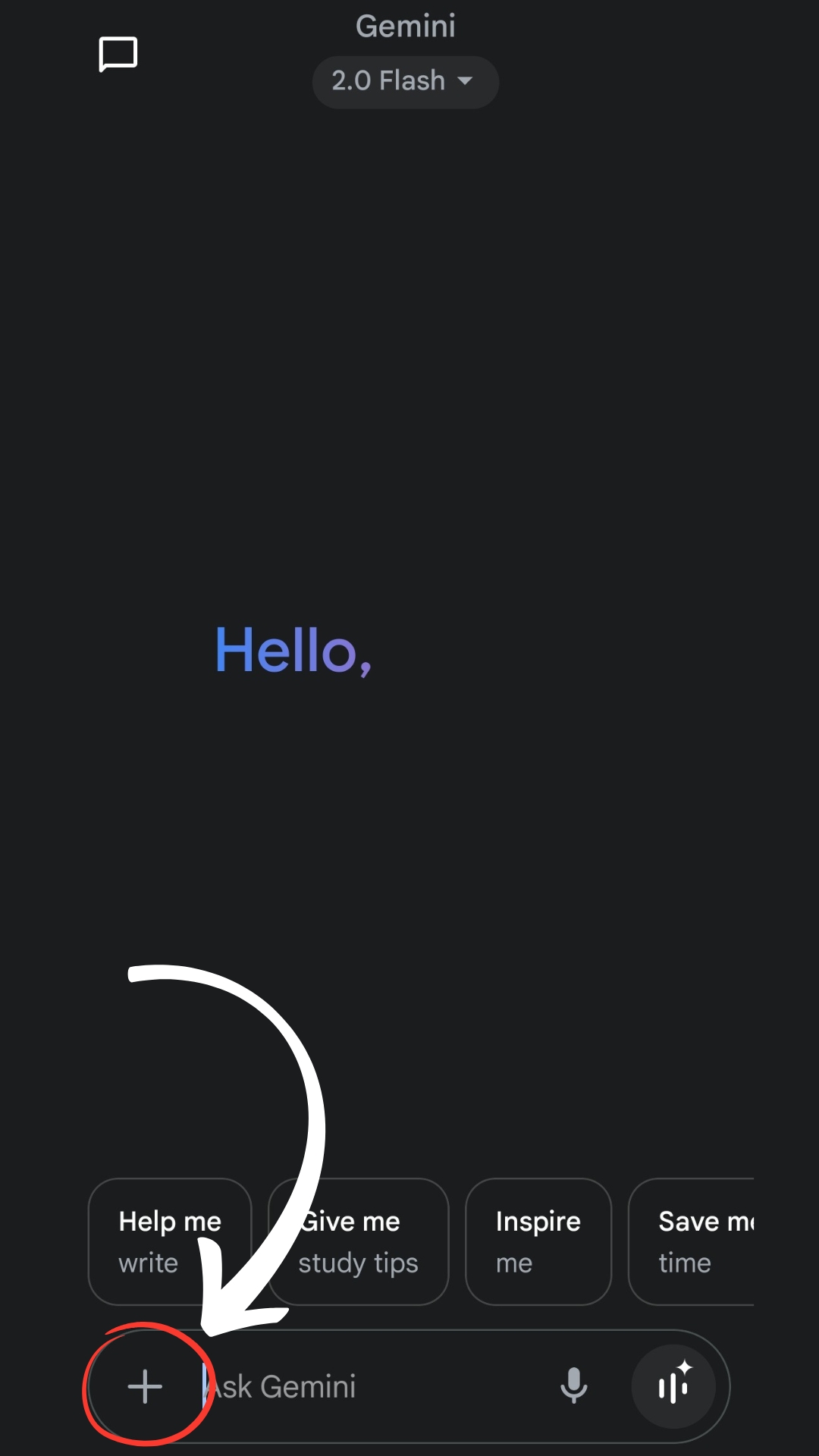
Analyze Official Reports & NCERTs
Upload **PDFs of ARC reports, Economic Surveys, or NCERTs**. Use it to summarize government documents, extract data for GS papers, or simplify complex policy research.
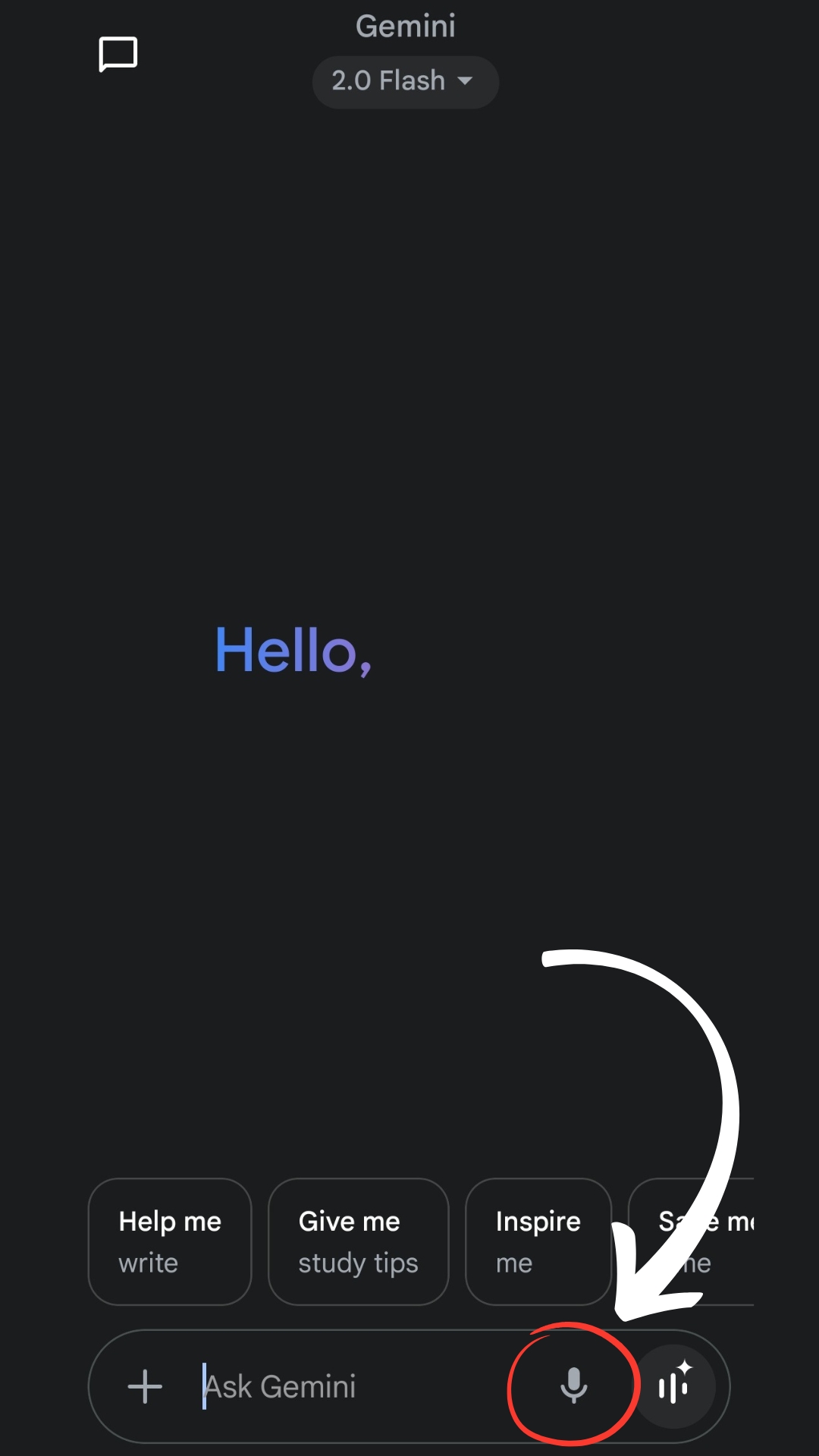
Interview & Daily News Recall
Review **Current Affairs or Ethics principles hands-free**. Ideal for practicing Personality Test responses or summarizing the day's editorial headlines during your breaks.
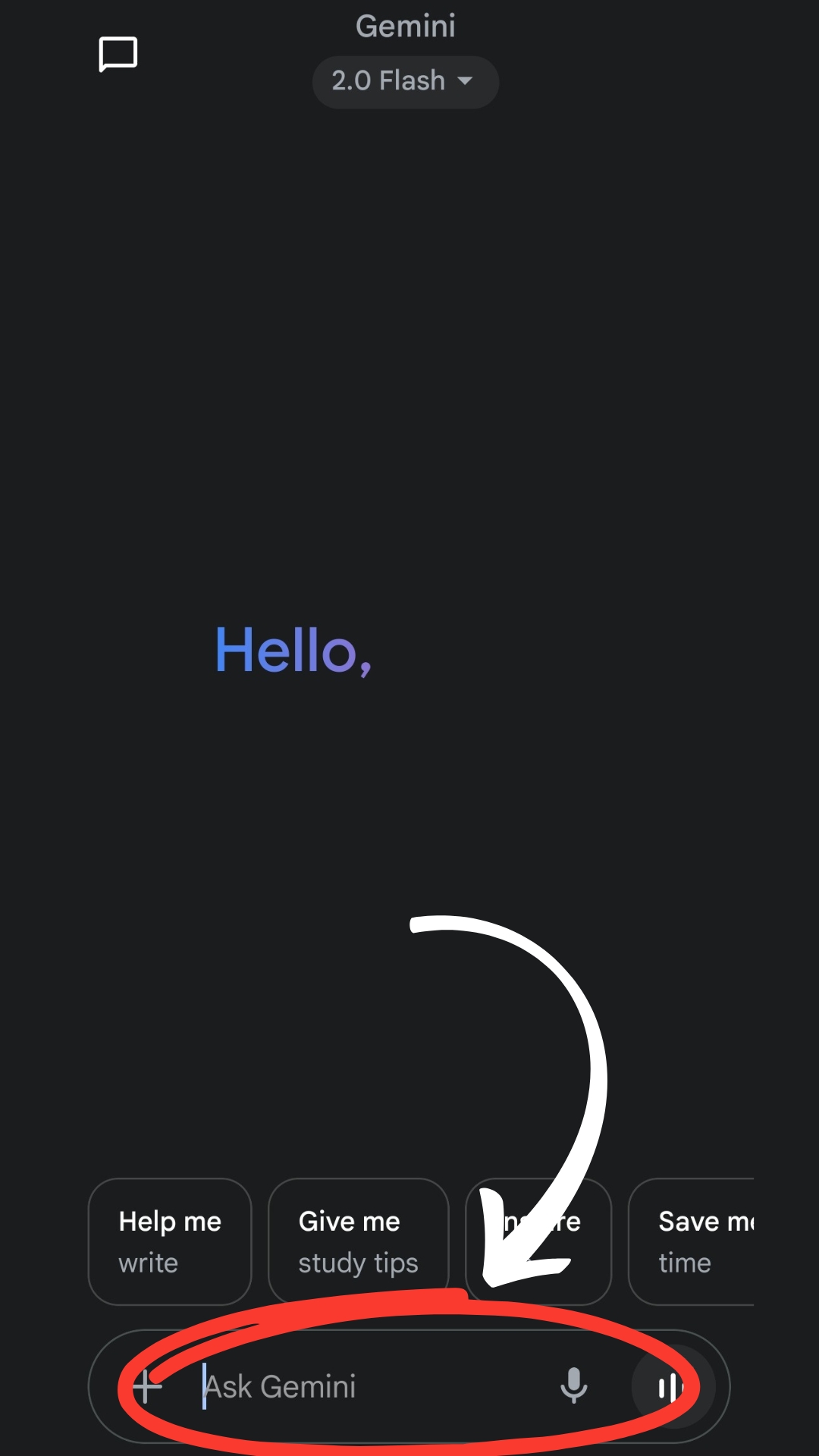
Mains Answer & GS Analysis
Your primary tool for **structured answer writing**. Ask about GS themes, structure Ethics case studies, or solve complex CSAT logic problems for the UPSC standard.
Solving Questions From The UPSC Exam Syllabus Using Google Gemini
Example 1: UPSC Exam Quantitative Aptitude (CSAT)
Number System (Divisibility and Remainder Theorem)
Official Path: CSAT Paper-II: Basic Numeracy
Modular Arithmetic & Property Analysis
Research "Divisibility rules and remainder theorem for UPSC CSAT" and "Properties of remainders for algebraic operations." For the UPSC CSAT, the Number System is the most high-yield anchor. Terms like "Euclidean Division Lemma," "Congruence Modulo," and "Cyclicity" define the logical depth required for the paper.
Study Lab
UPSC CSAT Paper-II
"A number when divided by 7 leaves a remainder of 3. What will be the remainder when the square of the same number is divided by 7? Analyze the 'Modular Arithmetic' logic and deconstruct the 'Property of Remainders' as applied to exponential operations."
"Act as a CSAT Specialist and IAS Officer. Explain the Logic of Remainder Proxies in the context of divisibility. Focus on the 'Operation Invariance' of remainders. Provide a procedural logic summary of how to handle $n^2$ without knowing the value of $n$."
"Analyze the Remainder of $n^2$ divided by 7 using Chain-of-Thought. Step 1: Define initial $n$ via remainder 3. Step 2: Square the proxy value (3). Step 3: Divide by 7. Step 4: Verify the 'Algebraic Proof'."
"Create a UPSC CSAT Number System Mastery Framework. Identify 'The Divisor' as the anchor, highlight the 'Invisible Error' of large remainders, and provide the 'Speed-Scan' rule."
Basic Numeracy Engine • CSAT Optimized
Example 2: UPSC Exam General Science
Biology & Biotechnology (CRISPR-Cas9 Gene Editing)
Official Path: General Science: Developments in Science and Technology
Genome Engineering & Ethical Frameworks
Research "CRISPR-Cas9 mechanism for UPSC Prelims" and "Ethical concerns of germline gene editing." For the UPSC CSE, the focus is on "Applied Science." Terms like "Double-Strand Break (DSB)," "Non-Homologous End Joining (NHEJ)," and "Base Pairing" define the technical and ethical depth required for Prelims and GS Paper III.
Study Lab
UPSC CSE General Science
"Analyze the mechanism of the CRISPR-Cas9 technology in genome engineering. Identify the roles of gRNA and Cas9, and discuss the implications of 'Germline' vs. 'Somatic' editing. Deconstruct why it is called 'Genetic Scissors' and its link to India's Sickle Cell Anemia Elimination Mission."
"Act as a Scientist at the Department of Biotechnology (DBT) and an IFS Officer. Explain the Logic of CRISPR Precision in gene editing. Focus on 'Targeting vs. Cutting.' Provide a procedural summary of how the gRNA-Cas9 complex locates a specific DNA sequence."
"Analyze the Divide between Somatic and Germline Editing using Chain-of-Thought. Step 1: Define Somatic cells. Step 2: Define Germline cells. Step 3: Explain 'Permanent Inheritance.' Step 4: Verify the 'Global Moratorium'."
"Create a UPSC General Science Mastery Framework for Biotechnology. Identify 'Targeted Double-Strand Break' as the anchor, highlight the 'Invisible Error' of the repair mechanism, and provide the 'Speed-Scan' rule."
General Science Engine • UPSC Optimized
Example 3: UPSC Exam Current Affairs & General Knowledge
International Relations & Economy (Red Sea Crisis)
Official Path: General Studies II & III: Effect of Policies & Indian Economy
Maritime Security & Trade Resilience Analysis
Research "Impact of Red Sea disruptions on Indian exports 2024-2026" and "Strategic importance of Bab-el-Mandeb." For the UPSC CSE, current affairs must be linked to "Static Geography" and "Economic Policy." Terms like "Chokepoints," "Freight Rate Volatility," and "Suez Canal Bypass" define the multi-dimensional nature of GS Paper II and III.
Study Lab
UPSC CSE IR & Economy
"Analyze the impact of the ongoing Red Sea Crisis on India’s 'Trade-led Growth' strategy. Identify the significance of the Bab-el-Mandeb Strait and discuss the geopolitical implications of the IMEC (India-Middle East-Europe Economic Corridor). Furthermore, deconstruct the concept of 'Friend-shoring'."
"Act as a Diplomat at the Ministry of External Affairs (MEA) and a Trade Analyst. Explain the Strategic Importance of the Bab-el-Mandeb Strait for India’s energy and trade security. Focus on 'Navigation Freedom' and 'Economic Costs.' Provide a geographical summary of the route."
"Analyze the IMEC Corridor using Chain-of-Thought. Step 1: Define Eastern/Northern Corridors. Step 2: Explain multimodal nature. Step 3: Discuss 'Strategic Autonomy'. Step 4: Verify 'Infrastructure Challenges'."
"Create a UPSC Current Affairs Mastery Framework for International Trade. Identify 'UNCLOS' as the anchor, highlight the 'Invisible Error' of energy security links, and provide the 'Speed-Scan' rule."
Foreign Policy Engine • UPSC Optimized
Using Google Gemini for UPSC Exam Deep Research
What is Deep Research?
Deep research for the UPSC Civil Services Exam involves using Google Gemini to connect General Studies (GS) fundamentals with dynamic current affairs, ethical dilemmas, and optional subject specialization. It turns the AI into a strategic administrative partner that helps you understand the "Why" behind socio-economic trends and policy shifts, moving beyond static facts to the multidisciplinary analysis required for the Mains and Personality Test.
How It Helps You
- Multidisciplinary Answer Writing: UPSC Mains rewards interdisciplinary links. Gemini helps you connect Polity, Economy, and Environment to write high-density GS answers that show a holistic administrative perspective.
- Ethical Case Study Analysis: Deep research allows you to break down complex ethical dilemmas in GS Paper 4, helping you identify stakeholder interests, moral philosophies, and balanced courses of action.
- Policy & Governance Context: Stay updated on the exact nuances of the Economic Survey, Union Budget, and PIB releases—topics critical for adding "administrative value" and data-driven evidence to your Mains responses.
- Optional Subject Specialization: Instead of just finding definitions, Gemini can research the "evolution of thought" in your optional subject, helping you tackle non-routine and high-difficulty theoretical questions.
Grounding and Context
What it is: "Grounding" means tethering Gemini to official UPSC notifications, NCERT textbooks, and government reports so it doesn't give you unverified news or non-administrative logic that is outside the exam's scope.
Why it matters: UPSC evaluation expects constitutional, factually precise, and neutral reasoning. Grounding ensures you use sources like Official UPSC Notification, NCERT Class 6-12, PIB Releases, and ARC Reports.
How you do it:
1. Download a PDF of the UPSC CSE syllabus or the latest Economic Survey summary.
2. Upload the PDF to Gemini.
3. Use the command: "Filter all your future research through the administrative depth and constitutional logic found in this official UPSC guide."
System-Task-Range Prompting
Expert Framework for Multi-Purpose ResearchThis structured framework allows you to customize the AI's persona and objective. Use it to create multi-purpose research tasks for GS, Ethics, or Optional Papers.
“System: (IAS Mentor | Policy Analyst | UPSC Evaluator). Task: (Audit GS answer logic | Predict Prelims statement trends | Solve Ethics case studies | Synthesize optional subject data). Range: (Current UPSC CSE format only | Administrative depth simulation | GS Paper 1-4 focus | High-yield topics). Research the latest trends in [UPSC Section, e.g., Indian Federalism or GS Paper 3 Economy]. Summarize the top 3 shifts in policy and create a Mains-style 250-word practice question. Use only official government sources.”
The India Should Know Technique
The "Reverse Engineering" MethodThis method lets you dictate the exact outcome before the AI processes data. Use it to specify the required info, sources, emphasis, style, and exclusions.
“I want to create a high-density strategy guide for [UPSC Topic, e.g., Centre-State Relations and the Finance Commission]. Information Required: (Mastery of constitutional articles | Identification of administrative gaps | Strategy for Ethics case studies | Analysis of Optional Subject theories). Sources: (Official UPSC syllabus | NCERT GS textbooks | PIB updates | Economic Survey | ARC Reports). Emphasis: (Administrative keywords | Multidisciplinary links | Policy impact analysis | Balanced constitutional perspective). Presentation: (Structured list for Mains answers | Comparison table for policies | Case study skeleton | Logic flowchart). Exclusions: (Basic school-level trivia | Conversational filler | Vague political gossip | Long paragraphs | Unverified news rumors). Once generated, I will ask you to create a logic-based Mains answer structure for this guide.”
Tips for Better Deep Research
- The "Logic Loop": After an answer, ask: "What is the common conceptual confusion between 'Constitutionality' and 'Administrative Convenience' in this specific topic?" to identify knowledge gaps.
- Verify Administrative Data: Always use the "Google" search button to verify the latest NITI Aayog indices, current budget allocations, or recent Supreme Court judgments mentioned in your research.
- Visual to Text: If you are studying complex Governance flowcharts or Geography maps, describe the linkages to Gemini and ask it to explain the "unseen" strategic or policy logic for a more nuanced answer.
- Chain of Reasoning: For difficult ethical questions, tell Gemini: "Explain the transition from the ethical premise to the administrative decision step-by-step so I can mentally map this logic during the exam."
Guided Learning For The UPSC Exam With Google Gemini As Your Personal Tutor
What is Guided Learning with AI?
For UPSC aspirants, guided learning with AI is like having a senior bureaucrat and a seasoned Civil Services mentor available 24/7 to help you crack the logic behind Ethics, Governance, and complex International Relations. Since the UPSC tests your ability to analyze issues from multiple dimensions rather than just memorizing facts, you use Gemini to simulate a high-level administrative briefing. It identifies gaps in your conceptual understanding and explains dynamic current affairs in simple ways that help you build the analytical depth needed for Prelims, Mains, and the Interview.
How it helps you for this course/exam
- Master General Studies (Static + Dynamic): Linking static history or geography with dynamic current affairs is the biggest hurdle. Gemini can break down the logic of a news event, ensuring you understand its historical context and constitutional implications rather than just reading a news headline.
- Improve Ethics & Essay logic: Whether it is ethical dilemmas or philosophical essay topics, the Mains paper demands deep moral and logical clarity. Gemini can act as an ethics coach, helping you troubleshoot your logical approach to case studies through practical, real-world examples.
- Multi-dimensional Answer Writing: It can act as a technical mentor for answer writing, helping you link disparate subjects like Economy, Social Justice, and Internal Security through relatable administrative analogies.
How to do it in short
1. Define the Role: Tell Gemini it is an expert UPSC Mentor specializing in General Studies, Ethics, or your Optional Subject.
2. Set the Boundary: Tell it NOT to give you a model answer immediately—insist on guiding you through the analytical reasoning first.
3. Interactive Dialogue: Ask it to explain a complex policy or quiz you on multi-layered patterns one question at a time.
4. Feedback Loop: Provide your analysis for a scenario, and let the AI correct your administrative logic based on UPSC standards.
Google Suggested Method: Conversational Scaffolding
Google’s recommended approach focuses on "conversational scaffolding." For UPSC, this means starting with basic constitutional or historical rules and letting the AI guide you step-by-step toward solving full-scale complex analytical problems through a back-and-forth chat.
“I am studying for the UPSC Civil Services exam, specifically focusing on [Subject/Chapter]. I want you to act as a supportive administrative mentor. Start by asking me what I already know about [Specific Topic like Federalism or Monetary Policy], and then help me build my understanding by asking follow-up questions that connect basic logic to advanced UPSC-level problems. Let's take it step-by-step.”
Google Suggested Method: The Socratic Method
The Socratic method is the gold standard for mastering ethical and administrative logic. Instead of the AI explaining a policy or an ethical theory to you, it asks you a series of disciplined questions. This forces you to think through the logic yourself, which is critical for answering the "critical analysis" type questions common in Mains papers.
“I want to learn the core logic behind [Topic]. Act as a Socratic tutor for UPSC prep. Do not give me the explanation. Instead, ask me a leading question that helps me realize the core administrative principle or ethical logic behind this. Once I answer, ask another question to push my thinking into practical application until I have fully grasped the concept.”
The India Should Know Method
The "Reverse Engineering" MethodThe India Should Know method is about Reverse Engineering. Instead of letting the AI wander, you put heavy constraints on the output. You define the exact "shape" of the session—specifying the need for high-density analytical formats—before you ever give it the raw data or syllabus details.
“Intent: Act as an expert Professor specializing in UPSC preparation. Context: I am preparing for my Civil Services attempt and need to master [Chapter/Topic]. Format Constraints: * Conduct a 'Step-by-Step Analytical Depth' or 'Administrative Logic' session. * Ask exactly one question or logic-part at a time. * Wait for my response before moving to the next part of the logic. * If I am wrong, provide a conceptual hint rather than the final answer. * Use a professional and encouraging tone. * After 5 questions, provide a 'Conceptual Gap Report' in a table format (Column 1: Subject Concept, Column 2: Mastery Level 1-10, Column 3: How to improve multi-dimensional depth for Mains). Raw Data: [Paste your notes, mock test questions, or syllabus here] Instruction: Once you understand these constraints and the data provided, acknowledge this by asking the first question.”
Tips for Guided Learning
- Be Honest with the AI: If you don't understand an administrative hint, say "I don't understand how this policy affects the grassroots, explain it using a simpler analogy." The AI can pivot its teaching style immediately to match your pace.
- Use Voice Mode for Interview Prep: If you are on the Gemini app, use Gemini Live. Talking through complex socio-economic arguments out loud helps build the clarity and recall needed for the actual Personality Test.
- Feed it Official Reports: Paste specific snippets from the Economic Survey, Budget, or ARC reports into the "Raw Data" section. This ensures the AI quizzes you on the exact level of depth and terminology expected by the UPSC.
- Review the Gap Report: Don't just finish the session. Look at the "Conceptual Gap Report" and ask Gemini to create a 10-minute revision plan just for the areas where you need more analytical clarity for the Mains exam.
Note: Once Gemini produces the outcome based on these prompts, you can further improve it by saying: "That was great, but make the questions more focused on [Specific Sub-topic] and use more real-world, administrative examples."
Important Links for UPSC Aspirants
The central authority for the Civil Services Examination. Access official notifications, the CSE syllabus, exam calendars, and previous year question papers.
The official government gateway for UPSC applications. Use this portal for Prelims registration and submitting the Detailed Application Form (DAF) for Mains.
Advanced reasoning model for summarizing lengthy policy documents, analyzing GS topics, and practicing answer writing for Ethics and Essay papers.
The official source for Government of India press releases. Essential for tracking policy updates, national schemes, and verified current affairs for the UPSC exam.
A unified gateway to government information and services. Provides official data and sector-wise reports that are critical for General Studies and optional subjects.
Your Journey To Mastering AI Has Just Begun, Go Practice Now
Google Gemini, with its comprehensive ability to process information across text and images, coupled with its vast and constantly updated knowledge base, offers an invaluable advantage in your rigorous preparation for the UPSC exam.
By acting as an instant clarification tool, a quick problem-solving guide, and a versatile resource for enhancing your understanding across the vast syllabus, it empowers you to learn efficiently and effectively.
Integrating Gemini seamlessly with your UPSC study material creates a dynamic and responsive learning environment, enabling you to tackle complex topics, stay updated with current affairs, and develop the critical thinking skills necessary to excel in this challenging examination.
Embrace this powerful AI tool as your dedicated ally, and unlock your full potential to achieve your civil service aspirations. The future of personalized, insightful, and comprehensive learning is here, empowering you to conquer the UPSC exam.
Written By
Prateek Singh.
Last Updated – Febuary, 2026
About The Author
Prateek is a self-taught practitioner who believes the only real way to learn is by doing. He created IndiaShouldKnow.com from scratch, using AI as his primary learning partner to navigate everything from web development and UI/UX design to color theory and graphic engineering.
He works within the “engine room” of AI daily, using these tools to manage professional workflows including data visualization, digital marketing systems, and SEO architecture. Having personally tested and refined dozens of AI models across hundreds of real-world scenarios, Prateek focuses on the “how” behind the technology. He shares his self-taught workflows and prompting pillars to help others move past basic chat interactions and start using AI as a high-precision tool for their own goals.
FAQs About AI Use
Can I trust every answer an AI tool gives me for my studies?
A: No, you should not trust every answer completely. Think of an AI as a super-smart assistant that has read most of the internet—but not every book in the library is accurate.
AI can sometimes make mistakes, misunderstand your question, or use outdated information.
It can even “hallucinate,” which means it confidently makes up an answer that sounds real but is completely false.
Rule of Thumb: Use AI answers as a great starting point, but never as the final, absolute truth. Always double-check important facts.
How can I verify the information I get from an AI for my academic work?
A: Verifying information is a crucial skill. It’s like being a detective for facts. Here are four simple steps:
Check Your Course Material: Is the AI’s answer consistent with what your textbook, lecture notes, or professor says? This is your most reliable source.
Look for Reputable Sources: Ask the AI for its sources or search for the information online. Look for links from universities (.edu), government sites (.gov), respected news organizations, or published academic journals.
Cross-Reference: Ask a different AI the same question, or type your question into a standard search engine like Google. If multiple reliable sources give the same answer, it’s more likely to be correct.
Use Common Sense: If an answer seems too perfect, too strange, or too good to be true, be extra skeptical and investigate it further.
What is the difference between using AI for research and using it to plagiarize?
A: This is a very important difference. It’s all about who is doing the thinking.
Using AI for Research (Good ✅):
Brainstorming topics for a paper.
Asking for a simple explanation of a complex theory.
Finding keywords to use in your library search.
Getting feedback on your grammar and sentence structure.
You are using AI as a tool to help you think and write better.
Using AI to Plagiarize (Bad ❌):
Copying and pasting an AI-generated answer directly into your assignment.
Asking the AI to write an entire essay or paragraph for you.
Slightly rephrasing an AI’s answer and submitting it as your own original thought.
You are letting the AI do the thinking and work for you.
How can I use AI ethically to support my learning without violating my school's academic honesty policy?
A: Using AI ethically means using it to learn, not to cheat. Here’s how:
Know the Rules: First and foremost, read your school’s or professor’s policy on using AI tools. This is the most important step.
Be the Author: The final work you submit must be yours. Your ideas, your structure, and your arguments. Use AI as a guide, not the writer.
Do the Heavy Lifting: Use AI to understand a topic, but then close the chat and write your summary or solve the problem yourself to make sure you have actually learned it.
Be Transparent: If you used an AI in a significant way (like for brainstorming), ask your professor if you should mention it. Honesty is always the best policy.
Can an AI's answer be biased? How can I detect this in its responses?
A: Yes, an AI’s answer can definitely be biased. Since AI learns from the vast amount of text on the internet written by humans, it can pick up and repeat human biases.
Here’s how to spot potential bias:
Look for Opinions: Does the answer present a strong opinion as a fact?
Check for One-Sidedness: On a topic with multiple viewpoints (like politics or economics), does the AI only show one side of the argument?
Watch for Stereotypes: Does the answer use generalizations about groups of people based on their race, gender, nationality, or other characteristics?
To avoid being misled by bias, always try to get information from multiple, varied sources.
Is it safe to upload my personal notes, research papers, or assignments to an AI tool?
A: It is best to be very careful. You should not consider your conversations with most public AI tools to be private.
Many AI companies use your conversations to train their systems, which means employees or contractors might read them.
There is always a risk of data breaches or leaks.
A Simple Safety Rule: Do not upload or paste any sensitive information that you would not want a stranger to see. This includes:
Personal identification details.
Confidential research or unpublished papers.
Your school assignments before you submit them.
Any financial or private data.